


DeepSeek’s New AI Model Is by Far the Cheapest of Well-Known Models to Run, Research Firm Says

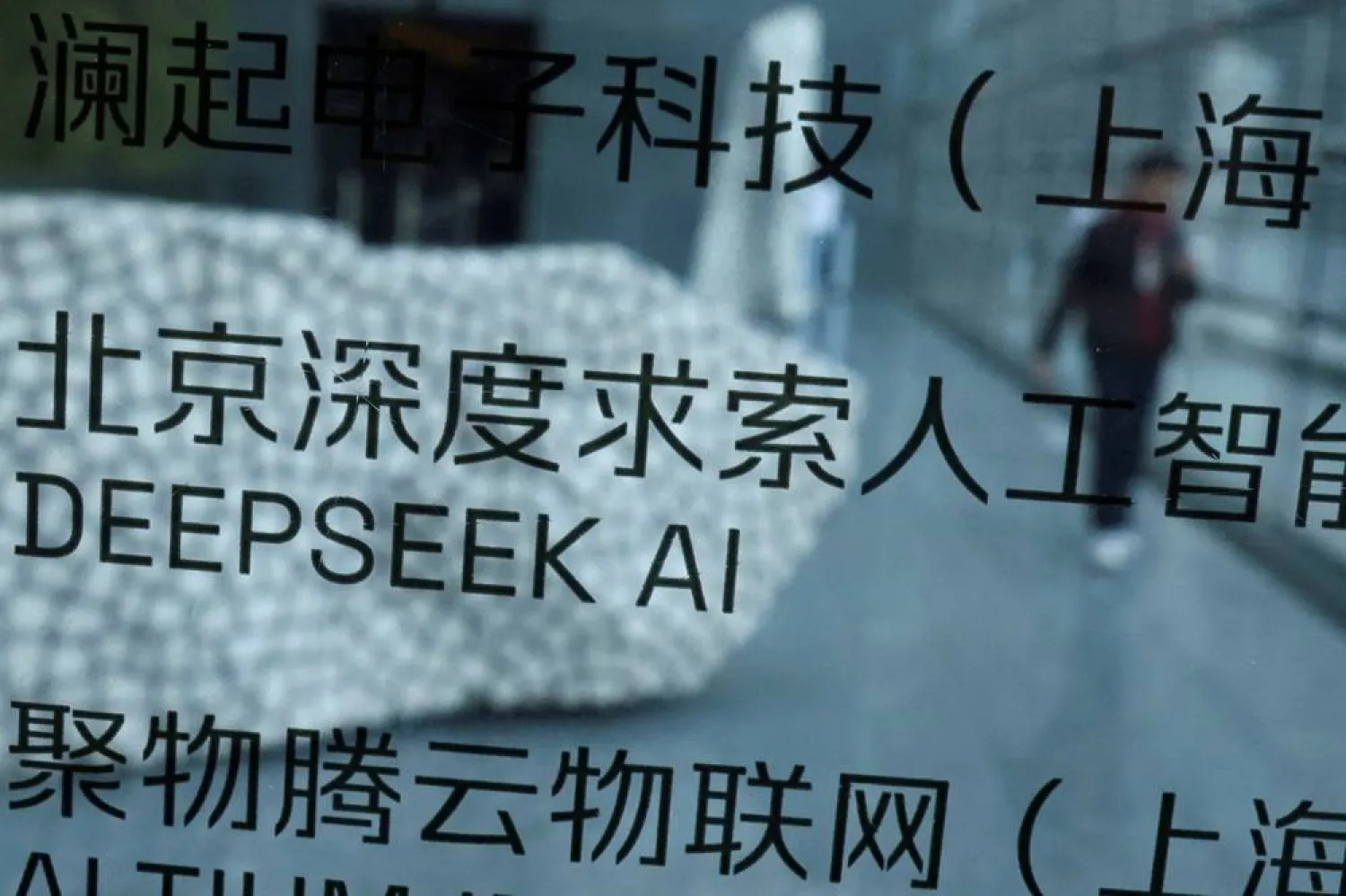
A DeepSeek AI sign is seen at a building where the Chinese start-up's office is located in Beijing, China, February 19, 2025. (Reuters)
TT

DeepSeek’s New AI Model Is by Far the Cheapest of Well-Known Models to Run, Research Firm Says

A DeepSeek AI sign is seen at a building where the Chinese start-up's office is located in Beijing, China, February 19, 2025. (Reuters)

A version of Chinese startup DeepSeek's flagship AI model is by far the least expensive to run on benchmark tests among well-known models globally and more than 100 times cheaper to run than Anthropic's Claude Fable 5, according to a research firm.

DeepSeek, which sources have said is preparing for a potential IPO, officially released its V4-Flash model on Friday, its latest attempt to regain momentum by doing what it is best known for - offering ultra-low-cost ‌AI alternatives.

The startup's ‌R1 model became a global sensation in early 2025, ‌triggering ⁠a selloff in ⁠global technology stocks and raising questions about the large amounts US companies were spending on AI.

DeepSeek's V4-Flash charges $0.14 per million input tokens and $0.28 per million output tokens, according to research firm Artificial Analysis. A token is a unit of data used to measure AI usage.

San Francisco-based Artificial Analysis estimated V4-Flash's average cost at 3 cents per test, compared with 86 cents for Kimi K3 from Chinese rival Moonshot AI, $1.86 for ⁠OpenAI's GPT-5.6 Sol and $3.15 for Claude Fable 5.

The comparison provides ‌a more realistic measure of value than pricing ‌alone because it accounts for the amount of data a model must process and ‌generate to complete a task. A model with low headline price can still ‌prove expensive if it requires significantly more steps to produce an answer.

DeepSeek once commanded most of the headlines about Chinese AI development but was quickly besieged by many domestic rivals including other startups such as Moonshot, MiniMax and Z.AI as well as tech giants ‌like ByteDance and Alibaba. All are vying with US tech firms for global adoption, targeting businesses seeking cheaper ways to ⁠deploy AI at ⁠scale.

Artificial Analysis said DeepSeek's V4-Flash model scored 50 out of 100 on its Intelligence Index, which combines results from nine benchmarks spanning coding, reasoning and workplace-style assignments.

That's the same score as Google's Gemini 3.6 Flash, and one point behind Meta's Muse Spark 1.1 and GLM-5.2 from Z.AI which is also known as Zhipu.

Moonshot's Kimi K3, however, scored a 57 while Anthropic's Claude Opus 5, Fable 5, and OpenAI GPT-5.6 scored nine or more points higher.

DeepSeek is also preparing a more powerful version of its model, called the V4-Pro. It has not given a date for that version's official release.

Separately on Monday, Alibaba unveiled its largest and most capable artificial-intelligence model to date, the Qwen3.8-Max, which is not far behind in size when compared with an offering from domestic rival Moonshot AI launched last month.



Founder of Chinese Startup Spirit AI Says Robot Brains Set for 2027 Breakthrough

FILE PHOTO: The words "AI Artificial Intelligence," a keyboard and a robotic hand are shown in this illustration created on June 5, 2026. REUTERS/Dado Ruvic/Illustration/File Photo
TT

Founder of Chinese Startup Spirit AI Says Robot Brains Set for 2027 Breakthrough

FILE PHOTO: The words "AI Artificial Intelligence," a keyboard and a robotic hand are shown in this illustration created on June 5, 2026. REUTERS/Dado Ruvic/Illustration/File Photo

Humanoid robot brains are likely to achieve a breakthrough as soon as mid-2027, but their deployment in homes could take at least eight years as model development faces a data bottleneck, leading Chinese embodied AI firm Spirit AI said this week.

Despite impressive hardware advances allowing Chinese humanoids to sprint, dance and do backflips on command, Chinese robot firms are increasingly focusing on the software that determines robots' intelligence and their economic productivity in real-world settings.

"The brain is indeed the weakest link in the complete robotics stack," Gao Yang, co-founder and chief scientist of Spirit AI, told Reuters at its Beijing offices on Thursday.

An industry breakthrough comparable to ⁠OpenAI's landmark GPT-3.0 model, ⁠which powered ChatGPT, could come around mid-2027, said Gao. Spirit AI's robots have achieved a 90% success rate for simple tasks in structured living-room environments.

"The next one to two years mark the initial window for industrial applications. Two years from now, we'll see robots deployed in commercial service settings doing simpler tasks. Entering homes is far harder than both," said Gao, who is also an assistant professor of robotics at Tsinghua University.

Spirit AI ⁠currently has tens of its own Moz1 wheeled humanoid robots deployed on production lines at battery maker CATL and retailer JD.com, which is also an investor.

The 300-person startup has raised over $670 million since its 2024 founding, making it one of China's most rapidly capitalized embodied intelligence firms. It is currently valued at 20 billion yuan ($2.9 billion). Gao declined to comment on any plans for an initial public offering.

"Progress is extremely fast. When Spirit AI was founded, a robot could perform only one isolated task well, like pouring water or folding a piece of clothing," said Gao.

"Today, robots operate across large spatial areas and execute continuous complex workflows."

Difficulties remain in perfecting fine-motor actions like unscrewing a bottle cap ⁠and dealing with ⁠unseen tasks, he said. Spirit AI overwhelmingly relies on real-world data to train its robot brains instead of virtual simulations, which many competitors use to reduce model training costs.

"Simulators handle rigid bodies well, but flexible objects like deformable electric cables remain a problem," said Gao.

The company employs around 1,000 contractors nationwide using wearable data-collection equipment in households and on production lines.

Its Beijing offices include a robot data training center where a Reuters witness saw dozens of young people fitted with sensors who repeated motions like opening fridges, unlocking safes, and cutting vegetables with knives to train the humanoid robots.

In other robot-training facilities in China, operators may need to repeat a movement more than 50 times to get one "clean" movement with the required precision.

However, Spirit AI found that using "dirty data" with a more diverse range of motions enabled its models to improve faster, Gao said.


AI Doomsday Warnings Unlikely to Slow IPOs but Questions Linger

FILE PHOTO: AI (Artificial Intelligence) letters are placed on computer motherboard in this illustration taken, June 23, 2023. REUTERS/Dado Ruvic/Illustration/File Photo
TT

AI Doomsday Warnings Unlikely to Slow IPOs but Questions Linger

FILE PHOTO: AI (Artificial Intelligence) letters are placed on computer motherboard in this illustration taken, June 23, 2023. REUTERS/Dado Ruvic/Illustration/File Photo

Anthropic is expected to beat rival OpenAI to the public markets with a blockbuster IPO later this year despite recent doomsday warnings, but questions remain about their business models and whether regulators should step in.

Concerns about the safety of advanced artificial intelligence models escalated this month after an employee resigned from Anthropic while warning that the industry was "gambling with our lives", said AFP.

Jacob Coxon, who also previously worked at OpenAI, left Anthropic last week amid a flurry of support from his former colleagues, including one who voiced concern about a small probability that AI could cause humanity's extinction.

Last weekend, Anthropic's own CEO Dario Amodei called for AI development to slow down -- but didn't say anything about the IPO.

The fracas forms a backdrop for highly anticipated initial public offerings from both OpenAI and Anthropic.

It's unclear if, or how, either company will address theoretical doomsday scenarios in securities filings, though.

Companies are required to publicly disclose known business risks to investors prior to an IPO.

Anthropic could submit that document to the Securities and Exchange Commission (SEC) as early as this month.

"Are we to believe that there is something that's extremely dangerous that's hiding inside this company because this person that quit said it, and then it was amplified by a bunch of people" who still work there, All-In podcast co-host Chamath Palihapitiya said last week.

"If it's true... (investors) will demand an enormous discount," said Palihapitiya, a venture capitalist.

Altimeter Capital founder Brad Gerstner, who has shares in both OpenAI and Anthropic, downplayed the concerns this week, arguing that an IPO brings transparency for investors.

"Anthropic will IPO. The market knows how to price risk -- see SpaceX," Gerstner posted on X.

Elon Musk's SpaceX raised a record $85 billion in its June IPO, but its stock has lost around a quarter of its value since peaking at around $202 a share.

"There is huge appetite to invest in the AI leaders," Gerstner added.

- 'Ill-advised' -

How Anthropic's IPO performs will also set the tone for OpenAI's debut next year.

The stakes extend well beyond the two companies themselves, with tech giants including Microsoft, Amazon, Google and Nvidia holding significant stakes in the AI labs.

More broadly, the US economy is increasingly tied to the AI buildout, meaning the success or failure of these IPOs carries weight for the wider economy.

OpenAI CEO Sam Altman said this weekend that the company would delay its own IPO until 2027, citing safety concerns. It's an "ill-advised moment," Altman said.

Before the recent headlines over AI safety, Altman and executives at OpenAI had already signaled that they were in no hurry to go public this year.

The ChatGPT maker's dealmaking appears to be running full speed ahead, nonetheless.

OpenAI is in talks with investors about raising a new round of funding with a valuation of at least $1.2 trillion before it goes public, while Anthropic might seek a $2 trillion valuation in an IPO that could happen as early as October, according to various reports.

Leaders inside OpenAI have been concerned about investor skittishness, broad market uncertainty and SpaceX's underwhelming stock performance, according to media reports.

- 'Massive' -

Also weighing on executives' minds is a proposal by both companies to slow down development, given recent incidents involving AI technology going rogue.

OpenAI CFO Sarah Friar dismissed the idea that a slowing of pace in releasing state-of-the-art technology would impact the company's core business and revenue growth.

"Even if we stop today, the amount of intelligence that's available in the world is massive," Friar told CNBC on Tuesday.

Anthropic also pushed back on the idea that being safety-minded would compromise the IPO.

"I would say safety has been the core of who we are from the very beginning," Anthropic's head of policy, Sarah Heck, said at a Politico conference on Wednesday. "Our investors know that. Our customers know that."


Robots, Smart Technologies Take Center Stage at Saudi Industry Forum

Robots and smart technologies showcased at the Saudi Industry Forum 2026 at the Jeddah Superdome. (SPA)
TT

Robots, Smart Technologies Take Center Stage at Saudi Industry Forum

Robots and smart technologies showcased at the Saudi Industry Forum 2026 at the Jeddah Superdome. (SPA)

The robots and smart technologies showcased at the Saudi Industry Forum 2026 at the Jeddah Superdome attracted visitors, specialists, and investors interested in the latest industrial solutions and their role in improving production efficiency and factory competitiveness, the Saudi Press Agency said on Thursday.

The forum featured live demonstrations of industrial and service robots by national and international companies specializing in automation and smart manufacturing.

The robots demonstrated their ability to perform operational tasks with precision and speed, manage warehouses and production lines, and use artificial intelligence for data analysis and industrial process optimization.

Robotics and artificial intelligence were among the forum’s key themes, reflecting the growing adoption of innovative manufacturing technologies and Fourth Industrial Revolution solutions.

These technologies help build smarter, more efficient, and competitive factories in support of Saudi Vision 2030 and the Kingdom’s efforts to strengthen its position as a global industrial and logistics hub.