Saudi Position and Washington's Return to Talks With Tehran

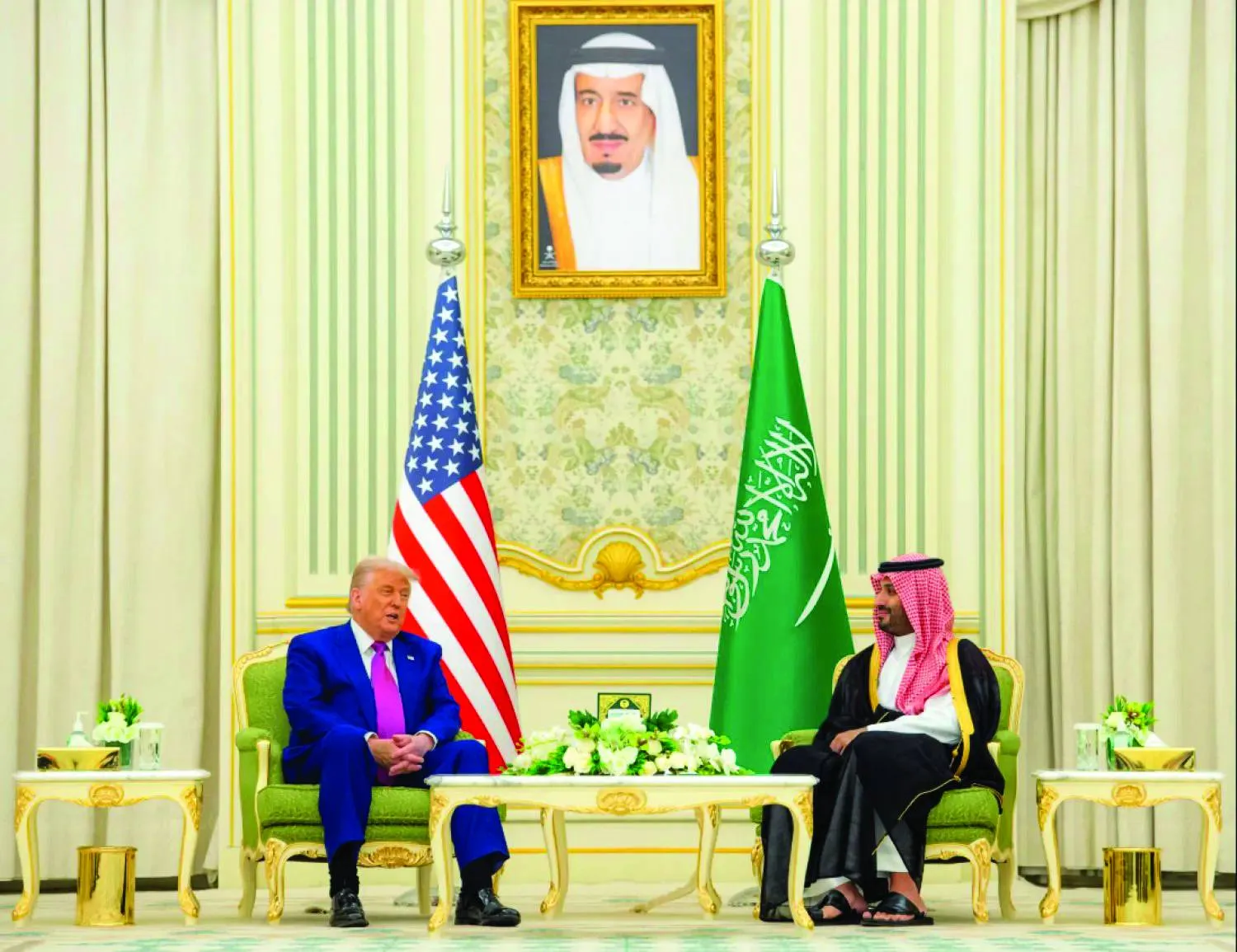
Saudi Crown Prince Mohammed bin Salman and US President Donald Trump in Riyadh last year. (SPA)
TT

Saudi Position and Washington's Return to Talks With Tehran

Saudi Crown Prince Mohammed bin Salman and US President Donald Trump in Riyadh last year. (SPA)

Political analysts said President Donald Trump's announcement on Sunday that he had postponed a planned military strike against Iran, in response to requests from several Gulf states including Saudi Arabia, reflects the importance of Riyadh's role at this stage. They noted that Saudi Arabia is pursuing a dual-track approach by supporting diplomatic efforts to reach an agreement while also confronting attacks by Iran-backed militias in Iraq and Houthi threats to navigation in the Red Sea and the Bab al-Mandab Strait.

Saudi Position Shapes US Calculations

Political analyst Faisal Al Shammeri said the Saudi move does not represent a defense of Iran or a downplaying of the risks posed by its nuclear program and regional conduct. Rather, it reflects a pragmatic assessment of the nature of conflicts in the Middle East, where initiating military confrontation may be easier than containing its consequences or controlling its course.

Speaking to Asharq Al-Awsat, he said President Donald Trump's remarks underscored the influence of the Saudi position on US decision-making after the president indicated that his contacts with Gulf leaders, led by Crown Prince and Prime Minister Mohammed bin Salman, had helped create additional space for diplomacy while emphasizing the need to prioritize dialogue and de-escalation.

He added that Defense Minister Prince Khalid bin Salman's visit to Washington, as reported by US media, formed part of a Saudi effort to convey the Kingdom's assessments directly to US policymakers.

Gulf Security Is the Priority

Explaining the rationale behind the Saudi position, Al Shammeri said the foremost priority is safeguarding Gulf security, as the region would be the first to bear the consequences of any potential Iranian retaliation. He also pointed to the importance of preserving the stability of trade and energy flows through the Strait of Hormuz and protecting economic transformation and development projects that require a stable, investment-friendly environment.

He argued that the Kingdom's approach is based on preventing Iran from acquiring the capability to threaten regional security while also preventing any confrontation from escalating into a full-scale war that would impose its greatest costs on the Gulf. This, he said, requires an implementable agreement that addresses the root causes of the crisis rather than a temporary truce.

Political analyst Nidal Al Saba, meanwhile, argued that Saudi Arabia's weight gives it influence over major decisions in the region, extending beyond the United States to all major international powers, including China, Russia, and Western countries.

"Saudi Arabia is the leading power in the energy sector, and its position on the Strait of Hormuz, energy security, and maritime navigation carries significant weight and influence. Therefore, the United States' decision to suspend an attack on Iran is not surprising as long as Saudi Arabia is playing a role in encouraging that course," he said.

Saudi Influence Extends to Iran and the United States

Although Al Saba said he is not optimistic about the intentions of either Iran or Israel, unlike what he described as the preference and interest of the Trump administration, he believes Saudi pressure could, in the coming period, extend beyond Washington to include Iran as well.

He said Saudi Arabia possesses considerable leverage and is one of the region's principal powers sitting at the negotiating table rather than observing developments from the sidelines.

Saudi Regional Consultations

Saudi regional diplomacy has seen notable activity over the past several hours following President Trump's remarks about the start of negotiations with Iran.

On Sunday, Saudi Foreign Minister Prince Faisal bin Farhan held discussions with Qatari Prime Minister and Foreign Minister Sheikh Mohammed bin Abdulrahman bin Jassim Al Thani, Jordanian Deputy Prime Minister and Foreign Minister Ayman Safadi, and Iranian Foreign Minister Abbas Araghchi on regional developments.

The consultations also addressed the importance of supporting efforts and coordinating positions aimed at de-escalation and countering anything that could undermine regional security, while ensuring the restoration of freedom of maritime navigation and limiting the negative repercussions of the crisis.

The Saudi foreign minister reaffirmed his country's commitment to continuing its regional role in promoting security and stability in a manner that serves the shared interests of the peoples and states of the region.


GCC Secretary-General Meets with Turkish Foreign Minister in Istanbul

Secretary-General of the Gulf Cooperation Council (GCC) Jasem Mohamed Albudaiwi
TT

GCC Secretary-General Meets with Turkish Foreign Minister in Istanbul

Secretary-General of the Gulf Cooperation Council (GCC) Jasem Mohamed Albudaiwi

Gulf Cooperation Council (GCC) Secretary-General Jasem Albudaiwi met on Friday with Minister of Foreign Affairs of the Republic of Türkiye Hakan Fidan, on the sidelines of the 9th Istanbul Mediation Conference held under the theme "Partnerships and New Perspectives for Peace: Mediation in a Changing World."

The two sides reviewed GCC-Turkish relations and explored avenues to broaden cooperation across various fields, reflecting the growing partnership between the GCC and Türkiye to serve mutual interests, SPA reported.

Both officials expressed their shared anticipation for convening the seventh Joint Ministerial Meeting of the Strategic Dialogue between the GCC and Türkiye in the coming period, emphasizing its role in advancing joint initiatives and opening new horizons for cooperation.

The meeting also addressed the latest regional developments, with both sides exchanging views on efforts to de-escalate tensions and bolster regional security and stability.


UAE: Oil Spill from Tanker Affects Beaches in Umm Al Quwain

An image published by the UAE Ministry of Climate Change and Environment of one of the country's beaches. (UAE Ministry of Climate Change and Environment)
TT

UAE: Oil Spill from Tanker Affects Beaches in Umm Al Quwain

An image published by the UAE Ministry of Climate Change and Environment of one of the country's beaches. (UAE Ministry of Climate Change and Environment)

The UAE Ministry of Climate Change and Environment said on Friday that its monitoring and environmental assessment systems had detected marine pollution caused by an oil leak from a tanker.

The spill had affected beaches in the emirate of Umm Al Quwain, the ministry said.

It said in a statement that the leak had caused odors reported by residents of Sharjah, Ajman and Umm Al Quwain, adding that it posed no health concerns or risks to residents.

All beaches and coastal areas in Umm Al Quwain had been temporarily closed as a precautionary measure to ensure the safety of the marine environment while survey operations were completed, added the ministry.

Specialist teams had begun coordinating with the relevant authorities to contain the pollution, cordon off affected areas and launch cleanup and remediation operations to limit its environmental impact, the statement added.


European Parliament Resolution Condemns Houthi Attacks, Urges EU Terrorist Listing

 A supporter of Yemen's Houthis carries his rifle during a rally in support of the group in Sanaa, Yemen, Friday, Oct. 9, 2026. (AP)
A supporter of Yemen's Houthis carries his rifle during a rally in support of the group in Sanaa, Yemen, Friday, Oct. 9, 2026. (AP)
TT

European Parliament Resolution Condemns Houthi Attacks, Urges EU Terrorist Listing

 A supporter of Yemen's Houthis carries his rifle during a rally in support of the group in Sanaa, Yemen, Friday, Oct. 9, 2026. (AP)
A supporter of Yemen's Houthis carries his rifle during a rally in support of the group in Sanaa, Yemen, Friday, Oct. 9, 2026. (AP)

Members of the European Parliament have expressed solidarity with Saudi Arabia and support for Yemen's legitimate government, reaffirming their commitment to the security, sovereignty, and territorial integrity of both countries.

The position was set out in a resolution adopted on Thursday that strongly condemned Houthi missile and drone attacks on Saudi Arabia, as well as the military escalation inside Yemen.

The members described the attacks as flagrant violations of international law and international humanitarian law. The resolution highlighted that the attacks have killed and displaced large numbers of Yemeni civilians and exacerbated the country's humanitarian crisis.

The resolution called on the Council of the European Union to designate the Houthi group, including its political and military wings, leadership, and military and security apparatus, as a terrorist organization under the EU list of terrorist organizations.

It also called for dismantling the group's funding channels and freezing its funds, economic resources, and the assets of entities facilitating its activities.

The members of Parliament urged the Houthis to immediately cease all hostilities inside and outside Yemen and abandon any ambitions to seize territory.

The resolution also strongly condemned Houthi attacks targeting Saudi Arabia's energy infrastructure and commercial vessels in the Red Sea and the Bab al-Mandeb Strait.

The resolution further called for strengthening security and defense cooperation between the EU and its Gulf partners.