Report: US Has Used ‘Virtually All’ of Its Long-Range Precision Missiles During Iran War

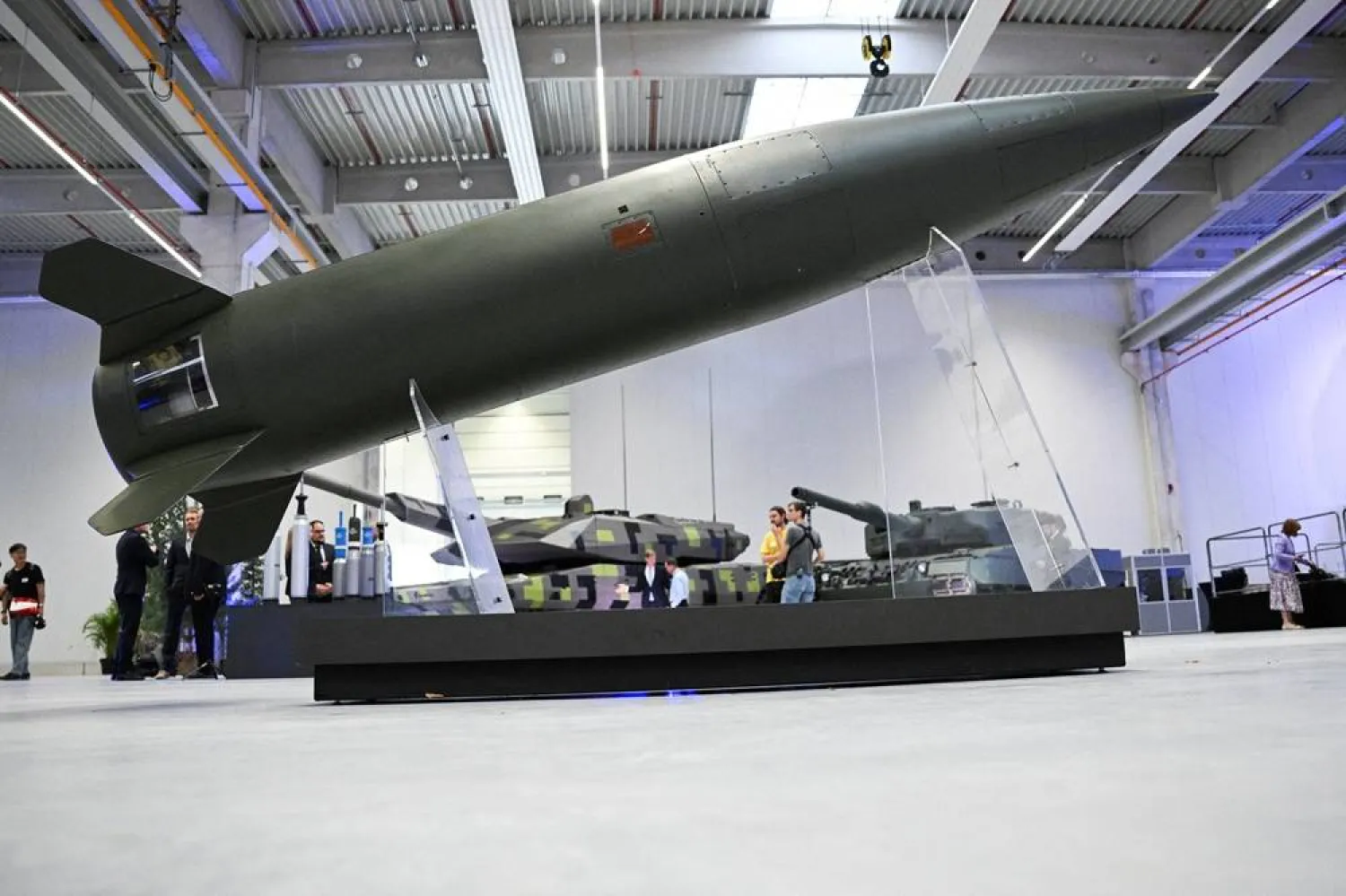
An Army Tactical Missile System (ATACMS) is displayed during the inauguration of a new artillery plant of ammunition maker Rheinmetall, in Unterluess, Germany August 27, 2025. (Reuters)
TT

Report: US Has Used ‘Virtually All’ of Its Long-Range Precision Missiles During Iran War

An Army Tactical Missile System (ATACMS) is displayed during the inauguration of a new artillery plant of ammunition maker Rheinmetall, in Unterluess, Germany August 27, 2025. (Reuters)

The US Army has used up much of its stockpile of highly accurate long-range missiles during its five-month war with Iran, according to three people familiar with the data, raising concerns about the military's readiness for future conflicts.

The missiles are principally the Army's surface-to-surface weapons, known as Army Tactical Missile Systems (ATACMS) and Precision Strike Missiles (PrSM). The US has used "virtually all" of these weapons, according to two of the sources, reported Reuters.

The degree to which the military is running out of ATACMS and Precision Strike Missiles has not been previously reported.

The long-range munitions – which cost more than $1 million each – are an important part of the military's arsenal, allowing accurate strikes from a safe distance. US-supplied ATACMS have played a key role in the war in Ukraine, allowing Ukrainian forces to attack targets inside Russia. The PrSM is a newer, more advanced generation that will replace the ATACMS, which have a shorter range.

The dramatic rundown in precision, long-range missiles means US President Donald Trump may have to rely more on riskier, piloted bombing missions if he relaunches large-scale attacks on Iran.

The sources declined to say how many of each munition the US had left.

Trump launched the Iran war jointly with Israel in February, predicting that the conflict would last a short time.

But as the war drags on, the three people ‌familiar with the matter expressed ‌worry that the falling missile supplies could limit the US ability to deter adversaries, including Russia and China.

A fourth person ‌familiar with ⁠the matter said ⁠that while Central Command, which oversees US forces in the Middle East, has nearly used up the land-based missiles it had before the war began, it has been able to reload from US military supplies elsewhere in the world.

The sources interviewed for this story spoke on the condition of anonymity.

Asked for comment on the stockpile data, the White House issued a statement from Trump, saying the US had “far more munitions than anyone in the world" and "far more than we need."

"Our defense companies are, at this moment, making more munitions than they have ever made before, in addition to expanding their plants and equipment at record levels," Trump said.

Analysts agree that certain munitions, including artillery shells and several types of missiles, are being produced at record levels but caution that supplies might fall short of what is needed for a prolonged war.

Lockheed Martin, which makes the ATACMS and PrSMs, along with the anti-ballistic missile THAAD system, did not immediately respond to questions about Trump's ⁠statements or about supply levels. Raytheon, which makes Tomahawk missiles and Patriot interceptors, two important US weapons, also did not immediately respond.

Responding ‌to a request for comment, chief Pentagon spokesperson Sean Parnell said: “America’s military is the most powerful in the world and ‌has everything it needs to execute at the time and place of the President’s choosing. We have executed multiple successful operations across combatant commands while ensuring the US military possesses a deep arsenal ‌of capabilities to protect our people and our interests.”

The supply figures have circulated inside the federal government over the last week during tense conversations inside the Trump administration about ‌how much longer the US can continue striking Iran without drawing down the stockpile to levels that would limit the military's ability to respond to crises elsewhere.

WARNINGS OVER WEAPONS SUPPLIES

One of the sources said the drawdown of the ATACMS and PrSM stockpiles reflected a decision by the Trump administration to avoid riskier ways of attacking Iranian targets, such as by using piloted aircraft to drop bombs.

Because these weapons allow the military to attack targets from a distance, analysts say they would be valuable in a war against an adversary with strong air defenses, such as China. They have been used to strike ‌targets inside Iran, according to a March report by the Center for Strategic and International Studies (CSIS).

According to the report, PrSM stockpiles were low to start with, since it is a relatively new munition, but the US military has ordered a large number ⁠of them for 2027. The Army has said ⁠that ATACMS are being phased out and that production is shifting to the newer PrSM missiles.

Military leaders have for weeks warned the president that stockpiles of defensive weapons, including Patriot interceptors, which are effective against ballistic missiles, were dwindling, said two of the sources. Last week, several media outlets reported Trump had decided not to launch another massive offensive inside Iran in part because his military advisers had warned about the US stockpile.

A US official disputed those accounts, saying Trump chose not to move forward with another attack because of pressure from other countries.

The Middle East conflict has sparked intense debate about Trump's authority to prosecute hostilities against Iran without congressional authorization. No request for a declaration of war or an authorization to use military force has been submitted to Congress.

DEFENSIVE WEAPON STOCKS ARE ALSO DIMINISHED

Last week, CSIS published a report estimating that between February and July about 65% of Patriot interceptors had been expended and that the number of THAAD ballistic missile interceptors in US stockpiles was at least 38% lower than at the start of the war. Patriots and THAADs are systems that detect and destroy incoming missiles and are among the most effective in the country's arsenal.

While Reuters has not seen the supply figures, those numbers match internal US data, two of the sources said.

The US also burned through a little less than half of its global supply of Tomahawk cruise missiles, which are generally launched from ships, since the start of the war, one of the sources said.

Reuters could not independently verify that number.

The Tomahawk is a Navy weapon, launched from destroyers, cruisers and submarines, and has long served as the sea service's principal means of striking heavily defended targets without risking pilots.

Raytheon, a unit of RTX, has reached a tentative multi-year agreement with the Pentagon aimed at boosting Tomahawk production, alongside increases in other munitions, as Washington races to rebuild stockpiles.

Displaced Hebron Residents Return Home to Scenes of Destruction after Israeli Operation

People inspect the damage on the roof of a house that was blown up by Israeli forces in the Deir Baha area of Hebron in the occupied West Bank, on November 2, 2026. (AFP)
TT

Displaced Hebron Residents Return Home to Scenes of Destruction after Israeli Operation

People inspect the damage on the roof of a house that was blown up by Israeli forces in the Deir Baha area of Hebron in the occupied West Bank, on November 2, 2026. (AFP)

Hijazi Shawer al-Tamimi, known as Abu al-Raed, had run out of the traditional sweets to hand out to his many grandchildren as they returned with their parents to the family’s large home in the Jalda area of Ain Deir Baha neighborhood in Hebron, in the occupied West Bank.

The 70-year-old neighborhood community elder, was celebrating their return after 11 days of forced displacement by the Israeli army.

At least 3,000 people, including more than 200 infants and 32 people with disabilities, were forced from their homes during an Israeli military operation launched in response to an attack by two Palestinian gunmen from Ain Deir Baha.

The attack, carried out at a checkpoint near Hebron less than two weeks earlier, killed two Israeli soldiers.

“We are here, and we will not leave. Our roots are here, like the roots of fig trees in the earth,” Tamimi declared after returning home.

But the joy of returning was quickly overshadowed by scenes of destruction and vandalism. Families who had barely begun celebrating were shocked by the damage to their homes and belongings.

Tamimi, who had been hospitalized a week earlier after Israeli soldiers assaulted him while preventing him from reaching his home, expressed defiance as he returned.

Like other families in the neighborhood, he was finally able to reach his house on Monday after Israeli forces, which had forcibly evicted residents, withdrew.

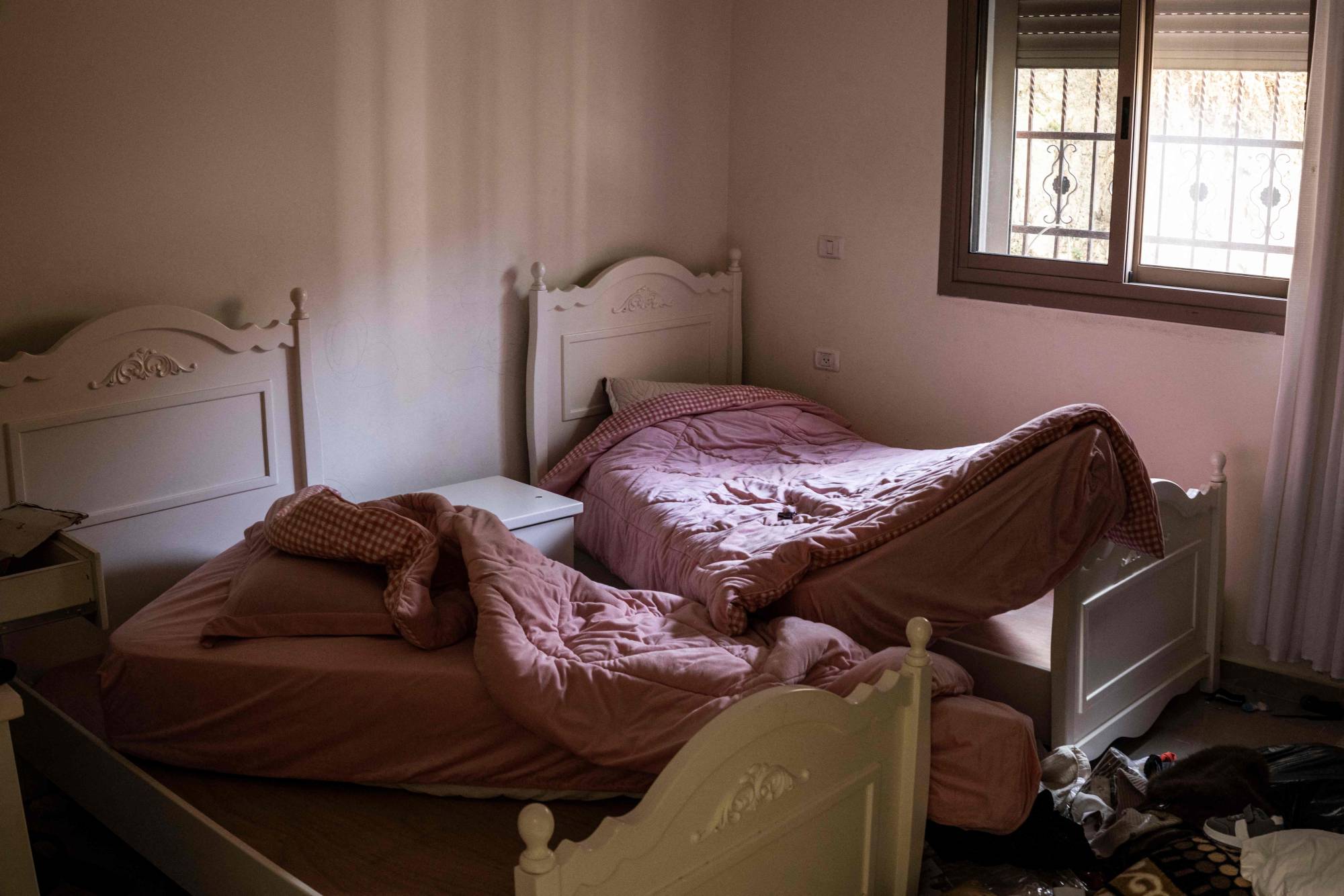
A children's bedroom, ransacked by Israeli forces during an operation is seen in the Deir Baha area of Hebron in the occupied West Bank, on November 2, 2026. (AFP)

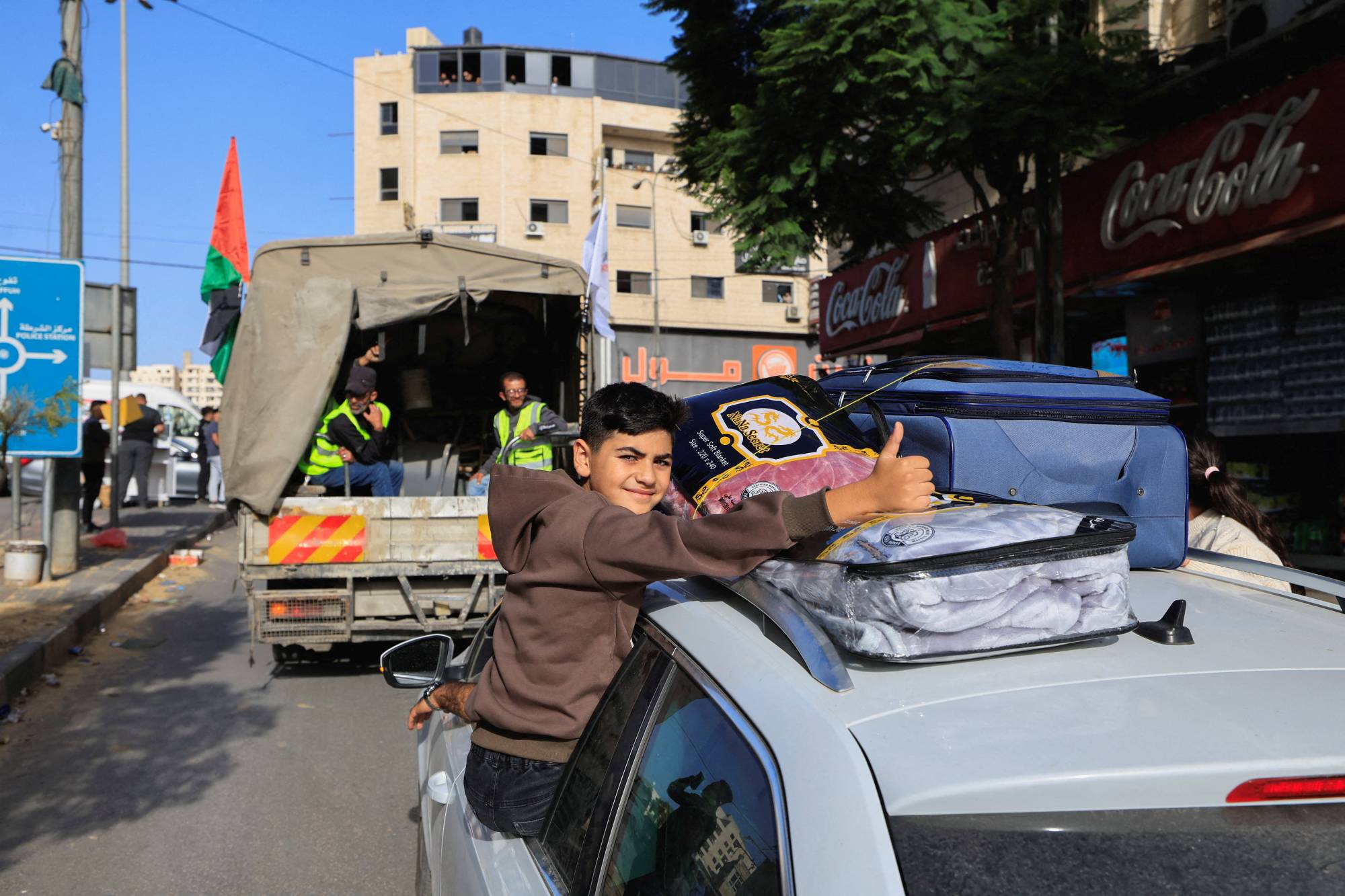
Videos circulating on social media showed crowds celebrating, cars driving through the streets, young men handing out sweets, women weeping as they entered their homes and children playing in courtyards.

Yet, many residents were stunned by the extent of the damage.

Palestinians accused Israeli soldiers of vandalizing homes, shops and institutions, while others reported thefts. Accounts of looting circulated on social media.

Obaida Mujahid, who owns a photography studio, said his shop had been looted, with losses exceeding 100,000 shekels (about $32,000) after cameras and photographic equipment were stolen.

An unidentified woman accused soldiers of smashing and vandalizing her home. Another recounted how soldiers had destroyed all the items prepared for her daughter’s wedding.

Osama Shawer told the official Palestinian news agency that his sons returned to their apartments to find that Israeli forces had smashed most of their contents.

Children’s toys, perfumes, cash and the children’s savings banks had not been spared from damage and theft, he recounted. Doors had been broken and belongings scattered.

Muhannad al-Tamimi told AFP that his family returned to find their apartment wrecked, with furniture and clothes strewn across the floor, mattresses overturned and toys broken.

Many Palestinians posted images showing the damage and destruction left by soldiers inside their homes.

A Palestinian boy gestures from a car, with belongings on its roof, as people return to their homes after the Israeli military ended an operation, in Hebron in the Israeli-occupied West Bank, November 2,2026. (Reuters)

Israeli forces launched the operation in Hebron following a Palestinian attack on a checkpoint in the Farsh al-Hawa area on the city’s outskirts. The attack killed two Israeli soldiers and wounded three others.

During the operation, Israeli troops took control of parts of Hebron, demolished 15 homes and occupied others after expelling their residents, particularly in the Jalda and Deir Baha areas, where the attackers hailed from. The troops withdrew early Monday.

Hebron Governor Khaled Dudin announced that Israeli forces had withdrawn from the entire city, confirming that Palestinian security services had regained full control of the area.

Residents began returning after specialized Palestinian security teams conducted rapid inspections to check for possible explosive remnants.

Despite the declared end of the operation, however, Israeli forces had not left the entire area.

Israeli military sources told the country’s public broadcaster that the withdrawal from Palestinian neighborhoods in Hebron had been postponed until at least after next Saturday.

The delay was attributed to expectations that around 20,000 people would arrive in the city for a Jewish religious event known as Shabbat Chayei Sarah.

The Israeli military issued no formal statement announcing the end of the operation, although a military official confirmed it to journalists.

The official explained that troops had vacated homes in certain areas and were preparing to provide security for the religious event.


Where Things Stand on Iran after a Tense Weekend

An Iranian woman holds Iran's national flag on a street in Tehran on November 1, 2026. (AFP)
TT

Where Things Stand on Iran after a Tense Weekend

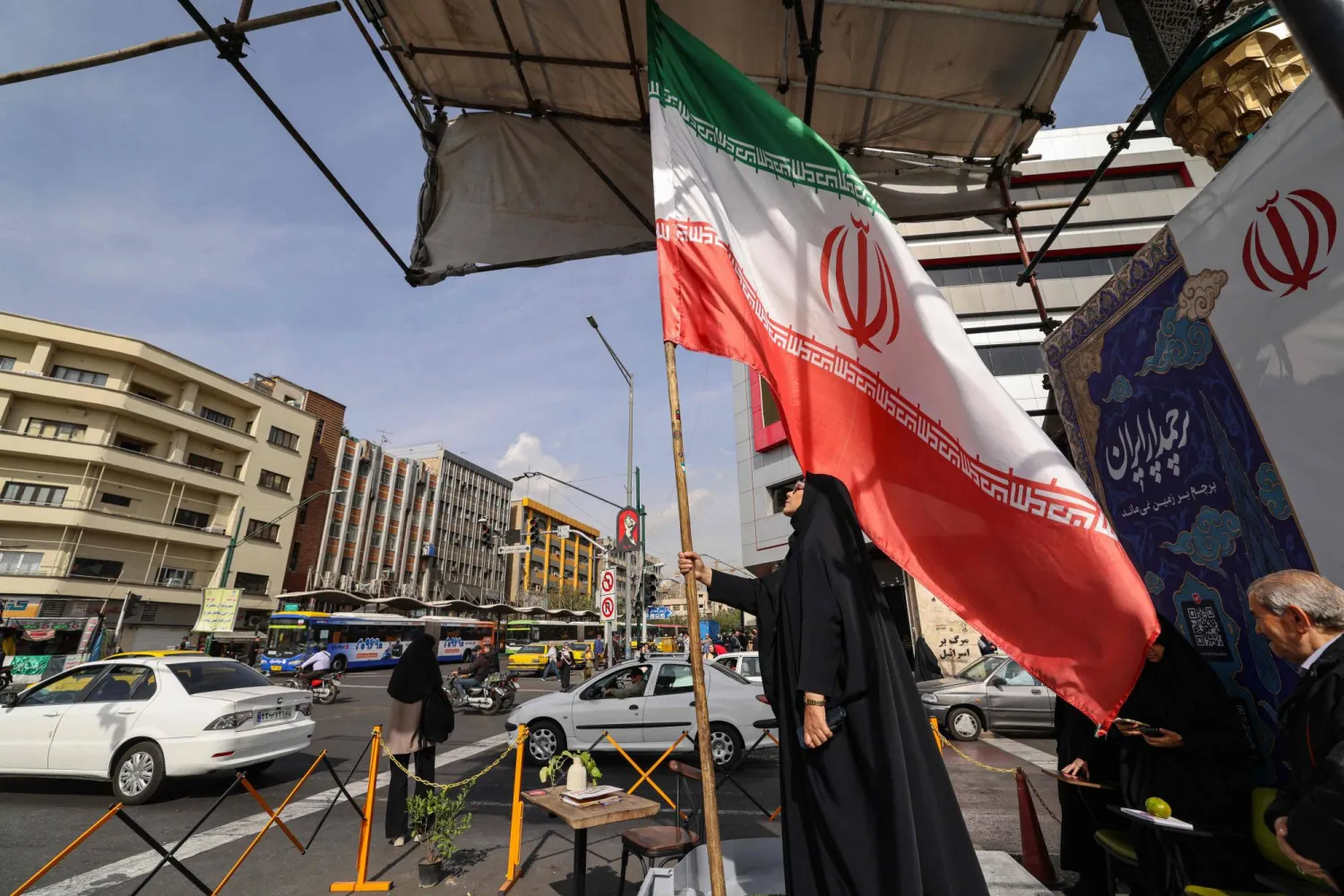
An Iranian woman holds Iran's national flag on a street in Tehran on November 1, 2026. (AFP)

The Middle East is braced for a possible return to all-out war. There are concerns that the United States, along with Israel, could strike Iran shortly after Tuesday’s midterm elections in the US.

Two Iranian officials said their delegation had left Qatar after days of discussions but that messages with the US continued to be exchanged through the mediator. The officials spoke on condition of anonymity due to the sensitivity of the talks, The Associated Press reported.

The diplomatic efforts seek to avert new attacks. Tehran has expanded its threats but said it is waiting for the latest US response to a proposal that would fully open the Strait of Hormuz to shipping within two days if Washington meets several conditions.

Here’s where things stand Monday.

Trump had a ‘very good’ call with Netanyahu

US President Donald Trump on Sunday evening told reporters he and Israeli Prime Minister Benjamin Netanyahu had a “very good” call on Saturday. He said they discussed Iran but gave no details.

Even before Netanyahu and his bloc of allies lost their majority in parliament in last week’s election, there were growing fears that Netanyahu was pushing for new strikes against Iran in an effort to stay in power in an emergency government during renewed war. Since last Tuesday’s election, the prime minister has publicly commented only on the vote.

There was no word from Netanyahu and his office on the latest call with Trump, who has continued to alternate between public comments about pursuing talks with Iran and threats to strike it hard.

Iran greatly expands threats while sticking with diplomacy

The Iranian Republic has stepped up its public messaging during the uncertainty, saying it is ready for both diplomacy and renewed fighting.

The new supreme leader, Mojtaba Khamenei, met with Iran’s military chiefs and said the response to “any kind and level of threat” from the US or Israel should be immediate and without “geographic limits,” and urged an expansion of the list of potential targets.

Khamenei still has not been seen publicly since the opening strikes by Israel and the US on Feb. 28 killed his father, the previous supreme leader.

Iran’s security chief, Mohsen Rezaei, warned on X that any attack would bring “devastating blows on the aggressor using new weapons.”

In an interview with state television, Rezaei said “the tone has completely changed” from the US and called it a “very good sign.” He gave no details about the letter he received from US Vice President JD Vance, which Iran acknowledged last week, and said he had not responded.

Rezaei also said there had been no decision to change Iran’s nuclear doctrine, but he noted that some Iranians had questioned whether that should change if Iran were attacked again. Tehran has insisted its nuclear program is peaceful.

Washington seeks to prevent Iran from obtaining a nuclear weapon and wants to address the issue in any new talks. Iran wants to discuss the nuclear issue later.

Iranian Foreign Minister Abbas Araghchi, on a one-day visit to neighboring Turkmenistan on Monday, has said the final outcome depends on answers provided by the United States to the “Iranian questions.”


Fear of Renewed War Reshapes Housing Choices in Beirut’s Southern Suburbs

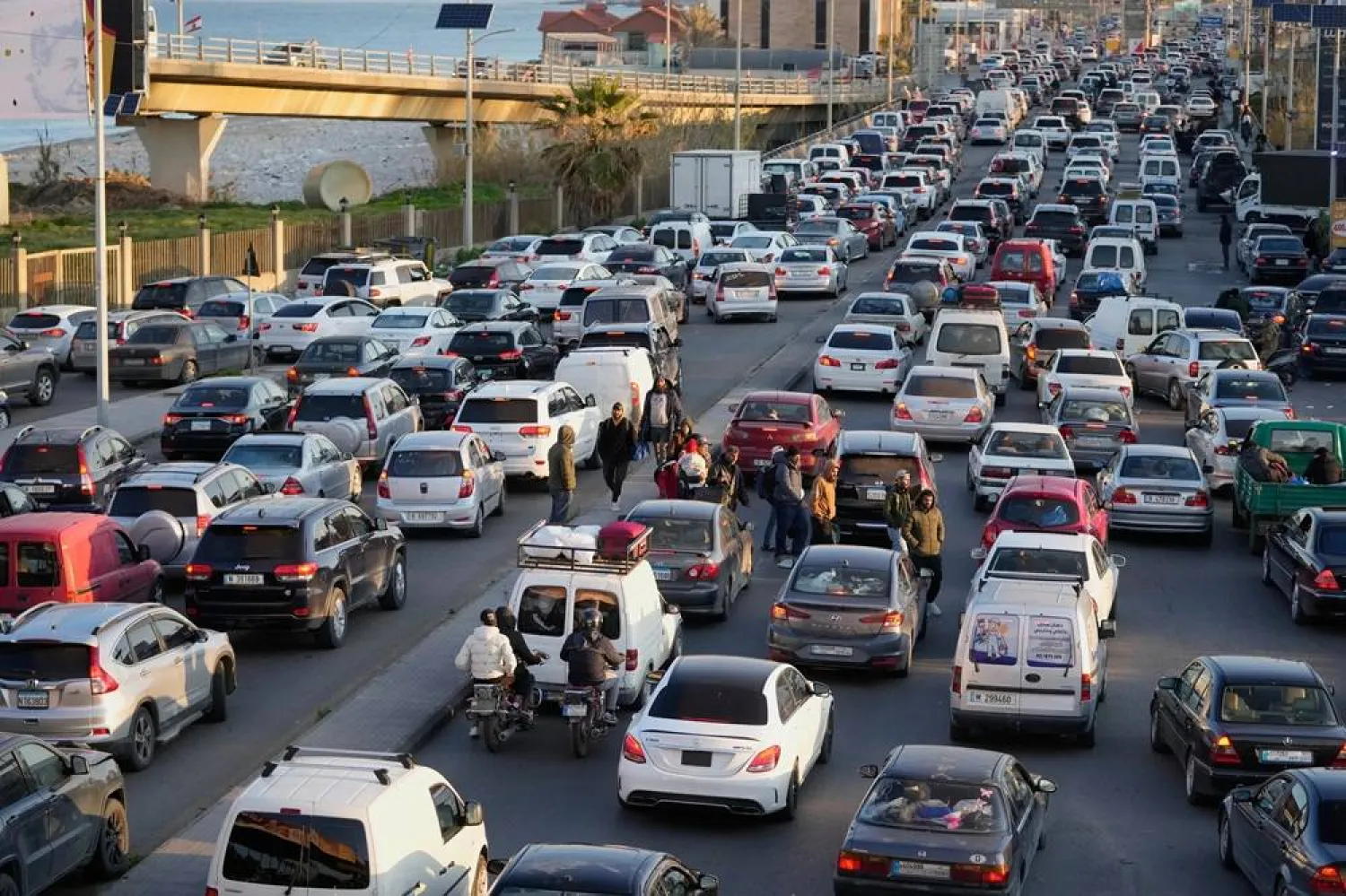
Displaced people fleeing Israeli strikes in southern Lebanon sit in traffic at a highway that links to Beirut, in the southern port city of Sidon. (AP)
TT

Fear of Renewed War Reshapes Housing Choices in Beirut’s Southern Suburbs

Displaced people fleeing Israeli strikes in southern Lebanon sit in traffic at a highway that links to Beirut, in the southern port city of Sidon. (AP)

Fear of another war is prompting residents of Beirut’s southern suburbs to relocate or rent homes elsewhere. Housing decisions are no longer driven solely by the possibility of destruction or evacuation warnings. The prospect of renewed fighting is increasingly influencing where people choose to live, how they plan their marriages and even where they intend to spend their retirement.

Testimonies gathered by Asharq Al-Awsat reveal how families are reorganizing their lives in search of safety. Some have left the southern suburb, known as Dahiyeh, altogether, while others remain in their homes but maintain alternative accommodation in case they need to flee.

From homeowners paying additional rent to newlyweds choosing larger apartments to shelter relatives, security concerns are increasingly outweighing financial and social considerations.

Marital home for two families

For newlywed Nadia Houri, choosing a marital home was anything but a conventional decision.

Having lived in Beirut’s southern suburbs before her marriage, she decided to move to Bchamoun, making the possibility of another war a central consideration.

“When I decided to get married, I wasn’t thinking only about the home where my husband and I would live, but also about somewhere my family and my husband’s family could seek shelter if another war broke out,” Houri told Asharq Al-Awsat.

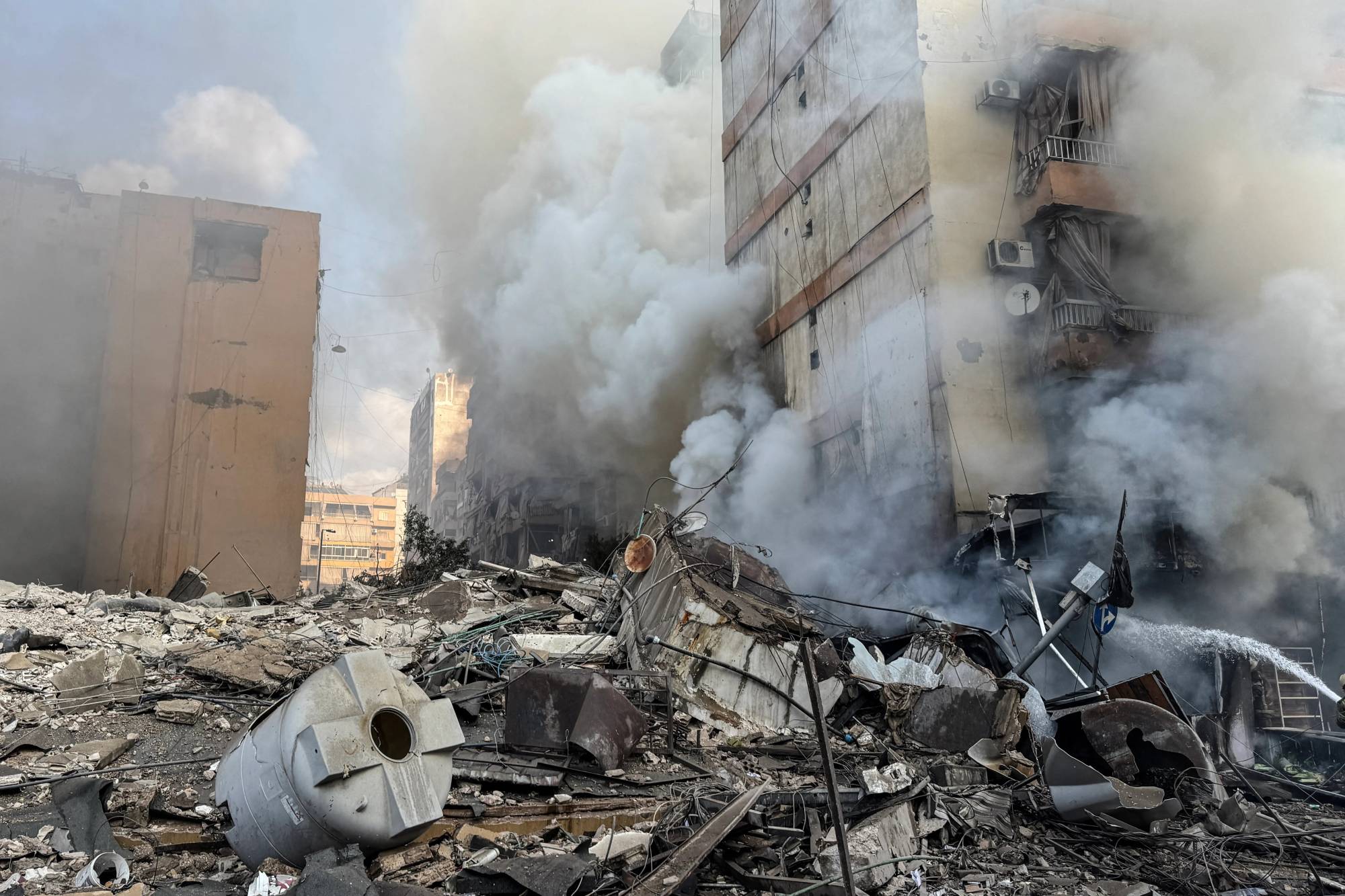
Smoke rises from the site of an Israeli air strike that targeted the Haret Hreik neighborhood in Beirut's southern suburbs. (AFP)

“That’s why I chose Bchamoun. I made sure the building was safe and the apartment spacious enough to accommodate both families.”

She said the additional expense was preferable to being unable to help relatives forced to flee their homes.

“I would rather bear the extra cost than see my family or my husband’s family displaced with nowhere to go. I wanted to be prepared for any emergency.”

Trauma of bombardment drives residents away

Lana Shouaib, from the Mreijeh neighborhood in the southern suburbs, rented a small studio in Beirut’s Ashrafieh after becoming increasingly uneasy about returning home. Her parents, meanwhile, moved to their village in the eastern Bekaa Valley.

“The situation is worrying, and security fears aren’t the only reason we’re staying away from the southern suburbs,” Shouaib told Asharq Al-Awsat. “The area is still suffering from all the destruction and water problems. All these factors made me look for somewhere else.”

Her greatest concern, however, remains the possibility of renewed airstrikes, particularly after experiencing a nighttime attack. With no guarantees that war will not resume, she finds the prospect of returning increasingly difficult. Shouaib is now considering leaving the neighborhood permanently.

“When this situation ends and things return to normal, we’ll sell the house and look somewhere else,” she said, acknowledging how difficult it is to abandon a home into which someone has invested a lifetime of hard work.

Retirement at an additional cost

Khaireddine, who asked that his full name not be published, did not wait for his home in the Sainte-Therese neighborhood of Beirut’s southern suburbs to suffer damage before deciding to leave.

Although the property remained intact, he and his wife moved to Khaldeh in Mount Lebanon, where they rented a house for $600 a month, hoping to spend their retirement away from fear and the prospect of repeated displacement.

“My house wasn’t damaged, and we could have stayed there. But we’re tired of being afraid and of the possibility of having to flee again,” he told Asharq Al-Awsat. “We’ve reached an age when we want to rest and live peacefully, away from bombardment and anxiety about another war.”

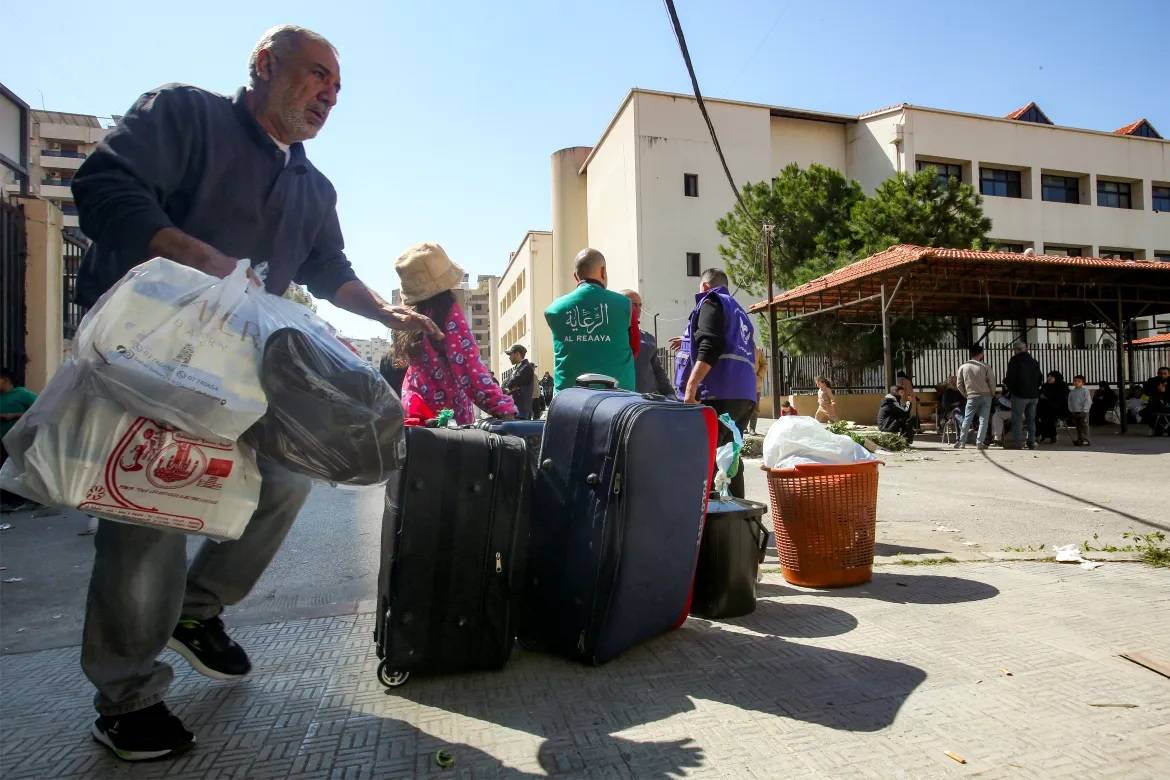
Families displaced by Israeli strikes from southern Lebanon seek refuge at a school transformed into a shelter in Sidon. (AFP)

Their decision was also influenced by a desire to remain close to their children, who live in Khaldeh and the surrounding area.

Khaireddine acknowledged that paying $600 in monthly rent despite owning a habitable property placed an additional financial burden on the couple during retirement. But for him, the trade-off was worthwhile.

“Peace of mind has become more important to us,”he explained.

A summer chalet becomes an emergency refuge

Unlike those who have left, Abu Ali, a man in his 80s, still lives in his home in Beirut’s southern suburbs.

He has nevertheless taken a precautionary step, renting a chalet in Faraya on an annual lease in case another war erupts.

“I still live in the southern suburbs, and I don’t want to leave my home. But I’ve rented a chalet in Faraya for the whole year so I have somewhere to go if war resumes,” he told Asharq Al-Awsat.

“I usually use it in the summer, but I decided to keep it in case of an emergency.”

Abu Ali explained that his advanced age had made him more determined to secure accommodation where he could relocate immediately if the security situation deteriorated, rather than search for shelter in the middle of a crisis.