


Saudi Finance Ministry Warns Against Starting Government Projects Before Contract Awards

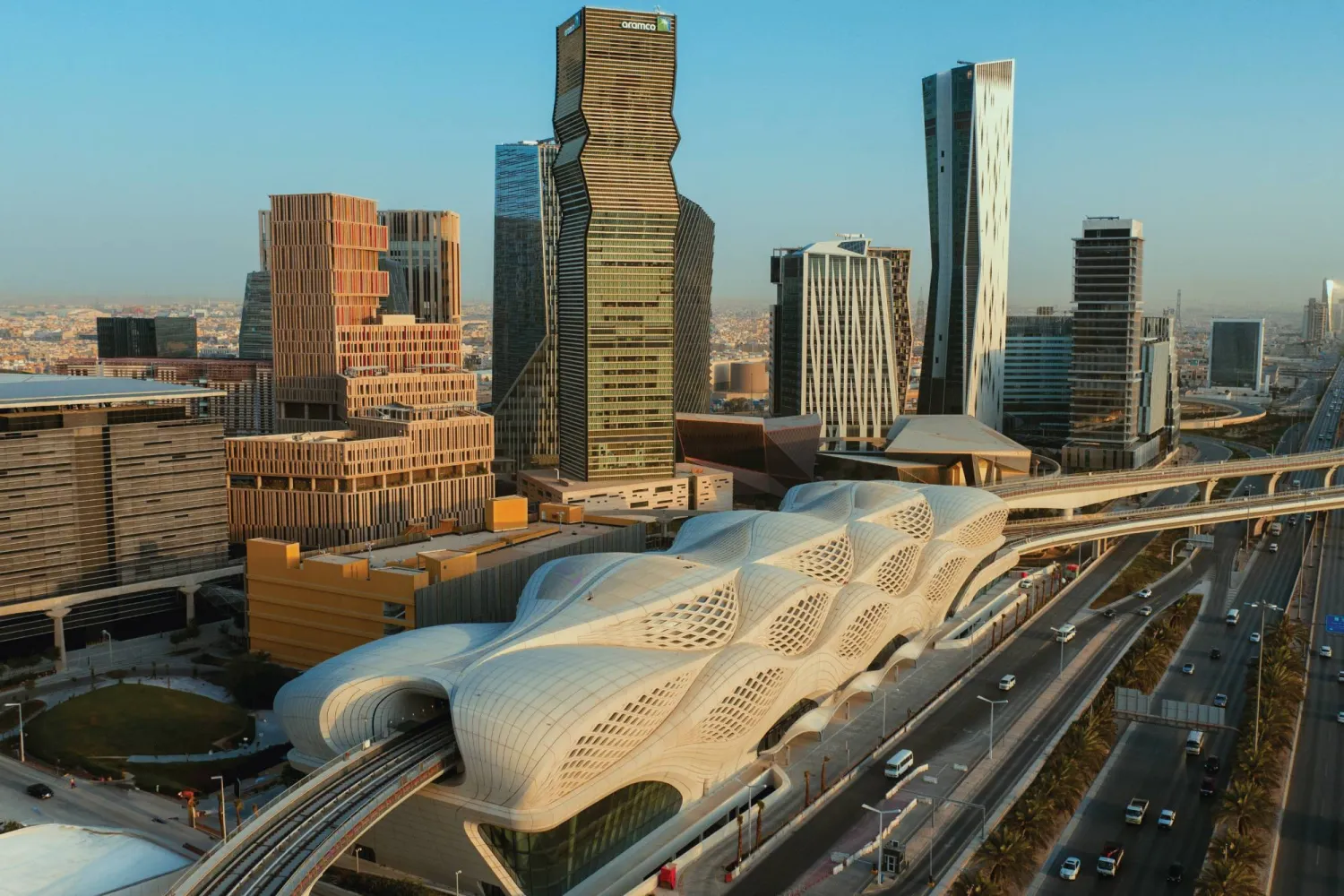
The King Abdullah Financial District (KAFD) in Riyadh (KAFD)
TT

Saudi Finance Ministry Warns Against Starting Government Projects Before Contract Awards

The King Abdullah Financial District (KAFD) in Riyadh (KAFD)

As Saudi Arabia steps up efforts to strengthen discipline in public procurement and contract execution, the government has approved a new Government Tenders and Procurement Law aimed at enhancing governance, transparency and the efficiency of the procurement system.

Asharq Al-Awsat has learned that the Ministry of Finance has warned domestic private-sector companies that contract award and contracting procedures must be completed in accordance with the approved regulations before work begins on any government project, service or procurement.

The Cabinet on Tuesday approved the new Government Tenders and Procurement Law to strengthen governance and transparency, improve planning and execution, and promote clarity, fairness and equal opportunity in competitive bidding and contractual dealings.

Finance Minister Mohammed Al-Jadaan said the law builds on the Kingdom’s efforts to develop the regulatory framework supporting the goals of Saudi Vision 2030, including stimulating investment and improving the efficiency and sustainability of public finances.

According to information obtained by Asharq Al-Awsat, the ministry stressed that bypassing contract award and contracting procedures—such as beginning work before an award decision is issued, relying on verbal work orders, or carrying out work beyond a contract’s scope without completing the required legal procedures—could lead to unjustified financial claims, as well as disputes and grievances that delay payments and violate the Government Tenders and Procurement Law and its implementing regulations.

Sources said the ministry issued the warning after identifying practices that could breach the law and its executive regulations, resulting in unjustified financial claims stemming from work carried out in violation of procurement rules.

Types of Violations

The ministry cited several examples of prohibited practices, including starting work before a government entity issues a contract award and completes contracting procedures, carrying out work or procurement based on verbal authorization, and performing work outside a contract’s scope without the required legal approvals.

It warned that such practices could trigger disputes with government entities, repeated financial claims and grievances submitted to the Ministry of Finance, and delays in the payment of legitimate dues.

The ministry urged the Contractors Committee and other stakeholders involved in the procurement system to comply with the Government Tenders and Procurement Law and its implementing regulations to reduce violations, avoid financial claims and grievances, and safeguard the rights of all parties.

It also continues to encourage private-sector companies to submit their legitimate financial claims promptly.

The ministry underscored the importance of enabling private-sector firms to submit financial claims through the Etimad electronic platform, provided all legal requirements and supporting documentation have been completed.

Bid Opening and Evaluation

Al-Jadaan said the new law will help government entities achieve their objectives and accelerate project implementation. Among its key provisions are the merger of the bid-opening and bid-evaluation committees into a single body, enhancements to the direct-purchasing mechanism and an increase in its financial ceiling, expansion of limited tenders to include freelance professionals, and broader authority for heads of government entities to simplify procedures and speed decision-making.

He added that supporting private-sector growth is one of the law’s principal objectives. Under the new rules, government entities must process payments owed to private-sector contractors within the prescribed deadlines before entering into new contractual commitments, a measure intended to improve payment discipline and strengthen confidence in government contracting.

The minister said the law also advances broader economic and development objectives by strengthening regulatory frameworks for research, development and innovation, while promoting industrial localization and knowledge transfer.



Saudia Cargo Says AI Boosts Efficiency, Prepares to Double Fleet

A Saudia Cargo aircraft (Asharq Al-Awsat)
TT

Saudia Cargo Says AI Boosts Efficiency, Prepares to Double Fleet

A Saudia Cargo aircraft (Asharq Al-Awsat)

Saudi Arabia’s air cargo industry is undergoing a technology-led structural shift to make global supply chains more efficient.

At the center of that shift, Saudia Cargo is entering a new phase of operational and technological expansion built on artificial intelligence and a doubling of its fleet, supporting the kingdom’s ambition to become a global logistics hub linking three continents by 2030.

Artificial intelligence and digital technologies are now embedded in the company’s operations, rather than used merely as supporting tools, Saudia Cargo Vice President of Shared Services Hisham Mallakah told Asharq Al-Awsat in an exclusive interview on the sidelines of the LEAP 2026 technology conference.

The company uses algorithms to forecast demand, manage capacity and optimize cargo weight and load distribution, Mallakah said. It also deploys sensors to monitor the temperature of sensitive shipments and tools to automate operations.

Saudia Cargo’s drive to automate operations and forecast demand mirrors the global air freight industry’s shift toward smart logistics.

According to reports by the International Air Transport Association (IATA), using artificial intelligence and algorithms to manage cargo loads and cold chains cuts operating costs by more than 15% and improves delivery-time accuracy amid volatility in global e-commerce markets.

Saudia Cargo is Saudi Arabia’s national carrier for air freight, cargo transportation and logistics solutions. It is part of the Saudia Group.

Technology partnerships

Mallakah said Saudia Cargo was participating in LEAP to keep pace with technological advances and explore opportunities for cooperation, particularly in artificial intelligence and cloud computing.

The conference allows the company to examine new technologies, exchange expertise with industry leaders and explore future partnerships to develop solutions that are more flexible and responsive to market shifts.

Doubling the cargo fleet

Saudia Cargo is preparing to add four Boeing 777-200F aircraft to its fleet, doubling its size over more than two years.

The Boeing 777-200F is a preferred choice among global air cargo operators for long-haul flights, with a range of about 9,200 kilometers at full payload.

The fleet expansion comes as global demand for transporting high-value and temperature-sensitive goods, such as semiconductors and pharmaceuticals, is growing by more than 7% annually.

Mallakah said the new aircraft would strengthen the company’s ability to transport heavy and temperature-sensitive cargo nonstop over long distances. Their fuel efficiency would also improve performance while reducing costs and emissions.

The aircraft would support expansion into high-yield markets and help the company capitalize on rising demand for express freight and e-commerce, particularly between China, the rest of Asia, Europe and North America, as well as in the pharmaceutical and perishable-goods sectors.

The Riyadh-Melbourne route links continents

Saudia Cargo has also launched a new route between Riyadh and Melbourne, tapping Australia’s importance as a source of fresh produce, meat, dairy products and pharmaceuticals.

The direct service will expedite the transport of those goods to markets in the Middle East and Europe while supporting Saudi exports to Oceania.

The Riyadh-Melbourne route carries particular strategic importance. Australia is one of the largest exporters of meat and fresh food products to Oceania and the Middle East, while the pharmaceutical industry depends on fast and reliable supply chains.

The direct connection will shorten transit times and reduce losses involving perishable cargo compared with indirect routes.

Mallakah identified further growth opportunities in East and Southeast Asia, particularly China, Vietnam and Indonesia, driven by e-commerce.

The company is also targeting the African market to strengthen Saudi Arabia’s role as a logistics corridor between Asia and Africa. Its expansion plans extend to Central and Eastern Europe.

Supporting Saudi Arabia’s logistics transformation

The company’s expansion aligns with the National Transport and Logistics Strategy, which aims to raise Saudi Arabia’s annual air cargo capacity to 4.5 million tonnes by 2030.

The kingdom is seeking to cement its position as a global logistics hub connecting continents, capitalizing on its geographic location and its expanding role in trade and supply chains.

It is also working to strengthen technology, aviation and logistics as pillars of economic diversification and sustainable growth.


Lenovo Set to Begin Saudi Production in Late 2026

Lenovo unveils its Saudi-made laptop at LEAP 2026 (Asharq Al-Awsat)
TT

Lenovo Set to Begin Saudi Production in Late 2026

Lenovo unveils its Saudi-made laptop at LEAP 2026 (Asharq Al-Awsat)

Saudi Arabia is seeking to cement its position as a regional technology manufacturing hub as Lenovo prepares to begin commercial production at its new Riyadh plant in late 2026.

The facility, Lenovo’s largest outside China, will be the company’s first worldwide to manufacture laptops, desktops, servers and Motorola smartphones at a single site. It will serve markets across the Middle East, Türkiye and Africa.

Lenovo unveiled its first laptop manufactured in Saudi Arabia at the LEAP 2026 technology conference in Riyadh, marking a shift in its partnership with Alat, a company owned by the Public Investment Fund, from investment and capacity-building to the domestic production of technology devices.

Salman Faqeeh, Lenovo’s vice president and general manager for Saudi Arabia, told Asharq Al-Awsat that the laptop represented an important milestone for the company. He said large-scale production was expected to begin in late 2026.

“The Riyadh facility has been designed to produce Lenovo’s product portfolio over time, including PCs, desktop computers, servers and Motorola smartphones,” Faqeeh said.

“Our Riyadh facility is Lenovo’s first worldwide to produce all four product categories and is also the company’s largest factory outside China.”

Faqeeh said Lenovo remained on track to begin large-scale commercial production in late 2026. The company is focused on developing a world-class manufacturing ecosystem that supports Saudi Arabia’s industrial ambitions, serves regional markets and connects with Lenovo’s global supply chain, he added.

Lenovo’s largest plant outside China

The Riyadh facility has been designed to produce a broad range of Lenovo products, including laptops, desktops, servers and Motorola smartphones.

It will be the first plant in Lenovo’s global manufacturing network to bring production across all four categories together at a single site, as well as the company’s largest factory outside China.

The facility is being built on a site covering about 200,000 square meters at Riyadh Integrated, operated by the Special Integrated Logistics Zone near King Khalid International Airport.

The project is part of a strategic partnership between Lenovo and Alat aimed at developing an industrial and technology manufacturing base serving the Middle East, Türkiye and Africa.

Lenovo officially opened its regional headquarters in Riyadh in April 2026 as part of its plans to expand its manufacturing and research and development operations.

Saudi Arabia as a manufacturing and innovation hub

Faqeeh said Saudi Arabia was becoming increasingly important to Lenovo’s global strategy, not only as a regional market but also as a center for leadership, innovation, talent development, and manufacturing.

The company has established its Middle East, Türkiye, and Africa regional headquarters in Riyadh and is expanding its innovation initiatives and local talent development programs.

Saudi Arabia will play a larger role in Lenovo’s global manufacturing, innovation, and supply-chain network in the coming years, Faqeeh said, citing accelerating investment in the Kingdom’s technology and industrial sectors.

Growing demand for AI solutions

Faqeeh said Lenovo was seeing growing demand in Saudi Arabia and the wider region for artificial intelligence-enabled devices, infrastructure, and services as organizations moved beyond experimentation towards deploying the technology more broadly.

Government, financial services, energy, manufacturing, retail, education, healthcare, and sports were among the sectors driving that growth, supported by heavy investment in digital infrastructure, he said.

Those investments were creating opportunities across the technology ecosystem, ranging from AI-ready devices to data-center solutions and edge-computing infrastructure.

Research, development and talent

Lenovo is continuing work to establish a research and development center and a customer experience center in Saudi Arabia, Faqeeh said.

The company has appointed Dr. Rabeah Alzaidy to lead its local research and development initiatives.

Areas under consideration include artificial intelligence, device innovation, smart manufacturing, and technologies tailored to local market requirements, including support for Arabic-language use.

The customer experience center will allow customers, partners, and policymakers to interact directly with Lenovo’s latest technologies and innovation capabilities, Faqeeh said.

The first group of Saudi engineers has completed training at Lenovo manufacturing facilities around the world and is now supporting the company’s local operations.

Lenovo will continue investing in programs that build expertise in advanced manufacturing, engineering, research and development, and emerging technologies, allowing Saudi talent to participate in the technology industries of the future, Faqeeh said.

Partnership with Alat

Faqeeh said Lenovo’s partnership with Alat had moved from vision to implementation, citing progress in constructing the plant, the unveiling of the first Saudi-made Lenovo laptop, and the launch of initiatives to develop Saudi talent.

The partnership combines Lenovo’s global manufacturing expertise with Saudi Arabia’s industrial ambitions, he said.

It is intended to strengthen domestic capabilities, develop high-value skills, support knowledge transfer, and help build a technology manufacturing ecosystem capable of competing globally.


Saudi Aramco Boosts Innovation, Technological Collaboration at LEAP 2026

The logo of Saudi Aramco is seen during the Adopt AI International Summit at the Grand Palais in Paris, France, November 26, 2025. (Reuters)
TT

Saudi Aramco Boosts Innovation, Technological Collaboration at LEAP 2026

The logo of Saudi Aramco is seen during the Adopt AI International Summit at the Grand Palais in Paris, France, November 26, 2025. (Reuters)

Saudi Aramco and its subsidiary, Saudi Aramco Digital, announced on Tuesday the signing of several agreements and memoranda of understanding (MoUs) with leading technology companies at LEAP 2026 in Riyadh.

The agreements focus on cybersecurity, industrial artificial intelligence (AI), innovation, the localization of critical technologies, and building national industrial capabilities.

During the conference's opening, Saudi Aramco President and CEO Amin Nasser said he had witnessed firsthand Saudi Arabia's significant progress in developing its digital infrastructure and information and communications technology (ICT) sector.

LEAP 2026 serves as an important platform for envisioning the future by bringing together global and national ideas, talent, and partnerships capable of accelerating technological advancement, he added.

Nasser highlighted the Saudi energy sector's contribution to driving the global economy over the past 90 years.

He hoped that the momentum generated through diverse investments would help the Kingdom become a leader in AI and digital solutions in the coming years, supported by its expertise, infrastructure, partnerships, and regulatory environment.

The opportunities are vast and achievable, thanks to the strong and continuous support of the Kingdom's leadership, he stressed.

Several Saudi Aramco officials and experts are participating in LEAP 2026 and speaking at conference sessions. The global technology event, held in Riyadh from August 31 to September 3, offers insights into how innovation is reshaping the global landscape.