US Lifts Sanctions on Fly Baghdad, Previously Linked to Iran's IRGC

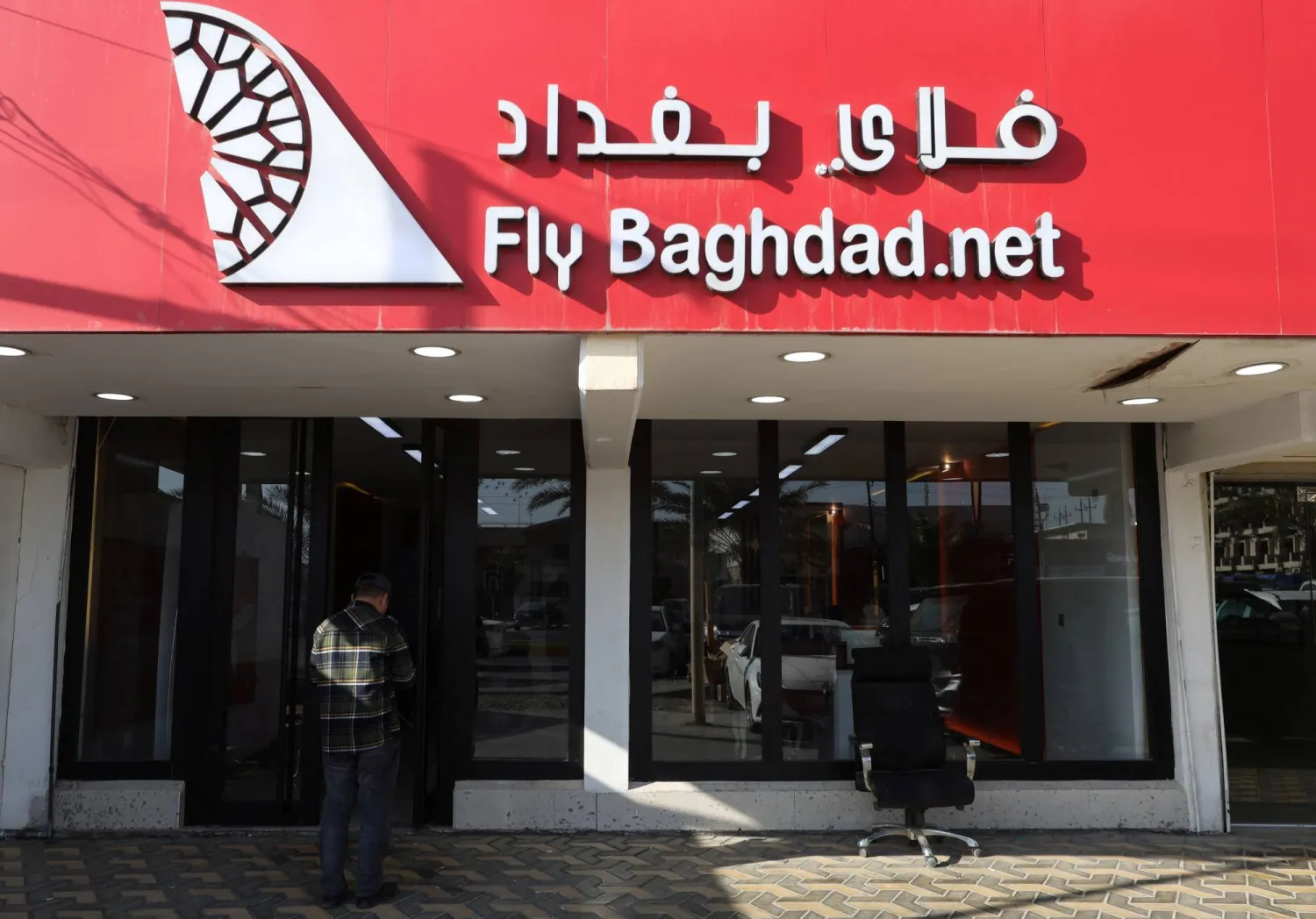
A man stands outside the office of Fly Baghdad airline, in Baghdad, Iraq January 23, 2024. REUTERS/Ahmed Saad
TT

US Lifts Sanctions on Fly Baghdad, Previously Linked to Iran's IRGC

A man stands outside the office of Fly Baghdad airline, in Baghdad, Iraq January 23, 2024. REUTERS/Ahmed Saad

The US Treasury said on Wednesday it had removed counter-terrorism sanctions from Iraq's Fly Baghdad Airlines and two aircraft that were imposed in 2024 over links to Iran's Islamic Revolutionary Guard Corps Quds Force, citing changes in the airline's behavior.

A Treasury official said that the move was not indicative of any shift in US policy towards Iran's government, the Iranian Revolutionary Guards or any organization designated as terrorist and was unrelated to US negotiations with Iran over a possible deal to end hostilities in the Gulf, Reuters reported.

The removal of Fly Baghdad Airlines Co (FBA), Iraq Express and two Boeing 737 aircraft from the Treasury's Specially Designated Nationals list was part of the Office of Foreign Assets Control's process to reconsider sanctions after behavior changes, the official said.

"FBA has demonstrated major changes to their operations such that their listing is no longer warranted," the official said.

"They have addressed sanctionable conduct."

No details were provided on the specific FBA changes that warranted the lifting of sanctions, and the official said that sanctions could be reimposed at any time.


UNRWA's Gaza Employees March Against Job Cuts

An amputee walks with crutches next to a girl carrying a pot with a meal from a charity kitchen past rubble in the Jabalia camp for Palestinian refugees in the northern Gaza Strip on October 24, 2026. (AFP)
TT

UNRWA's Gaza Employees March Against Job Cuts

An amputee walks with crutches next to a girl carrying a pot with a meal from a charity kitchen past rubble in the Jabalia camp for Palestinian refugees in the northern Gaza Strip on October 24, 2026. (AFP)

Employees of the UN agency for Palestinian refugees marched through Gaza's Nuseirat refugee camp on Monday to protest expected job cuts by the vital service provider, AFP journalists reported.

Dozens of men, women and children walked through the streets of the central Gaza camp, heading towards one of the agency's many schools in Gaza.

UNRWA, as the agency is known, is one of the Palestinian territory's largest service providers, offering healthcare and education, as well as crucial coordination for humanitarian relief since the start of the Israel-Hamas war in October 2023, making use of its thousands of staff and logistics networks.

"This march and this event are intended to make it clear that we oppose the dismissal of any employee, because dismissing employees means ending services for refugees and a decline in the quality of services," head of the staff union Mustafa al-Ghour told AFP.

Demonstrators including UNRWA beneficiaries held signs that read "No to job cuts" and "No to reducing refugee services".

"The agency has been experiencing unprecedented financial and operational difficulties for some time now and difficult decisions may be necessary in the near future," UNRWA spokesman Jonathan Fowler told AFP.

Fowler said that the matter was currently under review and that the agency could not comment in more detail for the time being.

UNRWA currently employs 10,500 people in Gaza, and 4,500 in the occupied West Bank.

In September, UNRWA's acting commissioner-general Christian Saunders had warned he would be forced to cut long-term services to refugees if his agency could not begin to bridge a $100 million shortfall in the next two months.

Israel has repeatedly accused UNRWA of providing cover for Hamas, claiming that some of its employees took part in the group's October 7, 2023 attack on Israel that sparked the war.

Legislation severing ties with the agency and banning it from operating on Israeli territory took effect in January 2025.

A series of investigations, including one led by France's former foreign minister Catherine Colonna, found some "neutrality-related issues" at UNRWA but stressed Israel had not provided conclusive evidence for its headline allegation.


Fighting Against Houthis Resumes on Bab Al-Mandab Front

Southern Giants Brigades forces clash with the Houthis on the Lahj and Bab Al-Mandab fronts (Military Media)
TT

Fighting Against Houthis Resumes on Bab Al-Mandab Front

Southern Giants Brigades forces clash with the Houthis on the Lahj and Bab Al-Mandab fronts (Military Media)

Fighting against the Houthis resumed on the Bab Al-Mandab front on Monday, coinciding with fierce clashes in Lahj Governorate and advances by the Southern Giants Brigades in Al-Mudarabah and Ras Al-Arah district.

Meanwhile, government forces deployed military reinforcements to Al-Maqatirah district in northern Lahj to regain the initiative and recapture areas seized by the Houthis in recent days, while maintaining their positions on the front lines surrounding Taiz.

Clashes resumed on the Bab Al-Mandab front early Monday morning, with the Southern Giants Brigades taking part in military operations that resulted in the recapture of several positions and advances in contested areas, according to field sources. The fighting also left Houthi fighters dead and wounded.

The renewed battles coincided with continued clashes in Al-Mudarabah and Ras Al-Arah district in western Lahj, where the Giants Brigades regained control of strategic positions, including Jabal Safan and Qarn Al-Shamayah, while fighting continued in the Al-Majza and Zurayqat Al-Sham areas on the district's outskirts.

In a related development, the Southern Giants Brigades denied reports that their forces had withdrawn from Dhubab, Kahbub and their positions along the western coast.

Aseel Al-Saqaldi, director of the forces' media center, said their units remained deployed at their positions and would not withdraw under pressure from what he described as rumors and false claims.

Al-Saqaldi added that the forces' presence in Dhubab marked the beginning of a theater of operations that he said would extend as far as Saada, reaffirming their commitment to continuing the fight against the Houthis and pressing ahead with military operations.

Regaining the Initiative

In Al-Maqatirah district in northern Lahj Governorate, government forces deployed substantial reinforcements from the Southern Giants Brigades and Nation's Shield Forces.

The reinforcements took over the headquarters of the Tur Al-Bahah Military Axis Command and immediately joined the front lines against the Houthis, in a move aimed at recapturing areas seized by the group in recent days.

Field sources said government forces and the Popular Resistance had thwarted Houthi attempts to advance and seize additional territory, forcing the attackers to retreat after inflicting casualties and equipment losses.

The arrival of reinforcements is part of broader military efforts to regain the initiative in the district and prevent the Houthis from expanding their control over positions and high ground that have witnessed clashes in recent weeks.

Taiz: Government Forces Hold Their Ground

In Taiz Governorate, government forces and the Popular Resistance continued to repel Houthi attacks on the fronts surrounding the city, with fighting persisting along the southeastern axis.

Operations focused on thwarting Houthi movements and targeting the group's reinforcements and military positions.

The Taiz Military Axis Command reported that government forces, supported by military aircraft, carried out strikes against Houthi positions and concentrations in the Bardad area of Wadi Anqab on Jabal Sabr, destroying a military vehicle.

Other strikes targeted positions in Hisn Al-Mukhaaf and areas of Al-Misrakh district in the southern part of the governorate.

The command added that air defenses shot down two Houthi drones on the Sabr front as fighting continued across several sectors, with government forces maintaining their positions and preventing the group from making further breakthroughs.

Separately, local sources reported that Houthi fighters raided and forcibly seized the homes of government, political and community figures in Al-Shamayatayn district, south of Taiz.

According to the sources, the properties included the home of Water and Environment Minister Tawfiq Al-Sharjabi in the village of Sharjab, the home of former Baath Party leader Qasim Sallam, and the home of Brigadier General Abdulwahab Al-Sharjabi.

The incidents come amid an expanding Houthi presence in several districts of the governorate, raising concerns about further seizures of private property and the targeting of government officials, politicians and community figures.

Air Support and Military Operations

On the broader military front, the Yemeni army announced that it had carried out 1,272 targeting operations during the 24 hours preceding Sunday evening as part of Operation Fajr Yemen.

The operations targeted Houthi concentrations, reinforcements, fortifications, firing positions, vehicles and supply assets.

Colonel Majed Al-Nuzayli, spokesperson for the Yemeni Armed Forces, said the operations had weakened the group's capabilities, supported government advances and helped recapture positions in Al-Jawf Governorate.

He noted that operations were continuing on the northern fronts and in Marib and Al-Bayda, as well as on the southern and southwestern fronts.

Al-Nuzayli added that the operations had resulted in the neutralization of approximately 500 Houthi field commanders and fighters, along with the destruction or disabling of 169 vehicles, pieces of equipment and heavy weapons.

He reaffirmed that military operations would continue, with the necessary precautions taken to protect civilians and civilian objects.


Arab League Secretary-General: Palestinian Cause True Test of International Order’s Credibility

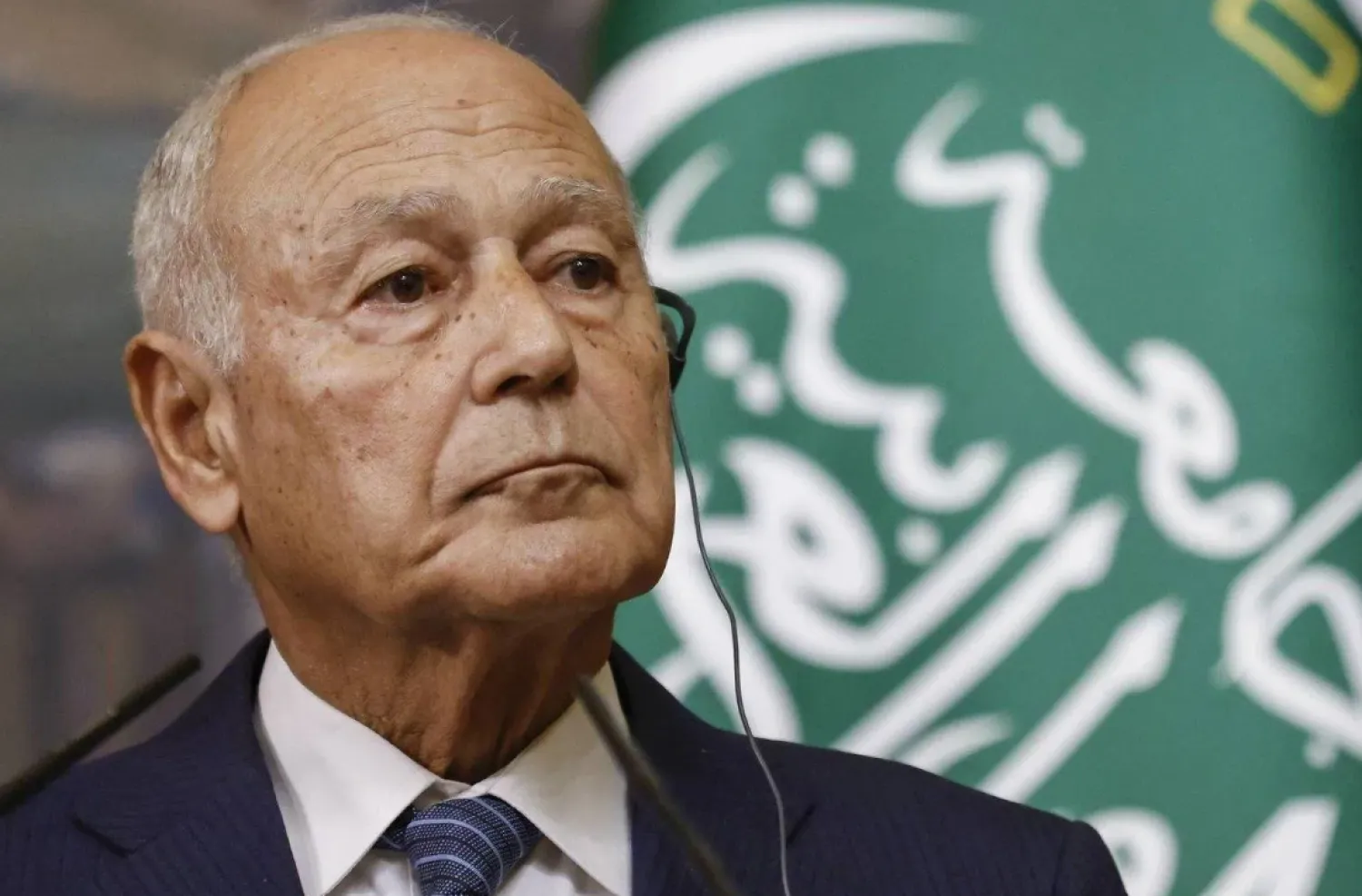
Secretary-General of the Arab League Ahmed Aboul Gheit. (Asharq Al-Awsat)
TT

Arab League Secretary-General: Palestinian Cause True Test of International Order’s Credibility

Secretary-General of the Arab League Ahmed Aboul Gheit. (Asharq Al-Awsat)

Arab League Secretary-General Nabil Fahmy affirmed that the Palestinian cause is a true test of the credibility of the international order, in light of persistent double standards and Israeli violations of international law, stressing the need to end the occupation and establish an independent Palestinian state.

He also underscored the importance of preserving the unity, sovereignty, and territorial integrity of Arab states and supporting their national institutions as a fundamental pillar of security and stability, SPA reported.

Fahmy made the remarks during an open dialogue at the third edition of the Cairo Forum, where he reviewed the main challenges facing the Arab region, explored ways to strengthen security and stability, and discussed the role of joint Arab action in responding to regional and global shifts.

He explained that Arab security extends beyond military considerations to include political, economic, social, and developmental dimensions. He highlighted the crises and instability affecting Syria, Sudan, Lebanon, Yemen, and the Arab Gulf region, noting that addressing them requires looking beyond their immediate manifestations to tackle their root causes, foremost among them weak institutions and the accumulation of political, economic, and social challenges.

Fahmy stressed the need to move from merely managing the repercussions of crises to adopting proactive approaches that prevent their recurrence. He also emphasized strengthening cooperation and integration among Arab states, establishing balanced relations with neighboring countries based on respect for sovereignty and non-interference in internal affairs, and engaging with the wider world on the basis of parity and shared interests.