


US Unexpectedly Loses Jobs in Blow to Trump Ahead of Midterms

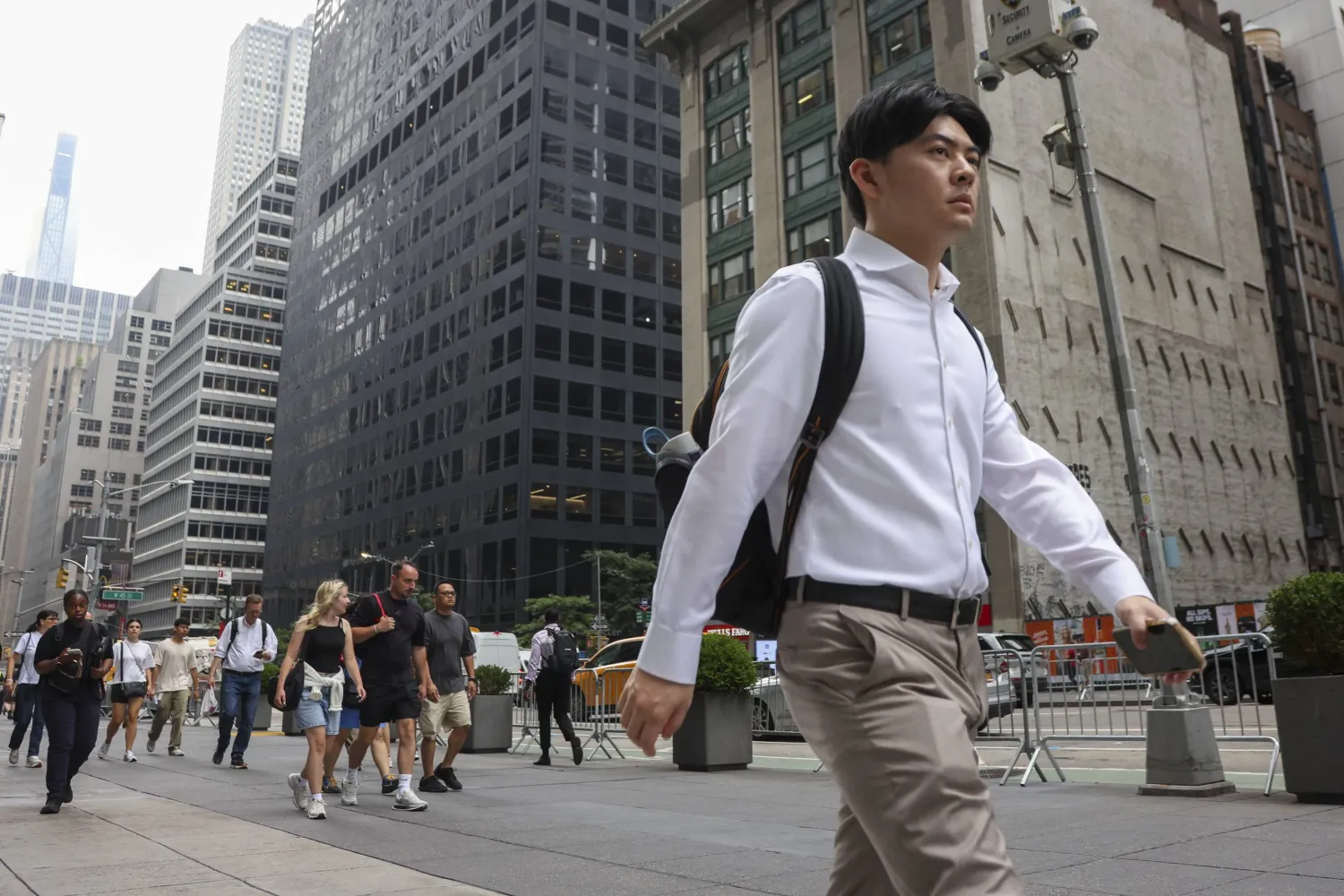
People walk on the sidewalk in midtown Manhattan in New York, New York, US, 06 August 2026. (EPA)
TT

US Unexpectedly Loses Jobs in Blow to Trump Ahead of Midterms

People walk on the sidewalk in midtown Manhattan in New York, New York, US, 06 August 2026. (EPA)

The United States unexpectedly lost thousands of jobs in July, government data showed Friday, a blow to US President Donald Trump's claims of leading an economic revival as his Republican Party gears up for crucial midterm elections.

The world's largest economy lost 23,000 jobs in July, data published by the US Bureau of Labor Statistics showed, signaling potential labor market weakness after months of steady growth.

The unemployment rate ticked down to 4.1 percent, likely a result of falling labor supply as the US economy grapples with an aging population and lower net migration.

Since taking office for his second term, Trump has unleashed a spate of policies aimed at reviving domestic manufacturing and curbing surging inflation.

Republicans face a stiff test in November's midterm elections, with the state of the economy a key issue for Democrats who are seeking to wrest back control of both houses of Congress.

Friday's data will also pose a question to the US Federal Reserve, which has been signaling it was preparing for a rate hike later this year.

- Implications for Fed -

The bulk of the loss in July was attributed to the local government education sector, which sees thousands of teachers drop off payrolls in the summer months.

Still, analysts had expected overall job growth. Economists polled by Dow Jones Newswires and the Wall Street Journal anticipated 83,000 new jobs would be added in July.

The BLS also revised down job growth in the previous two months by 103,000, showing the labor market to be less robust than previously reported.

Based on the new figures, job growth hit a peak in March before declining in the next three months and entering negative territory in July.

White House economic advisor Kevin Hassett dismissed Friday's data as being based on a survey that is "very, very noisy."

The unemployment rate has remained relatively steady through choppiness in the labor market, due to the overall drop in labor supply.

Friday's figures showed the labor force participation rate -- a key metric -- had dropped to its lowest level since the height of pandemic-related closures.

Policymakers at the US Federal Reserve watch the labor market closely, as their dual mandate requires them to deliver maximum employment while ensuring inflation remains at a long-term target of two percent.

The Fed has missed that target for five years, as inflation has battered US households since the pandemic.

Last month, the central bank held interest rates steady, but three regional Fed presidents dissented in favor of a rate hike.

"This morning's report is a game changer in the sense that all of the recent focus has been on inflation and this report highlights the risks that are embedded in the labor market as well," said Chris Zaccarelli of Northlight Asset Management.

Kathy Bostjancic, chief economist at Nationwide, said the Fed would not be swayed by a single job report from its inflation focus.

"The soft labor market report should lower market expectations for a Fed rate hike in the coming months, but the inflation reports will be the key focus for Fed officials," she said.

- Wages lag inflation -

Sector-wise, retail trade lost 19,000 jobs, with employment declining in warehouse retailers -- firms like Costco, Sam's Club and others that offer discounts for wholesale quantities of household goods -- and general merchandise stores.

Employment in the financial activities sector continued its downward trend, having lost 121,000 jobs from its May 2025 peak.

The health care sector has buoyed the US labor market over the last year, with more Americans aging and requiring medical assistance.

In July, the sector added 22,000 jobs, but it was a slower pace than its average gain over the last year.

Average hourly earnings increased by 3.2 percent year-on-year, lagging inflation and therefore leaving workers with less income in real terms.

Diane Swonk, chief economist at KPMG, said persistent inflation and a potentially weak labor market could put the Fed in a tough spot when it meets to set rates next month.

"The worst combination for the Fed is if inflation remains sticky while the labor market weakens," she said.

"That would not take rate hikes off the table; it would make them more painful."


'AlUla Peregrina': From Fields to Global Markets

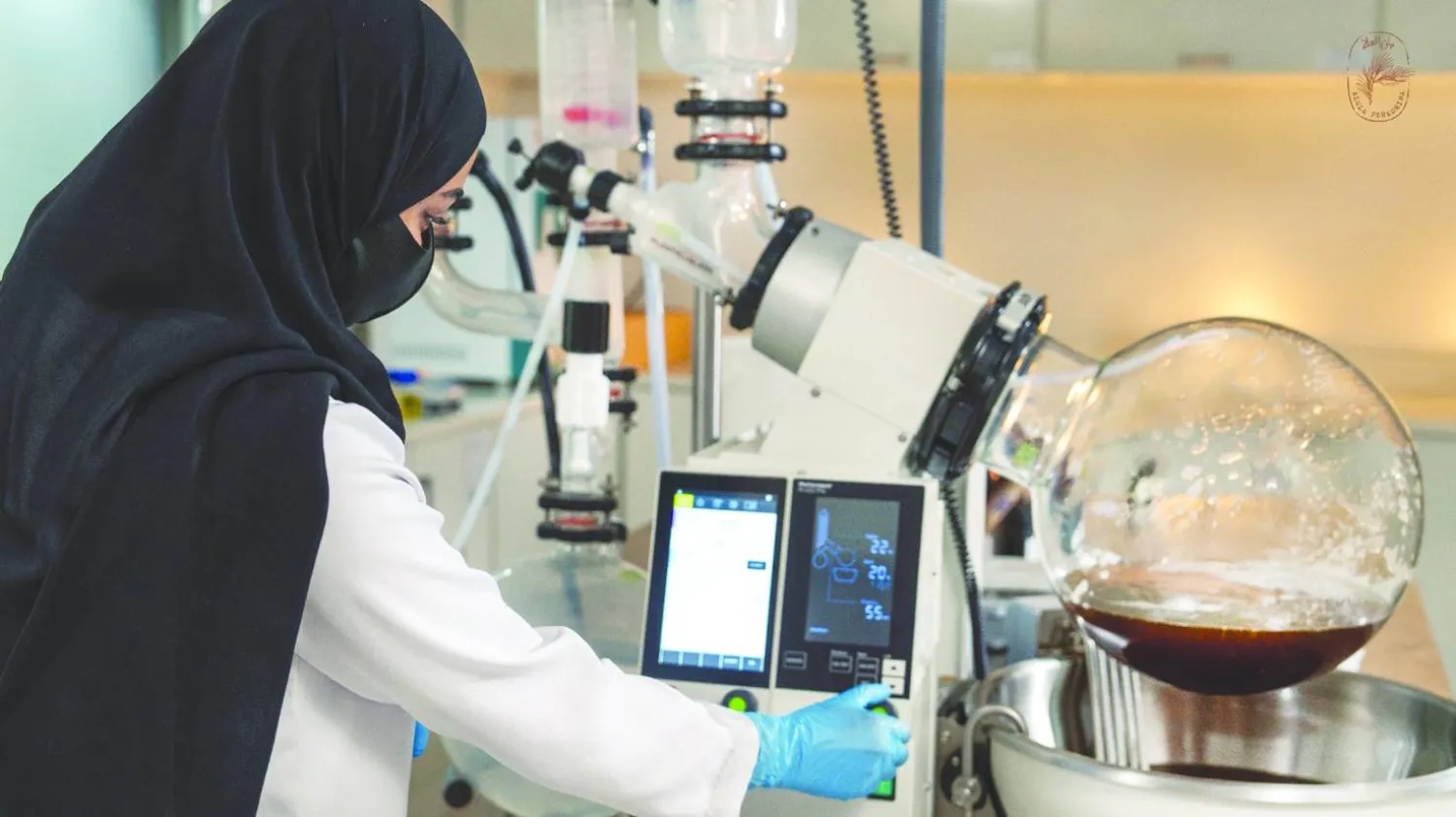
A Saudi woman works on products derived from the Peregrina tree in AlUla.
TT

'AlUla Peregrina': From Fields to Global Markets

A Saudi woman works on products derived from the Peregrina tree in AlUla.

In AlUla, where the Peregrina tree has been part of the local environment for generations, the tree is taking a new path from fields to laboratories and global markets. Rather than simply marketing raw materials, AlUla Peregrina is seeking to develop oils, extracts, and natural ingredients for applications in beauty and personal care, adding value to a local resource before it reaches overseas markets.

AlUla Peregrina was established in 2021 by the Royal Commission for AlUla, with the aim of developing economic uses for the tree and its extracts. The company is now expanding its applications in skincare, haircare, and wellness products, while also developing its presence in international markets.

The strategy comes as efforts to increase the added value of local resources and expand non-oil exports gain importance. The company is betting that developing and manufacturing ingredients within Saudi Arabia can generate greater economic returns than exporting raw materials, while creating opportunities for products that carry Saudi knowledge and technology into international markets.

In an exclusive interview with Asharq Al-Awsat, Eng. Abobakar Alanazi, Chairman of the Board of AlUla Peregrina, said the company's ambition is to establish AlUla Peregrina as a leading Saudi platform for high-quality active natural ingredients, expanding from AlUla into regional and global markets, with a focus on skincare, haircare, and personal care.

Added Value

According to Alanazi, the company is gradually building a presence in international markets, benefiting from growing demand for natural ingredients with traceable origins and scientific evidence, alongside increasing interest in responsible supply chains.

He said the goal extends beyond exporting a Saudi product to developing ingredients and products based on local natural resources and combining scientific research, development, and manufacturing within Saudi Arabia, thereby increasing the product's added value before it reaches overseas markets.

Development efforts focus on the Arabian Peregrina tree, Moringa peregrina, and its natural compounds, including ceramides, plant exosomes, bioactive peptides, and antioxidants. Alanazi said the company has developed a range of oils and extracts that can be used in various skincare applications.

The development of these products is based on scientific research, laboratory testing, and clinical evaluations to verify their effectiveness before moving into commercial applications. Alanazi said these efforts have resulted in four registered patents, reflecting part of the company's research and development work.

Hospitality Sector

In the hospitality sector, Alanazi said the company is developing customized formulations and solutions for hotels and spas, inspired by Arab traditions of personal care but presented in contemporary formulations. These solutions include formulations and fragrances that can be tailored to reflect the identity of each establishment rather than offering a standardized product.

He explained that product development begins by identifying the needs of the market and partners, followed by scientific and technical evaluation before arriving at the final formulation.

On sustainability, he said responsible practices form part of the company's business model and supply chain, from cultivation and harvesting in cooperation with local farmers to the processing and development of ingredients in AlUla. The company is focusing on tracing raw materials and identifying their sources and journey throughout the production process, alongside responsible sourcing practices.

He noted that the supply chain has undergone verification by the Union for Ethical BioTrade (UEBT) in relation to responsible sourcing, in line with relevant international standards. He said developing processing and production operations within Saudi Arabia contributes to increasing local added value and supports the emergence of an integrated economic value chain around the activity in the region.

The company is also working to strengthen the participation of local farmers and suppliers, transfer knowledge, and develop the capabilities needed to support the growth of the natural ingredients sector in Saudi Arabia.

Economic Diversification

Alanazi said AlUla Peregrina's business model aligns with several objectives of Saudi Vision 2030, particularly economic diversification, increasing local content, and developing value-added industries, while also benefiting from growth in the tourism and hospitality sectors.

“We are transforming a natural resource from AlUla into ingredients and products that are developed and manufactured locally, creating economic value beyond the sale of raw materials,” he said.

He added that the growth of tourism and hospitality in Saudi Arabia is creating opportunities to develop Saudi solutions for hotels, resorts, and the wellness sector that are connected to the identity of the place and the visitor experience.

He pointed to an opportunity to develop a specialized sector for natural ingredients and their applications in personal care and beauty that could expand beyond the domestic market, bringing together natural resources, scientific research, manufacturing, and services linked to tourism and hospitality.

International Expansion

The Chairman of the Board said exports are a key pillar of the company's growth strategy, amid growing global demand for natural ingredients with traceable origins and scientific evidence supporting their use.

“What distinguishes our model is that the added value is created within Saudi Arabia, starting with the natural resource and research and development, through processing and manufacturing, and ultimately to the finished product or ingredient tailored for overseas markets,” he said.

He explained that the company is not simply seeking to export raw materials, but to develop specialized, higher-value products and ingredients.

Alanazi revealed that the company is working to expand its commercial relationships and presence in international markets through trade fairs and specialized platforms, as well as by building partnerships with global companies and brands. He said international expansion could support the growth of Saudi non-oil exports while opening new markets for products and ingredients developed locally.

The long-term goal, he added, is for products developed in AlUla to reach global markets under the “Made in Saudi” brand, reflecting not only their country of origin but also the development, knowledge, and manufacturing added to the products locally.


Crown Prince Launches CEER's Flagship Vehicles

Saudi Crown Prince Mohammed bin Salman (SPA)
TT

Crown Prince Launches CEER's Flagship Vehicles

Saudi Crown Prince Mohammed bin Salman (SPA)

Prince Mohammed bin Salman bin Abdulaziz Al Saud, Crown Prince, Prime Minister and Chairman of the Board of Directors of the Public Investment Fund (PIF), has launched EXOBOT, the flagship electric vehicles from CEER, Saudi Arabia's national automotive company.

This national milestone reflects Saudi Arabia's strategic direction toward developing an advanced industrial sector aligned with the objectives of Saudi Vision 2030 and further strengthening Saudi Arabia’s position in the global automotive industry, SPA reported.

Commenting on this occasion, the Crown Prince said: "The launch of CEER's first vehicles represents another step forward in Saudi Arabia's progression to build a sustainable and prosperous industrial ecosystem. It further enables the automotive sector as a key driver of economic growth, through attracting investments, empowering national talent, and expanding the private sector's role to further position Saudi Arabia to become a leading regional and global hub for this industry."

The EXOBOT sedan and SUV vehicles represent part of a planned portfolio of seven models that will be launched over the next five years, including midsize and compact vehicles with various propulsion options to serve different customer needs.

These vehicles will be manufactured at CEER Manufacturing Complex (CMC), the largest automotive production facility in the Middle East and one of the most technologically advanced in the world.

Additionally, the EXOBOT sedan and SUV feature a distinctive design inspired by Saudi Arabia's landscape, rooted in its culture, and reflective of its vision. Designed and engineered locally, the vehicles have been developed according to the highest global standards, further strengthening Saudi Arabia's position as a rising force in the global automotive industry.

By 2034, CEER is projected to contribute over SAR30 billion ($8 billion) to Saudi Arabia's GDP, over SAR80 billion ($21 billion) to trade balance improvement, and create quality direct and indirect jobs.

The announcement aligns with PIF's efforts to develop an integrated and competitive local automotive ecosystem, as part of PIF's mandate as a key driver of Saudi Arabia's economic diversification. PIF launched CEER in 2022 as the first Saudi vehicle brand to support the development of the national industrial ecosystem, attract investments, create opportunities for the private sector, and increase Saudi GDP.


Oil Prices Slide on Hopes of Diplomacy in Iran War

Oil tankers in Basra port (Reuters)
TT

Oil Prices Slide on Hopes of Diplomacy in Iran War

Oil tankers in Basra port (Reuters)

Oil prices slid to their lowest in more than a week on Monday as investors hoped for diplomatic progress on the Iran war due to this week's UN meeting.

Brent crude futures and US West Texas Intermediate crude touched their lowest since September 10 earlier on Monday. The Brent contract for November was at $102.09 a barrel at 0655 GMT, down $1.78, or 1.71%, after settling 0.91% lower on Friday, Reuters said.

The WTI October contract that is expiring on Tuesday fell $1.97, or 1.96%, to $98.33 a barrel following a ‌1.58% drop in the ‌previous session.

"It seems that a degree of risk premium is ‌being ⁠removed from oil prices ⁠on hopes that a diplomatic path to de-escalate the US-Iran war may arrive this week," said Tim Waterer, chief market analyst at KCM Trade.

"Whether that hope proves to be warranted or not is another question. Time will tell."

WTI broke a key psychological support at $100 a barrel while some investors may have rolled over their positions in the October contract a day ahead of expiry to November, a Singapore-based broker said.

Iran and the US exchanged new threats on Sunday, although President Donald Trump said ⁠he would be open to meeting Iranian President Masoud Pezeshkian, who is ‌expected to be in New York this week for ‌the United Nations General Assembly.

Iran has conveyed its conditions to mediators for re-engaging in negotiations aimed at ‌ending the war with the US, Al Jazeera cited Iran's security chief, Mohsen Rezaei, as ‌saying in an interview on Saturday.

On Monday, a spokesman ‌for the Revolutionary Guards, Hossein Mohebbi, said Iran would use new weapons and target locations not previously attacked if the US launched a ⁠new offensive against it, ⁠according to the Fars news agency.

China has asked Iran to help rein in the Houthis after an appeal to Beijing following the attacks, according to three Iranian sources familiar with the matter.
