


Israeli Strike on Lebanese Army Raises Tensions in South

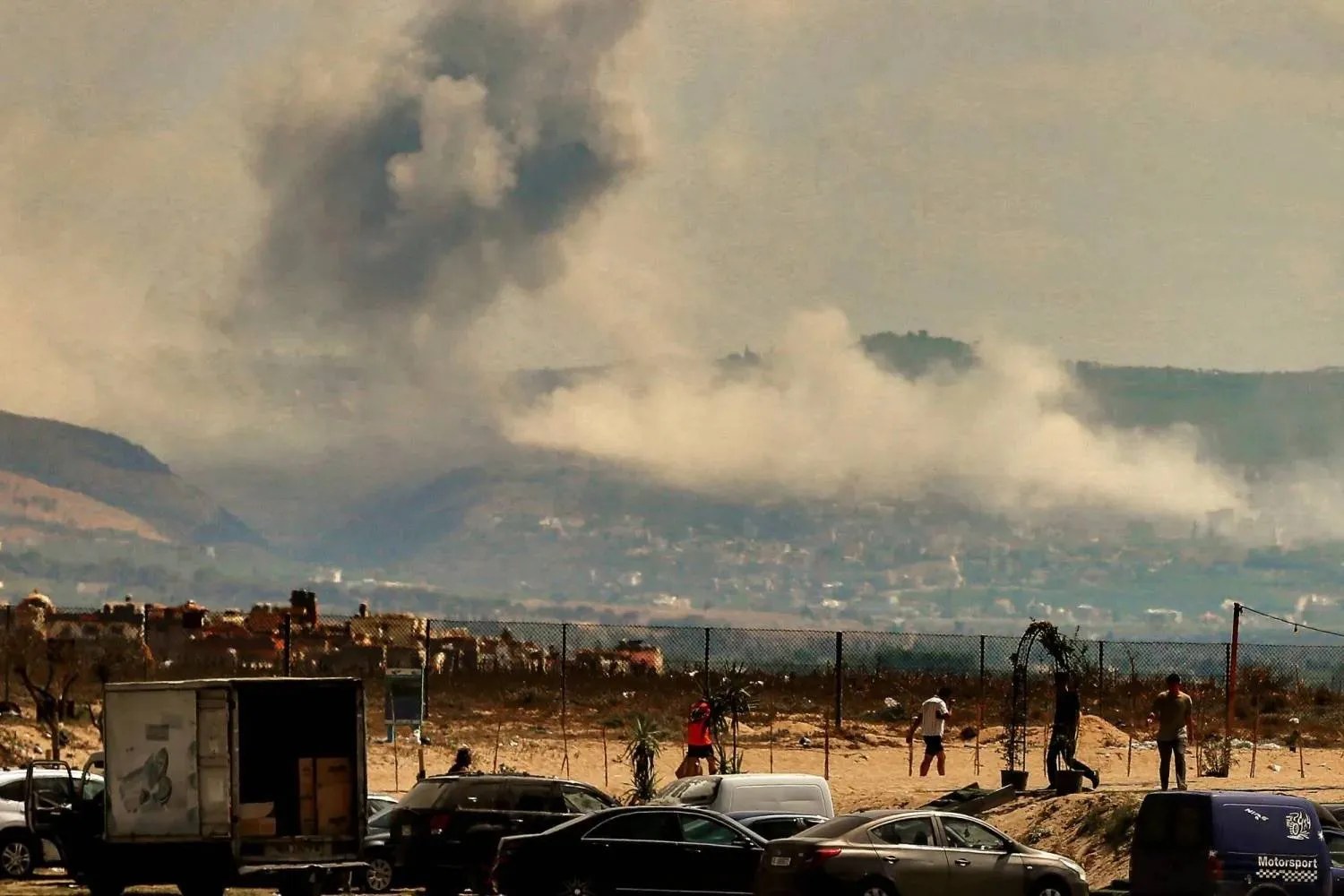
Smoke rises from the town of Mansouri in South Lebanon following an Israeli attack. (DPA) 
TT

Israeli Strike on Lebanese Army Raises Tensions in South

Smoke rises from the town of Mansouri in South Lebanon following an Israeli attack. (DPA) 

An Israeli strike on a Lebanese army bulldozer in Mansouri, wounding a soldier, heightened tensions in South Lebanon amid explosions and shelling that hit towns and water facilities.

The escalation coincided with fallout from the seventh round of Rome talks, which ended without agreement on expanding pilot zones. Khiam and Bint Jbeil remain outside the plan after Israel rejected Lebanon’s proposal for the two areas, bringing the issue of an Israeli withdrawal from both towns back to the fore.

The Lebanese army announced that a soldier sustained minor injuries in an “Israeli enemy attack” on a military bulldozer clearing roads and rubble in Mansouri, in the Tyre district.

Explosions also rocked Qounine and Wadi al-Hujair, while artillery fire struck Hadatha, setting several homes ablaze, and Wadi Zibqin. A drone raid hit Mayfadoun. Mansouri also came under artillery fire and four stun grenades before an Israeli drone later struck the town.

Water infrastructure was also affected. Israeli forces set fire to the Wadi al-Slouqi water station near the Shaqra junction. The South Lebanon Water Establishment reported that the head of its Bint Jbeil department and several workers came under Israeli fire in Aita al-Jabal while repairing faults to restore water supplies. It condemned the incident as “an attack on civilians and residents’ right to access water” and vowed to continue its work despite the risks.

Artillery shelling and machine-gun fire were recorded in Mais al-Jabal, while Israeli vehicles briefly advanced on the outskirts of Hadatha and Aita al-Jabal before withdrawing.

Strike on Lebanese Army

Retired Brig. Gen. Khalil Helou viewed the Mansouri incident as carrying significance beyond an isolated battlefield episode.

“In previous incidents, such as what happened in Zawtar, Israel claimed the Lebanese army had approached areas where there had been no coordination,” Helou told Asharq Al-Awsat. “What happened in Mansouri, however, is a message to the army.”

He placed the explosions in Wadi al-Hujair, Qounine and elsewhere within what he described as Israel’s effort to destroy homes and facilities it believes Hezbollah could use in the future.

Helou ruled out an Israeli withdrawal from Bint Jbeil or Khiam in the near term. He explained that the issue of Bint Jbeil had been raised during the first meetings in Washington but met with outright Israeli rejection because the area lies within the “yellow line.”

He added that available information suggests that the current Israeli government will make no concessions within that line before elections.

Helou attributed the stance to military, security and electoral considerations, arguing that any concession could be portrayed domestically as weakness, particularly following the recent deaths of Israelis. Bint Jbeil and Khiam also carry particular military symbolism for Israel after heavy Israeli losses there during the 2006 war and recent fighting.

Washington, he added, is exerting considerable pressure on Israel to make concessions and strongly backed the Lebanese delegation during the Rome talks. But US leverage becomes limited when Israel invokes security concerns, “whether for Trump or anyone else.”

Israeli Restrictions

Retired Brig. Gen. Bassam Yassin linked the Mansouri strike to Israel’s treatment of the entire territory under its control as a military zone off-limits to Lebanese troops and civilians, an approach he believes also explains its refusal to withdraw from Khiam and Bint Jbeil.

“After the Majdal Zoun explosion, Israel threatened Mansouri and demanded that the army and civilians evacuate,” Yassin told Asharq Al-Awsat. “When the army tried to return, the area was treated as a military zone where approaching was prohibited. Today, when a bulldozer moved in to work, it was struck.”

Yassin argued that Israel has no intention of leaving Khiam or Bint Jbeil at this stage. In Khiam, he pointed to a military base established near the former detention center, while an Israeli withdrawal from Bint Jbeil would be highly unlikely before a final settlement, “if there is a withdrawal at all.”

He further explained that Israel’s interest extends beyond Bint Jbeil itself to an area stretching from the elevated town of Beit Yahoun toward Bint Jbeil, including Qounine, Hadatha and surrounding localities. Israel, he argued, wants to retain positions that protect its forces farther behind.

Yassin concluded that Israel appears unwilling even to leave the yellow zone. Changing that reality would require “a comprehensive settlement and significant US pressure”; otherwise, the occupation could become a long-term reality, he warned.

Lebanon Documents Violations

Separately, President Joseph Aoun received from Deputy Prime Minister Tarek Mitri a 232-page report by the National Commission for International Humanitarian Law documenting serious Israeli violations during the latest war.

The report contains documents and photographs covering attacks on bridges, crossings, residential apartments, medical facilities, paramedics, civil defense personnel, the Lebanese Red Cross, journalists and other civilian targets. It also addresses the forced displacement of civilians and damage to hospitals, cultural property and other sites.

Aoun and Mitri also discussed an international initiative to renew commitment to international humanitarian law and a summit scheduled for December in Amman, organized by the International Committee of the Red Cross under the auspices of several Arab and foreign heads of state.



Syrian Diplomacy Returns to Libya after 14-Year Hiatus

Dbeibeh, prime minister of the Government of National Unity, meets Syrian Foreign Minister and Expatriates Asaad al-Shaibani on Sunday. (Dbeibeh’s Office) 
TT

Syrian Diplomacy Returns to Libya after 14-Year Hiatus

Dbeibeh, prime minister of the Government of National Unity, meets Syrian Foreign Minister and Expatriates Asaad al-Shaibani on Sunday. (Dbeibeh’s Office) 

Syrian diplomacy has ended an absence of nearly 14 years from Libya following talks held Sunday in Tripoli by Foreign Minister and Expatriates Asaad al-Shaibani aimed at strengthening bilateral relations and expanding cooperation.

Al-Shaibani reopened Syria’s embassy in the Libyan capital during the visit and met several officials.

The Syrian Embassy in Tripoli closed in 2012, months after the fall of late Libyan leader Muammar Gaddafi’s regime in August 2011, after Libya’s then-Transitional National Council recognized the Syrian revolution. Relations remained severed throughout the rule of ousted Syrian President Bashar al-Assad.

The new Syrian administration, led by President Ahmed al-Sharaa, has sought to reopen channels with Libya, with Syrian officials visiting Tripoli to explore bilateral ties and cooperation in various fields — a move observers see as an attempt to forge “new relations that benefit both countries.”

A ‘New Phase’

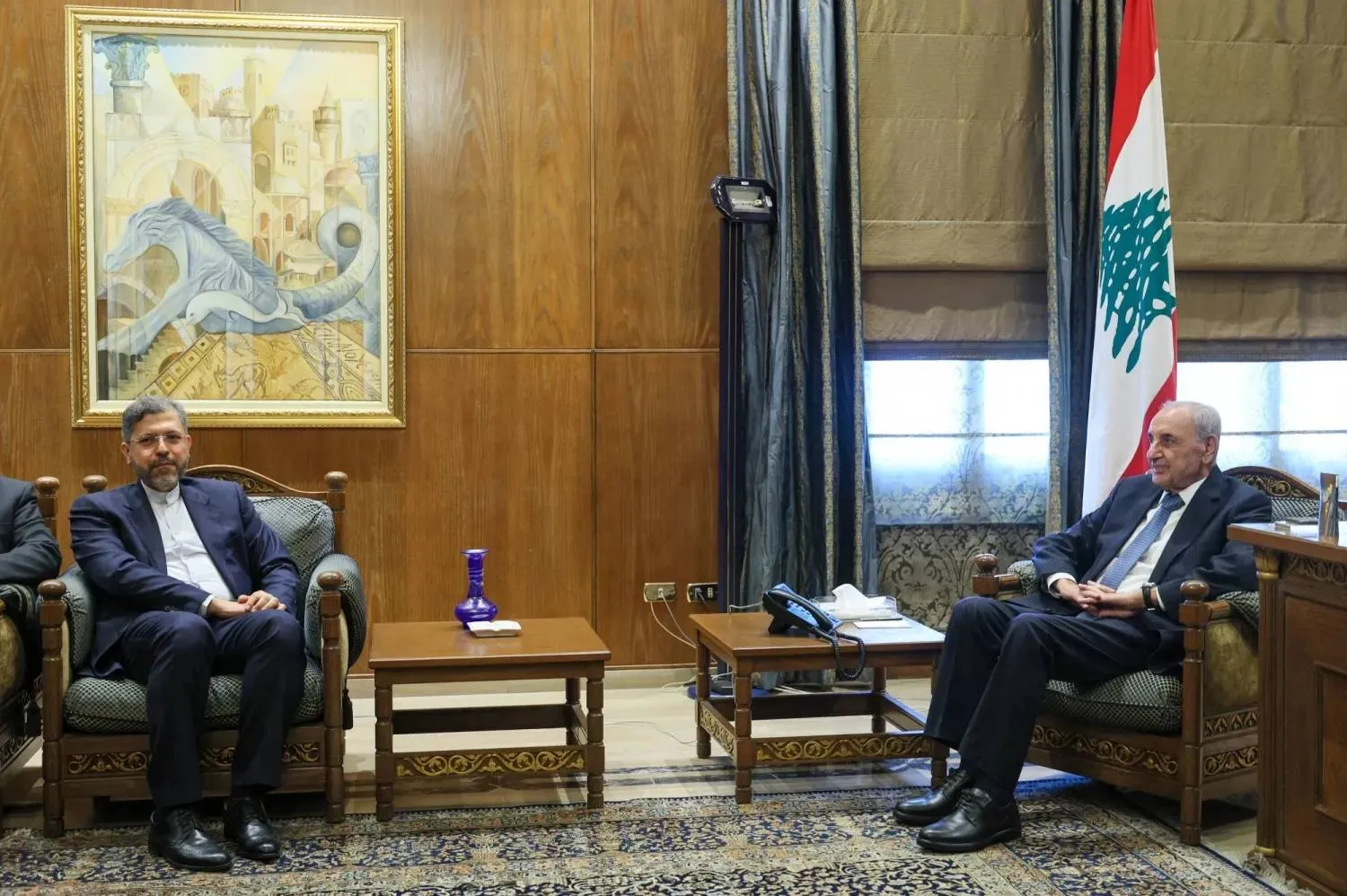
Al-Shaibani and his delegation arrived at Mitiga International Airport in Tripoli on Sunday morning and later met Abdul Hamid Dbeibeh, prime minister of the interim Government of National Unity.

Before meeting Dbeibeh, the Syrian minister held talks with Taher al-Baour, who is overseeing the affairs of the GNU’s Foreign Ministry and received him at the airport.

Tripoli’s Ministry of Foreign Affairs and International Cooperation said the talks addressed issues of mutual interest, ways to advance Libyan-Syrian relations and strengthen coordination and consultations “in a manner that serves the common interests of the two brotherly peoples.”

The two sides also discussed procedures for reopening the Syrian Embassy in Tripoli to strengthen diplomatic communication, facilitate consular services and develop bilateral cooperation.

Dbeibeh’s talks with al-Shaibani focused on “reactivating frameworks for Libyan-Syrian cooperation, raising the level of diplomatic representation and revitalizing the Joint Higher Committee,” as well as economic, investment and trade cooperation and outstanding financial issues between institutions in the two countries.

According to Dbeibeh’s office, they also discussed security cooperation and counterterrorism, the situation of the two countries’ communities, consular services, prisoners and detainees, refugees and displaced people, as well as reopening the Syrian Consulate in Benghazi.

Dbeibeh stressed the importance of “opening a new phase of relations” based on shared interests and practical cooperation, while resolving outstanding issues in a way that serves citizens of both countries.

Energy and Investment

The Syrian Foreign Ministry said al-Shaibani also met Libyan Oil and Gas Minister Khalifa Abdulsadek and Ali Mahmoud Hassan Mohamed, chairman and CEO of the Libyan Investment Authority.

The talks covered bilateral cooperation in energy and investment, expanding partnerships and exchanging expertise in sectors of mutual interest to strengthen economic ties.

Syrian-Libyan relations have seen notable progress recently. In August 2025, a Syrian technical and diplomatic delegation raised the Syrian flag over the embassy building in Tripoli in preparation for its reopening.

Earlier this month, al-Shaibani met Libya’s chargé d’affaires in Damascus, Walid Hassan Ammar, to discuss strengthening bilateral relations and exchange views on issues of common interest.

Al-Sharaa also met Dbeibeh on the sidelines of the Antalya Diplomacy Forum in April 2025, when they agreed to reactivate the Libyan-Syrian Joint Higher Committee.

A Step With ‘Practical Dimensions’

The Syrian and Libyan foreign ministries said al-Shaibani’s visit reflected a shared commitment to strengthening the countries’ historic ties and expanding bilateral cooperation and coordination.

Tripoli’s Foreign Ministry said al-Baour and al-Shaibani also discussed completing procedures to reactivate the Joint Higher Committee and signing the agreement governing its work, opening broader prospects for economic, development and other forms of cooperation.

Turkish international relations researcher Muhannad Hafizoglu said the mutual opening between Tripoli and Damascus “reflects both countries’ efforts to emerge from their crises by drawing up a different map of foreign relations.”

“Libya sees Damascus as a gateway for expanding its regional partnerships, while Syria seeks to reach deeper into North Africa through the Libyan gateway,” Hafeziglu told Asharq Al-Awsat.

He noted that the diplomatic move had “practical dimensions that go beyond protocol,” particularly in addressing outstanding issues related to the Syrian presence in Libya, including refugees, military personnel and administrative arrangements.

He argued that both sides aim to build “a partnership based on mutual benefits and avoid the mistakes of the past through joint coordination.”

Missing Persons and Detainees

In mid-August, Libya received a delegation headed by Syrian chargé d’affaires Samir al-Shalabi to discuss obstacles to developing economic relations, including difficulties in issuing visas to Syrians and some customs procedures affecting Libyan exports to Syria.

Tripoli authorities continue to hold a number of Syrians who were transferred by Türkiye to fight in Libya, while Russian forces remain deployed in areas controlled by the General Command of the Libyan National Army under the banner of the “Africa Corps.”

Libyan rights activist Tarik Lamloum stressed the importance of Shaibani’s visit to Libya and urged that the issue of missing and detained Syrians be a priority. He called for lists of Syrians held in prisons and other detention facilities to help determine their fate, including whether they remain detained or went missing during sea journeys.


Syrian Authorities Say Killed Assad-Era Officer After Clash

A member of Syria's internal security forces in Tartus city. (SANA)
TT

Syrian Authorities Say Killed Assad-Era Officer After Clash

A member of Syria's internal security forces in Tartus city. (SANA)

Syrian security forces said on Sunday that they killed an army commander who served under ousted ruler Bashar al-Assad, after he opened fire on them as they tried to arrest him.

In a statement, the forces accused Firas Abdul Karim Hammoud of having taken part in anti-government insurrections that killed security personnel.

Since Assad's fall in December 2024, Syria's new authorities have arrested dozens of security officials from his rule, and trials began in April.

The security forces said they "neutralized Firas Abdul Karim Hammoud... following an armed clash and a raid on his hideout in the town of Safita" in Tartus province in the coastal Alawite heartland.

Hammoud had previously "opened fire on security personnel during an attempt to arrest him", they added.

"During the recent operation, he again opened fire and initiated a firefight with the security forces... necessitating their response."

They said Hammoud served as a commander of the special forces in the so-called "25th Division" under Assad's rule.

They accused him of working under Assad-era general Ghiath Dalla in leading pro-Assad groups on the coast after the former president's fall.

They added that he was involved in "armed insurrection operations" against state institutions that killed security personnel.

Dalla, a former officer in the much-feared Fourth Brigade, had announced on social media last year the formation of a "military council for the liberation of Syria".

The announcement came shortly before deadly violence targeting the Alawite minority, to which Assad's family belongs, erupted on the Syrian coast in March 2025.

Authorities accused armed Assad supporters of sparking the violence by attacking security forces in an ambush.


Iraq Sentences US-Sanctioned Oil Official to Prison

The sun sets behind apartment buildings in Baghdad, Iraq, Friday, Aug. 28, 2026. (AP)
TT

Iraq Sentences US-Sanctioned Oil Official to Prison

The sun sets behind apartment buildings in Baghdad, Iraq, Friday, Aug. 28, 2026. (AP)

Iraq sentenced a US-sanctioned oil official to seven years in prison after he was arrested as part of a government-led anti-corruption campaign, the country's anti-graft body said on Sunday.

Deputy oil minister for distribution affairs Ali al-Bahadli is among dozens of officials who were detained in June during anti-graft raids that took place in several areas, mostly in Baghdad's fortified Green Zone.

The Commission of Integrity said in a statement that an anti-corruption court sentenced Bahadli to seven years in prison for "illicit gains".

The ruling requires Bahadli to return to the state an amount equivalent to more than $20 million in ill-gotten gains, in addition to paying a fine of the same amount.

The United States imposed sanctions on Bahadli in May, accusing him of fraudulently mixing Iraqi and Iranian oil as part of a scheme to help Iran avoid sanctions.

At the time, Iraq's oil ministry denied the accusations against Bahadli, who was then arrested during the anti-graft raids.

Iraqi authorities said that the raids were part of new Prime Minister Ali al-Zaidi's campaign to fight the corruption that has plagued Iraq for decades.

But several Iraqi officials told AFP that the raids were also part of al-Zaidi's campaign against funding for pro-Iran armed groups and the smuggling of Iranian oil.

Iraq has been under mounting pressure from the United States to curb Tehran's influence and rein in Iran-backed armed factions, which Washington designates as terrorist groups.

Al-Zaidi, who took office this year with the blessing of the United States, has pledged to ensure the armed factions that emerged after the US-led invasion hand over their weapons to the state.

In Iraq, corruption is especially rampant across public institutions, but convictions typically target mid-level officials or minor players and rarely those at the top of the power hierarchy.
