
Iran Issues List of Demands, Complicating Efforts to Reopen Strait

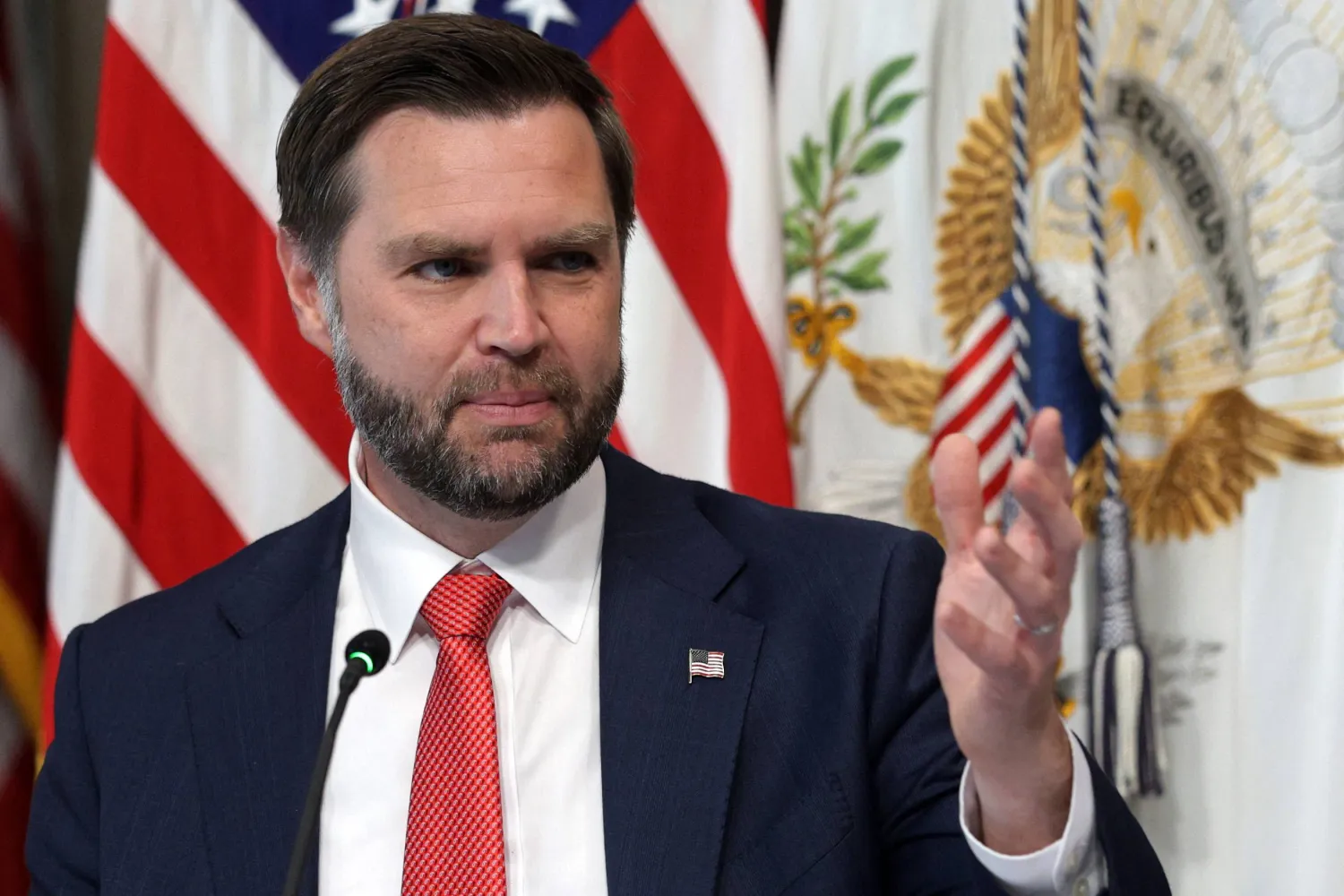
WASHINGTON, DC - AUGUST 05: US Vice President JD Vance speaks during a Congressional Roundtable on Anti-Fraud Initiatives at the Indian Treaty Room of Eisenhower Executive Office Building on August 5, 2026 in Washington, DC. Alex Wong/Getty Images/AFP
TT

Iran Issues List of Demands, Complicating Efforts to Reopen Strait

WASHINGTON, DC - AUGUST 05: US Vice President JD Vance speaks during a Congressional Roundtable on Anti-Fraud Initiatives at the Indian Treaty Room of Eisenhower Executive Office Building on August 5, 2026 in Washington, DC. Alex Wong/Getty Images/AFP

Washington: Aaron Boxerman, Yeganeh Torbati and Leily Nikounazar

A top Iranian national security official delivered a sweeping set of demands on Saturday that he said the United States must meet before the Strait of Hormuz can reopen to maritime traffic, throwing the fate of the critical trade waterway into question.

Mohammad Bagher Zolghadr, the secretary of Iran’s Supreme National Security Council, issued a statement carried by state media laying out multiple requirements for reopening the strait.

He called for the United States to lift its naval blockade and sanctions on Iran, withdraw the US military from around Iran, pay war reparations and release frozen Iranian assets, as well as end attacks on Iran’s allies in the region and threats against the country.

A previous ceasefire between Iran and the United States, agreed to in June, had said that sanctions would be fully lifted only in the event of a final deal regarding Iran’s nuclear program. And US officials have said in the past that Iran could access its frozen funds only if it committed to giving up its highly enriched uranium first.

The statement from Zolghadr came as Iran and Oman have been negotiating an agreement on the future management of the Strait of Hormuz, which sits between the two countries. Iran effectively closed the strait in retaliation for being attacked by the United States and Israel in February.

Zolghadr’s list of demands upended expectations that a deal with Oman would soon allow commerce to flow through the strait once more and ease global energy prices. They will likely put pressure on US President Donald Trump to consider Iran’s conditions if he wants to lower consumer prices for Americans, which pose a risk for Republicans ahead of November’s midterm elections.
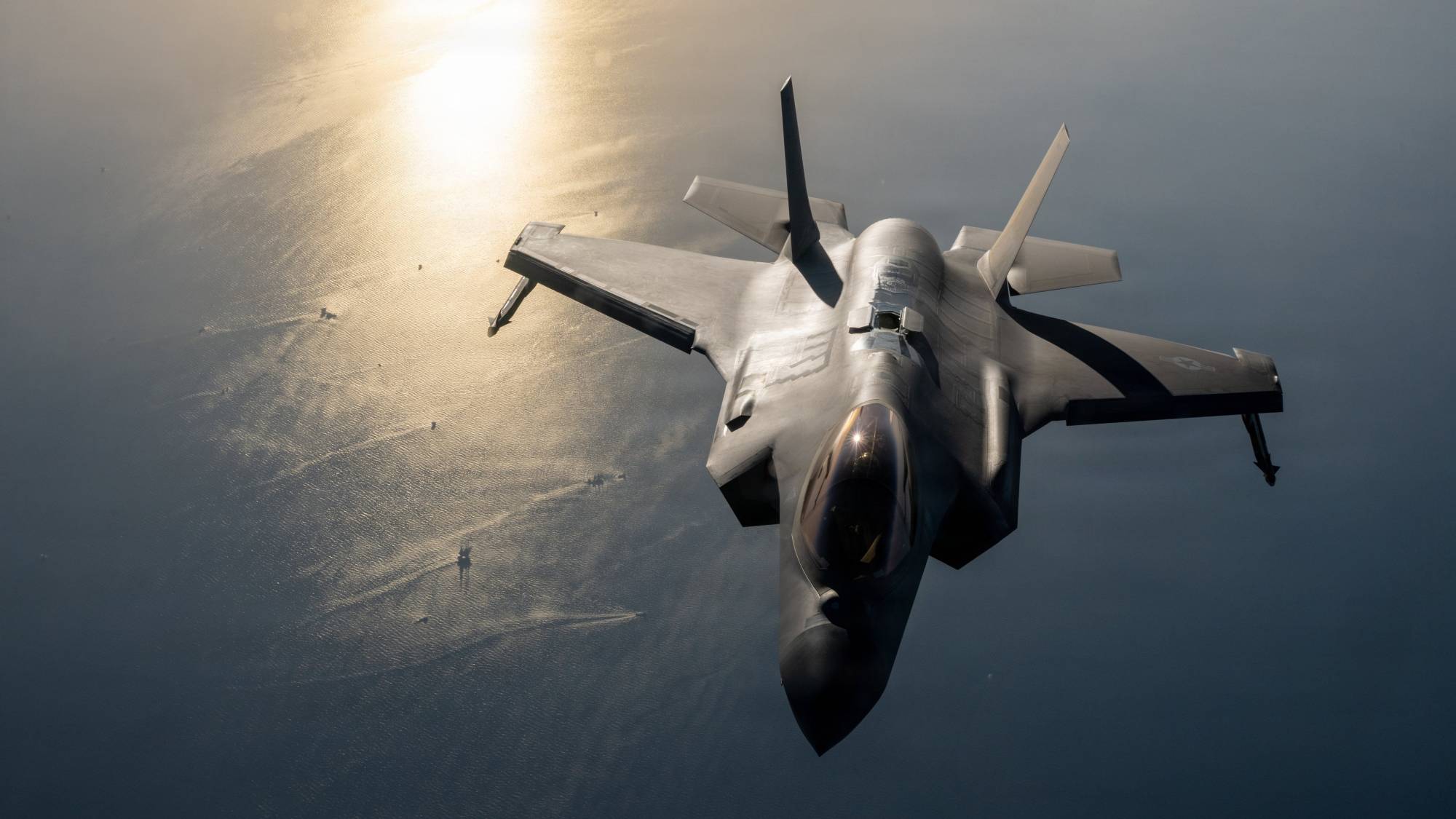
An American F-35 stealth fighter during monitoring operations in the Strait of Hormuz (CENTCOM)

The June agreement — a “memorandum of understanding” brokered by Pakistani mediators in Islamabad — called for the opening of the Strait of Hormuz and the temporary lifting of oil sanctions on Iran. Yet the deal’s language was vague, and the United States and Iran had differing interpretations of what it meant.

Disputes on Route

The United States backed a southern route for ships that skirted Oman’s coastline and avoided Iranian waters, and Iran responded by warning and striking ships that took that route. The ceasefire soon collapsed, and the United States reimposed its naval blockade of Iranian ports.

“The Americans were seeking to establish new routes through the Strait of Hormuz, and despite the warnings issued by our country, they sought to undermine Iran’s management of the strait,” Iranian Foreign Minister Abbas Araghchi said. “Therefore, any violation of the memorandum of understanding or of Iran’s management of the Strait of Hormuz is absolutely unacceptable to the Islamic Republic of Iran.”

Araghchi said that Iran and Oman were discussing a temporary route through the strait, and that the two countries’ militaries were negotiating the specifics. Officials familiar with the emerging deal have said it could formalize some of Iran’s claims of control over shipping in the waterway.

Iran’s Domestic Concerns

The comments by Iranian officials could be part of an effort to manage domestic political concerns. Araghchi and the Iranian president, Masoud Pezeshkian, have been under fire from hard-liners who oppose any deal with the United States.

Raz Zimmt, an Iran expert at the Institute for National Security Studies, an Israeli research institute, said the comments by Mohebbi and Araghchi reflected Iran’s view that its negotiations with Oman were intended “at most” to work out how the waterway will be reopened in the future.

Even if Iran and Oman agree to specifics on the strait, “it is clear that Tehran will not agree to implement them without a return to the US commitments under the memorandum, including lifting the naval blockade and resuming the process of sanctions relief,” Zimmt wrote on social media.
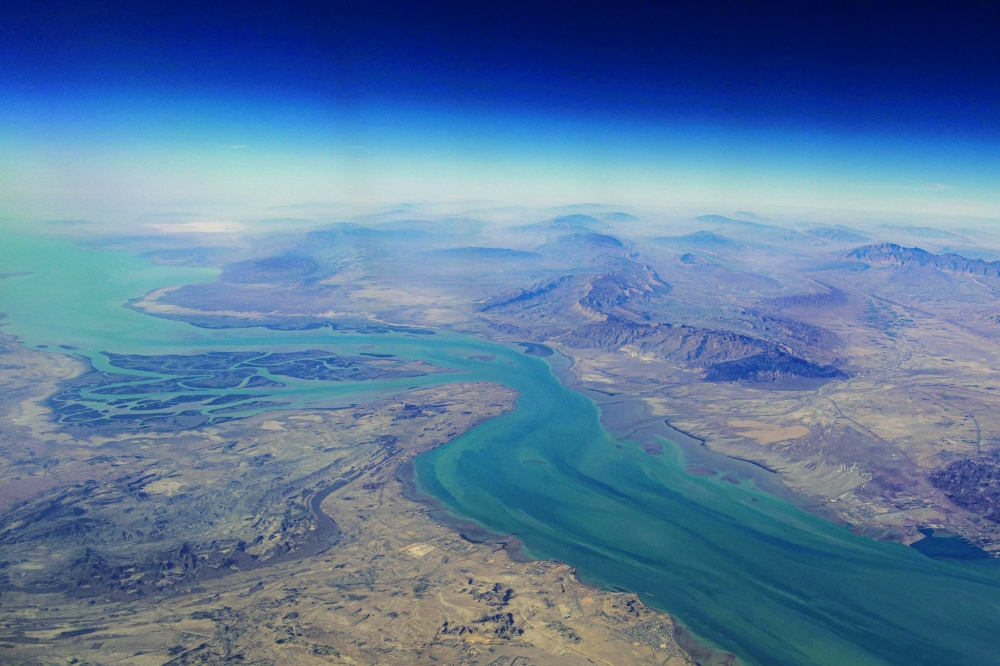
An aerial view of the Iranian shores and the island of Qeshm in the strait of Hormuz, December 10, 2023. REUTERS/Stringer/File Photo

Washington Stands for Freedom of Navigation

In an interview with Fox News on Saturday, Vice President JD Vance portrayed the United States as a player in Iran’s discussions with Oman, and said the talks were in “the middle of the game” — even though US officials had previously said that a deal to reopen the strait was nearly in hand. It was unclear whether he was aware of Iran’s latest demands at the time of the interview.

“What we’re really working through now is how you can actually set up a traffic scheme so that the ships that pass can pass through safely,” Vance said. “That includes of course demining, but it also includes a commitment from the Iranians that they’re not going to fire at commercial vessels.”

Vance did not say what the United States might concede to Iran as part of a possible deal. Instead, he argued that Washington holds major leverage over Tehran.

“They’re hurting in a big way,” he said. “They want this thing to be over. The question is whether they’re able, their system is able, to give the things that are necessary for us to be happy.”

Limited Navigation

Just over a dozen ships per day have navigated the strait over the past week, according to Kpler, a maritime data company. Before the war, an average of 130 ships used the route daily.
To avoid detection by the Iranian or American forces imposing blockades on the strait, some ships switched off the transponders that transmit their locations, making an accurate count of crossings difficult to compile.

The New York Times


US Hits Remaining Parts of Iran’s Aviation Sector with Sanctions in Latest Move to Isolate Tehran

 US Treasury Secretary Scott Bessent speaks during a press conference, as finance ministers and central bank governors from G20 countries meet in Asheville, North Carolina, US, September 1, 2026. (Reuters)
US Treasury Secretary Scott Bessent speaks during a press conference, as finance ministers and central bank governors from G20 countries meet in Asheville, North Carolina, US, September 1, 2026. (Reuters)
TT

US Hits Remaining Parts of Iran’s Aviation Sector with Sanctions in Latest Move to Isolate Tehran

 US Treasury Secretary Scott Bessent speaks during a press conference, as finance ministers and central bank governors from G20 countries meet in Asheville, North Carolina, US, September 1, 2026. (Reuters)
US Treasury Secretary Scott Bessent speaks during a press conference, as finance ministers and central bank governors from G20 countries meet in Asheville, North Carolina, US, September 1, 2026. (Reuters)

The Trump administration on Tuesday imposed sanctions on additional aspects of Iran's aviation industry, targeting more than two dozen commercial and private airlines as well as foreign cargo service providers in its new push to isolate Tehran from its remaining trading partners.

The latest actions are part of the Trump administration’s Operation Economic Outcast campaign that is aimed at severing “critical financial lifelines” for the already heavily sanctioned Iranian government.

The new penalties are focused on the remaining facets of Tehran's already beleaguered aviation ecosystem, which has been under countless sanctions from Washington for years.

“Let this be a warning to anyone doing business with Iran’s remaining airlines, all of which we sanctioned today: You are at risk of being cut off from the global financial system,” Treasury Secretary Scott Bessent said in a press release.

The Trump administration accused the 36 entities targeted this week of supporting Tehran’s efforts to use its aviation sector to move weapons, personnel, and illicit cargo.

It also claimed that private entities based in Türkiye, the United Arab Emirates, Kazakhstan and Malaysia have provided parts and logistics services to Iran’s Mahan Air.

The airline has been subject to US counterterrorism sanctions since 2019 for its support for Iran’s paramilitary Revolutionary Guard, which the State Department has designated a foreign terrorist organization.


Russia Says Putin, Trump Had ‘Frank’ Call After US Envoys Visit

Russian President Vladimir Putin listens to acting governor of Tver region Vitaly Korolyov during their meeting at the Kremlin in Moscow, Tuesday, Sept. 8, 2026. (Mikhail Metzel, Sputnik, Kremlin Pool Photo via AP)
TT

Russia Says Putin, Trump Had ‘Frank’ Call After US Envoys Visit

Russian President Vladimir Putin listens to acting governor of Tver region Vitaly Korolyov during their meeting at the Kremlin in Moscow, Tuesday, Sept. 8, 2026. (Mikhail Metzel, Sputnik, Kremlin Pool Photo via AP)

Russian President Vladimir Putin and US counterpart Donald Trump had an "extremely frank" phone call on Tuesday, after US negotiators visited Moscow over the weekend, Kremlin aide Yuri Ushakov told reporters, including AFP.

Steve Witkoff, who is Trump's business ally, and Jared Kushner, the president's son-in-law, visited the Russian and Ukrainian capitals at the weekend for talks with both Putin and Ukrainian President Volodymyr Zelensky.

In a one-hour call on Tuesday, Putin and Trump "exchanged views on the outcome of the visits", Ushakov said.

The talks brought no immediate breakthrough in the four-and-a-half-year war that is Europe's bloodiest conflict since World War II.

Ushakov said Putin presented to Trump an "objective and detailed analysis" of the frontline situation.

The Kremlin leader routinely says his troops are advancing across the entire front, with the capture of the entire eastern Donbas a matter of time.

He also "pointed out what the Americans could realistically do to bring the hostilities to a swift conclusion," Ushakov said, without elaborating.

Moscow has shown no signs of dropping its maximalist conditions to end the war, including a demand that Ukraine cede territory in the east that Russia's troops have not captured.

Putin also told Trump that Russia had "no aggressive plans" towards Europe, Ushakov said.

The Kremlin has over the summer been accused of ratcheting up a sabotage campaign against Ukraine's European backers -- accusations it has denied.

"In view of the speculation regarding Russia's alleged hostile intentions towards European states, it was emphasized that we have absolutely no aggressive plans whatsoever towards Europe," Ushakov said.

"The myths being spread about the Russian threat serve as a pretext for Europeans to ramp up support for Ukraine and their own military spending," he added.

Fueling the concerns over Russia's intentions, CIA chief John Ratcliffe paid a surprise visit to Moscow in late August, with US media reporting he warned Russia against attacking any NATO country.


Serbia Crosses ‘Red Line’ as War Criminal Funeral Sparks Outrage

A photograph taken on September 7, 2026 shows a monument reading the figure "8372...", representing the minimum recorded number of victims of the July 1995 Srebrenica massacre at the Srebrenica-Potocari Genocide Memorial and Cemetery in Potocari, near Srebrenica, Bosnia and Herzegovina. (AFP)
TT

Serbia Crosses ‘Red Line’ as War Criminal Funeral Sparks Outrage

A photograph taken on September 7, 2026 shows a monument reading the figure "8372...", representing the minimum recorded number of victims of the July 1995 Srebrenica massacre at the Srebrenica-Potocari Genocide Memorial and Cemetery in Potocari, near Srebrenica, Bosnia and Herzegovina. (AFP)

Bosnia's foreign minister on Tuesday expelled two Serbian diplomats and accused Belgrade of crossing "every red line" after several of its officials attended a funeral for war criminal Ratko Mladic.

At least six Serbian ministers were among thousands that attended Monday's funeral service which openly praised Mladic, who died last month in The Hague while serving a life sentence for war crimes committed during the Bosnian war.

The scenes in the capital of a European Union candidate country also drew condemnation from outside the Balkans, with EU chiefs Ursula von der Leyen and Antonio Costa labelling the attendance of Serbian officials "deeply regrettable".

"Serbia's path into the European Union requires an unequivocal commitment to fundamental European values and historical truth," EU foreign policy chief Kaja Kallas said on X.

Bosnia's foreign minister Elmedin Konakovic said he had ordered the defense envoy and an adviser of Serbia's intelligence service to leave the country.

Earlier he said he would recall Sarajevo's embassy staff from Serbia in an attempt to cut diplomatic ties to the "lowest possible level".

"They crossed every red line with what they did yesterday, the day before, and in the days leading up to the reception," Konakovic told a press conference in Sarajevo.

- 'Lip service' -

Despite Mladic's convictions, Serb nationalists and pro-government media still embrace him as a hero. Mourners wore shirts emblazoned with his face and held banners praising the former general during Monday's event.

Serbian President Aleksandar Vucic, who did not attend the funeral, has rejected allegations of glorifying Mladic and insisted that the service was organized by the family, not the state.

But the attendance of ministers, alongside the use of soldiers and a government plane to bring Mladic's body to Belgrade has sparked outrage.

"If this is not state involvement, what is?" Emir Suljagic, the director of the Srebrenica memorial center, said on X.

Mladic was sentenced for genocide, war crimes and crimes against humanity committed during Bosnia's 1990s war -- including his role in the killing of some 8,000 people in Srebrenica.

Suljagic said the statements from Brussels were not enough.

"We have had enough of people paying lip service to the victims while proceeding to shake hands with politicians dreaming of future genocides," he said.