

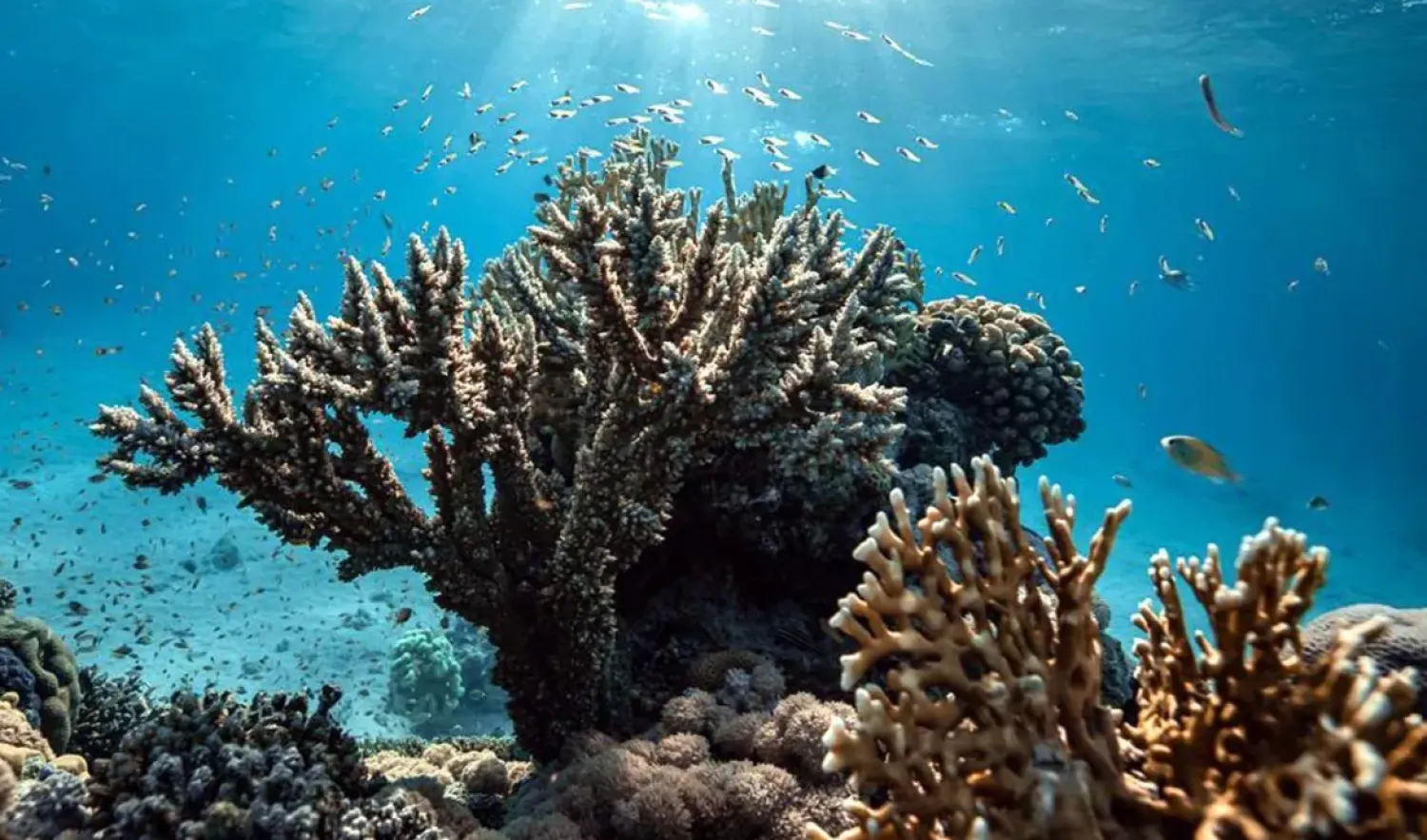

KAUST Scientists Discover Corals Can be Trained to Resist Disease

The discovery is the first evidence that corals can develop a protective, immune memory-like response - SPA
TT

KAUST Scientists Discover Corals Can be Trained to Resist Disease

The discovery is the first evidence that corals can develop a protective, immune memory-like response - SPA

Scientists at King Abdullah University of Science and Technology (KAUST) have discovered that corals can be trained to better resist disease before an outbreak occurs, a finding that could one day help protect reefs around the world.

The study, published in ISME Host Microbe, showed that corals exposed to sub-lethal doses or inactive forms of a disease-causing pathogen became more resistant when they encountered the disease again later. The process, known as pathogen priming, is similar in concept to how vaccines prepare the body to recognize future threats.

The discovery is the first evidence that corals can develop a protective, immune memory-like response despite lacking the adaptive immune systems found in humans and other vertebrates.

"Coral disease is becoming an increasingly important challenge for reefs worldwide," said Professor of Marine Science at KAUST and senior author of the study Raquel Peixoto. "What surprised us was finding that corals exposed to a pathogen were significantly better able to respond when they encountered the same disease agent again. It suggests corals can be trained to strengthen their natural defenses, something that was not previously demonstrated."

The research also revealed that the protective effect is linked not only to changes within the coral itself, but also to changes in its microbiome, the community of microorganisms that live alongside and support coral health, SPA reported.

The findings come at a time when coral reefs face growing pressure from warming oceans and other environmental stressors. Disease outbreaks can spread rapidly through reefs and coral nurseries, causing significant losses and undermining restoration efforts.

Conducted using corals from the Red Sea, the research could have implications far beyond the region. The team has filed a patent application related to the use of pathogen priming to strengthen coral disease resistance and is now working to test the approach across additional coral species, pathogens, and environmental conditions. If successful, the technique could eventually provide coral nurseries and restoration programs with a new tool to help protect reefs before disease outbreaks occur.



Green Riyadh Launches Tree-Planting and Cleanup Campaign

File photo of the Saudi capital Riyadh - File/AAWSAT
TT

Green Riyadh Launches Tree-Planting and Cleanup Campaign

File photo of the Saudi capital Riyadh - File/AAWSAT

Green Riyadh, one of the programs overseen by the Royal Commission for Riyadh City, has launched a tree-planting and cleanup campaign at Shuaib Umm Qasr to coincide with Saudi National Day celebrations, the Saudi Press Agency said Sunday.

The campaign will be held on September 23 from 1:00 p.m. to 5:00 p.m. and is open to male and female volunteers from all segments of society. Participants will receive volunteer certificates in recognition of their active contributions to environmental service.

The initiative aims to attract volunteers to participate in tree planting and cleanup activities, thereby promoting community engagement and a culture of volunteerism while supporting national efforts to protect the environment and achieve sustainability.


82-year-old Dies after Beach Fight in Greece over Sun Lounger

Tourists from a nearby hotel watch military helicopters fly overhead during Medusa 15, a joint military exercise led by Greece and Egypt, at Maleme on the Greek island of Crete, Friday, Sept. 18, 2026. (AP Photo/Thanassis Stavrakis)
TT

82-year-old Dies after Beach Fight in Greece over Sun Lounger

Tourists from a nearby hotel watch military helicopters fly overhead during Medusa 15, a joint military exercise led by Greece and Egypt, at Maleme on the Greek island of Crete, Friday, Sept. 18, 2026. (AP Photo/Thanassis Stavrakis)

An 82-year-old man died Sunday after he got into a fight over a sun lounger on a beach in Greece near Athens, local media reported.

The octogenarian had a dispute with a 76-year-old man and a 21-year-old woman over the sun lounger, with the argument degenerating into a scuffle between the two men, according to police, the ANA news agency and ERT state television channel reported.

The 82-year-old, badly hurt, was transported to hospital from the Vouliagmeni beach resort area where the argument broke out. He was later declared dead at the hospital, AFP said.

Both the 76-year-old man and the 21-year-old woman were arrested, ANA said, with police investigating what happened.


10 Lions Die in Suspected Poisoning at Tanzania Wildlife Reserve

Lions are seen in their counpound at the Artis Amsterdam Royal Zoo in Amsterdam, Netherlands in this handout photo released to media on January 28, 2021. Artis Amsterdam Royal Zoo/Handout via REUTERS
TT

10 Lions Die in Suspected Poisoning at Tanzania Wildlife Reserve

Lions are seen in their counpound at the Artis Amsterdam Royal Zoo in Amsterdam, Netherlands in this handout photo released to media on January 28, 2021. Artis Amsterdam Royal Zoo/Handout via REUTERS

Ten lions were found dead in Tanzania's Ngorongoro wildlife reserve this week and preliminary findings suggest they may have been poisoned, the area's management authority said.

The deaths raise concerns over the conservation of lions in one of Africa's most renowned wildlife ecosystems. Poisoning has been a recurring threat to large ⁠carnivores across parts ⁠of East Africa, often linked to conflicts between predators and livestock owners.

The lions were discovered on September 18 in the Ndutu area of Endulen Ward in Arusha ⁠region, Reuters quoted the Ngorongoro Conservation Area Authority as saying in a statement released late on Saturday.

"Preliminary findings suggest the animals may have died after ingesting poison," the authority said, adding that it had launched an investigation to determine the cause and identify those responsible.

The Ngorongoro Conservation Area, a UNESCO ⁠World ⁠Heritage Site in northern Tanzania, is one of the country's leading tourism attractions. It is home to a wide range of wildlife, including lions, elephants, buffaloes and endangered black rhinos.

Last month, police arrested four suspects in an investigation into the deaths of 18 elephants across the border in Kenya.