
SAL Bets on International Expansion to Cement Saudi Arabia’s Position as a Global Logistics Hub

Saudi Arabia's SAL Aims to Become an Integrated Logistics Platform with a Global Presence (Asharq Al-Awsat)
TT

SAL Bets on International Expansion to Cement Saudi Arabia’s Position as a Global Logistics Hub

Saudi Arabia's SAL Aims to Become an Integrated Logistics Platform with a Global Presence (Asharq Al-Awsat)

Omar Hariri, CEO of SAL Saudi Logistics Services, said the company is moving ahead with an expansion strategy aimed at transforming it into an integrated logistics platform with an international presence. The strategy is centered on developing its businesses in cargo ground handling, logistics services and SAL Logistics Zones, while expanding beyond the Kingdom through carefully considered investments and acquisitions that support trade corridors linked to Saudi Arabia.

In an interview with Asharq Al-Awsat, Hariri said cargo ground handling will remain the main pillar of the company’s revenues in the coming years, but he expects the contribution of the logistics business to increase gradually, alongside the development of the SAL Logistics Zone into an additional long-term growth engine.

Growing Volumes

He explained that the company continues to expand its airline customer base, increase handling volumes and improve its cargo mix, while maintaining pricing discipline and enhancing operational efficiency. SAL is also studying growth opportunities through targeted acquisitions, the latest being its acquisition of Aviapartner Liège SA in Belgium.

He added that the logistics business represents one of the most prominent future growth drivers, supported by higher occupancy rates at storage centers, expansion in contract logistics and growth in road feeder services. The sector has continued to achieve double-digit revenue growth, alongside a continued improvement in operating profitability.

Financial Results

Regarding financial results, Hariri said SAL recorded its best quarterly performance in its history during the second quarter of 2026, after revenue rose 30 percent to SAR 512 million ($136.5 million). Operating profit grew 24 percent to SAR 213 million ($56.8 million), while net profit increased 18 percent to SAR 191 million ($50.9 million), with an operating profit margin of 41.6 percent.

Hariri explained that revenue growing at a faster pace than profit was due to the expansion of logistics activities, which naturally require higher operating costs, in addition to continued investment in infrastructure and operational capabilities in preparation for the next stages of growth.

He noted that the company’s performance during the second half of the year would be affected by several factors, including developments in the region’s operating environment, demand for imports, handling volumes and cargo mix, as well as progress on logistics projects and the SAL Logistics Zone and international expansion plans.

Hariri stressed that the company does not view logistics and cargo ground handling as two competing sectors, but rather as complementary parts of a single system. He explained that the objective is to provide integrated logistics solutions extending from cargo handling to warehousing and distribution, contract logistics and road feeder services, thereby diversifying revenue sources without compromising the central role of the cargo ground handling business.

Geopolitical Tensions

Speaking about the impact of geopolitical tensions in the region, he explained that their effects on SAL’s operations had been limited and temporary, consisting mainly of rerouting some cargo routes and managing capacity as a result of restrictions faced by some airlines in using airspace.

He added that the company’s extensive operational network at airports across the Kingdom, together with the flexibility of its teams, contributed to maintaining service continuity and efficiently redirecting cargo flows. Activity began to regain momentum at the beginning of the second quarter, with airlines gradually returning to their normal operations.

Hariri believes these developments highlighted the importance of Saudi Arabia as a highly reliable logistics hub, benefiting from its strategic location linking East and West and from major investments in logistics infrastructure.
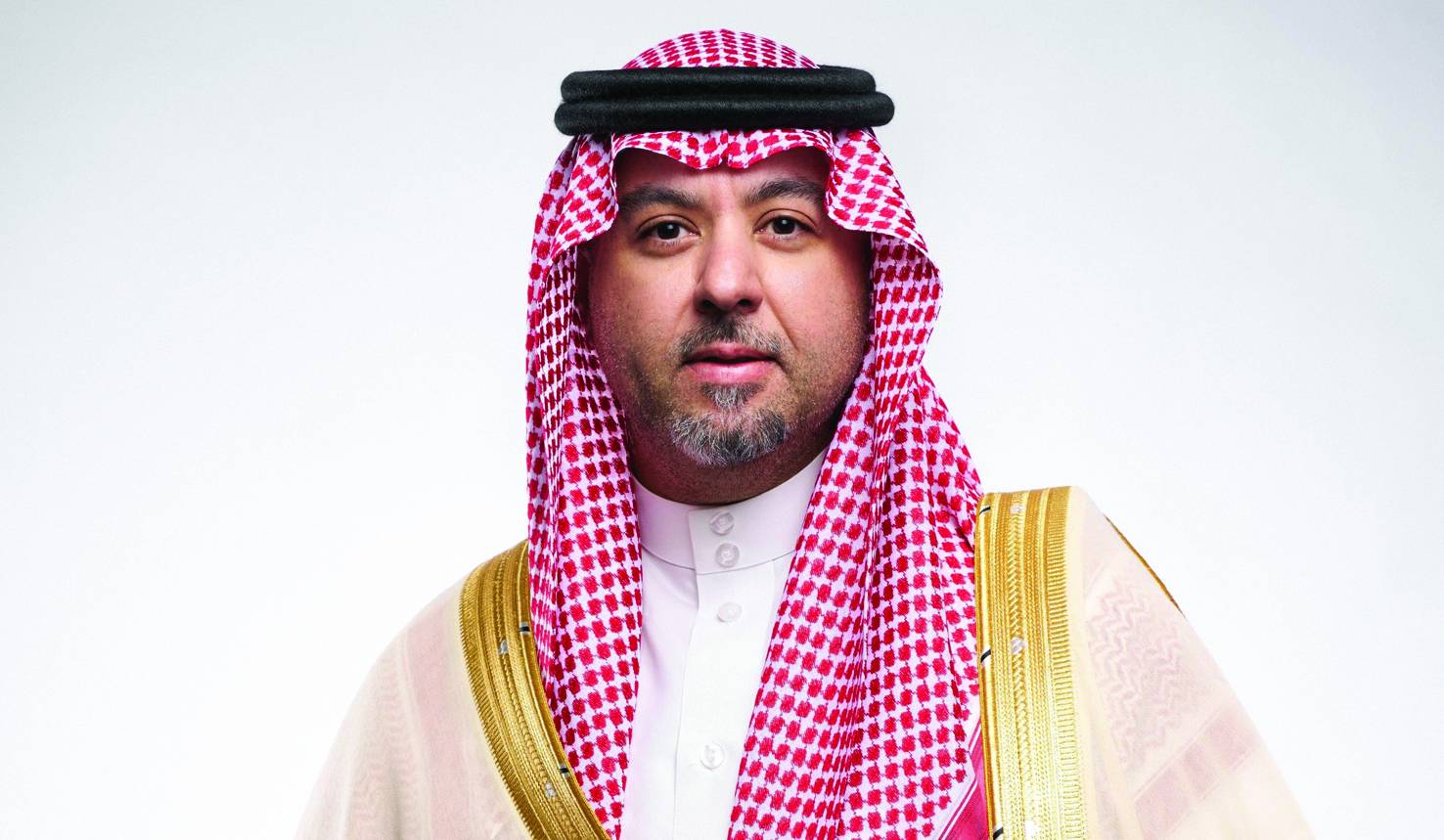
Omar Hariri, CEO of SAL (Asharq Al-Awsat)

International Expansion

As part of its international expansion plans, the CEO revealed that SAL established SAL International Ground Handling B.V. during the second quarter, headquartered in the Netherlands, to serve as a holding platform managing the company’s international investments. He stressed that the expansion strategy is based on serving trade corridors linked to the Kingdom, rather than merely pursuing geographic expansion.

He explained that the company’s acquisition of Aviapartner Liège gives it its first operational platform outside the Kingdom in one of Europe’s most important air cargo hubs. Liège Airport is Belgium’s largest cargo airport and Europe’s fifth-largest cargo airport, strengthening the Kingdom’s links to global trade corridors while expanding the company’s customer base and relationships with international airlines.

He noted that the company is currently focused on integrating the acquisition and achieving its operational and strategic objectives, while retaining the option of carrying out further acquisitions in the future as part of a measured and disciplined approach.

Aviation Sector

Regarding Saudi Arabia’s aviation sector, the CEO of SAL Saudi Logistics Services said the sector’s significant expansion represents a direct opportunity for the growth of SAL’s business, with new airlines entering the market and the number of flights and international destinations increasing.

He explained that the company signed new agreements during the second quarter with Singapore Airlines and China’s SF Airlines, as well as with Uzbekistan’s Fly Khiva Group and Centrum Air, which will increase handling volumes and diversify the customer base.

He added that SAL continues to invest in increasing its operational capacity at airports across the Kingdom, alongside developing the SAL Logistics Zone and adopting advanced digital solutions to increase efficiency and productivity. He noted that the board of directors had approved dedicated investments to ensure the company’s readiness to accommodate the expected growth in the aviation and logistics sectors.

SAL’s 2030 Vision

Regarding the company’s vision for 2030, Hariri said SAL aims to become a leading national logistics company offering an integrated platform for cargo ground handling and logistics services, while building an international operational presence that serves trade flows linked to the Kingdom.

He stressed that the company is not seeking geographic expansion simply to increase its size, but rather to build an operational network originating in Saudi Arabia and extending to locations that serve the Kingdom’s trade corridors, while maintaining service quality and financial discipline. This supports the objectives of Saudi Vision 2030 in cementing the Kingdom’s position as a global logistics hub.


China, US Discuss Tariffs, Farm Trade at First Trade Council Meeting

US and Chinese flags are seen in this illustration taken March 20, 2025. (Reuters)
TT

China, US Discuss Tariffs, Farm Trade at First Trade Council Meeting

US and Chinese flags are seen in this illustration taken March 20, 2025. (Reuters)

China and the United States held their first trade council meeting under a bilateral economic and trade consultation mechanism via ‌video link ‌on Friday, China's ‌commerce ⁠ministry said on ⁠Saturday.

The two sides held "candid, in-depth and constructive discussions" on implementing outcomes ⁠from previous trade consultations, ‌including ‌tariffs, a reciprocal ‌tariff-reduction arrangement involving $30 ‌billion on each side, agricultural trade and other issues of ‌note, the ministry said.

Both sides will ⁠continue ⁠to use the council to address trade concerns, expand cooperation and reduce outstanding issues, it added.


IMF Says More Work Needed on Lebanon Reforms

A man walks past Lebanon's Central Bank headquarters in Beirut on November 10, 2026. (AFP)
TT

IMF Says More Work Needed on Lebanon Reforms

A man walks past Lebanon's Central Bank headquarters in Beirut on November 10, 2026. (AFP)

The International Monetary Fund said on Friday that more work was needed to reach an agreement on restructuring Lebanon's banking sector, one of the steps towards unlocking billions of dollars in financial assistance.

An IMF staff-level agreement reached in April 2022 laid out conditions to unlock assistance, including a law on the distribution of losses in the banking sector, known as the financial gap law, which parliament has still not voted on.

In a statement at the end of meetings that began on Tuesday, the IMF said "there was progress in further clarifying the approaches under consideration by the Banque du Liban (BdL) and the Government regarding banking sector reform, the draft financial regulation law and the recovery of deposits, and aligning them with international standards".

It however noted that "further work is needed to reach an agreement on a strategy for an effective and durable restructuring of Lebanon's banking sector, leading to a sound and resilient system".

The cabinet submitted a draft of the law to parliament in 2025, but the text is contested by the banking sector and political parties, preventing a vote.

Differences over estimates of losses and their distribution have stalled negotiations with the IMF.

In 2022, the government estimated losses resulting from the 2019 financial crisis at around $70 billion, a figure believed to have increased over the last seven years during which the crisis has remained unresolved.

Lebanese Finance Minister Yassin Jaber said during a news conference that he hoped to "achieve progress that would allow us to reach an agreement on a program with the IMF and sign it during the first quarter of next year, and by its end at the latest".

Lebanon's economic crisis, which the World Bank has ranked among the worst since 1850, has deprived depositors of access to all of their funds, destroyed confidence in the banking sector and led to greater reliance on cash liquidity in various economic and commercial activities.


Silver Demand Seen Down 5% This Year Due to Weaker Jewellery Purchases

Silver bars are stacked in the safe deposit boxes room of the Pro Aurum gold house in Munich, Germany, January 10, 2025. (Reuters)
TT

Silver Demand Seen Down 5% This Year Due to Weaker Jewellery Purchases

Silver bars are stacked in the safe deposit boxes room of the Pro Aurum gold house in Munich, Germany, January 10, 2025. (Reuters)

Silver demand is expected to fall by 5% in 2026 due to weaker jewellery demand and lower consumption in solar cells, where high prices have accelerated substitution, research showed on Friday.

Research done by consultancy Metals Focus for the Silver Institute puts demand at 1.08 billion troy ounces this year.

Silver, used in jewellery, electronics, electric vehicles and solar panels as well as for investment, is ‌down 59% ‌to $50 an ounce since retail buying drove prices ‌to ⁠a record high ⁠of $121.6 in January.

The base for that rally was created in 2025, when silver surged 147%, as massive inflows of the metal to US inventories due to tariff uncertainty and into silver-backed exchange-traded products (ETPs) tightened liquidity in the London market.

This year, expectations for higher interest rates, a stronger dollar and higher bond yields have weighed on investment ⁠sentiment.

Silver released through ETP selling, outflows from stocks ‌in the US and a smaller ‌market deficit improved liquidity in the physical market, the Silver Institute and ‌consultancy Metals Focus said on Friday.

Metals Focus sees net ETP ‌outflows of 45 million ounces this year after 278 million ounces of inflows in 2025.

As of early November, ETP holdings stood at 1.25 billion ounces.

Industrial demand is expected to fall by 3% in 2026 as installations ‌in photovoltaics have fallen short of expectations, particularly in China, while January's record silver prices accelerated ⁠substitution.

Meanwhile, demand ⁠for jewellery and silverware is forecast to decline by 22% and 17%, respectively, as higher prices and weaker rural spending in India encouraged purchases of smaller, lighter products.

Demand in China and the US is also subdued. Strong retail investment in late 2025 and early 2026 gave way to far more subdued buying from March as silver prices fell, Metals Focus said.

It expects global bar and coin demand to fall 2% this year, with US retail investment hitting its lowest level since 2010.