Pakistan Brickmakers Scorched by Sun above and Fire Below

A worker pushes a wheelbarrow at a brick kiln in Sheikhupura, in Pakistan's Punjab province, on July 20, 2026. Arif ALI / AFP
TT

Pakistan Brickmakers Scorched by Sun above and Fire Below

A worker pushes a wheelbarrow at a brick kiln in Sheikhupura, in Pakistan's Punjab province, on July 20, 2026. Arif ALI / AFP

As dark plumes billow from overhead smokestacks, brickmakers at a kiln in Pakistan's Sheikhupura district crush coal through small holes beneath their feet into the fiery chambers below.

Workers already have to endure extreme conditions at traditional brick kilns, which burn at over 1,000C and demand constant monitoring to ensure they remain hot enough.

But they are becoming almost unbearable as climate change makes summers even hotter in a country already used to temperatures well over 40C.

Abid Hussain, a 35-year-old laborer whose clothes were covered in dark soot, told AFP the work felt like being trapped between fire below and, increasingly, above.

He is one of hundreds of thousands working in an industry that labor advocates say is poorly regulated, badly paid and becoming more dangerous as temperatures rise.

"The heat is undoubtedly extreme but when you think about the financial pressures at home, you have no option but to keep working," Hussain said.

Fast-growing Pakistan's construction boom is increasing the demand for labor in the sector, in which workers earn around $3 a day.

Despite the scorching sun and dust filling the air, workers stay on the heated kiln surface for hours at a time.

"I would describe these brick kilns as places of confinement," said Syeda Ghulam Fatima, the General Secretary of the Bonded Labor Liberation Front Pakistan.

"Workers endure relentless heat from the blazing sun overhead while the intense heat radiating from the kiln rises beneath them."

The workers remain trapped in a cycle of debt, extreme heat, and deteriorating health, Fatima told AFP, adding rising global temperatures amplified the risks.

Sheikhupura is at the heart of Pakistan's massive brick kiln industry. Nationwide, more than 18,000 brick kilns employ a total of over a million people, according to 2018 data in a Climate and Clean Air Coalition report.

Pakistan is ranked among the countries most vulnerable to the impacts of climate change globally, according to experts.

Fatima said many workers receive advance payments, making them unable to decline to work in dangerous conditions without falling into burdensome debt.

Hussain, who earns roughly 25,000 Pakistani rupees ($90) a month, said the money barely covers rent and his children's basic needs.

"No matter the situation, whether we are ill or there are family matters, we still have to work," he said. "If I take time off, we'll be in trouble."

- Breaks 'not possible' -

There is some hope of improved conditions from the Punjab provincial government's push to convert the industry to more modern technology known as zigzag kilns, which reduce air pollution and respiratory hazards.

Health experts warn that, especially at traditional kilns, prolonged heat exposure makes brick workers more vulnerable to illnesses including skin disorders, respiratory problems, and kidney disease.

But "extended rest breaks are not feasible... whether it is extreme heat, cold, or rain, the work must continue uninterrupted", said Mujeeb Ullah, 45, the supervisor at the kiln, adding its temperatures needed to be kept stable.

He said they provided workers with drinking water and occasional short breaks.

On the other side of the compound, a man squatted next to rows of unbaked bricks, mixing wet mud and packing it by hand into a wooden mold -- exhausting work considering the temperatures.

Worker Muhammad Azeem, 28, said there was no alternative.

"As for the weather, whether it's good or bad, work is work, it has to be done."


The Dachshund Is the Muse in an Exhibition Showcasing the Sausage Dog’s History in Art

 A dog sits during the exhibition "The Dachshund: An Icon off the Leash," dedicated to dachshunds in art, at Kunsthalle Bremen in Bremen, Germany, Thursday, Oct. 29, 2026. (AP)
A dog sits during the exhibition "The Dachshund: An Icon off the Leash," dedicated to dachshunds in art, at Kunsthalle Bremen in Bremen, Germany, Thursday, Oct. 29, 2026. (AP)
TT

The Dachshund Is the Muse in an Exhibition Showcasing the Sausage Dog’s History in Art

 A dog sits during the exhibition "The Dachshund: An Icon off the Leash," dedicated to dachshunds in art, at Kunsthalle Bremen in Bremen, Germany, Thursday, Oct. 29, 2026. (AP)
A dog sits during the exhibition "The Dachshund: An Icon off the Leash," dedicated to dachshunds in art, at Kunsthalle Bremen in Bremen, Germany, Thursday, Oct. 29, 2026. (AP)

The humble dachshund is taking center stage in a new exhibition in Germany that explores the history of the sausage dog in art — and visitors are welcome to bring their four-legged friends along.

“The Dachshund: An Icon off the Leash" opens at the Kunsthalle Bremen on Saturday, showcasing artwork by dachshund owners and fans including Pablo Picasso, David Hockney and Andy Warhol. In addition to painting, drawing, photography and video, visitors can admire delights such as a wealth of stuffed toy dogs and many other dachshund-themed objects.

Museum director Christoph Grunenberg believes it's the world's first exhibition dedicated to the dachshund in art, rather than dogs in general.

“There are many artists who owned dachshunds, who were inspired by the dachshund, loved the dachshund,” Grunenberg said. “It was like a muse and there is an incredible wealth of representation of the dachshund in very different styles by significant artists.”

“We wanted to take the dachshund as an object, as an inspiration to artists, and trace it through history in all its different forms and important works of art by Picasso, Warhol and Hockney and also ephemera,” he added.

The dog has a long association with Germany. Kaiser Wilhelm II had dachshunds, or Dackel in German; and Britain's Queen Victoria was a fan of the dogs, some brought from Germany. But the show casts its net wider, with exhibits brought in from Edinburgh, Los Angeles and Pittsburgh among others.

German artist Thorsten Brinkmann honored the compact dogs’ reputation as a “handbag dog” with a bronze sculpture that features a handbag on dachshund legs. He also provided the colorful “Toxie Love” installation in the exhibition’s first room, which sets a playful tone for the show.

The dachshund, he said, has “a very curious, very special form, very long — kind of too long, actually, with the short legs — and it looks already surrealistic to me.” He was helped by objects loaned by the Dachshund Museum in Regensburg, in southern Germany.

For several hours on Thursdays and Saturdays, the museum will let dachshunds and other small dogs into three of its eight rooms for a look and a sniff.

Among the conditions: they must have a maximum shoulder height of 30 centimeters (about 1 foot) and an online time-slot ticket. A “Dachshund Lounge” will be offered as a waiting area.

“We want to take the dog seriously as a personality and the dog can walk around, can interact, will be able to watch videos, look outside the window, smell — and of course that’s what the dog really is interested in,” Grunenberg said.

Finnish photographer Elina Brotherus' dachshund, Marcello, already checked out the wares ahead of the opening of the exhibition, which features Brotherus' pictures of the 13-year-old dog.

Marcello has been her model since 2013, Brotherus said. “I did not manage to have children, so then we got him and he’s my baby.”

“There’s something so, like, cute and philosophical and special about these dogs,” she said.

Kelsey Crossman, a business developer who lives in Bremen and originally hails from Florida, was invited to a preview of the show at a dachshund meetup group and explored it with her dachshund, Leonidas, or Leo for short.

She said the dogs' appeal is in “their attitudes — they’re small, but they’re very strong and a little stubborn, probably like myself.” And, of course, they're light enough to be easily transported.

Crossman enjoyed the dachshund collectibles in Brinkmann's installation — “a really cool collection of little dachshunds that you might see at grandma’s house, or collectors' things, and a ton of stuffed animals.”

But, she added: “Leo is not allowed near them because he will certainly grab one from the exhibit.”


Nations Commit to Get Nature Goals Back on Track

Executive Secretary of the United Nations Convention on Biological Diversity Astrid Schomaker (C-R), Armenia's Minister of Environment and COP17 President Hambardzum Matevosyan (C-L), Deputy Executive Secretary of the United Nations Convention on Biological Diversity Jihyun Lee (3rd L), and other members of the secretariat react during the closing session of the 17th meeting of the Conference of the Parties (COP17) in Yerevan on October 31, 2026. (AFP)
TT

Nations Commit to Get Nature Goals Back on Track

Executive Secretary of the United Nations Convention on Biological Diversity Astrid Schomaker (C-R), Armenia's Minister of Environment and COP17 President Hambardzum Matevosyan (C-L), Deputy Executive Secretary of the United Nations Convention on Biological Diversity Jihyun Lee (3rd L), and other members of the secretariat react during the closing session of the 17th meeting of the Conference of the Parties (COP17) in Yerevan on October 31, 2026. (AFP)

Nearly 200 nations struck hard-fought agreements Friday at a UN biodiversity summit, but the outcome was accompanied by disappointment over missed opportunities to address humanity's destructive toll on nature.

Delegates cheered as crucial texts were approved in overtime but the celebrations were tempered by acrimonious debates and regret over limited progress on some of the most contentious issues.

The COP17 summit in Armenia sought to revive a landmark commitment to halt and reverse the destruction of nature by 2030 after global efforts to meet that goal fell short.

Over two bruising weeks in Yerevan, nations were urged to correct course to keep the pact alive and protect the plants, animals and ecosystems that sustain life on Earth.

The United Nations had warned that progress was insufficient to meet the goals of the 2030 target including protecting 30 percent of Earth's land and oceans, tackling pollution and invasive species, and boosting money for conservation.

"And that's it. Perfect," said COP17 president Hambardzum Matevosyan in Armenia as he brought down the gavel on two major texts, the final versions of which were still not available early Saturday.

But the outcome was "not commensurate" with the crisis engulfing the natural world, said French Ecological Transition Minister Monique Barbut on Saturday.

"The progress we failed to achieve here is a series of missed opportunities to speed up our response to the loss of biodiversity," Barbut said in a lengthy statement sent to AFP, stressing that "nature will not wait for the pace of our negotiations."

- 'Step forward' -

The final plenary stretched through Friday night and well into the next morning, with negotiations turning sour as the hours dragged on.

Even as some delegates left to catch flights, others stayed behind to argue technical points.

Veteran COP observer Juliette Landry from the IDDRI think tank told AFP "there was a lot of push and pull in every direction" throughout the summit and "in that context, it's hard to get things accepted".

UN biodiversity chief Astrid Schomaker said the summit had achieved some "quite remarkable things at a moment when multilateralism is supposedly not functioning."

"Some of these more difficult subjects, we could not expect to have strong negotiated commitments. That was never the plan," she told reporters after the summit's close.

In a draft agreement of one closely watched text, nations were urged to "accelerate" their efforts and warned that "increased action" was needed to tackle the forces driving biodiversity loss.

This "represents a positive outcome... and though there are weaknesses, particularly on harmful subsidies, it does represent a step forward," Guido Broekhoven from WWF International told AFP.

Tackling subsidies and other incentives that encourage activities harmful to nature -- such as fossil fuels, intensive agriculture and overfishing -- was one of the most politically fraught agenda items at the summit.

"Even though the agreed decision text expresses it in weak terms, COP17 saw important political momentum to address harmful financial incentives, including subsidies," An Lambrechts from Greenpeace International told AFP.

A rare fight over science cast a pall over the summit, with a number of countries accused of undermining efforts to approve key reports in scenes that shocked even seasoned negotiators.

"We regret the increasing instances in which scientific evidence and its uptake has been challenged or constrained" by politics, said Swiss negotiator Gabriela Blatter in a statement on behalf of dozens of countries.

"Our delegations fully respect every state's right to safeguard national interest but science is not negotiable".

- Finance feud -

A separate row revolved around finding new cash sources to fund conservation efforts -- another hot-button issue with public budgets under strain amid an energy crisis and conflicts in Ukraine and the Middle East.

The European Union led a charge for wealthy emerging economies such as China to contribute to global conservation efforts, a contentious issue at COP17.

In a sign of possible compromise, another draft text that circulated Friday invited countries outside the developed-country donors to voluntarily join the group.

Outstanding questions over the design of the Cali Fund -- a UN mechanism that hoped to attract billions of dollars in corporate contributions but is close to empty -- were left unresolved.

"By punting essential decisions to two years from now, parties have all but ensured the fund remains empty until then," said Pakhi Das from the nonprofit organization Plant-for-the-Planet.

The COP17 summit decided early Saturday that Ecuador would host the next biodiversity talks in 2028 after the South American nation defeated rival candidate Panama in a secret vote.


Long-Distance Flights Can Interfere with the Internal Clocks of Seabirds

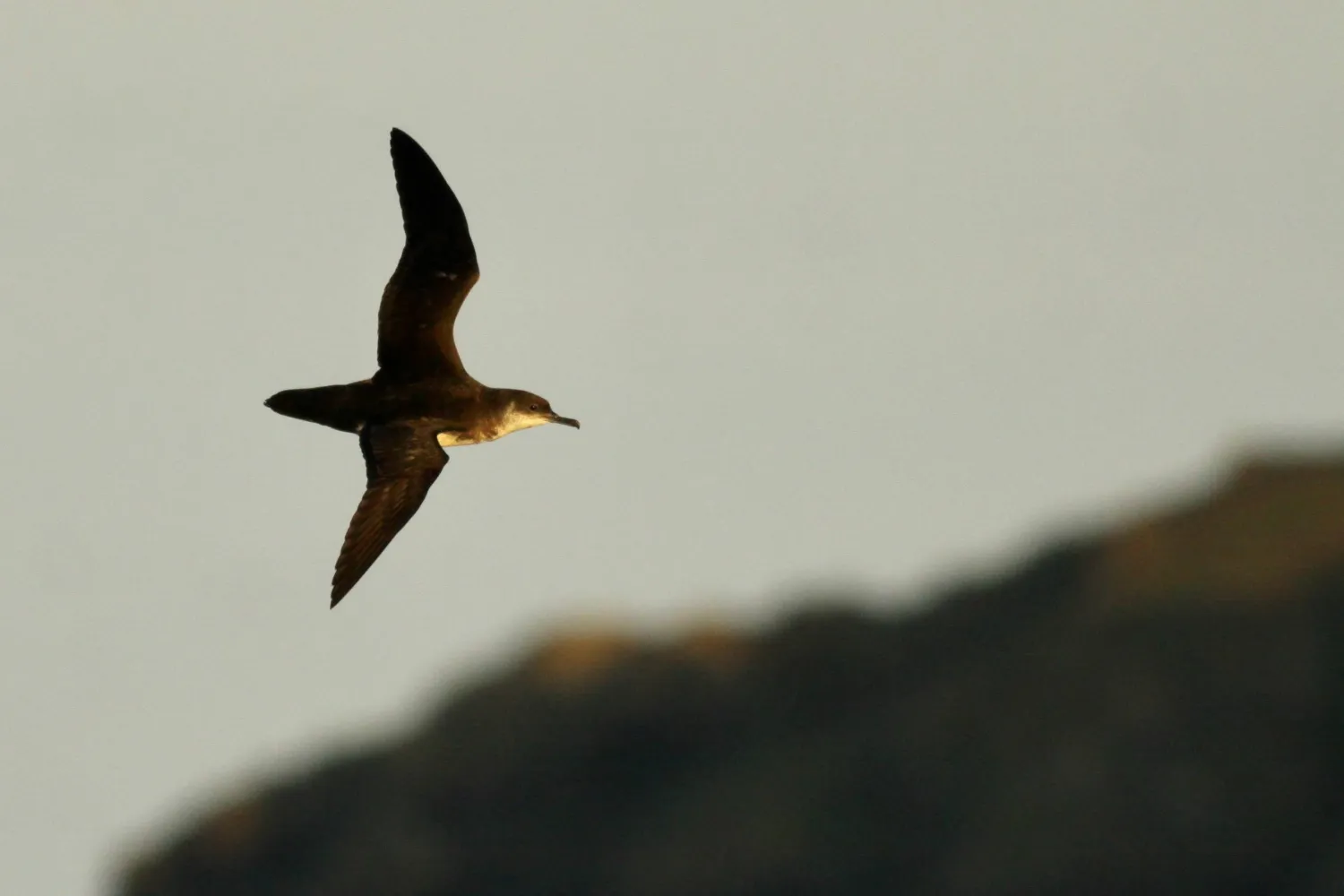
A Manx shearwater flies around Skomer Island, Pembrokeshire, Wales, Britain, in this handout image released on October 29, 2026. (Joe Wynn/Handout via Reuters)
TT

Long-Distance Flights Can Interfere with the Internal Clocks of Seabirds

A Manx shearwater flies around Skomer Island, Pembrokeshire, Wales, Britain, in this handout image released on October 29, 2026. (Joe Wynn/Handout via Reuters)

People who travel across many time zones, like a trip from London to Tokyo, may experience jet lag, with the body's internal 24-hour clock — the circadian rhythm — thrown out of sync with the local time at the arrival location. A new study shows that birds that fly long distances may experience a similar phenomenon that causes them to drift off course.

Research involving seabirds called Manx shearwaters found that crossing the Atlantic at speed can throw their internal clocks out of sync with local time, causing errors in the strategy they use to navigate their way home.

Birds can use several cues to find their way, including having the sun serve as a compass. A bird flying south sees the sun on its left at sunrise and on its right toward sunset, so it must keep adjusting its heading as the sun moves across the sky.

"Animals use an internal clock to do this, the ‌same one that tells ‌our bodies when to sleep, when to be active," said Patrick Lewin, a researcher ‌at ⁠the University of ⁠Oxford's Department of Biology and one of the leaders of the study published in the journal Science.

To investigate how the birds navigate across vast stretches of open ocean, researchers analyzed 20 years of GPS data from 1,045 breeding Manx shearwaters, birds that can travel as far as about 1,000 km (620 miles) west from colonies on islands off Britain on foraging trips.

Using the positions of the birds and the sun's movement across the sky, the researchers calculated the error each bird should make if its internal clock stayed set to the time at dawn. Across 335 homing flights made out of sight of land, the headings of the birds closely matched those ⁠predicted errors.

"The process behind what we're observing here — the mismatch between the internal clock ‌and external time caused by longitudinal movements — is exactly the same as what ‌causes jet lag in humans," Lewin said.

The researchers have not yet investigated whether the clock mismatch affects the birds beyond navigation. But internal clocks ‌influence behaviors including feeding and rest, raising the possibility that those too could be mistimed.

Shearwaters tend to hunt shortly ‌after dawn and before dusk, when fish and other prey are closer to the surface, meaning a mistimed rest period could cost them a feeding opportunity, Lewin said.

The study also showed that birds kept using their solar compass even when another source of information was readily available. Along coastlines, where familiar land could potentially guide them, their distance from shore still shifted in the direction predicted by clock-related sun-compass errors.

A ‌TWO-STEP PROCESS

"For most navigational tasks, it is thought that compass systems are used in conjunction with a map system in a kind of two-step process. In the map step, ⁠the animal determines where it is ⁠in relation to a goal, such as a home colony. Then in the compass step it uses a compass to translate that into movement," said Tim Guilford, a University of Oxford professor of animal behavior who was one of the study leaders.

The birds may continue to combine these systems even in familiar areas, rather than relying entirely on one or the other.

"If this only produces small deviations, there might not be strong selection against it," Lewin said.

Another possibility is that the sun compass helps the birds determine which way to go along the linear feature, Lewin said.

Even clouds may not render the sun compass useless. Evidence suggests that birds can sense polarized light and estimate the sun's position unless conditions are heavily overcast, Lewin said.

In people, jet lag can cause unpleasant short-term effects and has been linked to longer-term health problems in those who experience it frequently, such as airline pilots and flight attendants.

It is not yet known whether birds experience similar effects, but species such as shearwaters that regularly travel rapidly east-west may have evolved ways to cope with repeated disruption to their internal clocks, Lewin said.

"Knowing this phenomenon is occurring is only the first step, but perhaps these birds could teach us something about how to treat or avoid jet lag," Lewin said.