


From Uniqlo to Zara, Clothing Brands Try to Win Over Gen Z with a Needle and Thread

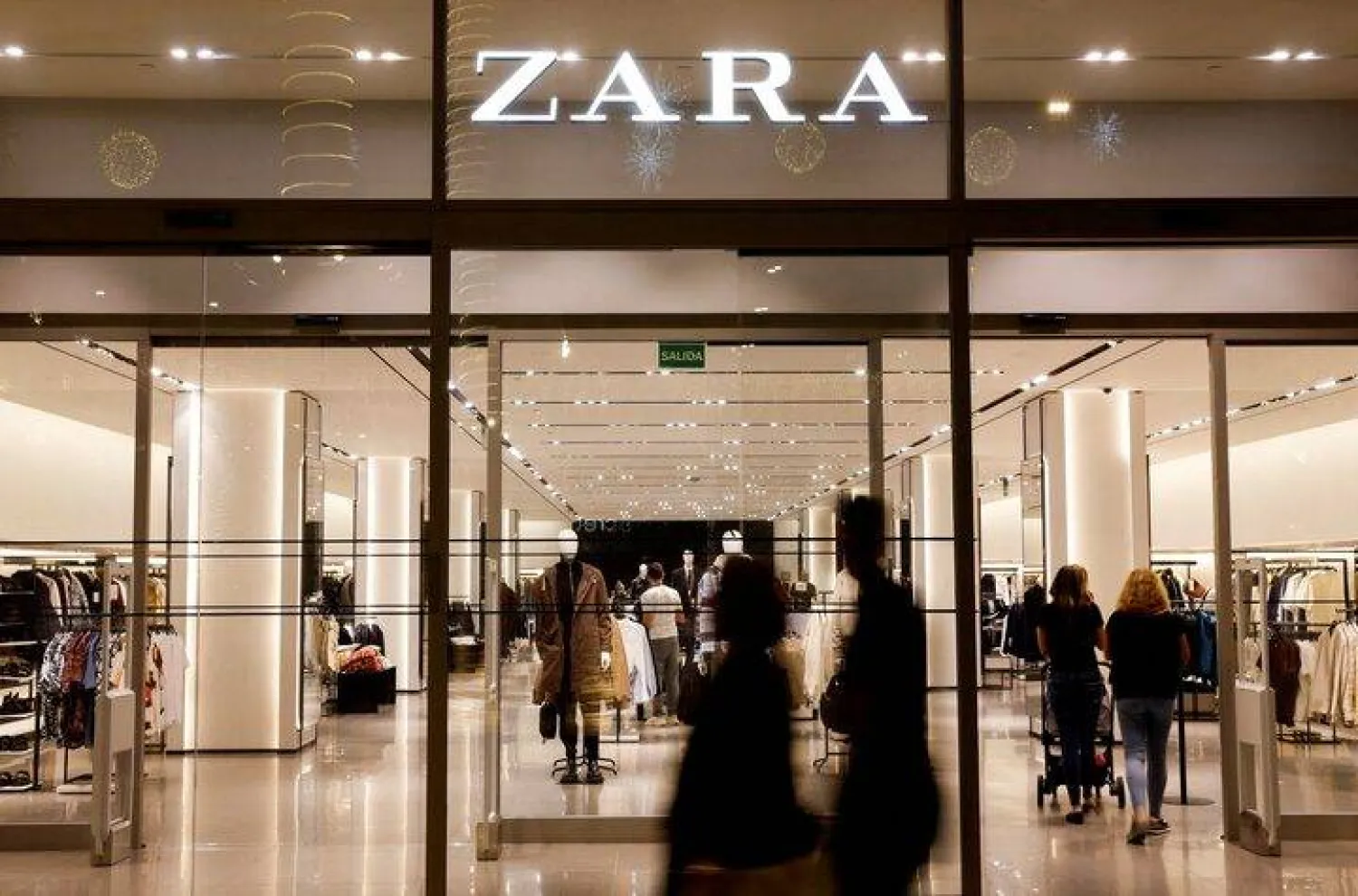
Shoppers walk past a Zara clothes store, part of the Spanish group Inditex, in Las Palmas de Gran Canaria, Spain, December 13, 2022. REUTERS/Borja Suarez
TT

From Uniqlo to Zara, Clothing Brands Try to Win Over Gen Z with a Needle and Thread

Shoppers walk past a Zara clothes store, part of the Spanish group Inditex, in Las Palmas de Gran Canaria, Spain, December 13, 2022. REUTERS/Borja Suarez

Encouraging customers to mend worn clothes instead of buying new ones might seem like a self-defeating sales strategy. But in-store repairs and sewing workshops are becoming essential retail services for clothing brands as they try to appeal to young consumers who want to save money and the planet.

While luxury fashion houses and select specialty retailers like Patagonia and L.L. Bean have offered product repairs for decades, the concept has caught on. Jeans giant Levi Strauss & Co., casual wear chain Uniqlo and budget retailer Primark are a few of the apparel companies hoping to win over Generation Z shoppers with a needle and thread.

Levi's created a handstitching course for high school students after determining that many members of Gen Z lacked the sewing skills to match their interest in thrift store shopping and sustainability. Employees spend 90 minutes instructing teenagers on four tasks: sewing on a button, hemming, patching a hole and fixing a tear.

The Wear Longer program, which the San Francisco-based company is expanding across the US, builds on the repair and customization services Levi's offers at hundreds of stores worldwide.

“We think it’s important to empower the people who buy our clothes with the skill sets to maintain them, to get them to that second life,” The Associated Press quoted Paul Dillinger, Levi's head of global design innovation, as saying.

Detroit resident Chloe Halprin, 25, is the kind of consumer retailers hope to attract with a “fix it, don’t ditch it” message.

In high school, Halprin shopped at inexpensive, trendy stores. Fixing a big rip felt beyond her limited sewing ability. If she damaged a top or skirt from Forever 21, “I might just throw it away."

These days, Halprin buys most of her clothes secondhand. She recently learned to hem with a sewing machine and hopes to tackle projects like turning a skirt into a shirt.

“I try to be conscientious of my carbon footprint,” Halprin, a nonprofit grant writer, said. "I really don’t like waste. I’m trying to save money as well.”

The evolution of mending from an economic necessity and traditional craft to a method for cultivating customers didn't happen overnight. The fashion industry as a whole has come under intensifying pressure to reduce its contributions to environmental pollution and climate change.

Textile waste — which includes manufacturing remnants, unwanted clothes and linens, and unsold products — is one of the industry's most pressing challenges. Each year, the world generates fabric waste at a rate equivalent to a garbage truck's worth getting dumped or incinerated every second, the United Nations Environment Program estimates.

Researchers broadly agree that repairing and reselling clothes can reduce a garment’s environmental impact, especially if it delays or replaces a new purchase. But many caution the practices remain too limited to offset continued growth in clothing production and consumption.

Clothing production roughly doubled between 2000 and 2015, while the average number of wearings per garment declined by about 36%, according to figures compiled by the Ellen MacArthur Foundation. The sustainability nonprofit estimated that less than 1% of discarded clothing material got recycled into new apparel.

Enter Generation Z, the cohort born between 1997 and 2012. It's the generation that grew up with fast fashion and e-commerce, then had school years and young adulthoods shaped by the coronavirus pandemic and post-pandemic inflation.

Whether due to limited budgets or a rejection of materialism, Gen Z has helped the preowned clothing market grow much faster than retail apparel sales in the US, independent market intelligence firm GlobalData estimated in a report with resale platform ThredUp.

For companies that make new clothes, mending programs and classes address “some deeper consumer needs and consumer behaviors at the moment," GlobalData retail analyst Neil Saunders said.

“It puts a halo on the brand,” he said.

The hands-on response from mass-market retailers, especially fast-fashion chains like Primark, Zara and H&M, has generated interest as well as skepticism.

Zara, which has its headquarters in Spain, launched a digital platform in 2022 for customers to resell their used pieces and to request basic alterations and repairs. The program is available in 17 of the nearly 100 countries where the trend-driven retailer operates.

Ireland-based Primark has focused more on customer education. The value-focused retailer hosts free “Love It For Longer” events where customers are taught skills like replacing zippers and buttons.

“Learning how to repair and care for clothing is probably one of the most simplest but absolutely totally effective ways that we can reduce waste and also extend the lifetime of whatever we buy,” Vicki Swain, Primark’s product longevity & partnership lead, said.

The company has held the workshops — more than 730 altogether — in nine of the 17 countries where Primark has stores, including the US Primark also tested in-store repairs at three UK locations this year.

Swain argues that affordable clothes can be just as durable and repair-worthy as more expensive ones. Half the items Primark sells annually are basics like socks, underwear, T-shirts, and jeans, she said.

“There is nothing throw away about our products,” Swain said.

Uniqlo, which focuses on timeless wardrobe staples, offers a range of aftercare services, including repairs, decorative sashiko mending, embroidery and creative restyling.

Available in 75 of the Japanese mass-market retailer’s roughly 2,500 stores worldwide, the services are promoted as a national extension of the product life cycle. Providing them also strengthens Uniqlo’s connection with customers, said Jean-Emmanuel Shein, director of global corporate responsibility at Uniqlo USA.

Kate Fletcher, a professor of sustainability, design and fashion systems at Manchester Metropolitan University in England, said she thinks the repair initiatives of popular retailers are well-meaning, but she doubts they will have much environmental impact.

“The fashion sector’s primary source of impact is due to the overproduction of pieces and growing volumes of garments created,” Fletcher said. “Repairing a garment in store happens in addition to these growing production volumes, not instead of them.”

The question facing the fashion industry is whether repairs can evolve from niche service to commercially viable.

Sweden's H&M Group, which has more than 4,000 stores in over 80 countries, has been unusually candid about one of the biggest obstacles: the economics. The company has argued that repair and resale are desirable goals, but manufacturing new garments costs businesses less than keeping existing ones in use.

H&M experimented with mending and redesign studios in several European flagship stores over the past decade. The company also is majority owner of a secondhand clothing platform called Sellpy.

In May, H&M joined Primark, ThredUp and dozens of other fashion and textile businesses in signing a statement that urged governments in North America and the European Union to adopt tax policies that would make repairing and reselling clothes profitable.

Making mending work in retail is challenging because it's labor intensive and must be priced low enough to entice customers, Saunders, of GlobalData, said. Signals from consumers also are mixed, he said.

“I think younger shoppers still shop fast fashion because even though it goes against some of their principles, it is one of the most accessible parts of the market," Saunders said. "But what they’re doing as well, though, is they’re buying into alternative channels like resale. And they’re having things repaired.”



Lululemon Forecast Cut Hits Shares, Underscores Challenge for Next CEO

FILE PHOTO: A logo is displayed inside a Lululemon outlet retail store at Bicester Village in Oxfordshire, Britain, August 21, 2024. REUTERS/Hollie Adams/File Photo
TT

Lululemon Forecast Cut Hits Shares, Underscores Challenge for Next CEO

FILE PHOTO: A logo is displayed inside a Lululemon outlet retail store at Bicester Village in Oxfordshire, Britain, August 21, 2024. REUTERS/Hollie Adams/File Photo

Shares of Lululemon Athletica fell about 18% in premarket trading on Friday after the sportswear maker cut its full-year forecast for a second time, underscoring the hurdles awaiting incoming CEO Heidi O'Neill.

Lululemon, known for its high-priced stretchy pants and athletic tops, has been grappling with declining sales for several quarters as it seeks to recover from merchandising missteps, an overreliance on promotions and intensifying competition, Reuters reported.

The firm's shares fell ⁠to $100.1 premarket, and ⁠if losses hold, it would wipe out more than $2.5 billion from Lululemon's market value and deepen the stock's year-to-date decline to about 41.5%.

O'Neill, a former Nike executive who takes the helm on September 8, will ⁠be tasked with reviving demand in North America, Lululemon's largest market, and restoring growth.

Revenue in the Americas, the company's largest market, fell 8% in the second quarter, compared with a 1% increase a year earlier, as the firm struggles to reignite demand amid inflationary pressure on consumer spending.

Morgan Stanley said that sales could deteriorate further in the second half, ⁠with ⁠limited visibility on when demand might recover, raising the risk of continued pressure on margins.

Following the results, at least 12 brokerages lowered their price targets on the shares, with Piper Sandler setting the Street-low target of $80, according to data compiled by LSEG.

The company trades at about 11.50 times forward earnings, compared with ​20.76 for Nike ​and 13.41 for Adidas, according to LSEG data.


One Year After Its Founder’s Death, Armani Faces Challenge of ‘Inevitable Evolution’

People walk past a Giorgio Armani store in Galleria Vittorio Emanuele II, in Milan, Italy, September 5, 2025. (Reuters)
TT

One Year After Its Founder’s Death, Armani Faces Challenge of ‘Inevitable Evolution’

People walk past a Giorgio Armani store in Galleria Vittorio Emanuele II, in Milan, Italy, September 5, 2025. (Reuters)

One year after the death of founder Giorgio Armani, the Italian fashion house is entering a pivotal period as the clock starts ticking on plans for an initial stake sale, after the group spent the last year focused on governance.

Armani, who died aged 91 on September 4, 2025, stipulated in his will that a first sale of around 15% of the company should take place between 12 and 18 months after his death, followed by the disposal of a larger stake or a bourse listing.

Industry executives and analysts warn, however, that one year on, the late designer's heirs and advisers must now focus on evolving, to keep the brand fresh and relevant.

"Continuity is the right choice to get through the first year. It becomes, or could become, a risk if it turns into inertia," said Francesco Fiorese, a partner at consultancy Simon Kucher.

The real test for the company, Fiorese ‌said, will be ‌to switch from "a succession model based on Giorgio Armani's legacy to a more autonomous system, capable of ‌making ⁠its own decisions while ⁠still preserving the brand's identity."

Armani group declined to comment.

NEW BUSINESS PLAN

Over the last year, Armani's sales declined 2.8% at constant currencies to €2.2 billion ($2.56 billion), and investors remain cautious about the luxury sector's health as the war with Iran drags on and Chinese consumer spending is faltering.

As he prepares a new business plan, CEO Giuseppe Marsocci, a group veteran now at the helm, told an event in July that Armani would not seek short-term fixes, while keeping faithful to the founder's long-term vision of an essential and elegant style with attention to detail and wearability.

He said Armani was still in a transition phase and looking for a new balance as the founding family worked closely with new board directors, ⁠including former Gucci CEO Marco Bizzarri.

Marsocci pointed to a joint venture to develop new Armani Hotels & ‌Resorts as an indication of future strategic moves.

"The great challenge will be maintaining ‌the balance between the identity that defines us and the inevitable evolution we will have to pursue," he said.

STAKE SALE

In his will, Armani listed ‌France's LVMH and licensees EssilorLuxottica and L'Oréal as potential buyers - or another luxury group of comparable standing.

The fashion house, which sources said is ‌working with Rothschild as financial adviser for the sale, had €500 million in net cash at the end of 2025.

Two people close to the matter said there was no pressure to clinch a sale and the deadlines set out in Armani's will are not strictly binding.

The process is expected to accelerate in the coming weeks, but a deal could be postponed if market conditions fail to support an adequate valuation, the sources said.

Bankers and advisers consulted ‌by Reuters put the group's valuation at around €5 billion to €7 billion.

LICENSING ACCORDS

For L'Oreal and EssilorLuxottica, a stake in Armani would help to protect licensing deals which last year netted almost €2 billion ⁠in revenue for the groups - and ⁠royalties for Armani.

"Licensing deals with L'Oreal and EssilorLuxottica have been profitable. With the market demanding more accessible entry points, like accessories and beauty, as consumer spending tightens, these areas show strong potential for continued growth," said Gonzalo Brujó, CEO of consultancy Interbrand Global.

EssilorLuxottica would be interested only in a small holding and could consider partnering with other bidders, two people close to the matter said.

L'Oréal has little interest in entering the fashion business but is keen to safeguard a beauty license that runs until 2050, according to another person close to the matter.

LVMH, large enough to incorporate fashion, eyewear and beauty, has closely studied the possibility of a stand-alone investment, according to a source with direct knowledge of the matter. But LVMH tends to control brands in its portfolio and an IPO could complicate its bid for Armani if the heirs decided to list the company, the source said.

EssilorLuxottica declined to comment, while LVMH was not immediately available for comment.

L'Oreal told Reuters in an emailed reply to queries that its position on a possible Armani stake had not changed and it was honored that Armani had mentioned the French cosmetic group. "L'Oréal will study this opportunity, which builds on our long-shared history, whenever the Armani S.p.A representatives choose to open the discussion," it added.


Fast-Fashion Giant Shein Plunges 10% on Hong Kong Debut

Carlson Tong (C), Chairman of Hong Kong Exchanges and Clearing Limited, attends SHEIN’s listing ceremony at the Hong Kong Exchanges and Clearing Limited (HKEX) in Hong Kong, China, 01 September 2026. (EPA)
TT

Fast-Fashion Giant Shein Plunges 10% on Hong Kong Debut

Carlson Tong (C), Chairman of Hong Kong Exchanges and Clearing Limited, attends SHEIN’s listing ceremony at the Hong Kong Exchanges and Clearing Limited (HKEX) in Hong Kong, China, 01 September 2026. (EPA)

Fast-fashion retailer Shein fell 10 percent on its long-awaited Hong Kong trading debut Tuesday, having raised US$1.7 billion in a high-profile initial public offering.

The flotation comes after the company's plans to list in New York and London were derailed by regulatory scrutiny, but it won approval from Chinese officials in July for the sale in the southern financial hub.

However, its shares fell to as low as HK$43.72 soon after the open, compared with its listing price of HK$48.56.

The IPO put the company's valuation at around US$26.3 billion -- well short of the nearly US$100 billion during private fundraising rounds in 2022.

Shein, known for its ultra-low prices and rapidly produced clothes, said proceeds from the sale would be used to finance its technological capabilities and boost its international presence.

The online retailer moved its headquarters to Singapore between 2021 and 2022, which analysts say was intended to avoid increasing global scrutiny of Chinese firms.

Its European customer base rose to 156 million average monthly users by the end of 2025, making it one of the continent's biggest e-commerce platforms alongside China's AliExpress and US titan Amazon, which have 193 million and around 180 million users respectively.

The company has faced scrutiny over its environmental footprint and allegations of human rights violations, and faces growing competition from low-cost e-commerce companies such as Temu and AliExpress.

Executive chairman Donald Tang told AFP last year that the company has "zero tolerance" for forced labor.

Morningstar analyst Lorraine Tan said in an August note that revenue growth "has converged to the pace seen by the fast fashion industry at below 10 percent in 2025".

She added the fall in valuation "does reflect that drop off in investor appetite for Shein's shares".

The company pioneered a formidable model that is hard to replicate, said Ken Pucker, a sustainable fashion expert at Tufts University.

- Chinese roots -

But its unprecedented growth also invited challenges of "newly imposed taxes and duties, compromised sustainability, privacy and copyright practices and competition", he added.

"Timing is not ideal given the company's slowing growth. That said, it has been trying to go public for around five years, and I am guessing that many of its investors were eager to get paid out."

In 2025, Shein reported a full-year net profit of US$2.06 billion but swung to a US$99 million loss in the first three months of this year after the United States scrapped an import duty exemption on small packages.

In a similar move, the European Union last month imposed a duty of three euros (US$3.50) per item for packages valued at less than 150 euros.

And France will impose a fee on ultra-fast fashion items from Tuesday that could eventually reach almost 20 euros per garment, as the government targets major Asian e-commerce platforms.

"Shein's near future is going to be marked by negative growth," e-commerce analyst Juozas Kaziukenas told AFP.

The retailer needs a "mid-air engine swap" to rebuild its supply chain on diversified inventory sources beyond shipping directly from China, he added.

Shein's CEO Sky Xu made a rare public appearance this year in the southern Chinese province of Guangdong, pledging to allocate greater resources in the country, which was seen by analysts as an attempt to realign the company with its roots.

The Hong Kong listing represents a "new Asian story for the company", as it redefines itself institutionally with "roots in China", said Lawrence Loh, a professor specializing in ESG markets at the National University of Singapore.

"The listing opens a new chapter for Shein to access new capital to resolve the sustainability issues, but this comes with a price of even higher levels of public scrutiny."