
Iraq Suspects Drone Attack Destroyed Tank Ammunition Stockpile Amid ‘Silent Battle’ With Militias

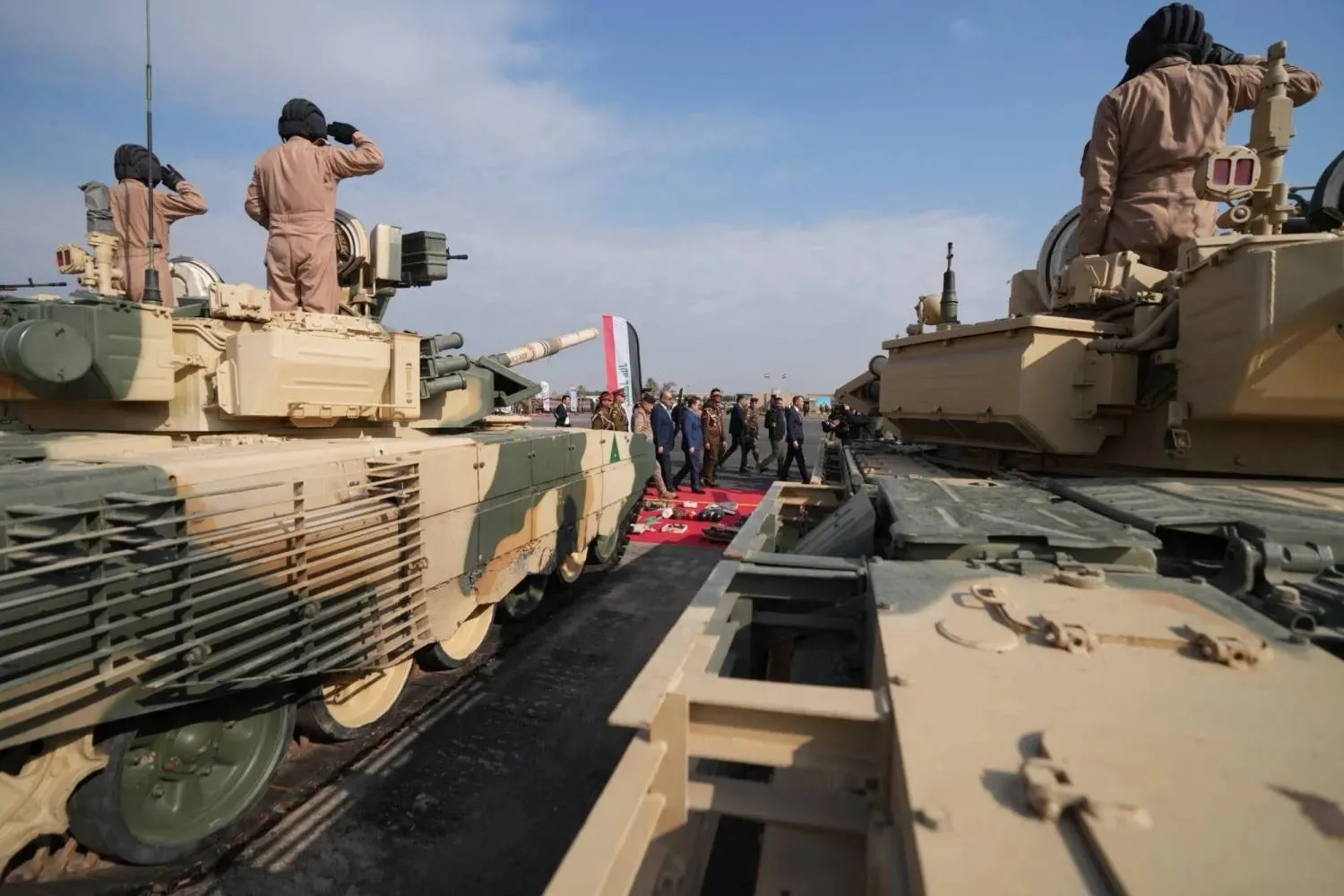
The Iraqi army takes part in a previous parade featuring US-made Abrams tanks (Iraqi Prime Minister’s Office) 
TT

Iraq Suspects Drone Attack Destroyed Tank Ammunition Stockpile Amid ‘Silent Battle’ With Militias

The Iraqi army takes part in a previous parade featuring US-made Abrams tanks (Iraqi Prime Minister’s Office) 

Iraqi authorities suspect a drone attack caused an explosion at a strategic ammunition depot at Camp Taji military base north of Baghdad in early August, security and intelligence sources said, inflicting extensive damage on stocks of ammunition for Iraqi army tanks and armored vehicles. Authorities had initially attributed the blaze to high temperatures.

Investigators now believe an unidentified drone was flying over the base shortly before an ammunition depot belonging to the 9th Armored Division exploded, destroying large quantities of ammunition for armored vehicles and US-made Abrams tanks, the sources said.

Two officers told Asharq Al-Awsat that investigators reviewed thermal-camera footage from the base showing a flying object approaching from the south shortly before the depot exploded.

“We lost most of our tank ammunition,” one officer said. “The 9th Armored Division now has no stockpile of shells — not even a single round — apart from the ammunition currently inside the tanks.”

Another intelligence officer said the depot was “most likely targeted by a drone.”

Iraq’s official news agency had quoted Defense and Interior Ministry officials on Aug. 2 as saying that high temperatures had caused a fire at an ammunition depot inside Camp Taji.

Although the initial account ruled out an attack, a senior military official told Asharq Al-Awsat that intelligence agencies were conducting a technical investigation to establish the circumstances.

Officials now view the incident as one of several signs that armed factions are attempting to “strip official security institutions of their weapons advantage.”

The targeted depot contained about 50,000 rounds, according to the sources, forming the main ammunition stockpile for one of the Iraqi army’s most important combat divisions. The full extent of the losses remains unclear.

The 9th Armored Division, based in Taji, is one of the army’s principal intervention units. A significant part of its arsenal is US-made, notably Abrams tanks and M113 armored personnel carriers.

Asharq Al-Awsat learned that Iraq recently sought urgent procurement contracts to replenish ammunition shortages, including rounds for US-made tanks and armored vehicles. The request is believed to be linked to losses from the Taji incident.

Neither the Defense Ministry spokesman nor the head of Iraq’s Security Media Cell responded to requests for comment.

Interior Ministry spokesman Maj. Gen. Miqdad Miri, however, told a news conference Monday that “any drone launched without authorization will be treated as terrorism,” stressing that “all weapons must be under state control.”

‘Silent Battle’

An intelligence official told Asharq Al-Awsat that preliminary investigations found that an armed group had used a location south of Baghdad to launch the drone toward Taji.

Security and political officials said the attack pointed to efforts by factions resisting disarmament to deprive regular forces of military assets that give them an advantage over irregular groups.

The sources said armed factions were making contingency plans for any confrontation with Iraqi security forces, seeking to eliminate assets — including tank ammunition — that could tip the balance in favor of government forces.

An official in the Coordination Framework said the Iraqi government was engaged in a “silent and sensitive battle with hard-line groups” but wanted to avoid an open confrontation because of the domestic and regional risks.

A political official quoted the leader of an armed faction opposed to the government’s weapons-control plan as saying his group and others were prepared for a military confrontation if the government or the United States used force to disarm them.

Prime Minister Ali al-Zaidi has set Sept. 30, 2026, as the deadline for US forces to withdraw from Iraq and for armed factions to place their weapons under state control.

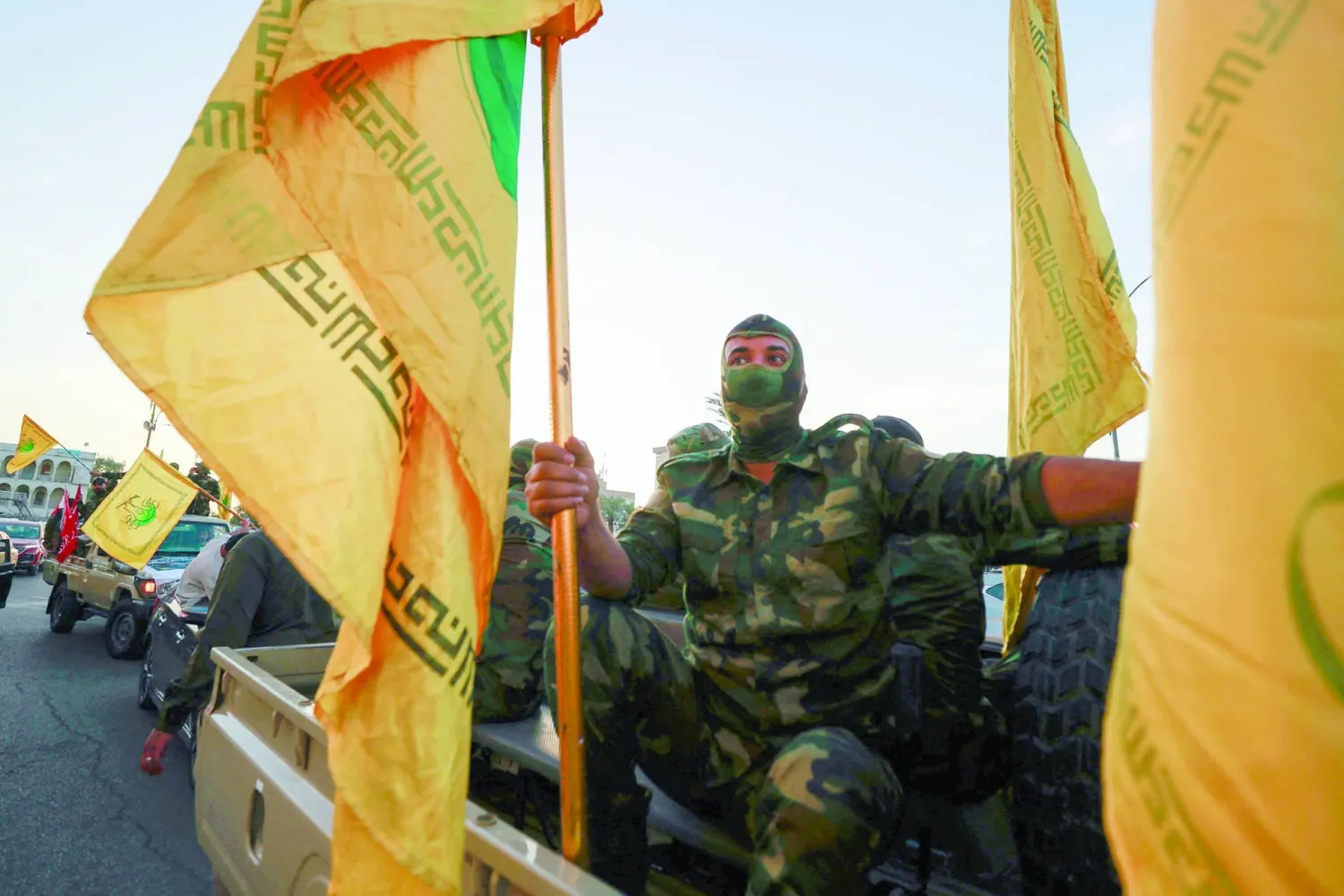
Kataib Hezbollah, Kataib Sayyid al-Shuhada and Harakat al-Nujaba, all aligned with Iran, continue to reject handing over their weapons. Activists close to the groups say the Axis of Resistance will not disarm even after US forces leave, while some have openly called, in a defiant reversal of the government’s policy, for “the state’s weapons to be placed in the hands of the factions.”



Doughty to Asharq Al-Awsat: Houthi Escalation Prompted Broad Punitive Measures

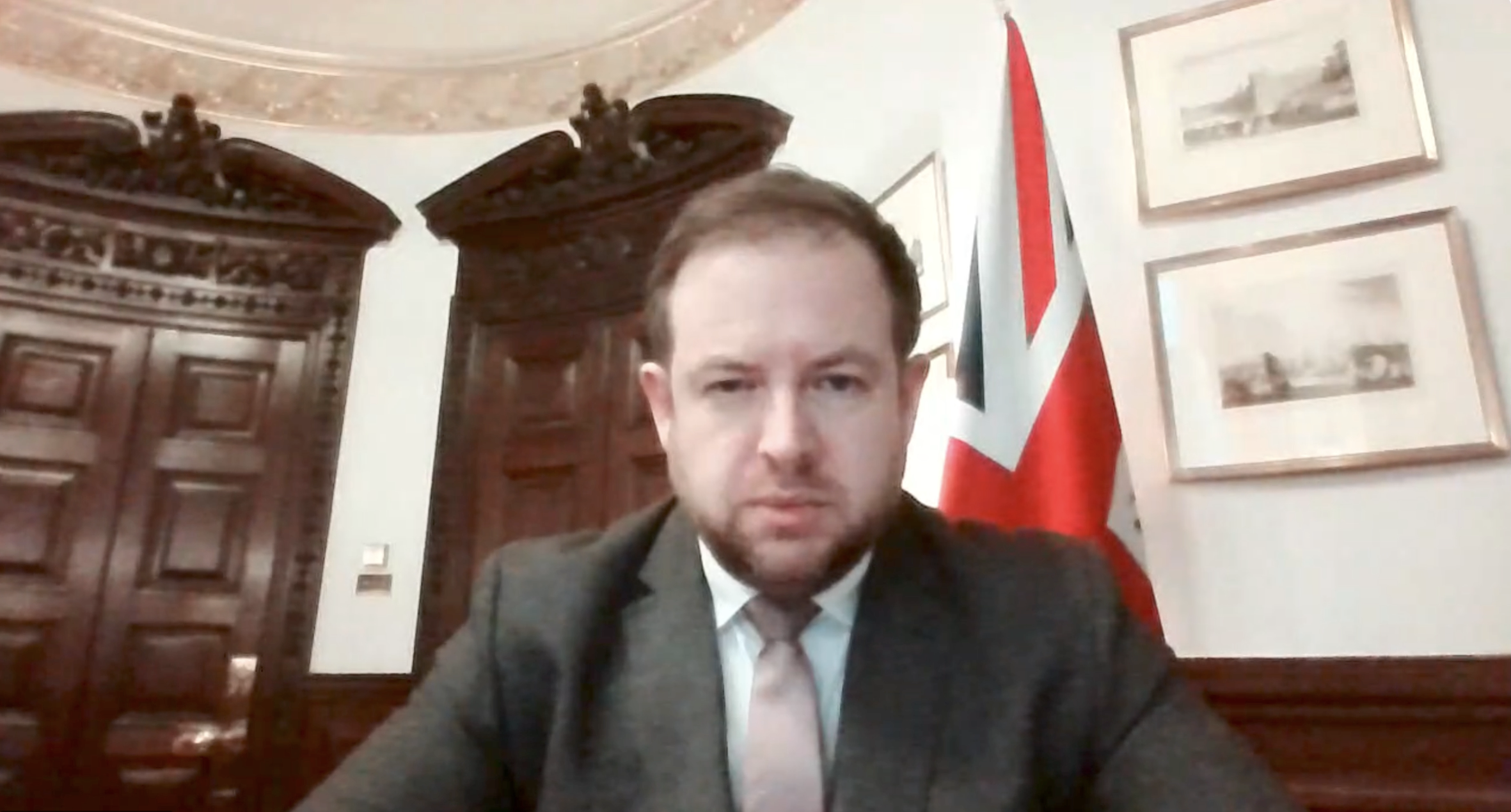
British Minister of State for the Middle East Stephen Doughty meets with Chairman of Yemen’s Presidential Leadership Council Dr. Rashad al-Alimi on November 5. (Doughty on social media)
TT

Doughty to Asharq Al-Awsat: Houthi Escalation Prompted Broad Punitive Measures

British Minister of State for the Middle East Stephen Doughty meets with Chairman of Yemen’s Presidential Leadership Council Dr. Rashad al-Alimi on November 5. (Doughty on social media)

British Minister of State for the Middle East Stephen Doughty stressed that the sanctions imposed by his country on Tuesday against the Houthi group are a "very significant step" in confronting the group's escalation of attacks inside Yemen and against neighboring countries.

He expressed confidence in the effectiveness of the new measures, without disclosing whether London is considering designating the Houthis as a terrorist organization.

In remarks to Asharq Al-Awsat, Doughty revealed close cooperation between Britain and the Yemeni Coast Guard to intercept illicit arms shipments to the Houthis as part of efforts to safeguard international navigation.

He also condemned Houthi attacks against Saudi Arabia, confirming that Britain is providing defensive military support to Riyadh, including air defense, aerial refueling, and Typhoon fighter jet support.

The minister described the Iranian threats facing the United Kingdom as "wide-ranging," calling on Tehran to halt its destabilizing activities inside and outside the region.

Broad sanctions package

The British government announced on Tuesday sanctions on the Houthi group, including an asset freeze, as well as sanctions targeting four of its officials over their involvement in serious human rights violations, comprising asset freezes and travel bans to the United Kingdom.

The British Foreign Office said the decision stemmed from the Houthis' escalation of fighting inside Yemen, their targeting of civilian infrastructure in Saudi Arabia, and their disruption of international shipping in the Red Sea and the Bab al-Mandeb Strait, which has disrupted global supply chains and added to cost-of-living pressures in the United Kingdom.

Amid the Houthis' continued escalation of attacks despite previous punitive measures, Doughty stressed that what sets the new package apart is that it targets the group in its entirety.

This is an important announcement that comes in response to the reckless escalation and aggression carried out by the Houthis, not only inside Yemen and against the Yemeni people, but also against neighboring countries in the region, including Saudi Arabia, he said.

This is completely unacceptable. There is immense humanitarian harm inside Yemen, hundreds of thousands of people are fleeing their homes, and there are horrific reports of human rights abuses and atrocities being committed. That is why the UK acted, he stressed.

Doughty noted that the sanctions also targeted four senior Houthi officials implicated in human rights violations and implementing these policies, adding that the new measures as a "very important step forward" and a direct response to the Houthis' actions.

Asked whether the British government is considering blacklisting the Houthi group and designating it as a terrorist organization, following the lead of the US, he replied that listing the Houthi group in its entirety on the sanctions list represents a very significant step.

It takes effect immediately, and it will have the impact London is seeking to achieve, he stated.

He likewise did not specify whether Britain intends to take additional measures to target the military and financial support Iran provides to the Houthis.

He noted that the number of British sanctions imposed on Iran now runs into the hundreds, and that London enacted a series of measures on September 8 against Iran and its proxy groups, including Lebanon's Hezbollah.

Doughty stressed that the sanctions imposed by his country on Tuesday against the Houthi group are a "very significant step". (Asharq Al-Awsat)

Red Sea maritime security

Within the framework of British efforts to protect international navigation in the Red Sea and the Bab al-Mandeb Strait, Doughty confirmed that his country is cooperating closely with the Yemeni Coast Guard to intercept illicit weapons supplies to the Houthis.

The Houthi actions against freedom of navigation and their threats to shipping are completely unacceptable. Maritime security and freedom of navigation must be respected, he said, pointing to a series of measures to bolster maritime security in the region.

These efforts are not limited to cooperation with Yemeni authorities. Doughty noted that London is working with a range of regional partners, while underlining the need to work toward ending the conflict in Yemen.

Ultimately, diplomatic pathways to de-escalate, ensuring freedom of navigation, but also, fundamentally, ending the conflict in Yemen are needed. This conflict is having devastating effects on hundreds of thousands of Yemenis and is destabilizing the region, he said.

He stressed that attacks targeting civilians and infrastructure in neighboring countries, such as the strikes that hit Saudi airports, are "completely unacceptable."

Military support for Saudi Arabia

Doughty condemned the Houthi attacks on Saudi Arabia, stressing that the UK has been supporting the Kingdom for weeks through a range of measures, including air defense, aerial refueling, as well as support with Typhoon aircraft.

This is extremely important as part of the defensive role the UK is playing to support its close partner and friend, the Kingdom of Saudi Arabia, he stressed, adding that his country will listen carefully to any further requests it may put forward.

The UK and Saudi Arabia are working very closely together, he remarked.

Recalling his recent visit to Riyadh, he said what the Kingdom was subjected to is "completely unacceptable," citing attacks on its airports, and the killing and injury of innocent civilians.

He demanded that the Houthis cease these actions immediately.

Prospects of renewed war with Iran

At a time when world capitals are monitoring indicators regarding a potential resumption of military confrontation between the United States and Iran in the coming months, Doughty stressed London's commitment to the diplomatic track, pointing to its close cooperation with regional partners and its support for talks mediated by Oman, as well as efforts by Qatar and others.

Doughty said London wants to reach a negotiated diplomatic solution that allows the reopening of the Strait of Hormuz, which is vital for the global economy, the British economy, and the economies of the region.

He underlined the importance of defending the principles of maritime security and freedom of navigation.

The minister, who assumed office four months ago, also affirmed the United Kingdom's readiness to defend its partners and interests. "When our partners and allies, as well as British interests, are threatened, we will of course defend our partners and our interests," he said.

Doughty reiterated his country's rejection of Iran acquiring a nuclear weapon.

Iran cannot be allowed to develop a nuclear weapon. It must stop its attacks on its neighbors and halt its destabilizing activities in the region and beyond, he urged.

He underscored the importance of diplomacy, and that has been conveyed directly to Tehran. The UK will continue to work with its regional partners to reach a diplomatic solution.

Iran's ‘wide-ranging’ threats

British concerns over Iran's activities are not confined to the Middle East. Following European Union accusations that Tehran was behind cyberattacks targeting cooling systems in several European countries days ago, Doughty described the threats Iran poses to the United Kingdom as "wide-ranging," stressing the need for them to stop.

He pointed to the varied nature of these threats, ranging from those targeting military bases and cyberattacks to the targeting of individuals and communities, recalling that the British government has previously spoken publicly about several of these issues.

Doughty expressed his country's full solidarity with France and other nations, condemning any attempts at cyber interference targeting the UK's partners and allies, and urging Iran to cease these activities immediately.

While declining to go into detail regarding British defensive capabilities, he underlined London's awareness of the hybrid threats it faces from various actors, whether Russia, Iran, or others.

"We will defend our infrastructure and our citizens," he said.


Iraqi MP Suspected of Smuggling Accuses al-Nujaba Faction of Seizing Oil Pipeline

Members of the al-Nujaba faction at a rally in Baghdad. (AFP file)
TT

Iraqi MP Suspected of Smuggling Accuses al-Nujaba Faction of Seizing Oil Pipeline

Members of the al-Nujaba faction at a rally in Baghdad. (AFP file)

Seeking to deflect accusations against himself, an Iraqi lawmaker implicated in smuggling activities has accused the pro-Iran al-Nujaba faction, led by Akram al-Kaabi, of seizing land traversed by an oil pipeline in Najaf, southern Iraq.

Abdul-Hadi al-Hasnawi, a lawmaker representing the province, stated on Tuesday that "the pipeline encroachment incident uncovered by the judiciary does not lie within the boundaries of the agricultural land belonging to his family."

Last Saturday, the Supreme Judicial Council announced in a statement that it had "conducted an on-site inspection of a breach on an oil pipeline in Najaf, located within a plot of land belonging to a provincial council member who chairs the energy committee, and his brother, as part of ongoing investigations into suspected oil smuggling operations."

Lawmaker Abdul-Hadi al-Hasnawi denied any involvement by his two brothers: Mohammed al-Hasnawi al-Abbasi, the aforementioned council member and committee chair, and Hussein al-Hasnawi al-Abbasi.

According to the judiciary, "the results of the inspection and preliminary investigations revealed oil smuggling operations through the pipeline."

The court ordered the detention of five officers and three personnel from the Energy Police pending investigation, following information indicating their interference in the incident, and also issued arrest warrants for the two brothers in accordance with the law.

The oil smuggling file erupted following the arrest of Oil Ministry Undersecretary for Refining Affairs Adnan al-Jumaili in May, after which Iraqi authorities arrested roughly 70 officials in the oil sector.

The oil smuggling case and the pursuit of those involved widened about a week after intelligence reports surfaced regarding the discovery of large-scale oil siphoning and smuggling operations in the Jurf al-Sakhar area by Kataib Hezbollah. Reports backed by satellite imagery indicated that the operation began in 2021, before government authorities succeeded in halting it and entering the Jurf area last Friday.

Al-Hasnawi’s account

While defending himself against the charges in a video clip broadcast on platforms affiliated with him, al-Hasnawi accused the Iran-aligned Al-Nujaba faction of controlling the land through which the breached pipeline runs.

Al-Hasnawi provided new details regarding the encroachment on the strategic oil pipeline linking Basra to the Haditha district, which runs through the al-Haidariya subdistrict in Najaf where his family resides.

He confirmed that his brother Hussein promptly turned himself in to security forces as soon as a judicial warrant was issued against him, while denying reports that his other brother, Mohammed, had fled the country.

He said his brother "left Iraq on a medical trip the previous Wednesday, three days before the incident."

The al-Nujaba faction rejected the accusations of smuggling and oil theft, announcing legal action to sue lawmaker al-Hasnawi.

In a statement, it said it "rejects the exploitation of corruption files and their use in systematic campaigns targeting parties that participated in the 'Al-Aqsa Flood' battle."

It vowed that it will "resort to the judiciary and file a lawsuit against MP Abdul-Hadi al-Hasnawi over his allegations, which we consider false.


UK Sanctions Four Houthi Officials Over Torture, Sexual Violence Abuses

Britain's Foreign Secretary Ed Miliband poses during a meeting with his French counterpart at the Quai d'Orsay in Paris on July 29. (AFP)
TT

UK Sanctions Four Houthi Officials Over Torture, Sexual Violence Abuses

Britain's Foreign Secretary Ed Miliband poses during a meeting with his French counterpart at the Quai d'Orsay in Paris on July 29. (AFP)

Britain on Tuesday sanctioned four ‌senior ‌figures linked ‌to ⁠the terrorist Houthi militia in Yemen, accusing ⁠them of ⁠involvement ‌in ‌torture, rape ‌and ‌other serious abuses ‌against detainees held by ⁠the ⁠militia.

In a statement, the UK government said it is “stepping up its response to the crisis in Yemen targeting those who seek to undermine peace inside the country.”

It announced designations against the Houthis and four top officials, following the group’s decision to resume conflict across the region and inside Yemen.

“The reckless behavior of the Houthis in the Bab al-Mandeb Strait has continued to disrupt global supply chains and has put added pressure on the cost of living for British families,” it added.

“Backed by Iran, the Houthis have increased attacks against Saudi Arabia’s civilian infrastructure and renewed conflict inside Yemen,” it went on to say.

Foreign Secretary, Ed Miliband said: “The Houthis’ renewed aggression targeting our partners and innocent civilians is unacceptable and they must be held to account.”

“This government has today taken steps to do just that. We will not stand by whilst groups like the Houthis take action that drives up the cost of living for the British people while deliberately attempting to undermine the stability of the Middle East,” he said.

“Today’s measures send a clear message to the Houthis - we will always act in support of British values and interests,” he added.

Tuesday’s measures “underline the UK’s commitment to holding those to account who seek to undermine peace and security in Yemen and the region and reaffirm our support for the people of Yemen and Yemen’s internationally recognized institutions,” continued the government statement.

The package of designations also targets those who have been involved “in serious human rights abuses, including the cruel, inhuman and degrading treatment of prisoners in Yemen, which the UK condemns in all forms.”

The designations target Abdulkarim Amir al-Din Hussein Al-Houthi, who served as the so-called Houthi Minister of Interior in the illegal Houthi government in Sanaa since 2019.

He has been responsible for the police, security forces, Criminal Investigation Department, women’s security unit and detention facilities of the Ministry of Interior, in whose custody detainees have been subjected to torture and other cruel, inhuman or degrading treatment, including electric shocks, beatings and sexual violence, said the designation.

Another designation targeted Abdul Hakim Hashem Ali Al-Khaiwani, the Head of the Houthi Security and Intelligence Service and previously served as Houthi as Deputy Minister of Interior, and Mohammed Moufleh, a Houthi-appointed judge in Yemen who has been involved in a serious violation of an individual’s right to liberty and security of a person.

The fourth designation targets Sarim Al-Din Muffadal, a senior Houthi prosecutor in Yemen who is reasonably suspected of having directly perpetrated, or knowingly permitted or acquiesced in, sexual violence including rape, torture and other cruel, inhuman or degrading treatment of women detainees.

Tuesday's package of measures “reaffirms the UK’s position that Houthi aggression is unacceptable and that the group must be held to account, following years of efforts to secure peace and progress through dialogue,” said the government statement,

Alongside this, the UK recently led international efforts to strengthen the UN Yemen sanctions regime, using its role as UN Security Council penholder on Yemen to increase pressure on the Houthis to cease in their aggression.

“This government has repeatedly made clear that the Houthis must end their attacks immediately and allow safe, unimpeded humanitarian access,” it added.

“The decision to restart conflict in Yemen puts the most vulnerable at further risk and has displaced hundreds of thousands of Yemenis,” it stated.

In September, the government responded by announcing £10m in funding for the UN flash appeal as part of our £104 million humanitarian support to Yemen this year.

Moreover, the statement declared: “The UK stands with the Kingdom of Saudi Arabia and the people and government of Yemen in the wake of increased Houthi attacks.”

Minister for the Middle East Stephen Doughty recently visited Saudi Arabia to reiterate the UK’s solidarity to Saudi counterparts and long-standing support to the government of Yemen.