
Peace Now Accuses Israeli Government of Weakening PA, Undermining Oslo Accords

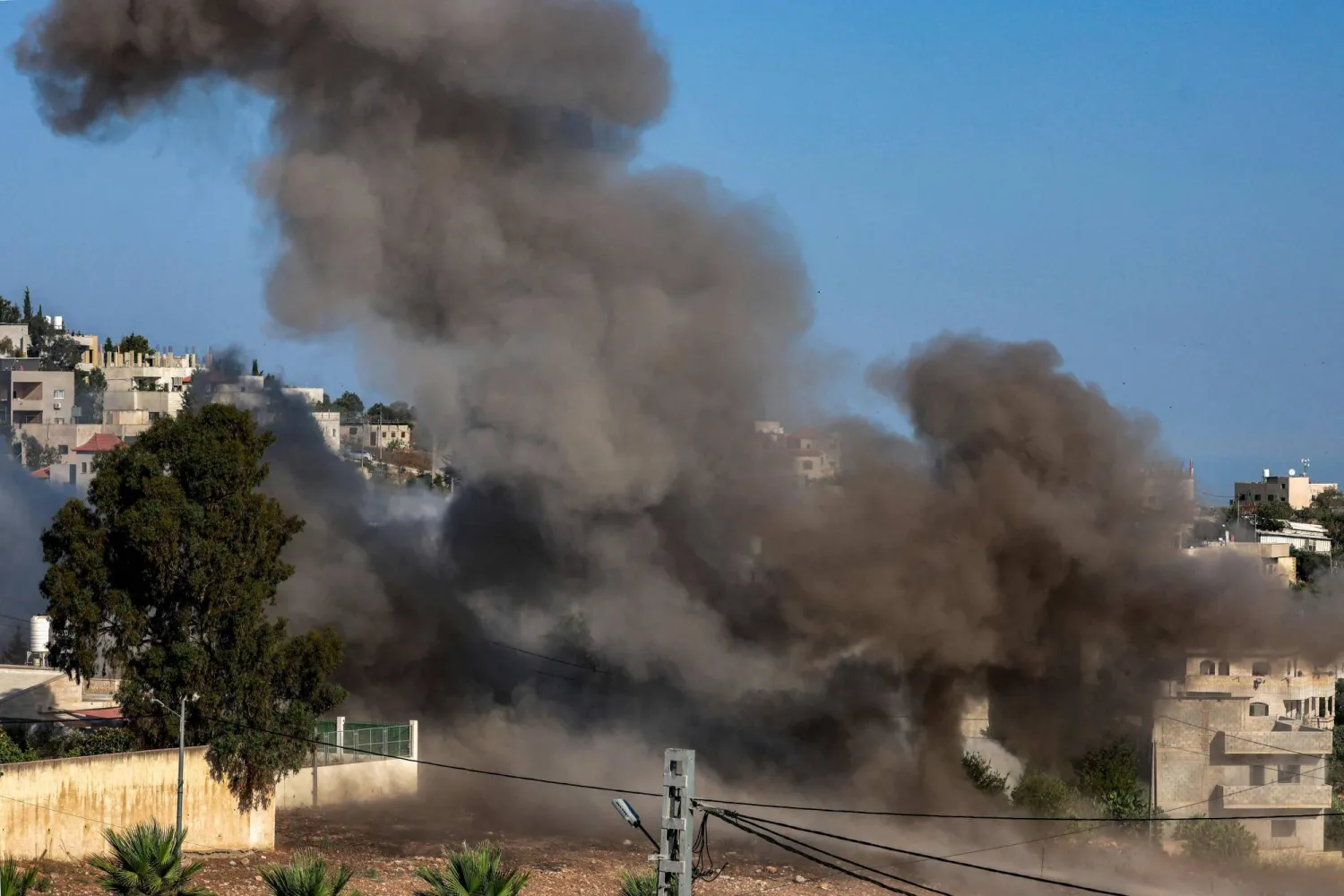
Smoke rises during an Israeli controlled-demolition from the home of Palestinian Farouk Ramadan, who was involved and killed in clashes with Israeli settlers on July 24, killing two, in the Palestinian village of Tell in the occupied West Bank on August 11, 2026. (AFP)
TT

Peace Now Accuses Israeli Government of Weakening PA, Undermining Oslo Accords

Smoke rises during an Israeli controlled-demolition from the home of Palestinian Farouk Ramadan, who was involved and killed in clashes with Israeli settlers on July 24, killing two, in the Palestinian village of Tell in the occupied West Bank on August 11, 2026. (AFP)

The Israeli advocacy group, Peace Now, warned that the policy being implemented by the Israeli government in the West Bank weakens the Palestinian Authority and strains the 33-year-old Oslo framework through settlement expansion and shifted administrative powers.

In a report obtained by Ynet on Tuesday, Peace Now accused Israeli Prime Minister Benjamin Netanyahu’s government of carrying out an organized and consistent campaign to weaken the Palestinian Authority economically, politically, territorially and in terms of security.

It said the Israeli government violated the agreements signed in Oslo by expanding settlements and transferring authority in Areas A and B of the West Bank to the Civil Administration.

The movement then warned that these practices represent an Israeli undeclared annexation of the territories.

“Netanyahu’s government is playing with fire, disregarding its international commitments and endangering Israel’s security - all in order to take control of more territory and land in the West Bank,” Peace Now said.

It added that “the government’s actions in Areas A and B are not isolated incidents but part of an organized policy whose ultimate goal is to collapse the Palestinian Authority and create chaos that would allow it to expand settlements into cities and villages deep inside the West Bank.”

The Oslo Accords split the West Bank into three temporary zones: Area A (about 18% under Palestinian control), Area B (about 22% under joint control), and Area C (about 60% under full Israeli control). The five-year interim plan never shifted to a permanent treaty.

Since the Second Intifada, the Israeli military has routinely conducted operations, raids, and incursions into Area A, fundamentally altering the implementation of the original agreement.

Peace Now said the Israeli military further violated the agreement last year when it used land-requisition orders inside Area A for explicitly civilian settlement purpose, rather than for military purposes.

Also, Peace Now’s report said one of the main tools used to pressure the PA is the withholding of tax revenues collected by Israel on its behalf under the 1994 Paris Protocol.

The revenues amount to about 11 billion shekels (around $3.66 billion) a year and have historically accounted for more than 60% of the Palestinian Authority’s budget, according to Ynet.

Peace Now said only about half of the funds owed to the Palestinian Authority were transferred under the current government between 2022 and 2025. Since June 2025, not a single shekel has been transferred, according to the report.

It also noted the security cabinet measures introduced in February and which authorized the Civil Administration to enforce regulations and oversee environmental protection, water and archaeology in Areas A and B of the West Bank.

The Israeli government claimed the move was aimed at preventing environmental hazards and damage to heritage sites, it said.

Peace Now noted that the environmental and archaeological measures use definitions broad enough to enable Israeli civilian authorities to intervene in Palestinian construction across much of the West Bank.

It then cited Israeli military orders issued in July to requisition Palestinian land inside Area A for a road connecting two settlements.

The movement said it was the first time since the Oslo Accords were signed that military land-requisition orders had been used inside Area A for an explicitly civilian settlement purpose, rather than for military purposes.

Peace Now said it had also documented at least 23 settlement outposts established in Areas B over the past two and a half years.

But even when the military occasionally removes the outposts, they are rebuilt and expanded, including with permanent structures, it said.

The movement noted that the outposts have been accompanied by the construction of roads, the takeover of water sources and the displacement of Palestinian residents.

Settlers have also taken over abandoned Palestinian homes in Areas B and C after residents were forced to leave following repeated settler attacks.

The report mentions a June decision by the Civil Administration, which moved to strip the Palestinian municipality of Hebron of broad planning and construction powers relating to settlements and several holy sites in the heart of the city.

Peace Now stressed that the government has not formally announced the cancellation of the Oslo Accords, nor has it introduced legislation to annex the West Bank or dismantle the Palestinian Authority.

The group argued that the measures combined amount in practice to a process of undeclared annexation.

Israeli Finance Minister Bezalel Smotrich said the report was a “certificate of achievement for the Israeli government.”

He said, “What they call ‘the erosion of Oslo’ we call correcting an injustice resulting from 30 years of neglect,” according to Ynet.

“What they call ‘de facto annexation’ we call establishing Israel’s security belt,” the minister added. “I am proud of the settlement revolution I have led to prevent the establishment of a Palestinian terrorist state in the heart of the country. This is only the beginning.”

OPCW Praises Damascus Authorities for Addressing Legacy of Assad-Era Chemical Weapons

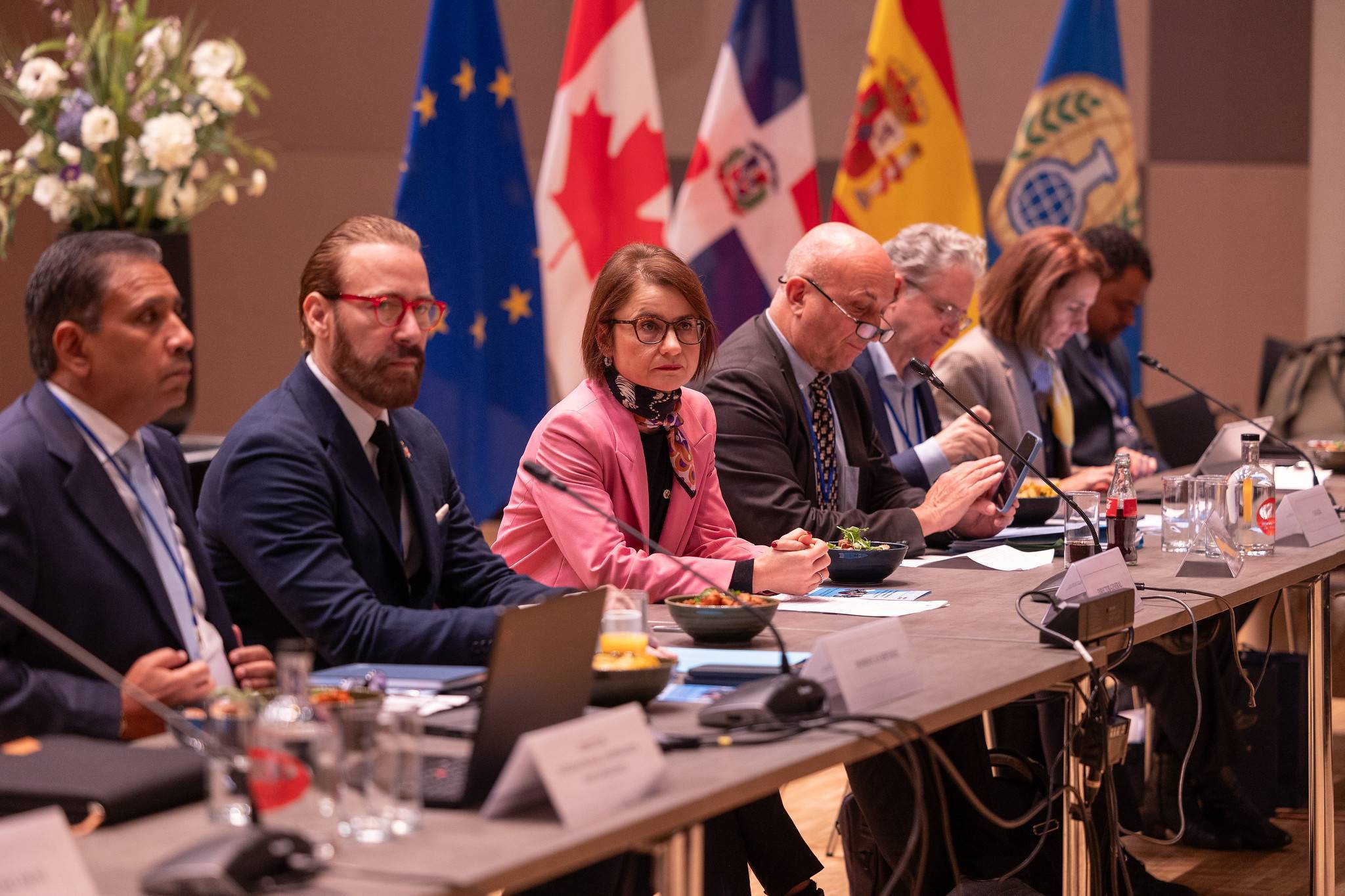
The opening of the the 31st Session of the Conference of the States Parties to the Chemical Weapons Convention in The Hague. (OPCW)
TT

OPCW Praises Damascus Authorities for Addressing Legacy of Assad-Era Chemical Weapons

The opening of the the 31st Session of the Conference of the States Parties to the Chemical Weapons Convention in The Hague. (OPCW)

Director-General of the Organization for the Prohibition of Chemical Weapons (OPCW) Sabrina Dallafior said Tuesday that the organization’s teams verified in August the destruction of 42 aerial bombs discovered in Syria, which were part of previously undeclared chemical weapons dating back to Assad's ousted regime.

In her opening statement to31st Session of the Conference of the States Parties to the Chemical Weapons Convention in The Hague, Dallafior cited “important progress” in Syria in recent months.

“In May, the Secretariat, supported by the Syrian authorities, discovered a significant amount of undeclared chemical weapons. In August, our teams were able to verify the irreversible destruction of 42 aerial bombs,” she said.

“This was the first verified destruction of declared chemical weapons in Syria since 2014,” she revealed, describing the effort as a “successful multilateralism in action.”

She expressed her gratitude towards Syrian Minister of Emergency and Disaster Management Raed al-Saleh and his colleagues for their efforts.

Director-General of the Organization for the Prohibition of Chemical Weapons (OPCW) Sabrina Dallafior. (OPCW)

“The goal remains to normalize handling of the Syria file at the OPCW. The Secretariat is developing concrete plans to that end, in close collaboration with the Syrian authorities,” Dallafior continued.

“In early November, a Secretariat team identified what may be equipment related to the production or use of chemical weapons. These developments deepen my sense of confidence and optimism, and I want to pay tribute to both our Syrian government partners and the Secretariat teams involved in this complex task,” she said.

For his part, al-Saleh told the conference Syria has taken significant practical steps in addressing the legacy of Assad’s chemical program.

Its success in destroying the first chemical missile from the inherited stockpile, under the supervision of the Technical Secretariat of the OPCW, marks a historic turning point in handling this file, he remarked.

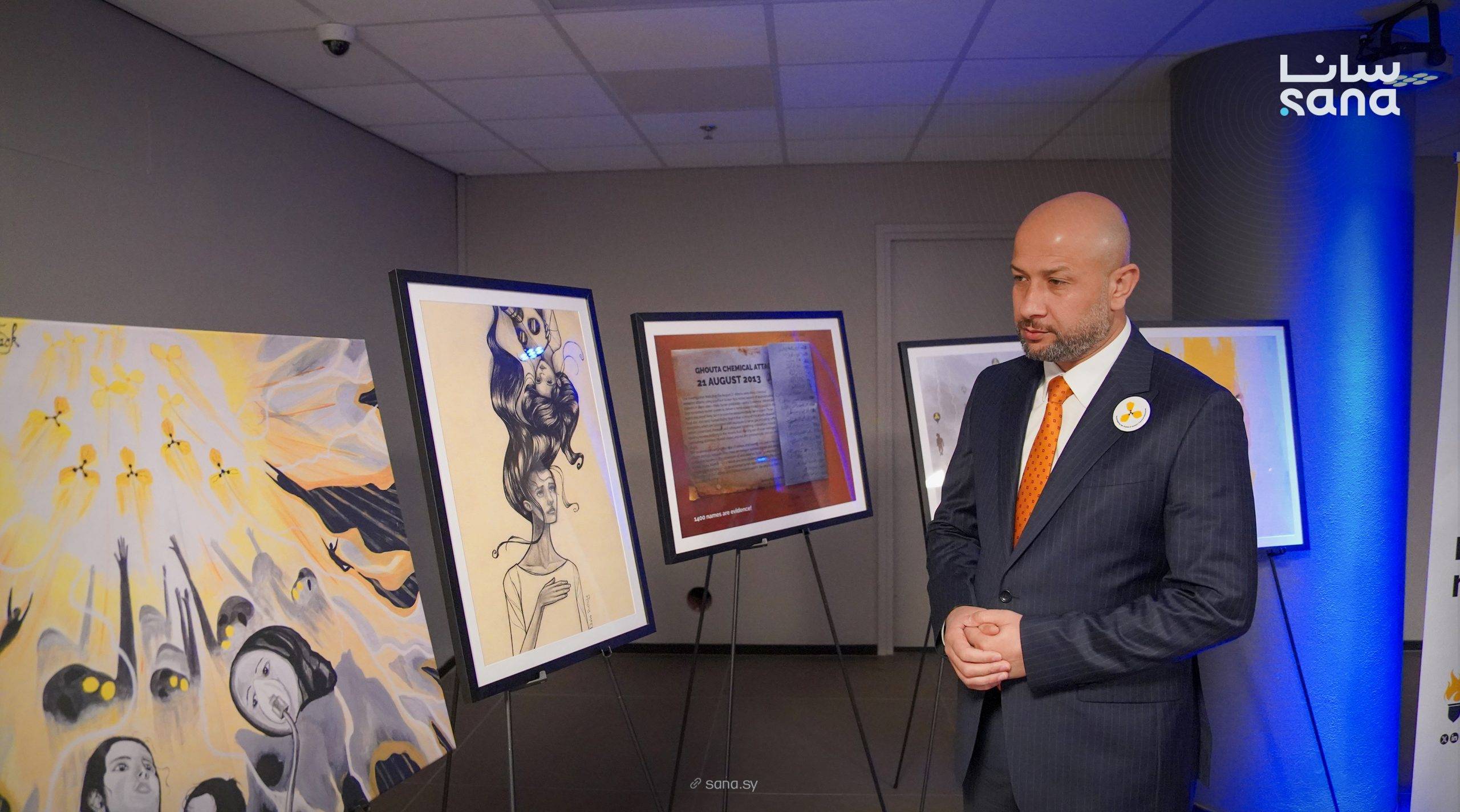
Syrian Minister of Emergency and Disaster Management Raed al-Saleh. (SANA)

In a post on the X platform on Monday, he stressed that dismantling the banned chemical arsenal and eliminating its threat “came thanks to the sacrifices and perseverance of the Syrian people, as well as the blood of martyrs who paid the price for freedom and dignity.”

He wrote about attending on behalf of the White Helmets past events held on the sidelines of the Conference of the States Parties to the Chemical Weapons Convention, “carrying the voices of victims and survivors, and addressing the world on behalf of those suffocated by chemical weapons, demanding truth and justice.”

“Today, we return to this conference as the delegation of the Syrian Arab Republic to tell the world another story - the story of Syrians who, through their will and resilience, managed to begin destroying this deadly legacy and removing one of the most dangerous threats left behind by the ousted regime,” he added.

“We have made a pledge to our martyrs, to the survivors, and to the families of the victims that chemical weapons will have no place in Syria’s future, and will forever leave the lexicon of fear and death imposed on Syrians for decades,” he stressed.


Aoun: Diplomacy Does Not Mean Surrender

Lebanese President Joseph Aoun meets with Prime Minister Nawaf Salam. Photo: Lebanese Presidency
TT

Aoun: Diplomacy Does Not Mean Surrender

Lebanese President Joseph Aoun meets with Prime Minister Nawaf Salam. Photo: Lebanese Presidency

Lebanese President Joseph Aoun defended on Tuesday the option of direct negotiations with Israel, stressing that resorting to diplomacy is neither surrender nor defeat, but rather a means of achieving Lebanon’s objectives and restoring its rights.

He stated that “diplomacy is not surrender; it is one of the instruments and options of politics. Negotiation is not a sign of weakness, and peace does not compromise dignity.”

Aoun’s remarks came as consultations continue regarding arrangements for the period following the end of the UNIFIL mission in southern Lebanon. Lebanon and France remain committed to maintaining the UN presence and avoiding any security vacuum. These issues were discussed by Aoun and Prime Minister Nawaf Salam on Monday, while both also received a French parliamentary delegation.

Aoun: Negotiations to Achieve Our Goals

During a meeting with activists and representatives of civil society, Aoun addressed the issue of negotiations, stating that Lebanon faced two choices:

“Either remain helpless observers while the current situation continues, or pursue the diplomatic option to achieve our objectives: liberating the south from occupation, securing the release of prisoners, enabling displaced persons to return, and achieving a ceasefire.”

In what appeared to be a clear reference to Hezbollah, he asked:

“Are you capable of achieving these goals by continuing the war? If you are unable to do so, then let us work to achieve them.”

He stressed that the problem lies not in negotiations themselves but in the negotiator, rejecting any suggestion that the Lebanese state is incapable of defending its interests.

“Are we incompetent? Do we not know how to speak and defend ourselves? This is where sovereignty begins: with sovereignty over decision-making.”

Aoun also stressed that the objective is for the state alone to hold weapons and control decisions of war and peace, so that: “There is no weapon except that of the Lebanese Army and the Lebanese security forces.”

“We sacrifice ourselves for our country, but we do not sacrifice our country for others,” he added.

The president called for national unity, warned against seeking external support against fellow citizens, and affirmed that the state would continue pursuing reforms, strengthening the judiciary, and modernizing public administration.

The Post-UNIFIL Phase

Regarding UNIFIL, Aoun said during his meeting with the French parliamentary delegation, in the presence of Ambassador Patrick Durel, that there was “a convergence of views between Lebanon and France on extending UNIFIL’s mandate, or enabling it to continue carrying out its duties through 2027, while ensuring that no vacuum occurs.”

He stressed that any replacement force should operate under the United Nations flag and within the legal framework of Security Council Resolution 1701, with amendments possible if necessary.

Salam also stressed during his meeting with the French delegation the need for “an ongoing UN presence in southern Lebanon after the end of UNIFIL’s mission.”

Hezbollah Issues a Warning

Meanwhile, as five Hezbollah members, described as the “security group” apprehended in the mountainous areas of the Bsharri and Batroun districts in northern Lebanon, are expected to appear before Military Investigating Judge Ghada Abu Alwan soon for questioning on charges related to “forming armed groups with the aim of undermining the internal security of the state,” Hezbollah escalated its rhetoric.

MP Hussein Hajj Hassan warned the state, saying: “Our commitment to preserving civil peace compels us to act responsibly, but patience has its limits.”


Doughty to Asharq Al-Awsat: Houthi Escalation Prompted Broad Punitive Measures

British Minister of State for the Middle East Stephen Doughty meets with Chairman of Yemen’s Presidential Leadership Council Dr. Rashad al-Alimi on November 5. (Doughty on social media)
TT

Doughty to Asharq Al-Awsat: Houthi Escalation Prompted Broad Punitive Measures

British Minister of State for the Middle East Stephen Doughty meets with Chairman of Yemen’s Presidential Leadership Council Dr. Rashad al-Alimi on November 5. (Doughty on social media)

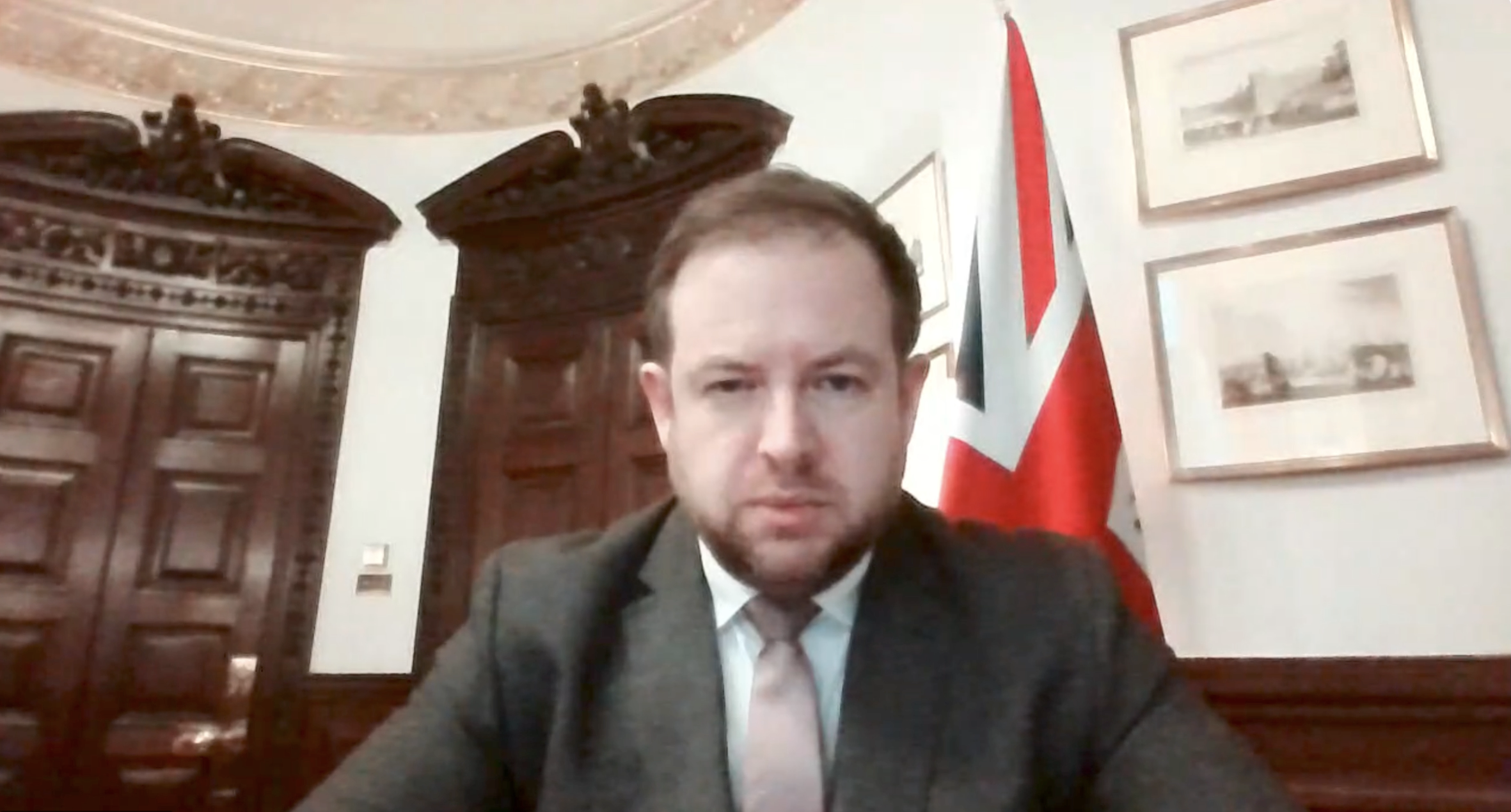
British Minister of State for the Middle East Stephen Doughty stressed that the sanctions imposed by his country on Tuesday against the Houthi group are a "very significant step" in confronting the group's escalation of attacks inside Yemen and against neighboring countries.

He expressed confidence in the effectiveness of the new measures, without disclosing whether London is considering designating the Houthis as a terrorist organization.

In remarks to Asharq Al-Awsat, Doughty revealed close cooperation between Britain and the Yemeni Coast Guard to intercept illicit arms shipments to the Houthis as part of efforts to safeguard international navigation.

He also condemned Houthi attacks against Saudi Arabia, confirming that Britain is providing defensive military support to Riyadh, including air defense, aerial refueling, and Typhoon fighter jet support.

The minister described the Iranian threats facing the United Kingdom as "wide-ranging," calling on Tehran to halt its destabilizing activities inside and outside the region.

Broad sanctions package

The British government announced on Tuesday sanctions on the Houthi group, including an asset freeze, as well as sanctions targeting four of its officials over their involvement in serious human rights violations, comprising asset freezes and travel bans to the United Kingdom.

The British Foreign Office said the decision stemmed from the Houthis' escalation of fighting inside Yemen, their targeting of civilian infrastructure in Saudi Arabia, and their disruption of international shipping in the Red Sea and the Bab al-Mandeb Strait, which has disrupted global supply chains and added to cost-of-living pressures in the United Kingdom.

Amid the Houthis' continued escalation of attacks despite previous punitive measures, Doughty stressed that what sets the new package apart is that it targets the group in its entirety.

This is an important announcement that comes in response to the reckless escalation and aggression carried out by the Houthis, not only inside Yemen and against the Yemeni people, but also against neighboring countries in the region, including Saudi Arabia, he said.

This is completely unacceptable. There is immense humanitarian harm inside Yemen, hundreds of thousands of people are fleeing their homes, and there are horrific reports of human rights abuses and atrocities being committed. That is why the UK acted, he stressed.

Doughty noted that the sanctions also targeted four senior Houthi officials implicated in human rights violations and implementing these policies, adding that the new measures as a "very important step forward" and a direct response to the Houthis' actions.

Asked whether the British government is considering blacklisting the Houthi group and designating it as a terrorist organization, following the lead of the US, he replied that listing the Houthi group in its entirety on the sanctions list represents a very significant step.

It takes effect immediately, and it will have the impact London is seeking to achieve, he stated.

He likewise did not specify whether Britain intends to take additional measures to target the military and financial support Iran provides to the Houthis.

He noted that the number of British sanctions imposed on Iran now runs into the hundreds, and that London enacted a series of measures on September 8 against Iran and its proxy groups, including Lebanon's Hezbollah.

Doughty stressed that the sanctions imposed by his country on Tuesday against the Houthi group are a "very significant step". (Asharq Al-Awsat)

Red Sea maritime security

Within the framework of British efforts to protect international navigation in the Red Sea and the Bab al-Mandeb Strait, Doughty confirmed that his country is cooperating closely with the Yemeni Coast Guard to intercept illicit weapons supplies to the Houthis.

The Houthi actions against freedom of navigation and their threats to shipping are completely unacceptable. Maritime security and freedom of navigation must be respected, he said, pointing to a series of measures to bolster maritime security in the region.

These efforts are not limited to cooperation with Yemeni authorities. Doughty noted that London is working with a range of regional partners, while underlining the need to work toward ending the conflict in Yemen.

Ultimately, diplomatic pathways to de-escalate, ensuring freedom of navigation, but also, fundamentally, ending the conflict in Yemen are needed. This conflict is having devastating effects on hundreds of thousands of Yemenis and is destabilizing the region, he said.

He stressed that attacks targeting civilians and infrastructure in neighboring countries, such as the strikes that hit Saudi airports, are "completely unacceptable."

Military support for Saudi Arabia

Doughty condemned the Houthi attacks on Saudi Arabia, stressing that the UK has been supporting the Kingdom for weeks through a range of measures, including air defense, aerial refueling, as well as support with Typhoon aircraft.

This is extremely important as part of the defensive role the UK is playing to support its close partner and friend, the Kingdom of Saudi Arabia, he stressed, adding that his country will listen carefully to any further requests it may put forward.

The UK and Saudi Arabia are working very closely together, he remarked.

Recalling his recent visit to Riyadh, he said what the Kingdom was subjected to is "completely unacceptable," citing attacks on its airports, and the killing and injury of innocent civilians.

He demanded that the Houthis cease these actions immediately.

Prospects of renewed war with Iran

At a time when world capitals are monitoring indicators regarding a potential resumption of military confrontation between the United States and Iran in the coming months, Doughty stressed London's commitment to the diplomatic track, pointing to its close cooperation with regional partners and its support for talks mediated by Oman, as well as efforts by Qatar and others.

Doughty said London wants to reach a negotiated diplomatic solution that allows the reopening of the Strait of Hormuz, which is vital for the global economy, the British economy, and the economies of the region.

He underlined the importance of defending the principles of maritime security and freedom of navigation.

The minister, who assumed office four months ago, also affirmed the United Kingdom's readiness to defend its partners and interests. "When our partners and allies, as well as British interests, are threatened, we will of course defend our partners and our interests," he said.

Doughty reiterated his country's rejection of Iran acquiring a nuclear weapon.

Iran cannot be allowed to develop a nuclear weapon. It must stop its attacks on its neighbors and halt its destabilizing activities in the region and beyond, he urged.

He underscored the importance of diplomacy, and that has been conveyed directly to Tehran. The UK will continue to work with its regional partners to reach a diplomatic solution.

Iran's ‘wide-ranging’ threats

British concerns over Iran's activities are not confined to the Middle East. Following European Union accusations that Tehran was behind cyberattacks targeting cooling systems in several European countries days ago, Doughty described the threats Iran poses to the United Kingdom as "wide-ranging," stressing the need for them to stop.

He pointed to the varied nature of these threats, ranging from those targeting military bases and cyberattacks to the targeting of individuals and communities, recalling that the British government has previously spoken publicly about several of these issues.

Doughty expressed his country's full solidarity with France and other nations, condemning any attempts at cyber interference targeting the UK's partners and allies, and urging Iran to cease these activities immediately.

While declining to go into detail regarding British defensive capabilities, he underlined London's awareness of the hybrid threats it faces from various actors, whether Russia, Iran, or others.

"We will defend our infrastructure and our citizens," he said.