
Baghdad Moves to Encircle Positions Run by Iran’s Revolutionary Guard Without Confrontation

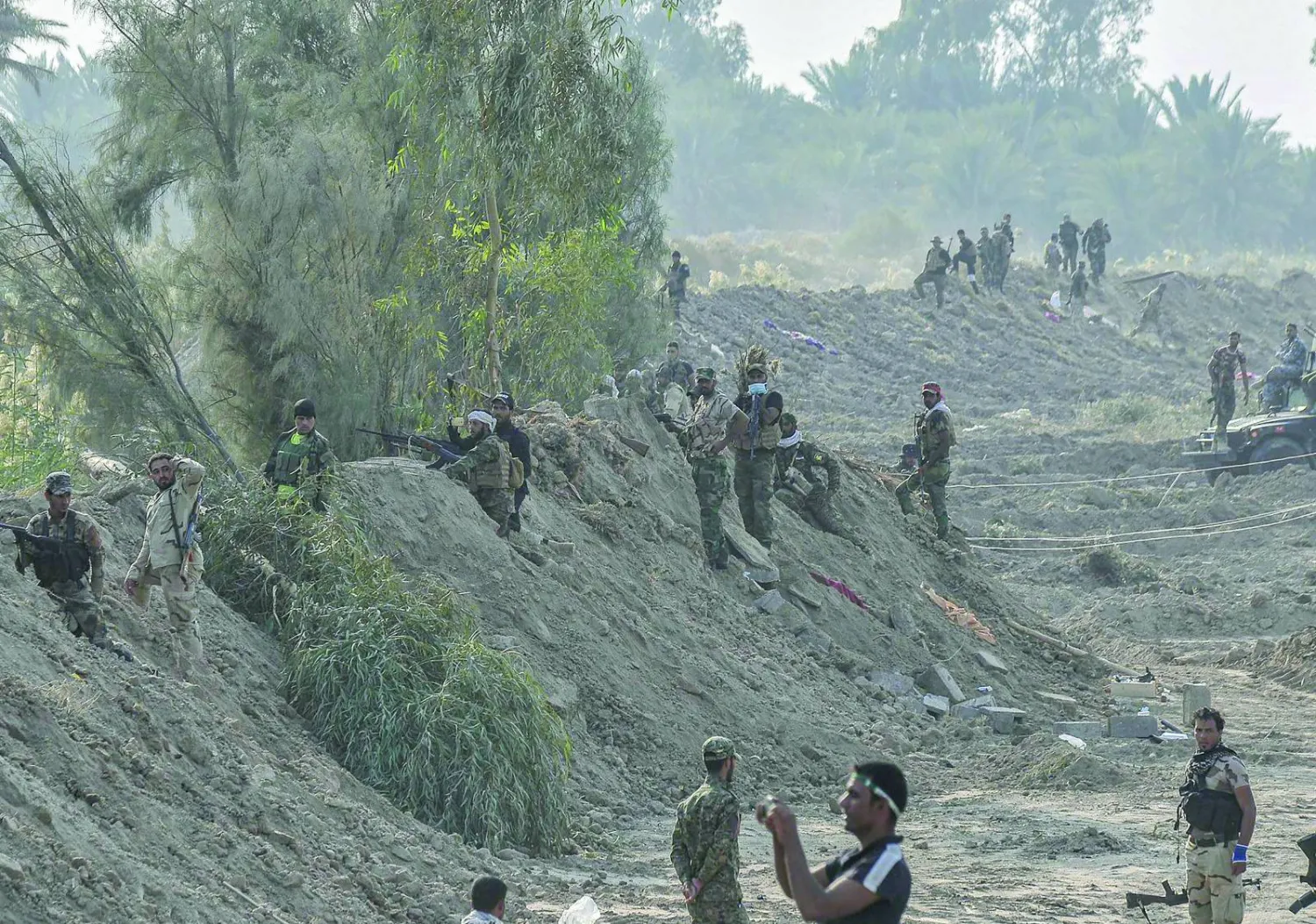
A photo released by the Popular Mobilization Forces showing its members in the town of Jurf al-Sakhar, south of Baghdad, in 2014.
TT

Baghdad Moves to Encircle Positions Run by Iran’s Revolutionary Guard Without Confrontation

A photo released by the Popular Mobilization Forces showing its members in the town of Jurf al-Sakhar, south of Baghdad, in 2014.

Iraqi sources revealed Wednesday details of a government plan to be implemented after the September 30, 2026 deadline for bringing weapons under state control expires. The plan includes "encircling leadership positions" of factions run by Iran’s Revolutionary Guard Corps (IRGC), paving the way for their "gradual" dismantling.

Iranian officials are meanwhile seeking to obstruct or delay the plan, although Baghdad has "designed a course that does not lead to armed confrontation."

Iraqi Prime Minister Ali al-Zaidi had previously set the end of next month as the deadline for the withdrawal of US forces from the country, as well as the deadline for bringing the weapons of armed factions under state control.

The "Encirclement Plan"

The sources told Asharq Al-Awsat that the government plan after September 30 calls for the deployment of regular army forces, Counter-Terrorism Service units, and elite units around the operational centers of armed factions and along roads leading to them, with the aim of restricting the movement of transport and supplies to and from these sites.

The sources said government forces would gradually establish checkpoints under the command of officers to monitor the movement of weapons and seize them, with a focus on drones and missiles.

According to the sources, the forces will begin imposing a tight security cordon around the armed factions’ operational centers without confrontation. The operation ultimately aims to push the factions "either to make a mistake, such as moving drones, to engage in armed confrontation, or to relinquish their positions to the official institution without firing a single shot."

A source familiar with sensitive discussions over the weapons of factions run by the IRGC said, "Government forces will gradually and systematically tighten restrictions around these sites until reaching a stage that allows them to impose control over them, something that has been difficult to do for years."

Military and political leaders reached this formula after discussions over a course that would spare both sides of the dispute over weapons outside state control from "military confrontation."

Field sources said, "Army and Counter-Terrorism Service forces had already begun earlier this week deploying a number of officers at monitoring checkpoints in several areas and on highways as a trial phase of the plan."

The sources confirmed that some of these checkpoints had "successfully intercepted shipments of drones headed to various locations in Iraqi areas over the past few weeks."

Jurf al-Sakhar and Jurf al-Nadaf

Asharq Al-Awsat learned that the plan is focused primarily on the sites of Jurf al-Sakhar, a stronghold of Kata’ib Hezbollah, and Jurf al-Nadaf, a stronghold of Harakat al-Nujaba, both south of Baghdad.

Jurf al-Sakhar has been one of the factions’ most important strongholds since 2014. It is believed to have become a strategic military base for the factions, containing camps, prisons, storage facilities, and missile and drone production facilities. Many, however, believe it is an operational center for Iran’s IRGC.

Jurf al-Nadaf, located on the southeastern outskirts of Baghdad near the Baghdad-Mada’in road, has emerged in recent years as a site containing headquarters and facilities belonging to the Popular Mobilization Forces (PMF) and armed factions affiliated with it.

Security attention has increased around the area because, according to Iraqi security sources, it is linked to facilities used to store weapons and ammunition, as well as military activity by Iran-aligned factions.

In July 2026, security sources said a joint security force raided a headquarters believed to belong to Harakat al-Nujaba in Jurf al-Nadaf. The site reportedly contained a drone manufacturing facility and had been used to launch drones targeting various locations.

Iraqi sources said, "Intelligence assessments indicated that the drone shipments that were seized, or those launched toward various targets, were connected to a command center at these sites."

Although the force involved in the raid included the Baghdad Operations Command, Federal Police, and the PMF Security Directorate, it withdrew without searching the site.

A political source familiar with the matter said, "The failure of the operation to storm the Jurf al-Nadaf headquarters gave military leaders sufficient insight to modify the plan from storming the headquarters to encircling them and restricting access to them."

Wider Deployment

The armed factions’ presence is not limited to Jurf al-Sakhar and Jurf al-Nadaf, both located southwest of Baghdad, but the two sites are receiving particular attention because of their strategic importance and proximity to the capital.

The factions also have positions in Tuz Khurmatu in Salahuddin province, north of Baghdad, and Amerli, also in Salahuddin province, as well as Camp Ashraf in Diyala province, northeast of Baghdad, and sites in the city of Kut, the capital of Wasit province, southeast of the capital.

According to a senior political official, the factions run by Iran’s IRGC have two main missions. The first is to establish positions very close to Baghdad to ensure the ability to intervene rapidly if necessary, which explains their extensive presence at multiple points and sites there.

The second mission is to tighten the pressure on Sunni areas by controlling their key geographic nodes, particularly those near the Syrian border.

The sources confirmed that "imposing a cordon and restricting movement around facilities belonging to factions run by the IRGC is part of a broader plan that includes removing all PMF brigades from all cities and redeploying them according to a plan determined by the military leadership independently of faction commanders."

A senior political official told Asharq Al-Awsat, "The government plan is designed to avoid armed confrontation with the factions. At an advanced stage, it also aims to bring the armed factions into serious negotiations with the authorities within a national framework over their status and the future of their members."

Iran Says "The Time Is Not Right"

So far, Kata’ib Hezbollah, Kata’ib Sayyid al-Shuhada, and Harakat al-Nujaba, all allies of Iran, have refused to hand their weapons over to the state. Activists close to these groups say that "the Resistance Axis will not surrender its weapons even after the Americans withdraw," and have openly and defiantly called for "restricting the state’s weapons to the factions."

The government plan has raised concerns among Iranian officials over the fate of strategic weapons held by the factions, as well as command and control centers staffed by Iranian advisers affiliated with the IRGC.

According to two political sources, Iranian officials told leaders of the Coordination Framework alliance that the timing of the campaign was extremely unfavorable because the regional situation requires allies to hold on to their weapons, particularly in Iraq.

A political source close to the leader of an influential Shiite party said, "The latter tried to persuade the Iranians not to put further pressure on the prime minister, who is already under pressure from the Americans over the issue of weapons. The failure of this government would also mean the end of the Coordination Framework alliance and its fledgling government, which is facing a severe financial crisis."

The source added that "the Iranians are pressuring the Coordination Framework to push the government to postpone implementation of the plan," adding that "the factions will ultimately seek to buy time until the balance of power changes locally and regionally, and the locations of their military assets are changed."


Lebanon Condemns ‘Systematic’ Israeli Destruction in South

A photograph taken from the southern Lebanese village of Chaqra shows an Israeli flag fluttering over the burnt fields of the border village of Mais al-Jabal, burnt during Israeli military operations on August 11, 2026. (AFP)
TT

Lebanon Condemns ‘Systematic’ Israeli Destruction in South

A photograph taken from the southern Lebanese village of Chaqra shows an Israeli flag fluttering over the burnt fields of the border village of Mais al-Jabal, burnt during Israeli military operations on August 11, 2026. (AFP)

Lebanese Prime Minister Nawaf Salam on Wednesday condemned Israel's "systematic destruction" in the country's south as a violation of international law, as Israel's defense minister said its military was "destroying all the houses" there.

Salam said Israeli "attacks, incursions, demolitions and the systematic destruction of homes", infrastructure, government buildings and places of worship "represent a serious violation of the principles and rules of international law and international humanitarian law".

Claiming that villages and towns "are entirely 'military facilities' does not stand up to any logic and cannot be used as an excuse for destroying them, displacing their inhabitants and preventing them from returning," he said in a statement.

Israel's Defense Minister Israel Katz visited southern Lebanon on Wednesday, vowing to keep troops in a so-called "security zone" there and saying the Israeli military was "destroying the underground infrastructure" in the area and "destroying all the houses".

Hezbollah drew Lebanon into the Middle East war in March by attacking Israel, which responded with heavy airstrikes and a ground invasion that Lebanese authorities say have killed more than 4,300 people.

A framework deal reached in late June between Lebanon and Israel involves the disarmament of the Iran-backed group, a gradual withdrawal of Israeli forces from south Lebanon and the deployment of the Lebanese army to the region, starting in "pilot zones".

While violence has significantly decreased since the signing of a US-Iran memorandum of understanding in June and the Lebanon-Israel deal, Lebanon still reports intermittent Israeli strikes and ongoing demolitions.

Lebanon's state-run National News Agency (NNA) on Wednesday said Israeli troops carried out detonations in southern villages including in Zawtar al-Shariqyeh, which abuts one of the "pilot zones".

Lebanon's army said Israel had blown up "the municipal building in Zawtar al-Shariqyeh" as well as "a public school, a health clinic, a children's nursery and a number of homes".

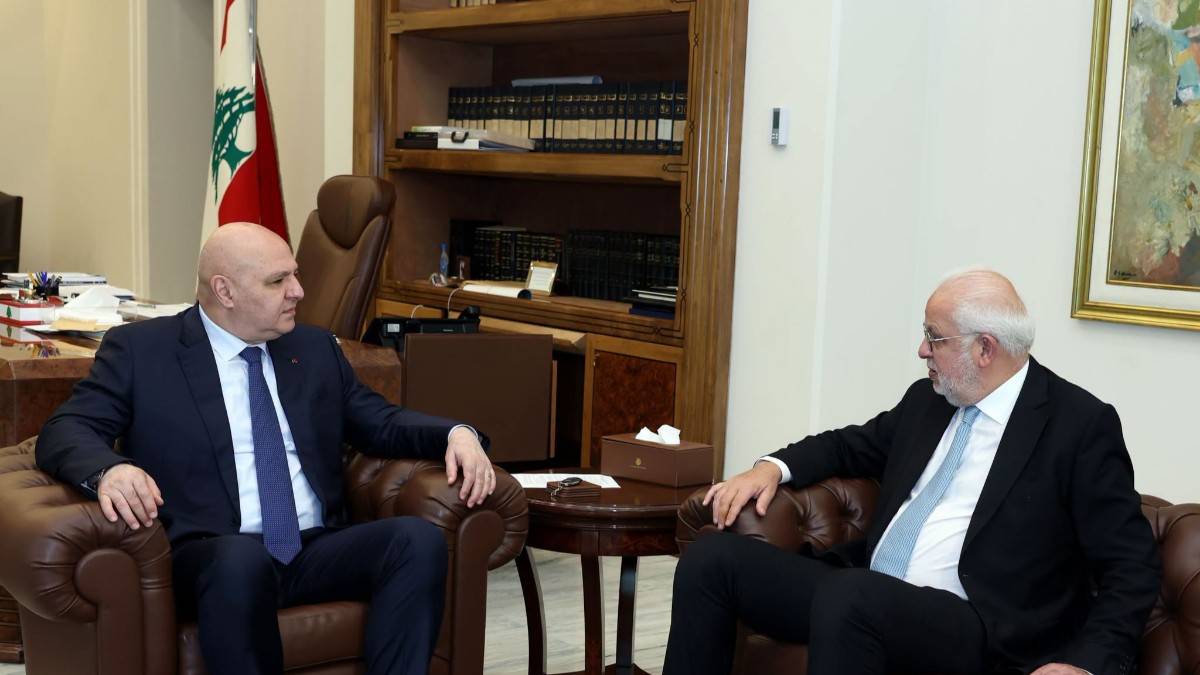
Also on Wednesday, Lebanon's army chief Rodolphe Haykal met visiting US General Joseph Clearfield, who heads a coordination group involved with the June agreement.

The pair discussed "developments in the south and security arrangements" relating to the deal, the Lebanese military said, as well as "the difficulties the army faces in carrying out its missions, primarily due to the continuing attacks, bulldozing and destruction by the Israeli occupation".

President Joseph Aoun also met Clearfield, his office said, and discussed the implementation of the framework deal.

Israel and Lebanon are to hold an eighth round of US-sponsored negotiations next month, in Rome.


Israeli Settlers Keep Up Siege of Palestinian Homes Despite Army Intervention

Israeli settlers besiege a Palestinian home for the fourth consecutive day in the town of Qusra, south of Nablus, 12 August 2026. (EPA)
TT

Israeli Settlers Keep Up Siege of Palestinian Homes Despite Army Intervention

Israeli settlers besiege a Palestinian home for the fourth consecutive day in the town of Qusra, south of Nablus, 12 August 2026. (EPA)

The Israeli military failed in an attempt on Wednesday to remove occupied West Bank settlers who for days have blockaded Palestinian homes, an eyewitness and an AFP photographer reported.

The siege began on Sunday, when a group of settlers set up a makeshift tent near houses in the Palestinian village of Qusra, just south of Nablus, blocking essential supplies from entering.

"We have received no food and no medicine," Qusai Abu Rida, a Palestinian trapped inside one of the houses, told AFP by telephone, adding that he had only managed to secure electricity thanks to solar panels.

The Israeli military condemned the settlers' actions and declared the area a "closed military zone", before on Wednesday morning removing the tent where the settlers had been staying.

Security forces "are working to evacuate the civilians who were staying there," the military said in a statement.

By mid-afternoon, an AFP photographer at the scene said the military had left and the tent had been removed, but that the settlers were still at the site.

Abu Rida confirmed the situation remained unchanged, with the settlers still in possession of chairs and blankets.

"The army has withdrawn, and so far we are still besieged, with the settlers at our doorstep," he told AFP.

Violence by Israeli settlers towards Palestinians in the West Bank has persisted for years, often with little or no legal consequence, but recent months have seen a surge in attacks.

Israel has occupied the West Bank since 1967.

More than 500,000 Israelis live in settlements in the Palestinian territory, which are illegal under international law, among some three million Palestinians.

The Israeli military said Tuesday it had received several reports of settlers entering and taking control of Palestinian homes and land in the area.

"This is illegal, reprehensible and unacceptable activity that harms the residents of the areas and disrupts their daily lives," it said.

It also said that disciplinary action would be taken against security personnel who had been filmed at the site days earlier.

According to an AFP tally based on data from the Palestinian health ministry, Israeli soldiers or settlers have killed at least 1,097 Palestinians, including both gunmen and civilians, since the start of the Gaza war in October 2023.

Israeli figures show at least 48 Israelis, including civilians and security personnel, have been killed in Palestinian attacks or during Israeli military operations during the same period.


Syria Receives First Shipments at Pier Previously Used by Russia

A drone view shows a vessel at Berth NO. 4, which was handed over by Russian forces to the Syrian government, at the port of Tartus in Tartus, Syria, August 12, 2026. (Reuters)
TT

Syria Receives First Shipments at Pier Previously Used by Russia

A drone view shows a vessel at Berth NO. 4, which was handed over by Russian forces to the Syrian government, at the port of Tartus in Tartus, Syria, August 12, 2026. (Reuters)

Syria received its first shipments of wheat and cement materials this week at a berth previously used by Russian forces, according to officials at the Tartus port, where Reuters reporters saw Russian forces packing up materials and moving out of parts of the pier.

Both shipments arrived on Tuesday, two days after Damascus announced it had reached an agreement with Moscow on the future of Russian bases at Tartus and the Hmeimim airport, ‌both in Syria's northwestern ‌coastal regions.

Syria's foreign ministry said the deal would ‌see ⁠Syria take over management ⁠of civilian facilities, including Hmeimim airport and the commercial berth at Tartus port, and that military facilities would be repurposed as joint training facilities.

"We began operating berth 4 yesterday after taking it over from the Operations Department. Work commenced immediately with the reception of two vessels in succession," Youssef Arnous, the head of Tartus port's operations and investment department, told Reuters on Wednesday.

He said that specific berth could ⁠accommodate up to three vessels simultaneously and that storage yards ‌directly opposite the pier could reduce vessel ‌waiting time during anchorage.

LSEG data showed that both vessels had come from Turkish ports, but ‌it was not immediately clear where they had originated.

Reuters reporters at the ‌port on Wednesday saw Russian forces moving out of a building near the pier and relocating material to another military facility nearby.

It was not immediately clear how many Russian forces remain at Tartus or in Hmeimim. A Syrian source familiar with the arrangement ‌said some Russian military forces would stay in Syria as part of the deal.

The future of the bases ⁠became uncertain after ⁠Russian ally Bashar al-Assad fled the country in 2024. The memorandum followed 18 months of intensive negotiations.

Russia's foreign ministry said on Tuesday that it saw the deal as "an important step aimed at further improving bilateral cooperation in the military sphere".

Russia has long viewed its naval and air bases in Syria as a key source of geopolitical clout in the Middle East and power projection across the Mediterranean and into Africa.

The Tartus facility is Russia's only Mediterranean repair and replenishment hub, and Moscow has used Syria as a staging post to fly its military contractors in and out of Africa.

Reuters reported in July that parts of the fourth berth in Tartus that had been used by Russia's military would be transformed into a commercial and logistics hub.