


From War Amnesty to Prison Amnesty... What Has Changed in Lebanon in 35 Years?

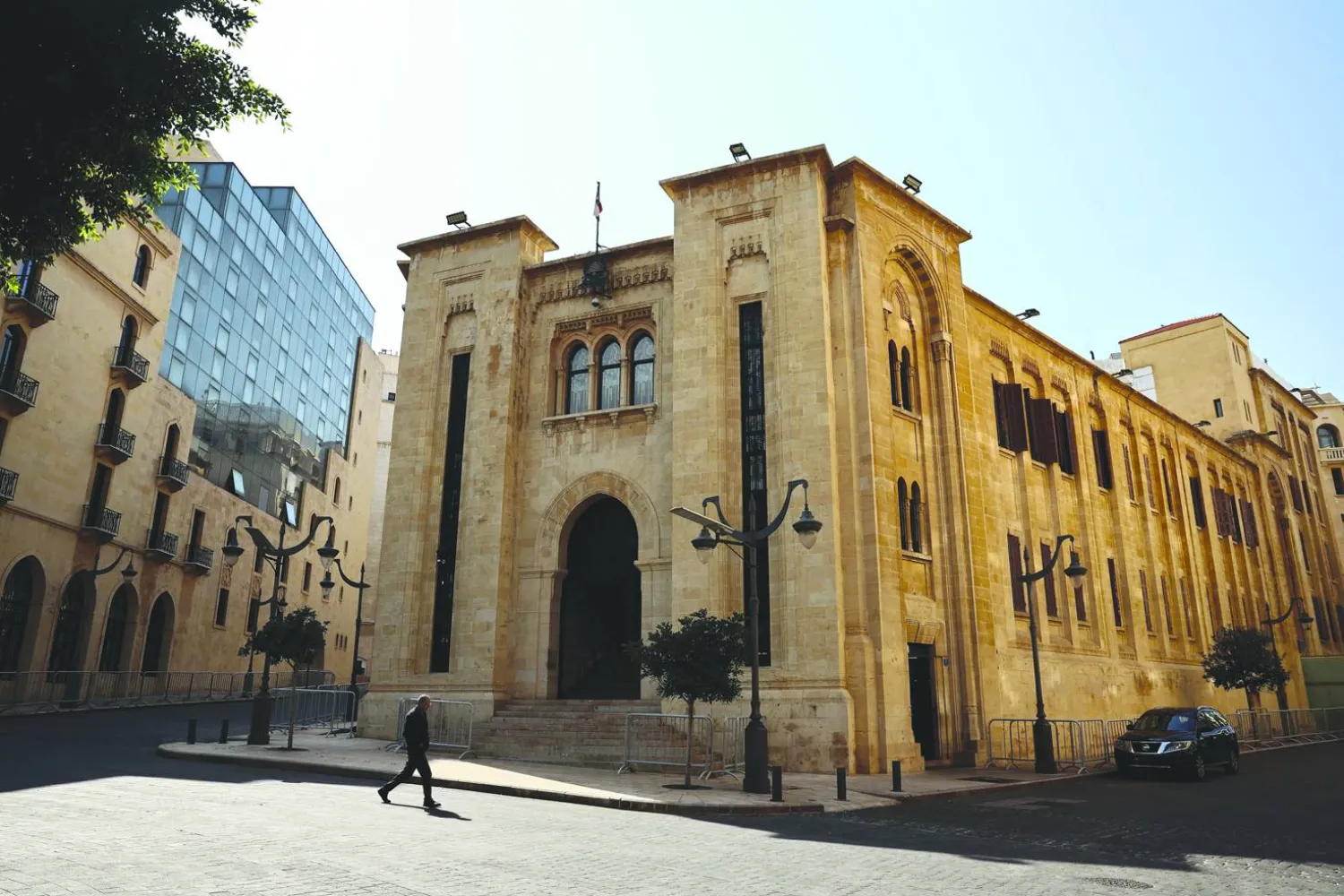
A general view of parliament building in Beirut, Lebanon, March 24, 2026. (Reuters)
TT

From War Amnesty to Prison Amnesty... What Has Changed in Lebanon in 35 Years?

A general view of parliament building in Beirut, Lebanon, March 24, 2026. (Reuters)

The Lebanese parliament's landmark approval of an amnesty law on Wednesday, 35 years after the 1991 amnesty, has revived debate on the different circumstances that prompted Lebanon to resort to amnesty twice.

While the first was enacted to turn the page on the 1975-90 civil war and kick off a new political chapter in the country, the 2026 law came to address the conditions of detainees and convicts, prolonged detentions, and the prison crisis, amid political considerations that led to parliament to ratify it.

‘Public oblivion’

Former Minister of Social Affairs Rashid Derbas brought the discussion back to the philosophy of amnesty itself, telling Asharq Al-Awsat that "the general amnesty issued in 1991 came following the civil war, in hopes of closing a chapter and entering a new era."

He explained that "the philosophy of general amnesty is fundamentally based on establishing public oblivion, meaning closing a page of the past and opening a new one."

Commenting on the current amnesty law, Derbas wondered: "Is it reasonable for a person to remain all this long time without a trial? Is it reasonable for certain accusations and cases to drag on to this extent? It was necessary to address this issue,” but unfortunately, it fell victim to political wrangling for years.

Former Justice Minister Ibrahim Najjar drew a legal and political distinction between the two experiences, telling Asharq Al-Awsat that "there is a very big difference between the law of August 26, 1991, and the law of August 12, 2026."

He explained that "from a political standpoint, the 1991 general amnesty law aimed to turn the page on the war and conclude all prosecutions associated with it. This is evidenced by the fact that it broadly covered crimes committed before March 28, 1991, specifically war-related crimes of a political nature, with some specific exceptions."

Najjar added that "the 1991 law therefore had a political, reconciliatory character, meaning it aimed to restore the smooth functioning of coexistence, which was its primary political goal."

As for the new legislation, he placed it in a different framework, stating that "the 2026 law has specific political dimensions in Lebanon and Syria, in addition to being related to prison conditions and the high number of detainees and convicts."

Najjar stressed that "the law issued on Wednesday is not a general amnesty for crimes committed before a specific date, because it targets specific categories and cases. It is closer to a socio-penal law concerned with addressing the conditions of detainees and convicts through an exceptional reduction of certain sentences."

He pointed out that "the 2026 law excluded many crimes and felonies, including the killing of military personnel, crimes referred to the Judicial Council, premeditated murder, money laundering, financial crimes, and drug felonies."

"This Lebanese law has clear Syrian dimensions, and it has also benefited some Lebanese who had sought refuge in Israel," he added.
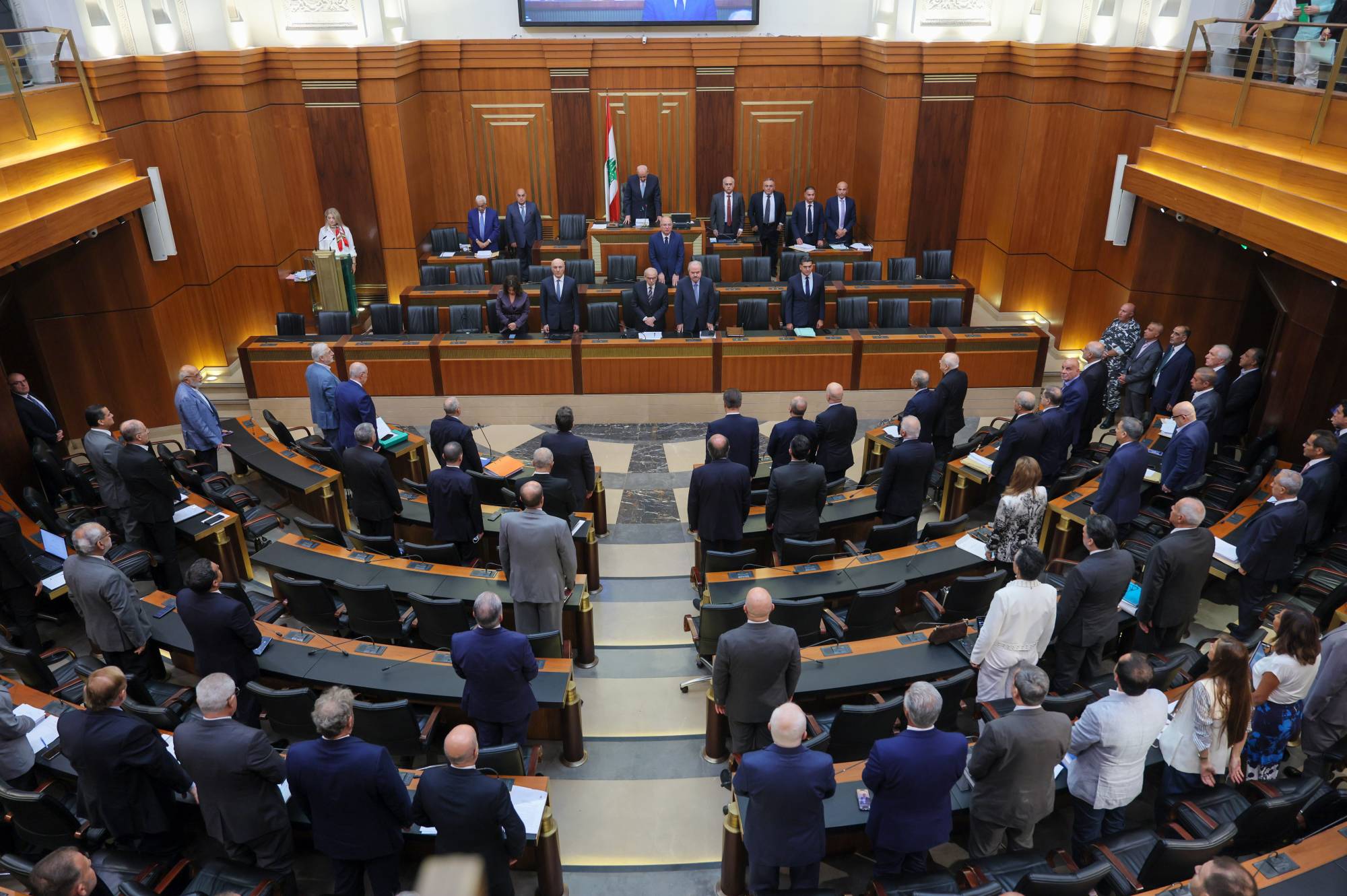
Lebanese lawmakers attend a parliamentary session to discuss a proposed general amnesty law, the abolition of the death penalty and the salaries of retired members of Lebanon's security forces in Beirut, Lebanon, 11 August 2026. (EPA)

Political settlement

Former MP and Minister Butros Harb interpreted the current law from an angle that combines politics and humanitarian considerations.

Speaking to Asharq Al-Awsat, Harb stated: "In part, the current amnesty is a political settlement more than a purely judicial move, even though it includes a humanitarian aspect that cannot be ignored."

At the same time, he stressed that addressing the conditions of prisoners should not lead to "overlooking the rights of the Lebanese Army and its victims, particularly in cases related to those who engaged in clashes with it."

He explained that "there is a humanitarian aspect that must be taken into account, because the Lebanese judiciary was influenced at certain stages and did not exercise its powers with the required speed, whether in terms of settling cases or issuing verdicts."

He noted that "there are individuals who spent long periods in prison that, in some cases, exceeded the sentence that could have been issued against them had they been tried within normal timeframes."

This "demands a humanitarian and legal solution to the problem," he remarked.

However, he noted that the amnesty file "has also unfortunately turned into a subject of sectarian debates, especially regarding the cases of Islamists who fought the army."

Harb criticized the double standards related to the army in the ongoing debate. "Some of those who today declare their concern for the army were, unfortunately, among the forces that helped inflict major losses on it, whether during the Lebanese civil war or in the clashes the country witnessed in later years."

The issue must not turn into fodder for political debates at the expense of the army or the rights of its victims, he urged.

‘Fundamentally different’

He said the 1991 and current amnesty are "fundamentally different."

He explained that the 1991 amnesty happened during "exceptional political circumstances that followed the Taif Agreement" and the end of the civil war.

"At that time, Lebanon was emerging from a long war, and it was necessary to turn the page on that chapter and enter a new era allowing the rebuilding of the state. Therefore, the amnesty was part of a broader national political settlement."

"Today, however, the problem is different even if it has a political aspect because it is primarily linked to a judicial and humanitarian failure that must be addressed," Harb stressed.

"The issue required a solution because it is unacceptable for individuals to remain in prison for years due to delayed trials or the failure to settle their cases," he said.



Gaza Cancer Patients Face Rising Death Rate Amid Israeli Curbs, Doctors Say

Palestinian cancer patient Elham Al-Sakafi, 38, speaks to a doctor after receiving nutritional intravenous fluids at Al-Shifa Hospital in Gaza City, August 6, 2026, according to medics. (Reuters)
TT

Gaza Cancer Patients Face Rising Death Rate Amid Israeli Curbs, Doctors Say

Palestinian cancer patient Elham Al-Sakafi, 38, speaks to a doctor after receiving nutritional intravenous fluids at Al-Shifa Hospital in Gaza City, August 6, 2026, according to medics. (Reuters)

Gaza cancer patients are dying at two to three times the pace they did before the start of the war in the territory, as Israel blocks many from travelling for treatment after destroying the only local specialized facility, Gaza doctors said.

Israel blew up Gaza's specialized cancer hospital last year after saying troops found a tunnel used by Hamas running beneath it. That means that an estimated 17,000 Gazans with cancer have no local option for chemotherapy or other advanced therapy.

Few Palestinians can afford to travel for treatment, and those who can face Israeli restrictions. The military imposes strict caps on daily crossings to Egypt, despite a 2025 Israel-Hamas ceasefire deal that requires free movement in and out.

Asked for comment, COGAT, the Israeli military agency that controls access to Gaza, said it coordinates medical evacuations with the World Health Organization. To depart, Gazans must have a ‌valid request from a ‌receiving country and pass "required security screening," COGAT said.

The WHO did not immediately respond to a ‌request ⁠for comment.

RACE AGAINST TIME

For ⁠Khuloud Abu Sahmoud, a Palestinian mother-of-two with advanced ovarian cancer, the wait for treatment abroad has become a race against time as her cancer spreads.

"Every day my disease progresses, and my condition is tragic. My fingernails have all fallen out – I have none left. I am just waiting to die."

Abu Sahmoud, 33, said she has been waiting to exit Gaza for treatment in Egypt or further afield since the ceasefire was struck last October. In that time, the cancer has spread to her lungs and bones, she says.

COGAT said around 5,800 Gazans needing medical treatment have exited to Egypt since Israel agreed in February to a limited reopening of the Rafah border crossing, largely shut during the ⁠war that began in 2023.

"Medical evacuations are in no sense restricted by the State of Israel ‌but are wholly dependent on the receiving country's request; without the official request, ‌COGAT cannot coordinate a patient's leave," COGAT said.

Palestinian health officials said 11,000 people, including patients, had gone through Rafah since it reopened, fewer than half ‌the number that had been expected under the ceasefire deal.

A further 20,000 patients, including 5,000 with cancer, are registered for treatment ‌abroad but not yet permitted to leave, the officials said.

TOXIC CHEMICAL EXPOSURE

The ceasefire ended major fighting but left Israeli forces in control of more than half of Gaza, since expanded to around two-thirds. Nearly all of Gaza's more than 2 million people live in a Hamas-controlled strip along the coast, mostly in makeshift tents or shelters in damaged buildings.

Before the war, local health services had made advances thanks to investment from abroad and persistence ‌from local doctors, a Reuters investigation found.

But most Gaza hospitals were destroyed or damaged in the war, and those that remain operational have been stripped of up to 70% of essential ⁠medical supplies, including those needed ⁠for cancer treatment and diagnostic services, doctors said.

Among those killed by Israel during the war were dozens of highly qualified specialists, including cancer experts operating in the Turkish-Palestinian Friendship Hospital, demolished in an Israeli controlled demolition in March 2025.

"We have been recording a significant number of deaths, ranging from three to five daily, because patients are not receiving the chemotherapy needed to save their lives," said Mohamed Abu Selmia, head of Gaza's biggest hospital, Al-Shifa.

Sobhi Skaik, a Palestinian surgeon who was head of the Turkish-Palestinian Friendship Hospital, said the death rate before the war was about one to two per day. Some pre-war statistics put the figure at around 1.7 per day, he said.

He said the rising deaths were due mostly to an absence of local treatment and to border restrictions. But he also said that cancer itself may be spreading at a faster rate due to the presence of toxic materials from Israeli explosives dropped on Gaza.

There were some 11,000 registered cancer patients in Gaza before the war started following the October 7, 2023, Hamas attacks on southern Israel, after which registrations largely stopped, Skaik said.

He estimated that another 6,000 Gazans had likely developed cancer since.

"Some people can be treated if diagnosed in early stages, but they are wandering around the tents sick, unaware, and with no help," Skaik said.


The Perfect Storm That Turbocharged Venezuela’s Twin Quakes

A view of a building destroyed by the June earthquakes; in Catia La Mar, Venezuela, 05 August 2026. (EPA)
TT

The Perfect Storm That Turbocharged Venezuela’s Twin Quakes

A view of a building destroyed by the June earthquakes; in Catia La Mar, Venezuela, 05 August 2026. (EPA)

A dangerous cocktail of tectonic positioning, loose earth and shoddy construction contributed to the unprecedented damage caused by Venezuela's twin earthquakes, experts say.

Jennire Garcia's home in the coastal Catia La Mar neighborhood was rendered unlivable by the tremors in late June, which devastated the state of La Guaira.

The 7.2 and 7.5 magnitude quakes killed over 6,300 people and sent 190 buildings crashing down, while 856 more sustained damage.

Garcia and her family are now living in tents next to the ruins, and the 42-year-old says she is "sick with stress all day long."

This was the same site as deadly mudslides that killed thousands of people in 1999.

The region's "unconsolidated" soils, where construction requires specific geotechnical studies, added to the severity of the damage, according to engineer Feliciano De Santis.

"These soils generally tend to be loose soils" and caused the ground to move with even greater intensity, said De Santis, who is president of the Venezuelan Geologists Society.

Garcia's residential complex, which was declared uninhabitable, was built after the landslide.

Deep cracks run through its yellow walls, several balconies have dislodged from the building and some high-rises have crumbled altogether.

- 'So anxious' -

Rescuers across the quake zone have not abandoned the search for victims under the rubble, and are working through the debris of buildings up to 12 stories high.

The last adjustment made to earthquake regulations for buildings was in 2019, and before that, in 1967 when a horrific 6.6 magnitude tremor struck the country.

A closer look at La Guaira's infrastructure reveals significant construction flaws, said Japanese engineer Kit Miyamoto, who is touring the state with support from Washington.

For instance, large quantities of steel "seems like it's really good," he told AFP.

"But once you get down to look at how actually the rebar (steel reinforcement) is connected to the foundation, it's not much," the engineer added.

In the early 2010s, the government of late leader Hugo Chavez built 43 flagship social housing high-rise buildings.

The quakes flattened 16 of them, crushing hundreds of residents underneath.

A recent investigation by Armando.info revealed that "contracts awarded at discretion to companies whose experience was unknown" fueled the damage.

In Caracas' worst-hit neighborhood Chacao, 68 people died while three buildings collapsed and dozens more are uninhabitable.

Most of these buildings were constructed before the 1967 earthquake, Venezuela's Engineering Order said.

"Some had been reinforced," said organization representative and engineer Felix Ojeda, adding that rubble samples taken on site can provide clues about the state of the infrastructure.

"The obvious next step," said Miyamoto, "is to take down the buildings," adding that retrofitting and strengthening buildings was also important to do as much as possible.

Public fury about the government's slow response to the quakes is widespread.

Interim leader Delcy Rodriguez -- who effectively governs under Washington's thumb since her predecessor Nicolas Maduro's ouster -- has promised to deliver around 4,000 housing units this year.

Back in Catia La Mar, Garcia pines for her former home.

"It makes me sad because I see it there every day. I think about the comforts I had and that I can't have here," she said.

"We are so anxious," she said, "waiting for an answer, and we don't have one."


China Missile Test Deepens Pacific Divide Over Growing Militarization

The headquarters for the Pacific Islands Forum in Suva, Fiji, August 7, 2026. (Reuters)
TT

China Missile Test Deepens Pacific Divide Over Growing Militarization

The headquarters for the Pacific Islands Forum in Suva, Fiji, August 7, 2026. (Reuters)

China's test of a nuclear-capable missile last month has exposed the limits of Pacific leaders' ambition to make the region an "Ocean of Peace", free from the crossfire of major-power rivalry.

The July launch, China's first known ballistic-missile test into the Pacific since September 2024, was fired into the Pacific just hours after Fiji and Australia signed a major defense treaty, marking Fiji's first ever alliance.

More than a month after the test, Pacific Islands foreign ministers were unable to agree on a collective statement condemning Beijing's missile test, despite individual leaders expressing alarm, publicly and privately, about militarization of the region.

The test was "totally inappropriate", Papua New Guinea Foreign Minister Justin Tkatchenko told Reuters on the sidelines of the foreign ministers' meeting in Suva last week.

"China is a very close friend and ally to Papua New Guinea, but we feel this doesn't help at all," he said, adding that Beijing had given PNG advance notice of the launch but no details on where ‌the missile would ‌land.

At the time of the launch, Chinese Foreign Ministry spokesperson Mao Ning said it was ‌conducted "safely", ⁠adding: "We hope relevant ⁠countries will not over-interpret the matter."

The missile launch capped a year of more visible military activity across the Pacific, which is fiercely contested between the US and China for influence. That has included Chinese naval deployments and live-fire drills in the Tasman Sea, US-allied exercises around Guam and Hawaii, and a steady flow of warship visits linked to expanding security partnerships.

The United States, meanwhile, retains a substantial military presence across the region, including in Hawaii, Guam and the Marshall Islands.

Tuvalu permanent foreign secretary Pasuna Tuaga, who was speaking in a personal capacity, was concerned about growing militarization, not only because of the missile test but also security arrangements such as the AUKUS partnership between Australia, ⁠Britain and the United States.

UNITED, BUT DIVIDED

In September 2025, Pacific Leaders endorsed the Ocean ‌of Peace Declaration, which committed to safeguard the region, recognized the right of the ‌people to peace, and resolved to contribute to and strengthen international peace and security.

David Peebles of the Australian National University's Pacific Security College said ‌Pacific countries had long resisted having peace and security defined by outside powers and their competing Indo-Pacific strategies. The Ocean ‌of Peace initiative was an attempt to reclaim that agenda, he said.

The regional declaration inspired the defense pact signed between Australia and Fiji last month, known as the Ocean of Peace Alliance.

Australia's Department of Foreign Affairs and Trade did not immediately respond to a request for comment on concerns that the growing number of regional security pacts could further militarize the Pacific.

For many governments, security partnerships bring benefits: surveillance against illegal fishing, ‌disaster response, policing support and access to equipment and training. But critics fear a proliferation of bilateral arrangements could leave Pacific countries with little say over how their territory, waters and infrastructure ⁠are used.

Solomon Islands Foreign Minister ⁠Rick Houenipwela, who chaired the talks in Suva, said the region's agenda must remain "conceived by the Pacific, shaped by the Pacific and only by the Pacific."

Yet by the end of the one-day meeting, no unified statement in response to the missile test had emerged.

Kiribati and Nauru, which have deepened ties with Beijing since switching diplomatic recognition from Taiwan in 2019 and 2024 respectively, did not support the statement's wording, according to an official familiar with the discussions.

New Zealand Foreign Minister Winston Peters blamed foreign influence for the failure to reach consensus, without naming a country.

The impasse illustrates the central challenge facing these small island nations which have different economic, political and security interests.

In the northern Pacific, where the US has maintained a military presence for decades, some governments want deeper security engagement with the US while others remain wary.

Fiji Foreign Minister Sakiasi Ditoka said Pacific governments faced an unavoidable tension.

Countries wanted "to be free of all these war-making paraphernalia," he said, but also recognized that some security capabilities helped keep them safe. "I believe it's maintaining that balance."

Fiji for the first time participated last month in US-led war games in the Pacific known as RIMPAC.

Pacific leaders will meet in Palau in three weeks for the Pacific Islands Forum leaders meeting, where the missile test and regional unity are expected to return to the agenda.