

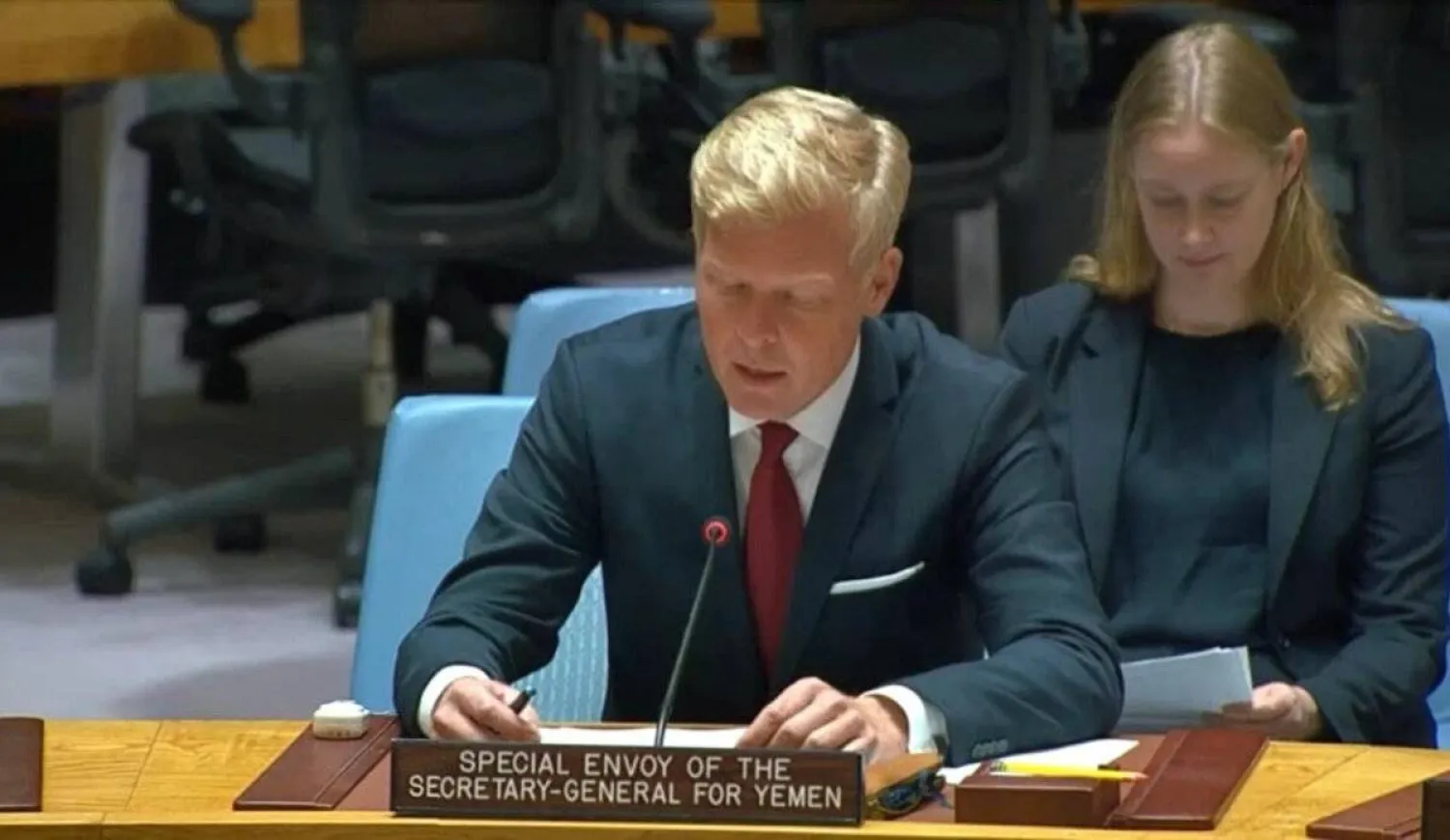

Grundberg Condemns Houthi Escalation, Fears War in Yemen Could Return at Any Point

UN Envoy to Yemen Hans Grundberg (United Nations)
TT

Grundberg Condemns Houthi Escalation, Fears War in Yemen Could Return at Any Point

UN Envoy to Yemen Hans Grundberg (United Nations)

With ongoing Houthi drone and missile attacks on government-controlled Yemeni areas, United Nations Special Envoy Hans Grundberg has warned that Yemen today faces a more serious risk of return to large-scale conflict than at any point since the 2022 UN-mediated truce.

In a briefing to the UN Security Council on Thursday, Grundberg said there has been an intensification of military activity along frontlines, with recent Houthi attacks in Marib, Hadramout, Mocha and beyond, causing casualties among both military personnel and civilians.

He added that with regional trade and energy flows already under intense pressure from the crisis in the Strait of Hormuz, Houthis’ renewed attacks on commercial vessels in the Red Sea and the Gulf of Aden, risk deepening Yemen’s entanglement with the wider regional confrontation.

“These attacks also put seafarers’ lives at risk; two days ago, a missile attack on a vessel killed several crew members,” he noted.

The envoy explained that tension had already been mounting prior to these developments.
In July, he said, an unauthorized flight from Tehran toward Sanaa was followed by airstrikes on Sanaa airport, and missile attacks on Abha airport and oil facilities in Saudi Arabia.

He made clear that Yemen stands to lose on the years of relative calm.

“For four years, and well beyond its formal expiry, the truce kept Yemen’s front lines relatively quiet. Remarkably, even through the regional turmoil since 2023, this calm mostly held inside Yemen, giving civilians the most sustained respite since the start of the conflict,” he said.
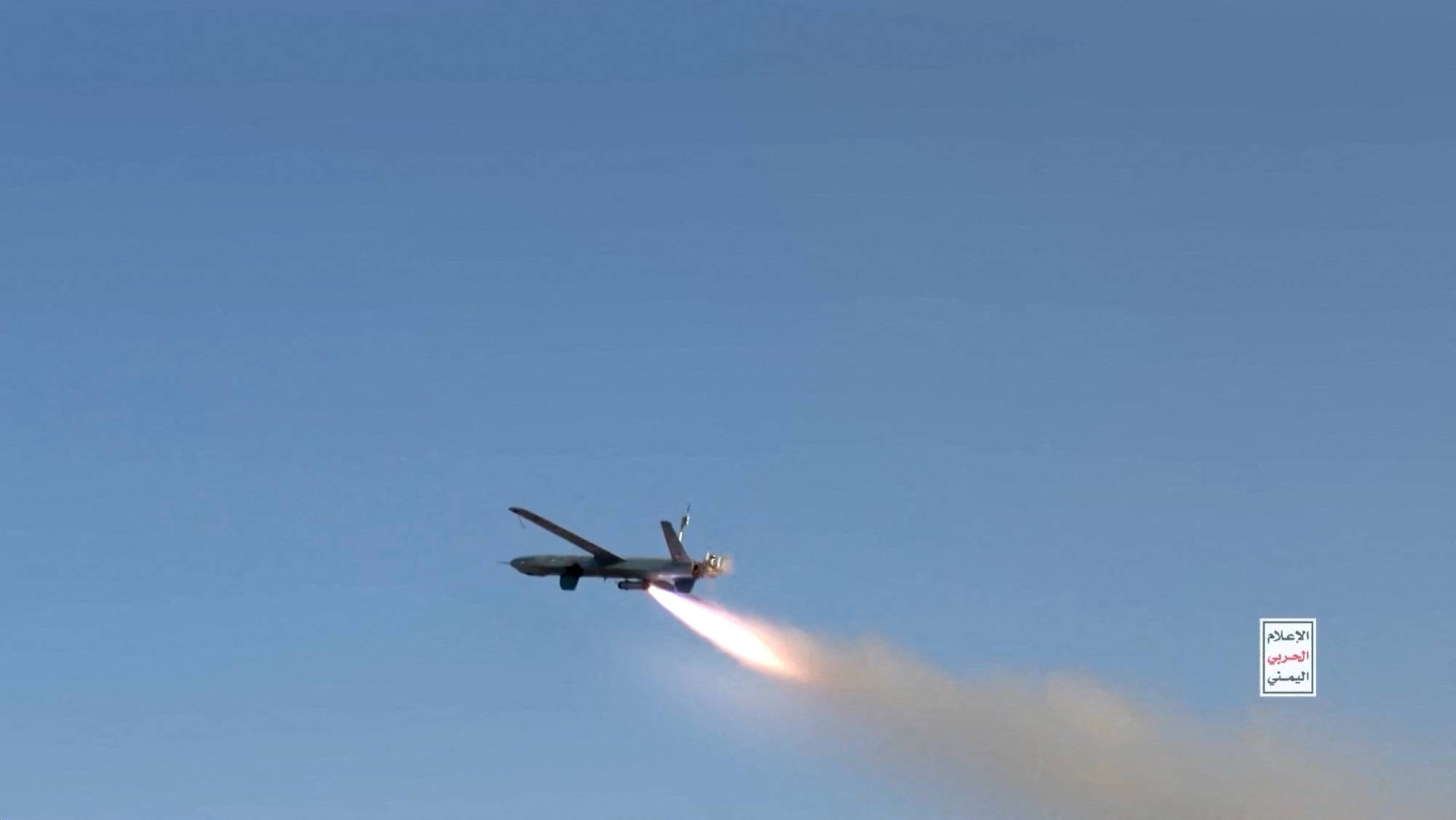
A drone is launched in what Yemen's Iran-aligned Houthis say is an attack on the Red Sea port city of Mocha, Yemen, at an unknown location in this still image taken from video released August 9, 2026. REUTERS

Grundberg warned that the calm cannot hold indefinitely amid the absent progress on the political process, particularly as Yemen’s state institutions are fragmented by over a decade of conflict, its economy left with little margin to absorb another shock, and the wider region engulfed by war.

Three Ways

The UN envoy proposed three ways to reverse the escalation and forge a credible path to a political solution in Yemen, mainly through de-escalation and working towards a robust ceasefire.

He said the calm along Yemen’s frontlines must be restored, adding that attacks and threats against shipping must stop, and freedom of navigation in the Red Sea and the Gulf of Aden must be upheld while cross-border attacks must stop.

The UN official said a mechanism for managing incidents and de-escalation already exists. “Military representatives from the Yemeni government and Houthis, together with the Saudi-led Joint Forces Command, have previously met under the UN auspices through the Military Coordination Committee.”

Therefore, he urged them to make full use of this channel and repeated his call on the parties to respect their obligations to protect civilians and civilian infrastructure and to protect Yemen from being drawn further into the vortex of the already complex regional dynamics.
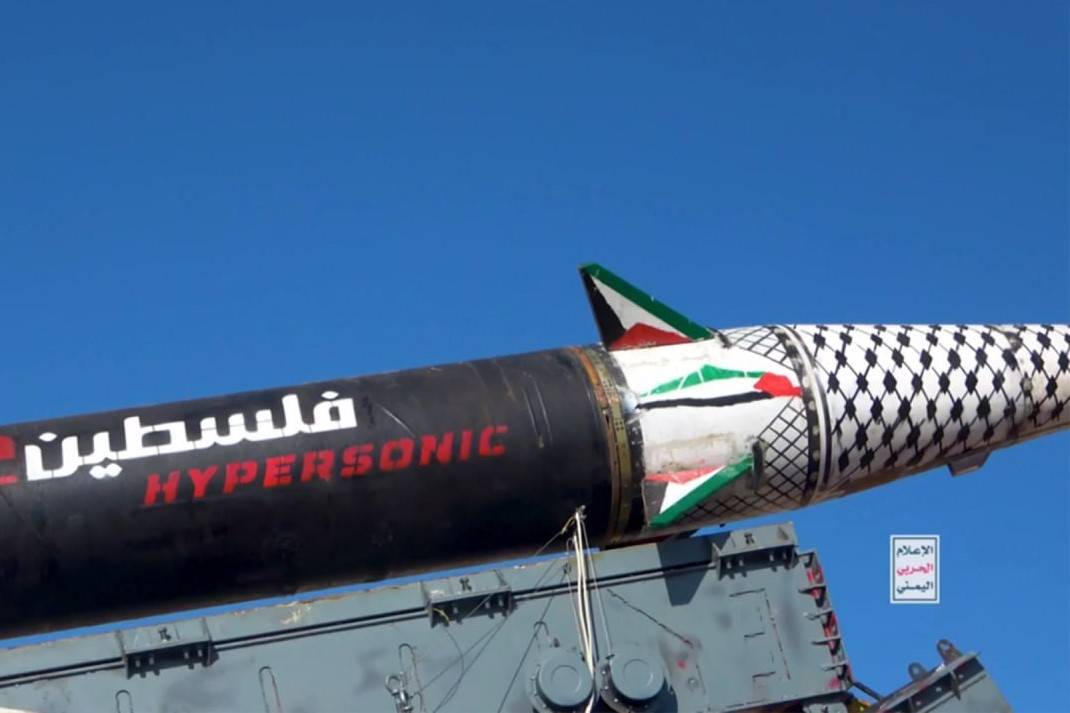
Some of the ballistic missiles used by the Houthis in their attacks (Houthi media)

According to Grundberg, the second way to reach a political solution in Yemen is economic de-escalation.

He said Yemen’s economy has itself become a frontline, with salaries, currency, trade, revenues, transport and essential services increasingly politicized.

Addressing these issues, he said, will require the parties to negotiate arrangements in which they have more to gain from cooperation than confrontation, adding that resuming oil exports, with appropriate security guarantees for production and export infrastructure, would provide a critical source of income and it would also support the country’s recovery.

Also, commercial vessels must continue to reach Yemeni ports, delivering the food and other essential goods Yemenis depend on, he said.

“The parties will also need to negotiate durable arrangements on the economic issues that touch Yemenis' daily lives more directly, including the payment of civil servant salaries, and the restoration of essential services,” the envoy added.

As for the third requirement, Grundberg said “is sustained engagement with the UN to consolidate these gains and relaunch an inclusive, Yemeni-owned political process.”

He said: “This remains the only credible path to comprehensively ending the conflict, ensuring that differences are resolved through dialogue rather than force, and establishing legitimate and accountable institutions that reflect Yemen’s political and social diversity.”

Therefore, the Yemeni parties must choose dialogue, he said. “No party controls where escalation leads; the only certainty is that the Yemeni people will pay the price,” the envoy noted.

File of Conflict-Related Detainees

Grundberg recalled that in May, the Yemeni parties agreed under UN auspices to release more than 1,600 conflict-related detainees.

Preparations to implement the releases are progressing, albeit slowly, he said, expressing his concerned that the wider escalation could stall this process further.

“I urge the parties to cooperate with the International Committee of the Red Cross to complete the remaining technical and operational preparations as swiftly as possible,” he said.

Grundberg then requested the release of 73 UN personnel, alongside colleagues from non-governmental organizations, civil society and diplomatic missions, arbitrarily detained by Houthis.

“Despite sustained United Nations efforts to find a solution, we have yet to see progress towards their releases. And I urge this Council to maintain its attention and use every available avenue of influence to help secure their immediate and unconditional release,” he said.



HRW Says UN Must Keep Peacekeepers in Lebanon

A photograph taken during a media tour organised by the French Catholic charity L'Oeuvre d'Orient shows peacekeepers with the United Nations Interim Force In Lebanon (UNIFIL) patrolling near the southern Lebanese village Biout es Sayed on July 20, 2026. (Photo by Anwar AMRO / AFP)
TT

HRW Says UN Must Keep Peacekeepers in Lebanon

A photograph taken during a media tour organised by the French Catholic charity L'Oeuvre d'Orient shows peacekeepers with the United Nations Interim Force In Lebanon (UNIFIL) patrolling near the southern Lebanese village Biout es Sayed on July 20, 2026. (Photo by Anwar AMRO / AFP)

Human Rights Watch has called on the United Nations to keep an international force in Lebanon after its peacekeepers' mandate ends this year.

The peacekeeping force in southern Lebanon, UNIFIL, has roughly 7,500 personnel from nearly 50 countries, and has been in place since 1978.

Its presence has not prevented repeated outbreaks of conflict. Southern Lebanon has seen successive wars between Israel and Iran-backed Hezbollah.

In August last year, however, the UN Security Council, under US pressure, decided to end UNIFIL's mandate on December 31, 2026.

"Pulling the plug on UNIFIL without a robust international force in place would effectively abandon millions of Lebanese civilians to an uncertain and potentially disastrous fate," said Louis Charbonneau, HRW's UN director.

"The peacekeepers are a crucial deterrent against attacks on civilians and human rights abuses," he added.

HRW urged the UN to extend the peacekeeping force's mandate "until the security situation has improved sufficiently to consider further reducing the force".

UN chief Antonio Guterres has said that peacekeepers will be needed in Lebanon after the current mandate expires, a suggestion likely to face opposition from the United States and Israel.

In June, he proposed three options ranging from nearly 2,000 to more than 5,500 UN personnel to monitor the ceasefire between Israel and Hezbollah, and support Lebanon's armed forces.

That same month, France and Italy said they wanted to launch a coalition for after UNIFIL to strengthen Lebanon's sovereignty and prevent its territory from being "a foothold for regional escalation".

The country became embroiled in the Middle East war after Hezbollah fired rockets at Israel on March 2, prompting a widespread Israeli bombing campaign and ground invasion. More than 4,300 people have been killed, though violence has decreased since a US-Iran deal and a Washington-sponsored framework agreement between Lebanon and Israel went into force.

In July, Lebanese President Joseph Aoun called for UNIFIL to stay. And Lebanon's UN mission sent a letter, signed by 86 member states, to the UN Security Council calling for UNIFIL troops to remain with an expanded mandate.

Aoun said that if UNIFIL could not stay there should be "an alternative force" to "assist the Lebanese army in clearing the southern regions, removing unexploded ordnance, and keeping pace with the implementation" of the framework agreement.

HRW's Charbonneau said that "the Security Council should not leave Lebanese civilians unprotected".

"The council will share much of the blame if UNIFIL's departure creates a security vacuum that opens the door to further abuses".


Arab Parliament Affirms Support for Stronger Arab-China Development Partnership

Arab Parliament logo
TT

Arab Parliament Affirms Support for Stronger Arab-China Development Partnership

Arab Parliament logo

The Arab Parliament, marking five years since the launch of the Global Development Initiative (GDI) proposed by Chinese President Xi Jinping, praised the positive and tangible results achieved by the initiative over the past five years, the Saudi Press Agency reported on Thursday.

The Parliament stressed that the initiative has become an important platform for enhancing international cooperation and supporting sustainable development efforts. It also provides an effective forum for exchanging expertise and coordinating efforts to achieve global development goals.

In a statement, President of the Arab Parliament Mohammed Al-Yammahi said the achievements of the GDI over the past five years demonstrate the importance of the vision on which it was launched. He said the initiative places development at the heart of the international agenda, supports the achievement of the Sustainable Development Goals, and strengthens cooperation among countries. This contributes to addressing the economic, social, and development challenges facing people around the world, particularly in developing countries and the Global South.

The Arab Parliament renewed its full support for the GDI and various efforts and proposals aimed at turning the Sustainable Development Goals into tangible results on the ground. It expressed its aspiration to continue joint work with the People's Republic of China and various international partners to boost Arab-Chinese cooperation in the economic, development, investment, technological, scientific, and cultural fields in a manner that serves the shared interests of both sides.


Iraq’s Top Judge in Damascus to Discuss ISIS Detainees, Judicial Cooperation

Iraq’s Supreme Judicial Council President Judge Faiq Zidan and his accompanying delegation at Tishreen Palace in Damascus, with Syrian Justice Minister Mazhar al-Wais in attendance. (SANA/Justice Ministry)
TT

Iraq’s Top Judge in Damascus to Discuss ISIS Detainees, Judicial Cooperation

Iraq’s Supreme Judicial Council President Judge Faiq Zidan and his accompanying delegation at Tishreen Palace in Damascus, with Syrian Justice Minister Mazhar al-Wais in attendance. (SANA/Justice Ministry)

Syrian Justice Minister Mazhar al-Wais met Faiq Zidan, head of Iraq’s Supreme Judicial Council, in Damascus on Thursday for talks aimed at deepening judicial cooperation, and the fate of Syrian detainees transferred to Iraq high on the agenda.

The Iraqi News Agency (INA) said Zidan arrived in the Syrian capital to discuss several issues of mutual concern, foremost among them ISIS detainees transferred to Iraqi prisons.

Al-Wais and Mohammad Taha al-Ahmad, adviser for Arab affairs at Syria’s Ministry of Foreign Affairs and Expatriates, received Zidan.

Judge Laith Jabr, head of Iraq’s Judicial Supervision Authority, said the visit opened broad prospects for judicial and legal cooperation between the two countries and included talks on detainees transferred from al-Hol camp.

Jabr told INA the Iraqi delegation, headed by Zidan, visited Damascus at the Syrian justice minister’s invitation to discuss a range of shared judicial issues.

He said the talks focused on Syrian detainees handed over to Iraq from al-Hol and their legal status, adding that Iraqi authorities had carried out judicial investigations and provided the detainees with all legal guarantees required under Iraqi law.

The two sides agreed to form joint judicial committees that would meet regularly to resolve issues linked to the detainees’ trials, Jabr said.

The meetings also covered stronger judicial coordination, expanded exchanges of information and expertise, and preparations for future memorandums of understanding between the two countries.

Sources following the visit said Zidan was expected to meet Syrian President Ahmed al-Sharaa and hold separate talks with the justice and foreign ministers and other Syrian officials.

The discussions were expected to cover ISIS members detained in Iraq, transitional justice, anti-corruption efforts and greater transparency.

Informed sources also said Iraq and Syria were close to signing a joint agreement to regulate the transfer and prosecution of Syrian detainees held by Iraqi authorities.

Al-Wais said Syria hoped the progress already made in economic and security relations would help drive closer judicial and legal coordination and strengthen ties between the two countries’ justice institutions.

Syria’s state news agency SANA quoted him as saying Damascus was committed to balanced and positive relations with its neighbors based on mutual respect and shared interests.

He said Syria’s historical ties and mutual interests with Iraq gave both countries stronger reason to expand bilateral cooperation.

Al-Wais said Syria was entering a new phase focused on building a state based on the rule of law and institutions, while strengthening national unity and justice.

He said the Justice Ministry was pursuing a broad judicial reform program to bolster judicial independence and integrity, improve judges’ efficiency, speed up the delivery of justice and simplify procedures for citizens.

Zidan, in turn, pointed to the historic and fraternal ties between Iraq and Syria and said Iraq’s judiciary was seeking new avenues of cooperation to improve judicial work and reinforce the rule of law in both countries.

He called for stronger coordination between justice institutions and greater exchanges of expertise, saying regional stability and justice required close judicial cooperation and partnership.

Iraqi and Syrian sources also said preparations were under way for a possible visit by Iraqi Prime Minister Ali al-Zaidi to Damascus for talks with Syrian President Ahmed al-Sharaa.

Asharq Al-Awsat reported on Sunday, citing sources in Baghdad, that Kurdistan Region President Nechirvan Barzani’s recent visit to Damascus had helped ease mutual concerns in Baghdad and Damascus over bilateral relations and several unresolved political and security issues.

The sources said Barzani carried messages between al-Zaidi and al-Sharaa and helped pave the way for a possible visit by the Iraqi prime minister to Damascus.