
Alphabet's Investment in SpaceX Multiplies 100-Fold to $94 Billion

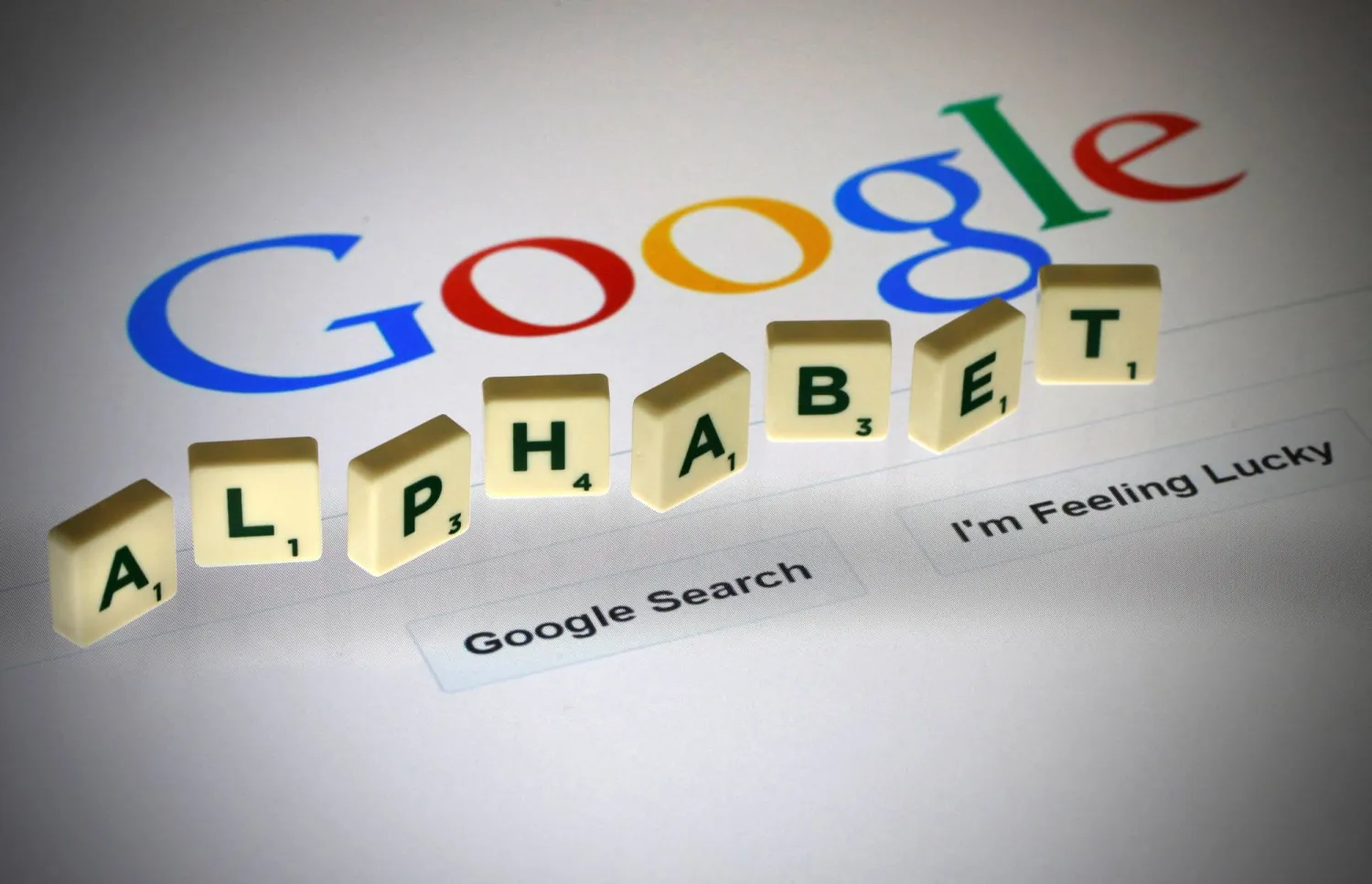
The letters of the word "Alphabet" on a computer screen featuring a Google search page in an illustration (Reuters)
TT

Alphabet's Investment in SpaceX Multiplies 100-Fold to $94 Billion

The letters of the word "Alphabet" on a computer screen featuring a Google search page in an illustration (Reuters)

Alphabet's early bet on SpaceX has multiplied more than 100-fold, with the Google parent disclosing a stake worth about $94 billion at the end of June compared with the $900 million investment it said it made in Elon Musk's rocket company in 2015.

Alphabet has emerged as by far the largest single institutional holder of SpaceX following its $86 billion IPO in June, according to a Reuters analysis of quarterly filings made public so far.

The filings shed new light on the scale of positions acquired by SpaceX's backers as the company transitioned from a closely held startup to a publicly traded giant. Together with separate public disclosures on early investments, including Alphabet's, they also highlight how dramatically the value of some early investments in SpaceX has grown.

Because the 13F filing data is compiled once ⁠per quarter and disclosed ⁠within six weeks of quarter-end, the information is dated and will not capture any buying or selling done by these large investors since June 30.

There are other limitations as well, given the vast universe of SpaceX investments and the evolving schedule of when they stand to become eligible to be sold in public markets.

"It's very, very difficult to tease out which of these institutions were holding pre-IPO shares," said Steve Sosnick, market strategist at Interactive Brokers.

Alphabet is an exception because the company publicly disclosed that it invested $900 million in SpaceX ⁠in 2015, providing a rare benchmark against which to compare the value of its current holding.

Alphabet did not immediately respond to a request for comment. Sosnick added that the 13F filings did not reveal investors' lockup status or intentions with respect to realizing profits on pre-IPO positions.
FILE - The SpaceX logo is displayed on a building, May 26, 2020, at the Kennedy Space Center in Cape Canaveral, Fla. (AP Photo/David J. Phillip, File)

Alphabet held 551.2 million SpaceX shares at the end of the second quarter, according to the firm's filing, worth about $94.2 billion at SpaceX's June 30 share price of $170.86.

At Thursday's price, Alphabet's disclosed position would be worth about $77.9 billion, still about 86.5 times the size of Google's original investment. Fidelity Investments was the second-largest reported institutional holder, with 302.6 million SpaceX shares, followed by Gigafund Management with 171.8 million, Baillie Gifford with 51.4 million and BlackRock with 51.0 million.

Alphabet, Fidelity, Gigafund Management, Baillie Gifford and BlackRock, the five largest reported holders in the data, accounted for nearly three quarters ⁠of reported SpaceX ⁠shares, highlighting the concentration of reported institutional ownership among a handful of investors.

Separately, SpaceX said in a regulatory filing that Musk owned a 48.4% stake in the company. SpaceX went public on June 12 at $135 a share. Its shares have since retreated from their end-June level. SpaceX closed at $141.29 on Thursday, 4.7% above its IPO price but 17.3% below the June 30 close.

Sosnick told Reuters that SpaceX remains one of the most actively traded stocks among customers at Interactive Brokers, receiving a "fresh jolt of buying last week when market fears about what would happen when the first lockup expiry arrived proved to be unfounded."

Retail owners of SpaceX shares, who do not have to submit their holdings to the SEC, turned into net sellers of the stock on Friday for the first time since the IPO, according to data from Vanda Research.

The research firm, which tracks the activity of self-directed individual investors, calculated that this group sold a net $4.5 million on that day. SpaceX shares were down 3% on Thursday but have risen 30% since August 5.


Mideast Oil Exports Rebound to 12.8 Million Barrels Per Day

Vessels in the Strait of Hormuz near the beach of Bandar Abbas, Iran, September 28, 2026. Amirhosein Khorgooi/ISNA/via WANA (West Asia News Agency) via Reuters
TT

Mideast Oil Exports Rebound to 12.8 Million Barrels Per Day

Vessels in the Strait of Hormuz near the beach of Bandar Abbas, Iran, September 28, 2026. Amirhosein Khorgooi/ISNA/via WANA (West Asia News Agency) via Reuters

Crude oil exports from key Middle East producers rebounded in September to 12.8 million barrels per day, the highest since the US-Israeli war with Iran started in February, data from Kpler showed on Monday, as Saudi Arabia and the United Arab Emirates boosted exports.

The rebound came following a recovery in exports via the Strait of Hormuz, ⁠which were set ⁠to hit about 7.4 million bpd this month, as Saudi Arabia diverted oil exports from the Red Sea port of Yanbu following attacks that damaged its East-West pipeline, the preliminary data showed.

While exports from the region - which includes Saudi Arabia, the United Arab Emirates, Iraq, Oman, ⁠Qatar, Kuwait, Iran - have rebounded, they were still about 6 million bpd down from 18.8 million bpd in February, according to Kpler.

The region's top exporter Saudi Arabia was on track to ship about 5.4 million bpd this month, rebounding from 2.446 million bpd in August, the data showed, according to Reuters.

September shipments from the Ras Tanura port in the Gulf jumped to about 3.6 million bpd, from 929,000 bpd in August, but still lower than the 6.411 million bpd ⁠recorded in ⁠February, according to the data.

A total of 19 very large crude carriers, carrying 2 million barrels of Saudi oil each, exited the Strait of Hormuz last week, Kpler data showed.

The figures exclude any vessels that might have crossed the strait with their Automatic Identification System transponders turned off to avoid detection.

Before the Iran war started on February 28, the strait typically handled about 125 large commercial vessels per day, including tankers, gas carriers, bulkers and container vessels, accounting for some 20% of the world’s daily crude oil and liquefied natural gas supply.


Syria Central Bank Expects More Than $1 Billion to Establish New Banks

President Ahmad al-Sharaa issued a decree appointing Nebras Mohammad Wahid Khayyata as first deputy governor of the Central Bank of Syria. (X) 
TT

Syria Central Bank Expects More Than $1 Billion to Establish New Banks

President Ahmad al-Sharaa issued a decree appointing Nebras Mohammad Wahid Khayyata as first deputy governor of the Central Bank of Syria. (X) 

Syria expects more than $1 billion in foreign capital to flow into the country to establish new banks, Central Bank Governor Mohammad Safwat Raslan said, as the bank seeks to encourage investment, protect customers’ rights and open secure money-transfer channels through official institutions.

Raslan told state news agency SANA on Sunday that licensing requirements already exist for both Islamic and conventional banks. Key criteria include applicants’ experience and reputation and the founders’ financial solvency, as well as a requirement for a strategic banking partner to hold at least a 10 percent stake in the new bank.

The timeframe for granting licenses depends on applicants submitting the required documents and meeting the stipulated conditions, he explained. The Central Bank is working to ensure that preliminary licenses are issued within three to four months of receiving all requirements.

Raslan dismissed concerns about financial risks, noting that the law allows foreign investors to retain 60 percent of their paid-in capital in foreign currency. Investors’ rights to profits and their transfer are also protected, he added, pointing to the removal of all restrictions on buying, selling or transferring foreign currency.

On regulatory risks, Raslan stressed that the Central Bank issues its regulatory and supervisory decisions in accordance with international risk and accounting standards, meaning investors should find no difference between standards applied in Syria and those in their home countries.

The Central Bank is also encouraging international money-transfer providers to enter the Syrian market through Syrian financial institutions to create secure transfer channels for Syrians and foreigners and protect their rights and interests.

Daily and monthly transfer limits will be determined by agreements between Syrian financial institutions and banks or service providers abroad, according to the official.

Separately, President Ahmad al-Sharaa issued Decree No. 176 of 2026 appointing Nebras Mohammad Wahid Khayyata as first deputy governor of the Central Bank of Syria. The decree also repealed any provisions conflicting with its terms.


Riyadh to Host Global Energy Leaders for Talks on Markets, Supply

The Saudi Energy Minister during the opening ceremony of the 24th World Petroleum Congress in Calgary, Canada, in 2023 (Reuters)
TT

Riyadh to Host Global Energy Leaders for Talks on Markets, Supply

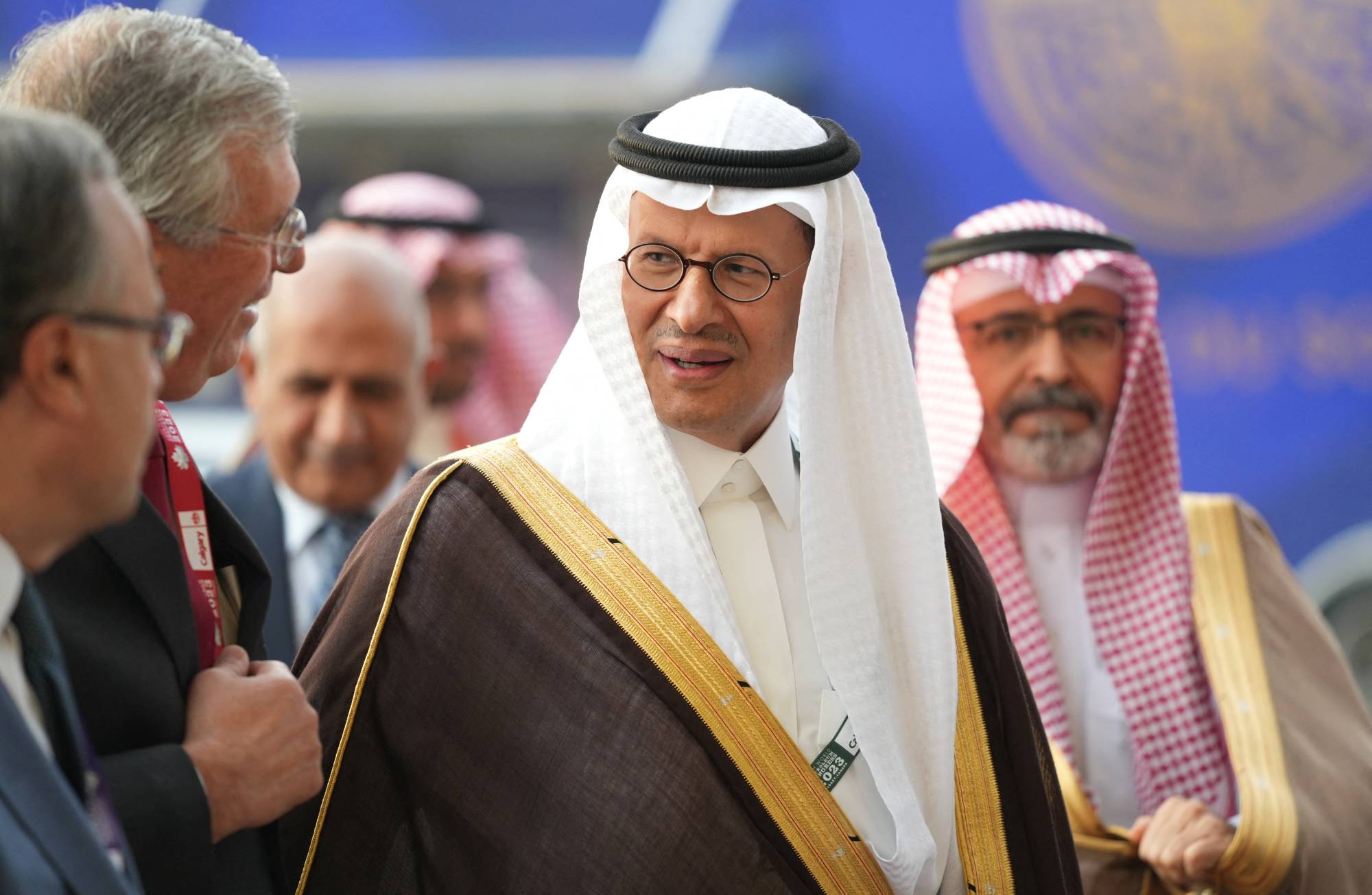
The Saudi Energy Minister during the opening ceremony of the 24th World Petroleum Congress in Calgary, Canada, in 2023 (Reuters)

Saudi Arabia will bring together some of the world’s most influential energy leaders in Riyadh from Oct. 11-15 for high-level talks on energy security, oil and gas markets, investment and the technologies reshaping the global energy industry.

At the heart of Riyadh Energy Week will be the 25th WPC Energy Congress, hosted by Saudi Arabia for the first time in the event’s nearly 90-year history. Held under the theme “Pathways to an Energy Future for All,” the congress will feature more than 30 ministerial, strategic and leadership sessions spanning global energy markets, investment and financing, artificial intelligence, critical minerals, carbon management, natural gas and the future energy mix.

The congress will run from Oct. 11-15 at the Riyadh Front Exhibition & Conference Center, with its official opening ceremony on Oct. 12. Organizers expect more than 25,000 participants, including 100 ministers, 500 CEOs and around 800 speakers, as well as representatives from about 1,000 companies. The exhibition will cover more than 50,000 square meters.

Riyadh Energy Week will also include an International Energy Forum ministerial meeting, Clean Energy Ministerial and Mission Innovation events, along with other sessions bringing together governments, international organizations and companies from across the energy value chain.

The Saudi Energy Minister upon his arrival to participate in the World Petroleum Congress in Calgary, Canada in 2023 (Reuters)

Global Government and Industry Leaders

Saudi Energy Minister Prince Abdulaziz bin Salman will formally open the congress on Oct. 12 alongside WPC Energy President Pedro Miras.

The executive program will include Saudi Economy and Planning Minister Faisal Alibrahim and Investment Minister Fahad Abduljalil Al-Saif, as well as Egyptian Petroleum and Mineral Resources Minister Karim Badawi, OPEC Secretary General Haitham Al Ghais, World Energy Council Secretary General and CEO Angela Wilkinson and International Energy Forum Secretary General Jassim Al Shirawi.

Leading industry speakers include ExxonMobil Chairman and CEO Darren Woods, TotalEnergies Chairman and CEO Patrick Pouyanne, Shell CEO Wael Sawan, BP CEO Meg O’Neill, Baker Hughes Chairman and CEO Lorenzo Simonelli, Siemens Energy CEO Christian Bruch, SLB CEO Olivier Le Peuch and ConocoPhillips President and CEO Andy O’Brien.

Prominent energy-market analysts will also participate, including S&P Global Vice Chairman Daniel Yergin, RBC Capital Markets’ Helima Croft, Carlyle senior adviser Jeffrey Currie, Energy Aspects founder and Director of Market Intelligence Amrita Sen and Rapidan Energy Group founder and President Bob McNally.

Energy Security and Markets

Energy security and global oil and gas markets will be among the congress’s main themes, with ministerial sessions bringing together representatives of producing and consuming countries to discuss market developments and the future of supply.

The agenda extends beyond oil and gas, with discussions on forces reshaping the industry, including AI and digitalization, critical minerals, energy-project financing, carbon management and renewables.

AI and digital transformation will feature prominently, with companies including Aramco, Siemens Energy, SLB, Hitachi Energy, Microsoft and Samsung E&A discussing the impact of digital technologies on energy operations, productivity and efficiency.

The discussions come as AI moves from experimental uses toward applications in operations, maintenance, data analysis and process optimization, while also driving increased demand for electricity and infrastructure to support expanding data centers.

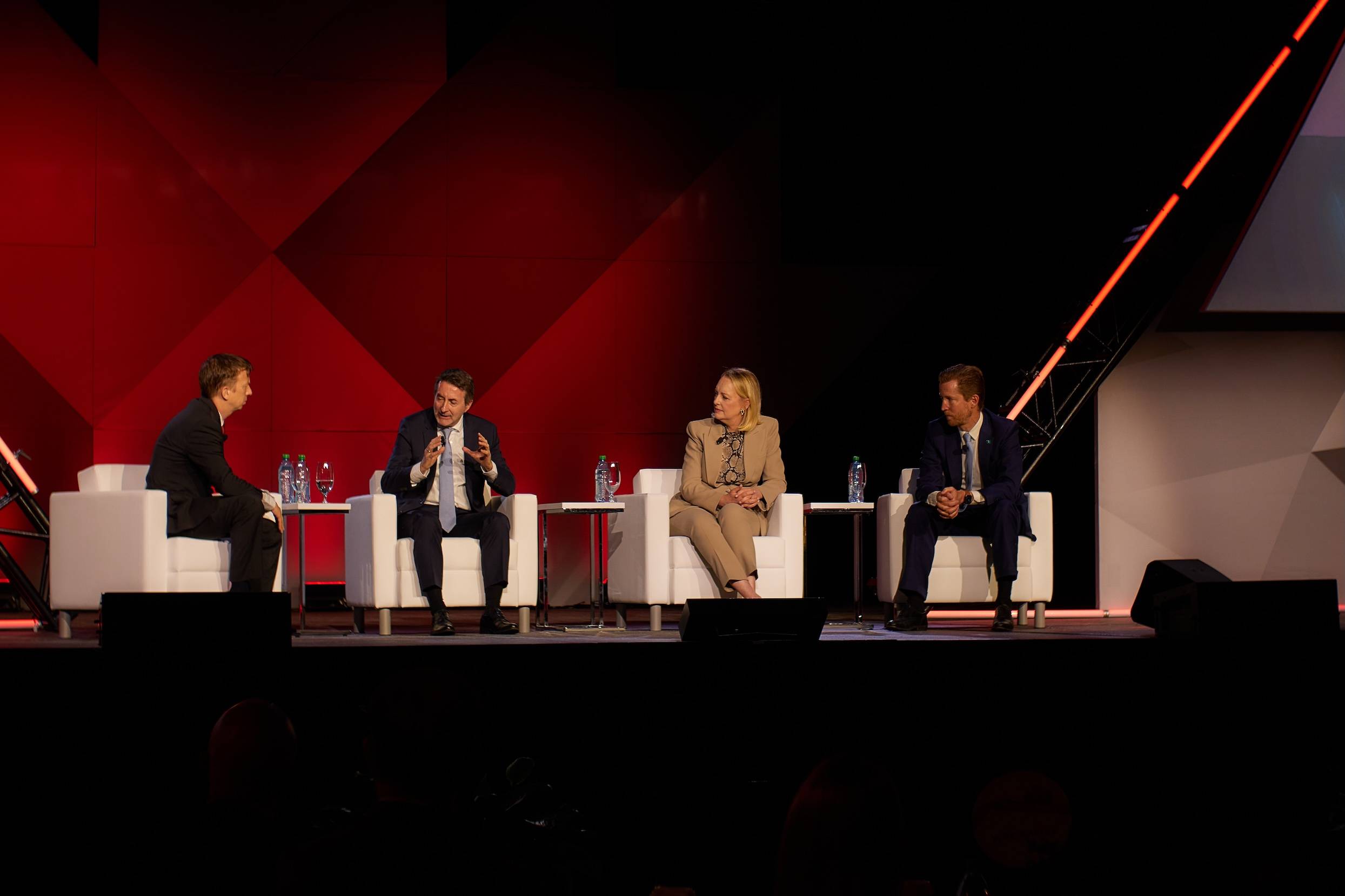
A panel discussion at the 24th World Petroleum Congress in Calgary Canada in 2023

Saudi Arabia’s Economic and Energy Transformation

The congress will hold a ministerial session titled “Vision 2030: Economic Transformation and Global Competitiveness,” focusing on Saudi Arabia’s economic transformation and its growing role in the global energy system.

The agenda covers critical minerals and supply chains, carbon capture, utilization and storage, carbon markets, renewable energy and hydrogen, broadening the discussion from security of conventional fuel supplies to the technology, infrastructure and materials required for the future energy system.

The congress will also feature a technical program with more than 30 research and technical forums across five areas: primary energy supply, infrastructure, fuels and molecules, energy technologies and industry leadership.

Riyadh Energy Week will include specialized programs on the circular carbon economy, women in energy, young professionals, social responsibility, AI and digital transformation, as well as an Energy Hackathon and knowledge-sharing and networking events.