

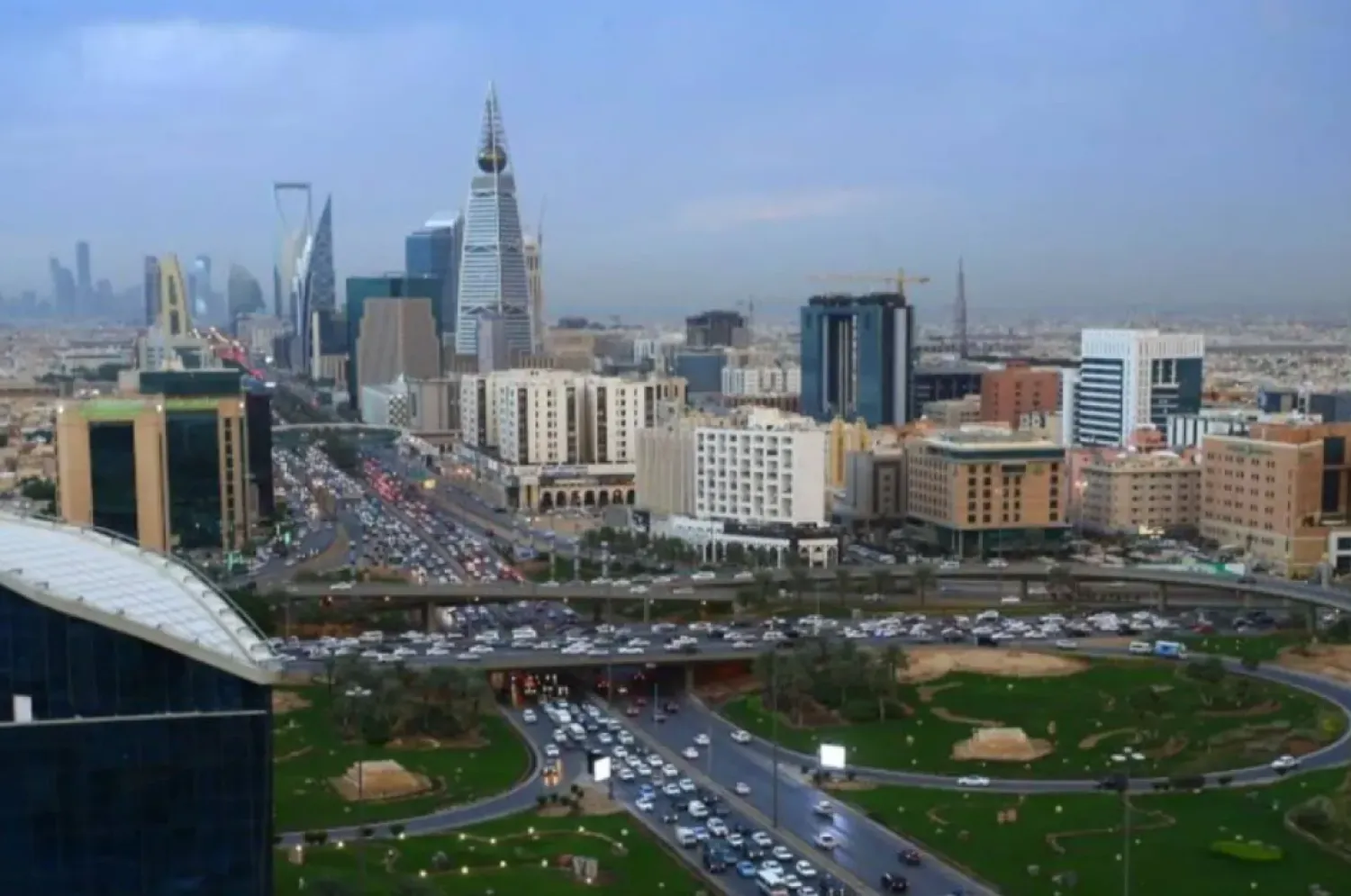

Saudi Arabia Reshapes the Future of the Digital Economy Through Advanced Digital Infrastructure, Global Partnerships

File photo of the Saudi capital Riyadh - File/AAWSAT
TT

Saudi Arabia Reshapes the Future of the Digital Economy Through Advanced Digital Infrastructure, Global Partnerships

File photo of the Saudi capital Riyadh - File/AAWSAT

Saudi Arabia has leveraged its advanced digital infrastructure and partnerships with leading global technology companies to establish its position as a global hub for artificial intelligence investment, underpinned by competitive advantages that include reliable energy, vast land availability, and a strategic geographic location.

The Kingdom has made rapid strides in the data center sector, with capacity increasing from 68 MW in 2021 to more than 467 MW in the first quarter of 2026, supported by investments exceeding SAR56.2 billion in data centers and digital infrastructure. The sector has grown more than sixfold since the launch of Saudi Vision 2030, as part of a national data and AI strategy that contributes to economic diversification and strengthens the Kingdom’s readiness for the knowledge economy.

Saudi Arabia has further strengthened its position as a global destination for technology investment by attracting some of the world’s largest cloud service providers. The Kingdom hosts operations for Oracle, Alibaba Cloud, and Google Cloud, alongside an SAR11 billion strategic partnership between HUMAIN and Blackstone, reflecting growing global confidence in Saudi Arabia’s digital investment environment, SPA reported.

This investment appeal is underpinned by a comprehensive set of competitive advantages, including abundant energy resources, extensive land available for data center expansion, and a geographic location connecting Asia, Africa, and Europe, positioning the Kingdom second globally in data center market attractiveness.

Saudi Arabia’s leadership has extended to helping shape the future of the global digital economy. As one of the leading G20 countries in the communications and technology sector, the Kingdom led G20 consensus on a roadmap for defining and measuring the digital economy and the adoption of human-centered, trustworthy AI principles. It also contributed to transforming the Digital Economy Task Force into a permanent working group, reinforcing its role as an international partner in advancing digital policies and strengthening global cooperation in technology.

As part of its efforts to bridge the global digital divide, the Kingdom has led pioneering initiatives, including a 5G trial using High-Altitude Platform Systems (HAPS), which demonstrated the ability to cover nearly half a million square kilometers in remote areas. Saudi Arabia also conducted the first-of-its-kind trial integrating non-terrestrial networks (NTN) with terrestrial networks, offering a future solution for expanding connectivity and accelerating access for unconnected communities.

These achievements have been reflected in the Kingdom’s performance across international indicators. Saudi Arabia ranked first globally twice in the International Telecommunication Union’s (ITU) 2026 ICT Development Index, outperforming 159 countries, reflecting the strength of its integrated digital infrastructure, widespread connectivity, and high levels of digital adoption. The Kingdom also ranked second among G20 countries in the ITU’s ICT Regulatory Tracker and second among G20 countries in digital competitiveness according to the European Center for Digital Competitiveness, while digital infrastructure coverage reached approximately 99% of the Kingdom’s population.

Saudi Arabia has continued to strengthen its standing across global AI indices, ranking first in the Arab world and 14th globally in the Global AI Index. The Kingdom also ranked first globally in AI security, privacy, and encryption; first in women’s empowerment in AI; third globally in the development of advanced AI models; and third in the share of specialized AI talent, while recording the world’s highest growth rate in specialized talent. It also ranked fourth globally in attracting international talent.

The impact of this progress has extended to empowering people and improving quality of life. Saudi Arabia launched the world’s largest virtual hospital, leveraging artificial intelligence technologies to deliver advanced healthcare services. The Kingdom has also made significant strides in empowering women in the technology sector, with their participation rising from 7% to 35%, surpassing the averages of both the G20 and the European Union. This reflects the success of investing in human capital alongside investment in digital infrastructure.

Saudi Arabia’s readiness has also received recognition from independent international institutions. JLL, as reported by Bloomberg, expects Riyadh to lead the growth of AI-related data centers in the Middle East, further underscoring the Kingdom’s growing position as one of the world’s leading destinations for investment in artificial intelligence and digital infrastructure.



Oil Falls but on Track for 8% Weekly Gain on Supply Concerns; US Diesel Hits Record High

WHITING, INDIANA - SEPTEMBER 08: An aerial view shows the sprawling BP refinery on September 08, 2026 in Whiting, Indiana. (Photo by SCOTT OLSON / GETTY IMAGES NORTH AMERICA / Getty Images via AFP)
TT

Oil Falls but on Track for 8% Weekly Gain on Supply Concerns; US Diesel Hits Record High

WHITING, INDIANA - SEPTEMBER 08: An aerial view shows the sprawling BP refinery on September 08, 2026 in Whiting, Indiana. (Photo by SCOTT OLSON / GETTY IMAGES NORTH AMERICA / Getty Images via AFP)

Oil prices fell on Friday but remained on course for a weekly gain of more than 8% while US diesel prices hit a record high as attacks along Middle East shipping routes stoked concerns about prolonged supply disruptions.

Brent crude futures were down $3.45, or 3.21%, to $104.18 a barrel at 1132 GMT.

US West Texas Intermediate crude fell $2.96, or 2.89%, to $99.52 a barrel. Both benchmarks hit their highest levels since mid-May earlier in the session.

The benchmarks reversed early gains after the Financial Times reported that foreign ministers in the Middle East are trying to work out a temporary deal with Iran to manage shipping through the Strait of Hormuz.

Brent and WTI rose more than 6% on Thursday after an escalation in shipping attacks in the region.

"Some headlines of possible new talks in the Middle East are weighing moderately on oil prices today," said UBS energy analyst Giovanni Staunovo. "I keep seeing near-term risks to the upside for oil prices, but we should expect ongoing high price volatility too."

In a further potentially significant development for Riyadh, satellite imagery showed smoke on Thursday in the vicinity of Saudi Arabia's East-West Pipeline, which has become a vital means for the kingdom to divert its crude exports away from Hormuz.

Saudi Arabia's crude supply fell by 2.3 million barrels per day on the month to 6 million bpd in August, the lowest level in more than three decades, the International Energy Agency said on Friday, citing attacks on Saudi energy facilities.

Adding to concerns over regional oil flows, Yemen's Iran-aligned Houthis on Friday reached the island of Perim in the Bab el-Mandeb Strait, four Yemeni government sources told Reuters, potentially tightening their grip on one of the world's vital shipping routes.

Iran said it had attacked 10 ships near the Strait of Hormuz on Wednesday, after the US hit five Iranian oil tankers. Iran's Islamic Revolutionary Guard Corps said it would escalate its response to any further attacks.

Vessel transits at the Strait of Hormuz fell to seven on Thursday from 11 the previous day, preliminary ship-tracking data showed on Friday.

The strait handled about 125 commodity vessels and one-fifth of global daily oil and liquefied natural gas supplies before the Iran war began in late February.

Meanwhile, two European Central Bank policymakers opened the door on Friday to further interest rate increases if a war-fuelled rise in energy prices continues and pushes up other prices in the euro zone.

SUPPLY DISRUPTIONS LIFT FUEL PRICES

Oil supply disruptions due to the Iran war, along with Ukrainian attacks on Russia's refineries, pushed the US national average diesel price past $6 a gallon for the first time on Thursday, according to price tracker GasBuddy.

"Refined products, particularly diesel, are feeling a one-two punch right now," said Tim Waterer, chief market analyst at KCM Trade.

"As long as both the Gulf shipping constraints and Russian refining outages remain in play, diesel and other refined products are likely to show a higher upside tendency than the broader crude market," he added.

Commerzbank raised its year-end Brent crude forecast to $85 a barrel from $75, while increasing its diesel forecast to $1,200 a ton from $950 and its jet fuel forecast to $1,230 a ton from $980.


Gold Gains on Softer Oil; US Inflation Data in Focus

A view of smelted gold bars at a smelting facility in Accra, Ghana, August 22, 2024. REUTERS/Francis Kokoroko/
TT

Gold Gains on Softer Oil; US Inflation Data in Focus

A view of smelted gold bars at a smelting facility in Accra, Ghana, August 22, 2024. REUTERS/Francis Kokoroko/

Gold prices rose on Friday, but were headed for a weekly loss, as oil slipped from multi-month highs and assuaged some inflationary concerns, as investors awaited key US economic data for clues on the Federal Reserve's monetary policy path.

Spot gold rose 0.6% to $4,339.46 per ounce by 1105 GMT. It was down nearly 3% for the week so far.

Prices fell on Thursday after the US Producer Price Index data showed prices increased in line with expectations in August amid a rebound in the cost of energy products.

US gold futures dropped 0.6% to $4,381.30.

The precious metal is benefiting from "softer oil prices on hopes a Monday meeting between GCC ministers and Iran can yield some results regarding the passage of oil through the Strait," said Ole Hansen, head of commodity strategy at Saxo Bank. "In addition, buyers once again emerged ahead of a key support area around $4,300," said Hansen.

Oil prices were set to end the week above $100 a barrel.

Higher oil prices stoke inflation fears and bolster expectations of the Fed raising interest rates. While gold is typically seen as an inflation hedge, higher interest rates diminish the appeal of non-yielding bullion.

Traders are now pricing in a 67% chance of a rate hike at the central bank's policy meeting next week, up from 62% before the data, according to the CME FedWatch Tool. The US consumer price inflation report is due at 1230 GMT.

Elsewhere, gold demand in India was subdued this week as volatile prices discouraged buyers, while investment demand remained strong in top consumer China.

Among other metals, spot silver rose 0.4% to $63.80 per ounce, but was down 3% for the week.

Platinum climbed 0.9% to $1,792.07 and palladium gained 2.4% to $1,312.90. However, both metals were on track for a weekly loss.


France Lowers Growth Forecast, Will Miss Deficit Target

French Minister for Economy, Finance, and Industrial, Energy and Digital Sovereignty Roland Lescure gestures as he speaks during a press conference to update the governments growth and fiscal deficit forecasts for the 2027 budget, at the Bercy Economy and Finance Ministry in Paris, France, September 11, 2026. REUTERS/Stephanie Lecocq
TT

France Lowers Growth Forecast, Will Miss Deficit Target

French Minister for Economy, Finance, and Industrial, Energy and Digital Sovereignty Roland Lescure gestures as he speaks during a press conference to update the governments growth and fiscal deficit forecasts for the 2027 budget, at the Bercy Economy and Finance Ministry in Paris, France, September 11, 2026. REUTERS/Stephanie Lecocq

France's economy will grow less than expected this year and the government will miss its budget deficit target, Finance Minister Roland Lescure said on Friday.

The downgraded outlook complicates the government's task of getting its 2027 budget passed in the coming months in a deeply divided parliament, where parties have hardened their positions before an April-May two-round presidential election.

Lescure told journalists he was lowering the government's 2026 economic growth forecast to 0.5% from 0.7% previously, but stuck with a ⁠projection of 1.0% ⁠for next year.

"This year has been marked by extreme crises involving four different types of shocks," Lescure told reporters, according to Reuters.

Slower growth will make it more difficult for the government to trim its fiscal budget deficit as planned to 5.0% of economic output this year.

"The ⁠reality is that the budget was built on a 5% assumption. And the reality is that, today, 5% is no longer an option," Lescure said.

The minister did not give a new deficit target.

The economic fallout from the war in the Middle East and summer heatwaves and drought that hit agriculture output have dragged down growth and put the government's fiscal targets out of reach.

"I think it is reasonable to say that economic ⁠uncertainty has ⁠never been greater than it is today," Lescure said. "We are operating under tight budgetary constraints; there is no more fat to trim."

Further complicating the picture, French borrowing rates have surged in recent weeks as investors have identified France as one of the weaker links in a global bond selloff due to its weak public finances and serial slippage on its deficit-reduction plans.

Lescure stressed that France had no difficulties in issuing debt, but acknowledged that it now cost more.