


Is this Cave in Türkiye Where Homer Wrote 'The Odyssey'?

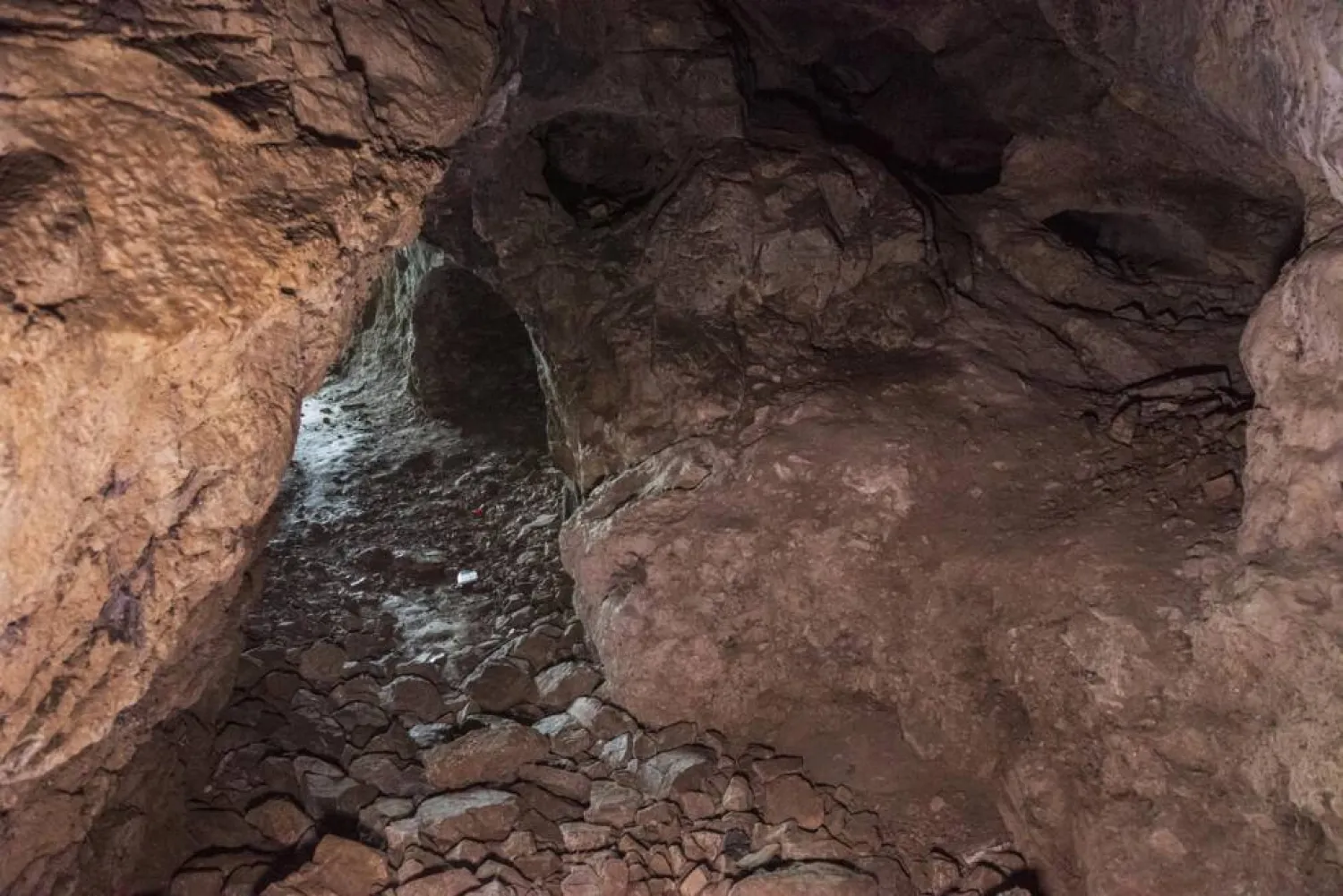
Access to the rock-strewn cave is not easy. Ahmet Ayberk Cimen / AFP
TT

Is this Cave in Türkiye Where Homer Wrote 'The Odyssey'?

Access to the rock-strewn cave is not easy. Ahmet Ayberk Cimen / AFP

On a Turkish hillside overlooking the olive-covered slopes outside Izmir is a cave known to generations of locals as the place where Homer penned "The Odyssey".

"This place was always called Homer's Valley by the locals. Travelers from all over the world would come and see the cave where Homer is said to have composed his poems," explained Turkish researcher Altan Altin, who has written a book on the subject.

In fact, nobody knows exactly where Homer wrote his epic poems and there is much mythology around the idea of his cave. Today, of course, the debate has become livelier and more immediate thanks to Christopher Nolan's blockbuster film "The Odyssey".

The poet has for a very long time been associated with the Izmir region of Türkiye’s Aegean coast, which for most of its history was known as ancient Smyrna.

"The Smyrnaeans have the river Meles, with its lovely water, and at its springs is the grotto, where they say Homer composed his poems," wrote the 2nd-century Greek chronicler and geographer Pausanias.

Those words have fueled a centuries-long debate, one that continues today, about Homer's life and the location of the river where he was thought to have been born in the year 8 BC.

- Remarkable precision -

Visiting the cave, which is filled with rocks, is not easy.

Inside, travelers have left Greek scrawled on the walls, although it is not clear how old the writing is.

Although other places, notably the Greek island of Chios, also lay claim to Homer's origins, ancient Smyrna and its hinterland -- where Bornova is located -- are closely associated with the poet.

"For me, there's no doubt, Homer is from Bornova. In any case, he is from Ionia, which includes Smyrna and Chios. He's from these lands," Altin told AFP. Ionia is the name of an ancient Greek region on Türkiye’s Aegean coast.

To support his thesis, Altin pointed to a 3rd-century BC frieze depicting the deification of Homer, which he says reproduced the Bornova cave with remarkable precision.

"This bas-relief was already known, but no one had ever noticed the identical details to those found in Homer's cave. This is the first time such a detailed geographical description came to light," he said.

Archaeological evidence from the area also suggests a link to Homer.

"The discoveries from the excavations, especially coins bearing Homer's likeness, show us that the inhabitants of ancient Smyrna considered the poet to be one of their own," archaeologist Mehmet Akif Erdem said.

"'The Iliad' and 'The Odyssey' were written in the (ancient Greek) dialects of Ionic and Aeolic, suggesting that ancient Smyrna and Bornova could be among Homer's native lands," he said.

- Homer everywhere -

Beyond the academic debate about his origins, Homer is everywhere in Bornova.

At Yesilova Hoyuk, a Neolithic site considered to be the oldest known prehistoric human settlement in Izmir, there is a bust of Homer with the inscription: "I compiled The Iliad and The Odyssey epics on this land. I lived in Bornova."

The town -- which already hosts a book fair dedicated to Homer and has a statue of Trojan War hero Hector in a local park -- is planning to refurbish the cave and open it to visitors to capitalize on the revival of interest in the ancient poet.

"Preserving Homer's legacy is a duty we owe to humanity. He is one of the founding fathers of literature," Bornova Mayor Omer Eski told AFP.

"The stories he tells are about this land. The question is not whether we should claim Homer or not. His story is also ours," he said.

But not everyone shares his vision.

In 2024, municipal officials from President Recep Tayyip Erdogan's ruling AKP party proposed renaming Homer's Valley after a Turkish fighter, saying the site should not have a Greek name.

"Erasing Homer's name would be one of the worst things we could do to Bornova," retorted the mayor, whose aim is to "make Homer known to the whole world as a person from Bornova" and to make the town a tourist attraction.

- 'Proud to be his compatriot' -

Mustafa Kocyigit, who runs the Gargantua bookshop in Izmir, said the success of Nolan's film has revived interest in Homer and boosted sales of the poem "The Odyssey".

"I knew Homer was from these lands, but I didn't know he was specifically from Izmir. We are incredibly lucky," said teacher Safak Tosun outside one of the city's cinemas where the film is showing.

"I feel proud, honored and deeply privileged to be his fellow countryman."

For the researcher Altin, there are clues in Homer's writing that he says shows the poet came from the area.

"When you dive into the Iliad, you really understand that Homer was an Anatolian. You find anecdotes and cultural references that are completely unknown elsewhere," he said.

He believes Homer's origins should not stir up rivalry between Türkiye and Greece.

"Homer is 2,800 years old, while the Turkish-Greek border is only a century old," he shrugs.

"Homer is Greek. Homer is Anatolian. None of us is older than he is, not even our countries."


Hegra Highlights Status as Saudi Arabia’s First UNESCO World Heritage Site

Hegra Highlights Status as Saudi Arabia’s First UNESCO World Heritage Site
TT

Hegra Highlights Status as Saudi Arabia’s First UNESCO World Heritage Site

Hegra Highlights Status as Saudi Arabia’s First UNESCO World Heritage Site

The Kingdom of Saudi Arabia, a land that has witnessed successive civilizations whose traces remain across its regions, is home to AlUla Governorate, where the Hegra Archaeological Site stands as part of this rich human heritage.

It was the first Saudi site inscribed on the UNESCO World Heritage List, a testament to Saudi Arabia’s deep civilizational heritage and its commitment to preserving and safeguarding it for future generations.

As Saudi Arabia celebrates Saudi National Day, Hegra evokes part of the history of the Arabian Peninsula and the civilizational and cultural exchanges that took place across the region through the ages, according to SPA.

The Hegra Archaeological Site was inscribed on the UNESCO World Heritage List in 2008, becoming the first Saudi site to be added to the list, in an achievement that reflects its exceptional historical and civilizational significance. The site contains archaeological remains and carved rock facades that showcase the Nabataeans’ engineering and sculptural expertise.

Saudi Arabia, represented by the Royal Commission for AlUla (RCU), pays particular attention to the Hegra Archaeological Site through comprehensive efforts to preserve the site and safeguard its archaeological and historical components.

These conservation efforts are complemented by archaeological studies, surveys, and research conducted by the RCU in cooperation with experts and academic institutions.

Hegra remains one of the Kingdom’s most prominent heritage sites and a destination for visitors and researchers from around the world.


Tyre’s Ruins Survived the Strikes. Now Divers are Finding their Way Back Underwater

A diver passes above Roman-era columns at an archaeological site near the coast in the southern port city of Tyre, Lebanon, Thursday, Sept. 17, 2026. (AP Photo/Bilal Hussein)
TT

Tyre’s Ruins Survived the Strikes. Now Divers are Finding their Way Back Underwater

A diver passes above Roman-era columns at an archaeological site near the coast in the southern port city of Tyre, Lebanon, Thursday, Sept. 17, 2026. (AP Photo/Bilal Hussein)

Beneath the Mediterranean waters off the southern Lebanese city of Tyre, divers swim past stone walls, ancient structures and a submerged road — remnants of parts of a city that once stood above the water.

With a shaky ceasefire in place after the latest Israel-Hezbollah war, visitors are returning to Tyre, a city known for its Roman ruins and its much older Phoenician history. Diving operators say interest in the underwater archaeological sites is increasing, though the number of visitors remains below prewar levels, The Associated Press said.

“The diving season is not like it used to be before, but the number of people coming to dive to see the ruins is increasing day by day,” said Yousef al-Jundi, manager of the Lebanon Diving Center.

The remains underwater are part of Tyre’s wider archaeological landscape. UNESCO says substantial archaeological remains of the ancient city are submerged, while underwater archaeological research has documented walls, harbor structures and other remains along the former island and coastline.

“This is the identity of this city, which tells us how old this city is and what its history is,” al-Jundi said. He said the underwater sites attract divers from around the world who want to see what is commonly described as Tyre’s “sunken city.”

Tyre was one of the major Phoenician maritime cities of antiquity, with trading networks that extended across the Mediterranean. The city was also famous for its purple dye and later became an important Greek and Roman center. Its archaeological remains were added to UNESCO’s World Heritage List in 1984.

The war raised concerns over the preservation of those remains, both on land and underwater.

“We were worried about the archaeological sites on land, which were affected by the war and the strikes, but at the same time we were also worried about the archaeological sites underwater, but thank God they were not affected,” al-Jundi said.

Before the ceasefire in late June, Tyre came under intense Israeli airstrikes, with neighborhoods in the coastal city heavily damaged during the fighting. UNESCO’s World Heritage Committee placed Tyre on its List of World Heritage in Danger in July 2026, citing the threat and damage caused by the ongoing hostilities.

Ali Badawi of Lebanon’s Directorate General of Antiquities said protecting the underwater sites remains a challenge.

“They’re not very well protected," Badawi said, adding that “encroachments” sometimes happen. “But we are trying very hard through surveys and research that we’re conducting, and we’re trying to develop laws to ensure their safety in the future.”

Badawi said the authorities also want to expand research and investment in underwater tourism, including the creation of underwater archaeological parks that would allow more visitors to see the sites.

The effort comes as Tyre seeks to rebuild its tourism sector after the war, while preserving archaeological remains that reflect thousands of years of the city’s history.


Historic Linah Marks Saudi National Day with Heritage Events, International Performances

Linah is one of the most prominent historical sites in northern Saudi Arabia - SPA
TT

Historic Linah Marks Saudi National Day with Heritage Events, International Performances

Linah is one of the most prominent historical sites in northern Saudi Arabia - SPA

Historic Linah, located south of Rafha in Northern Borders Region, will celebrate Saudi National Day with a series of national and heritage events at the Historic Linah Market.

The program features performances by local and international artistic groups, along with a variety of artistic segments, solo musical performances, and equestrian and camel-riding displays, SPA reported.

The festivities will also include puppet shows, children’s competitions, and a musical evening showcasing traditional songs.

The Historic Linah Municipality has completed preparations across sites, parks, and roads, decorating streets with national flags and festive lighting to welcome visitors and create a celebratory atmosphere that reflects national pride.

Linah is one of the most prominent historical sites in northern Saudi Arabia.

Once a key stop along ancient caravan routes, the town’s historic palaces and market continue to stand as enduring witnesses to the region’s collective memory.
