


China Leads Wave of Clean Power Wastage as Grids Globally Hit Limits

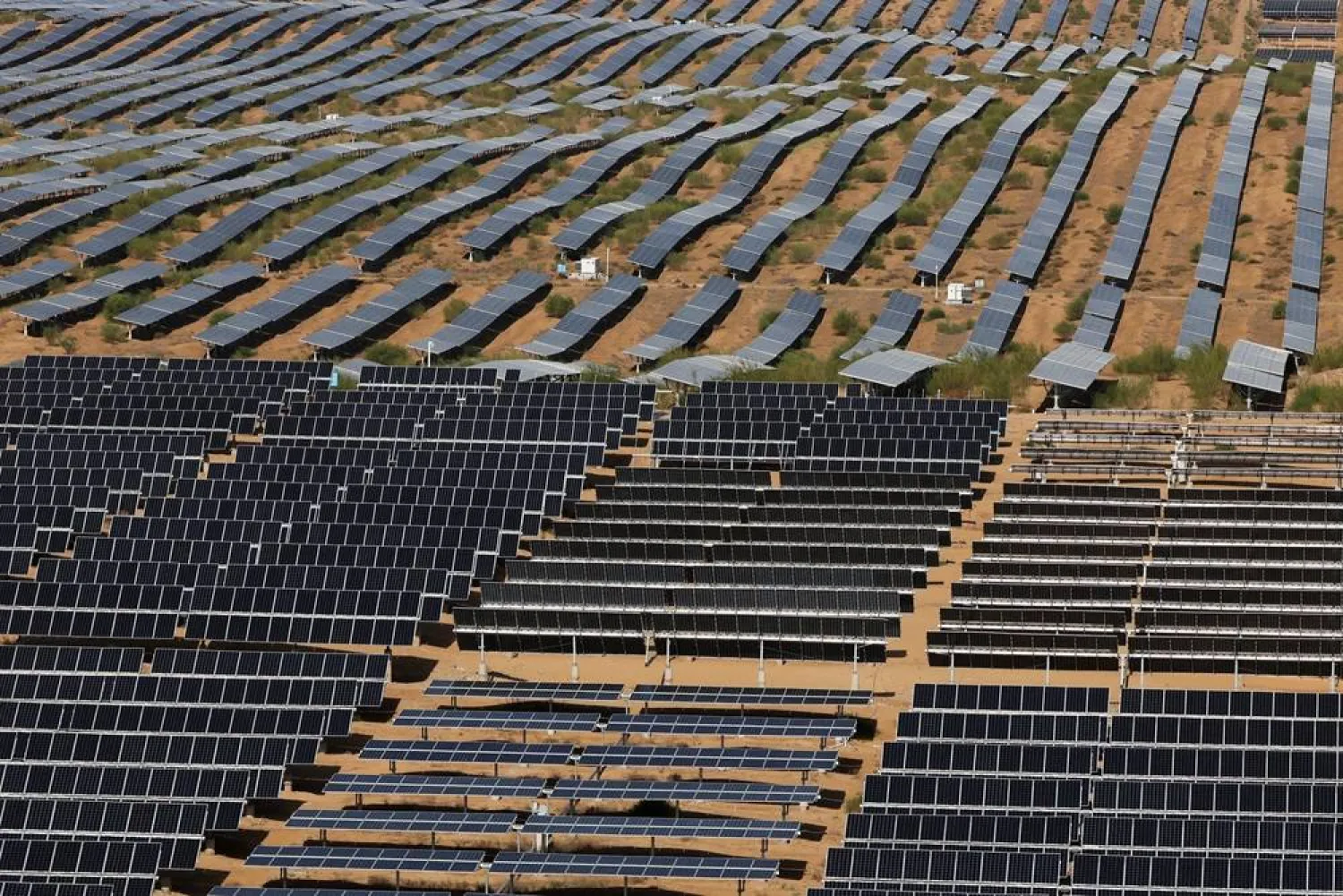
Solar panels at the Dalad Banner Photovaltic Base in Kubuqi desert during organized media tour, in Ordos, Inner Mongolia Autonomous Region, China, June 12, 2026. (Reuters)
TT

China Leads Wave of Clean Power Wastage as Grids Globally Hit Limits

Solar panels at the Dalad Banner Photovaltic Base in Kubuqi desert during organized media tour, in Ordos, Inner Mongolia Autonomous Region, China, June 12, 2026. (Reuters)

China turned away enough clean energy to power Mexico for a year in the six months through June as its grids hit their limits, while networks in many other nations such as Australia and Japan also failed to keep pace with a surging renewables buildout.

Curtailments, or the pre-emptive rejection of wind or solar power because a grid reaches capacity, are emerging as a growing challenge to renewables globally and underscore continued reliance on fossil fuels.

China, the world's top producer of solar power, rejected 360 terawatt-hours (TWh) of clean power from January to June, up 49% from the same period a year earlier, according to a report this month by Global Energy Monitor (GEM) and the Center for Research on ‌Energy and Clean ‌Air (CREA).

The report's estimates for curtailments far exceed figures given by the Chinese ‌government.

Insufficient ⁠transmission infrastructure and ⁠supply contracts that guarantee operations of newly built coal-fired power plants in China are forcing the rejection of abundant renewable output, analysts say.

"Curtailment in China is structural, not a temporary bottleneck. We expect curtailment pressure to continue through the rest of this decade," said Yuan Ren, analyst at consultancy Wood Mackenzie.

Curtailments, along with a new policy that removes a guaranteed fixed price for renewables, have contributed to a 66% drop in new solar installations this year in China. At the same time, China's coal-fired power generation is expected to rise again this year, reversing a first-in-a-decade ⁠decline.

CURTAILMENTS AFFECTING RENEWABLE INVESTMENTS

China's National Energy Administration, which stopped publishing monthly data on ‌curtailment by province in March, said in a statement last ‌month that 8.6% of the country's solar output and 9.1% of its wind output were curtailed in the first half ‌of 2026.

But GEM and CREA estimate China rejected 26.1% of its total wind and solar output in ‌the six months through June, using weather-adjusted data to account for unreported curtailment.

The National Energy Administration did not respond to a faxed request for comment.

With curtailment worsening, it's harder "to do pre-assessment of the financial viability of projects," said Shawn Shuwei Zhang, chief economist at Beijing-based consultancy Draworld Environment Institute.

Clean power investments are already shifting from standalone solar projects towards solar-plus-storage ‌to reduce exposure to curtailment, Wood Mackenzie's Ren said.

CURTAILMENT RISING GLOBALLY

Rising curtailment extends beyond China, to the rest of the Asia Pacific and Europe.

In Australia's ⁠National Electricity Market, curtailments surged ⁠37% to 2.93 TWh, or 7% of its wind and solar output, in the first half of 2026, while Japan's grid rejected 2.35 TWh — a jump of 34% and representing 4% of renewable output, data from their electricity markets showed.

India, the No.3 global solar generator, curtailed 8.13 TWh of solar power in the quarter ended June, its renewable energy minister said. That accounts for 14% of its solar output in the three months through June, grid data showed.

That compared with March quarter curtailment of 0.47 TWh of renewable output that includes both solar and wind, according to energy think tank Ember. Indian solar generation is, however, typically much higher in the June quarter, meaning curtailments will be higher too.

Efficient deployment and an immediate scale-up of battery storage could help stall curtailment globally, Ember analyst Kostantsa Rangelova said, adding that Bulgaria and Chile provided effective models that could be emulated.

"Chile added 4 GWh of batteries in 2025, more than doubling its installed capacity. Most of this new storage was co-located with solar plants, helping reduce curtailment," Rangelova said.



Sources: New Syria-Iraq Crude Pipeline Still Years Away

FILE PHOTO: A worker checks an oil pipeline at Nahr Bin Umar oil field, north of Basra, Iraq March 22, 2022. REUTERS/Essam Al-Sudani/File Photo
TT

Sources: New Syria-Iraq Crude Pipeline Still Years Away

FILE PHOTO: A worker checks an oil pipeline at Nahr Bin Umar oil field, north of Basra, Iraq March 22, 2022. REUTERS/Essam Al-Sudani/File Photo

Iraq's plans to export oil via a pipeline through Syria to avert future disruptions in the Strait of Hormuz will likely require four years of construction and cost at least $15 billion, sources with knowledge of the project told Reuters.

US officials and energy executives are billing the plan, which is receiving initial support for feasibility studies from a consortium including Chevron, as part of a strategy to reduce the industry's reliance on a waterway that has been largely shut by the Iran war.

"Over the next two years, the strait is going to become irrelevant. It is going to become just another body of water," US Treasury Secretary Scott Bessent said last week.

While a fifth of the world's oil and liquefied natural gas was shipped through Hormuz before the conflict, Bessent said "more than 50% or 70%" of those exports would instead be exported via underground pipelines.

But two sources directly involved in ‌the project told Reuters ‌the plans for the Iraq-Syria pipeline would take twice that long due to the need ‌for ⁠new infrastructure and ⁠could face other hurdles.

Both sources asked not to be named due to the sensitivity of the matter.

NEW INFRASTRUCTURE TO REPLACE EXISTING WAR-DAMAGED PIPELINE

Iraq has been among the countries most affected by the Hormuz shutdown.

It exported around 3.6 million barrels of oil per day before the war, mainly through Gulf terminals near Basra, but shipped just 35.5 million barrels in total via Hormuz in July, according to state-run oil firm SOMO.

A pipeline linking Iraq's northern Kirkuk region to Syria's Mediterranean port of Banias already exists but was badly damaged by wars in Iraq and Syria and has not been in regular use since the 1980s.

Both sources said the plan would require laying entirely ⁠new infrastructure rather than rehabilitating the existing pipeline and cost at least $15 billion.

While part of the ‌new pipeline would run largely along the same Kirkuk-Banias route, intact sections of ‌that pipeline are not compatible with newly developed specifications and would be unusable, one of the sources said.

The second source said the project ‌would include developing an entirely new integrated crude oil pipeline system that would link Iraq's southern and northern fields to a ‌central hub in Haditha in western Iraq, then onwards to Banias.

The US has welcomed the "rehabilitation and reconstruction" of the pipeline, saying it will have initial transport capacity of 2 million bpd of crude oil.

That would imply a major expansion of the old pipeline's capacity of about 300,000 bpd, which is less than a tenth of the oil volume Iraq exported through the Strait of Hormuz before the Iran war. Iraq has also ‌restarted oil exports from its Kirkuk fields via pipeline to Türkiye’s Ceyhan port with targeted capacity of around 250,000 bpd.

Both sources said work on the Iraq-Syria pipeline would take around ⁠four years, though one added ⁠that the timeline may also need to accommodate clearing old infrastructure and acquiring fresh land use rights from Syria's new administration.

ANOTHER POSSIBLE 'ACCESS TO MARKET' BUT STUDIES STILL NEEDED

Syria and Iraq have both signed separate memorandums of understanding with a consortium comprised of US major Chevron, TI Capital and Qatar's UCC Holding to carry out technical and financial studies in preparation for the project.

Iraq's oil ministry and state-owned Syrian Petroleum Company did not respond to Reuters requests for comment on the project and the sources' timeline and cost assessments. TI Capital and UCC Holding did not immediately respond to requests for comment. Chevron pointed to an earlier statement about the preliminary agreement and said it does not comment on details related to commercial matters.

During a press briefing last month, a Chevron executive said the project could offer "another access route to market" through the Mediterranean. The executive said any pipeline would also need to connect to Iraq's southern fields of West Qurna 2 and Nassiriya, which Chevron is in negotiations to enter.

Chevron still needs to complete technical studies to determine whether the existing Iraq-Syria pipeline would need refitting, expanding or rebuilding, the executive said.

The company has not yet given estimates of the project's future export capacity.

"Usually, as these pipelines go, it's not 100% capacity available on day one," the executive said.


Riyadh Opens Second Real Estate Balance Program With Land Price Cap

Residential neighborhoods in the Saudi capital, Riyadh (SPA) 
TT

Riyadh Opens Second Real Estate Balance Program With Land Price Cap

Residential neighborhoods in the Saudi capital, Riyadh (SPA) 

Riyadh’s real estate market entered a new phase Sunday with applications opening for the second round of the Real Estate Balance Program.

Overseen by the Royal Commission for Riyadh City (RCRC), the program aims to provide between 10,000 and 40,000 developed and planned residential plots annually over the next five years, at prices not exceeding SR1,500 per square meter.

The Real Estate Balance Platform aims to help balance the real estate market and increase homeownership among eligible beneficiaries in Riyadh.

It also seeks to ensure fair distribution and maintain a balance between supply and demand in the city's residential real estate market.

The Royal Commission for Riyadh City announced last week that applications for the program’s second year would be accepted from Aug. 16 through Sept. 15 via its online platform. The initiative follows directives from Saudi Crown Prince and Prime Minister Mohammed bin Salman to take measures to restore balance to the capital’s real estate sector.

As the program expands, its potential to influence the broader market is growing. Prices set for land offered through the initiative provide a new benchmark for homebuyers and an alternative to conventional market listings, increasing competition and potentially prompting landowners and real estate agencies to reassess asking prices.

The program is part of broader government efforts to increase Riyadh’s real estate supply and develop unused land, helping bring supply and demand into better balance as the capital experiences rapid population and economic growth.

Real estate specialists say the second round could help narrow the gap between asking prices and what buyers can afford. Its impact could extend beyond direct beneficiaries because increasing the supply of land at predetermined prices puts competitive pressure on other sellers, particularly in areas where comparable alternatives are available.

Khalid Al-Jasser, a real estate specialist and chairman of Amaken International Group, previously told Asharq Al-Awsat that the program’s impact extends beyond the land market to financing, construction, building materials and housing-related services.

Its strength, he argued, lies not only in offering land at set prices but in addressing the underlying problem by increasing supply. A larger, more orderly supply of residential land gives citizens more choices and reduces the ability of scarcity to drive prices higher.

Real estate developer Ahmed Omar Basodan described the program’s continuation for a second year as an important signal that tackling high housing costs requires a sustained approach rather than a temporary measure.

As Riyadh grows rapidly, residential supply must continually keep pace with demographic and economic expansion, he noted. The program’s most significant effect could ultimately be a shift in market behavior by reducing expectations that land scarcity will continue indefinitely to support higher prices.


Restart of Offshore Rigs Revives Saudi Energy Supply Chains

An offshore rig operated by Arabian Drilling (Company) 
TT

Restart of Offshore Rigs Revives Saudi Energy Supply Chains

An offshore rig operated by Arabian Drilling (Company) 

Saudi Arabia is gradually restoring operational capacity in its offshore drilling sector after ADES Holding and Arabian Drilling announced on consecutive days that they were resuming operations at offshore rigs temporarily suspended because of regional developments.

The restart brings a significant portion of the offshore fleet back into service, providing greater visibility over drilling activity and reviving demand across a broad network of suppliers, logistics providers and technical services.

Offshore rigs are specialized facilities used to drill oil and gas wells at sea. They house the equipment, systems and technical crews needed for drilling and well control, as well as well maintenance and rehabilitation and other operations related to field development and production.

Their operations require a continuous flow of equipment, spare parts, drilling materials and chemicals, along with maintenance, safety, catering and personnel transport services. Supply vessels carry much of these requirements from ports and logistics bases to offshore worksites.

Restarting a rig therefore also restores demand across a wide range of related activities, from transport, ports and warehousing to equipment, maintenance and engineering services.

ADES, followed by Arabian Drilling

ADES Holding, a company backed by Saudi Arabia’s Public Investment Fund, was the first to announce that it had received notices to resume operations at all its offshore rigs temporarily suspended in the Kingdom. The company said utilization of its contracted jack-up rigs exceeded 90%, supported by strong day rates.

ADES said the resumption provided greater visibility over regional activity and underscored the resilience of the Gulf offshore drilling market, noting that the suspensions stemmed from regional developments rather than weak demand.

ADES Holding CEO Mohamed Farouk noted that the development reflected an improvement in the regional situation and the readiness of the company’s teams to resume operations, while stressing that the safety of employees and assets remained its top priority.

The company maintained its 2026 EBITDA guidance at SAR 4.50 billion to SAR 4.87 billion ($1.20 billion to $1.30 billion), supported by the group’s scale and geographic reach across 123 rigs, as well as operating synergies from its acquisition of Shelf Drilling.

The following day, Arabian Drilling announced that it had received notices to resume operations at its remaining suspended offshore rigs and said it expected offshore fleet utilization to reach 100% by the end of the third quarter of 2026.

The company said the restart reflected the continued recovery in offshore drilling activity, with full fleet utilization marking an important milestone that would strengthen its operational readiness and ability to meet market demand.

Arabian Drilling had announced in July that three offshore rigs temporarily suspended because of regional conditions could resume operations. The suspensions were precautionary measures taken in coordination with clients and relevant parties, with safety given priority.

Restarting an entire ecosystem

Logistics expert Hassan Al-Heliel told Asharq Al-Awsat that the return of the rigs should not be viewed simply as bringing drilling assets back into service, but as restarting an integrated ecosystem stretching from suppliers and manufacturers to warehouses and ports, and ultimately to offshore rigs and well sites.

An offshore rig, he explained, is the final link in a vast supply chain encompassing spare parts, equipment, consumables and drilling chemicals, as well as maintenance, inspection, calibration, safety services, catering and the transport of workers and equipment.

The rigs also depend on a network of supply vessels linked in turn to land transport, ports, warehouses and logistics support bases. Restarting a rig therefore means renewed demand for an entire network of onshore services.

Rig activity is not limited to drilling new wells, but also includes well maintenance and rehabilitation, specialized drilling and services related to the development and production of oil and gas fields.

Beneficiaries range from logistics companies, land and marine transport operators, warehouses, ports and cargo handlers to suppliers of equipment, spare parts, chemicals and safety systems, as well as maintenance, engineering and support-service providers.

Opportunity for local content

The economic impact of the restart could also create broader opportunities for Saudi companies to localize a larger share of the offshore drilling value chain.

These include manufacturing spare parts and components locally, expanding maintenance and repair capabilities, establishing specialized supply centers, localizing technical services and developing Saudi companies capable of providing integrated solutions for offshore rigs.

Al-Heliel said local content should not be measured solely by purchases from Saudi companies, but also by the domestic economy’s ability to meet critical requirements and ensure continuity of operations.

Expanding local manufacturing and services would reduce exposure to international shipping risks, freight-rate volatility, long lead times and geopolitical disruptions, strengthening the resilience of energy-sector supply chains.

Companies combining quality, speed and local capacity could gain a competitive advantage, Al-Heliel underlined, because offshore drilling competition is not determined by price alone. A supplier able to deliver a critical component or service on time may be more valuable than a cheaper supplier requiring weeks to do so, particularly given the high cost of rig downtime.

Readiness determines the pace

Restarting a rig typically begins with technical assessments and inspections of key equipment and systems, followed by checks on crew readiness and the availability of spare parts and materials.

Companies must then restore logistical readiness by preparing warehouses and supply bases and ensuring that land and marine transport and supply vessels are available. If a rig needs to be repositioned, it must be moved to the operating site before safety and operational tests are conducted and activities gradually resume.

The process can be relatively quick if a rig is in good condition and requires no major maintenance, but may take several weeks if repairs, re-equipping or relocation are necessary.

“The timing of the restart is not determined by the rig alone, but by the readiness of the supply chain around it,” Al-Heliel stated. Technical readiness, he added, is insufficient unless spare parts, operating materials and marine services are available when needed.

With ADES and Arabian Drilling returning their offshore rigs to operation, the impact extends beyond drilling companies themselves, reactivating an economic cycle involving suppliers, manufacturers, transport companies, ports, warehouses and technical and engineering services.

The restart also gives Saudi companies an opportunity to capture a greater share of energy-sector spending through expanded local manufacturing and services while building faster, more resilient supply chains.
