Emir of Kuwait Holds Meeting with GCC Secretary-General

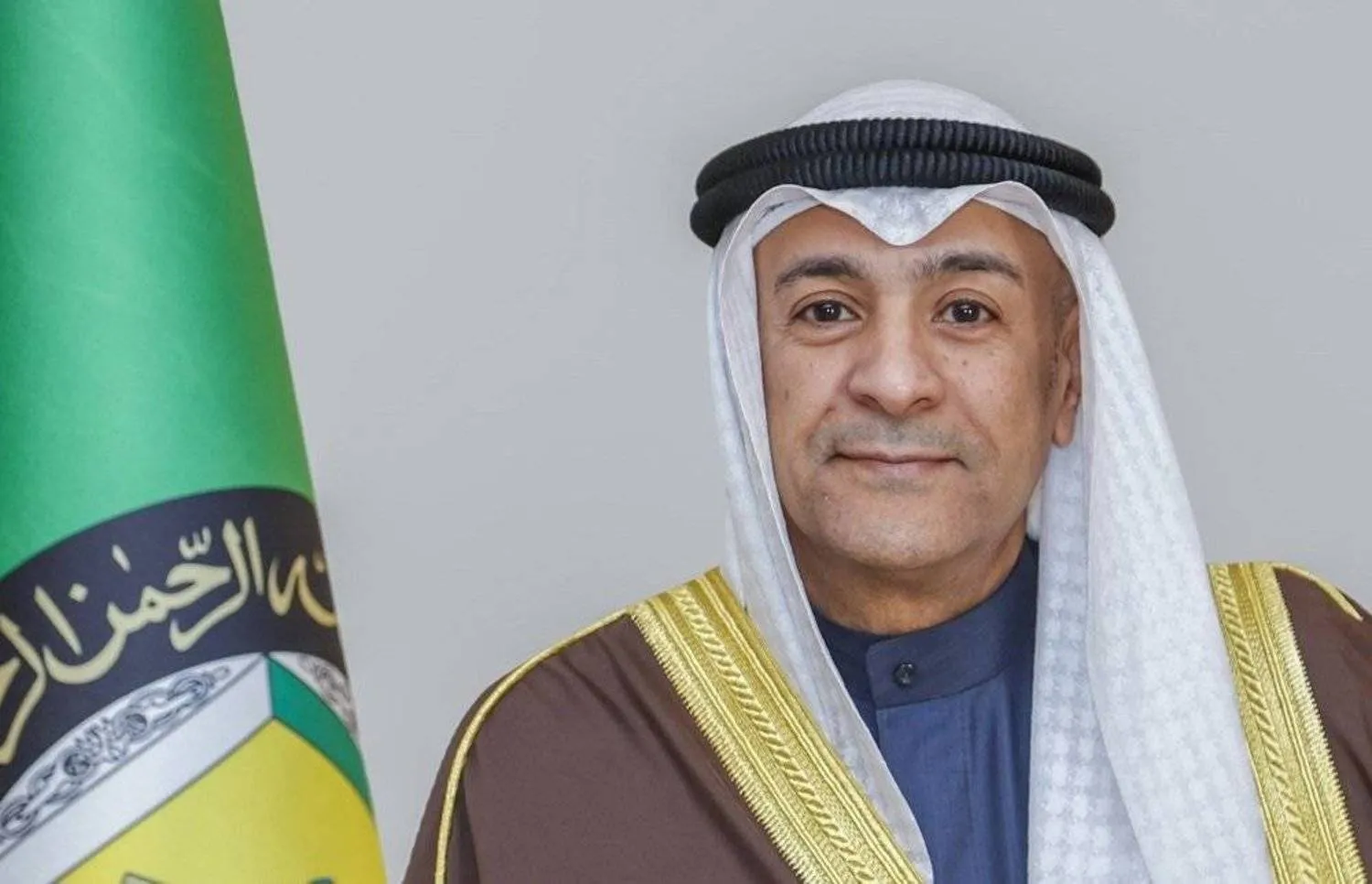
Gulf Cooperation Council (GCC) Secretary-General Jasem Albudaiwi
TT

Emir of Kuwait Holds Meeting with GCC Secretary-General

Gulf Cooperation Council (GCC) Secretary-General Jasem Albudaiwi

Emir of the State of Kuwait Sheikh Meshal Al-Ahmad Al-Jaber Al-Sabah met with Secretary-General of the Gulf Cooperation Council (GCC) Jasem Albudaiwi on Tuesday at the Bayan Palace in Kuwait.

During the meeting, the Emir underscored the importance of continuing to support the GCC's journey and bolstering integration efforts among its member states to fulfill the aspirations of their peoples for greater security, stability, prosperity, and development.


Saudi Foreign Minister Receives Phone Call from Iraqi Counterpart

Saudi Minister of Foreign Affairs Prince Faisal bin Farhan bin Abdullah in Moscow on July 4, 2025. (Reuters)
TT

Saudi Foreign Minister Receives Phone Call from Iraqi Counterpart

Saudi Minister of Foreign Affairs Prince Faisal bin Farhan bin Abdullah in Moscow on July 4, 2025. (Reuters)

Saudi Minister of Foreign Affairs Prince Faisal bin Farhan bin Abdullah received a phone call from Iraqi Minister of Foreign Affairs Dr. Fuad Hussein.

During the call, they discussed ways to strengthen bilateral relations and enhance consultation on regional issues, as well as topics of mutual interest.


Saudi Arabia Strongly Condemns Attacks on Iraq’s Kurdistan Region

Saudi Arabia affirmed its rejection of undermining Iraq's sovereignty and the security of its institutions (SPA)
TT

Saudi Arabia Strongly Condemns Attacks on Iraq’s Kurdistan Region

Saudi Arabia affirmed its rejection of undermining Iraq's sovereignty and the security of its institutions (SPA)

Saudi Arabia strongly condemned on Tuesday the attacks that targeted Kurdistan region in Iraq, including an attack on the office of its Prime Minister Masrour Barzani describing them as a violation of Iraq’s sovereignty and territorial integrity.

The Saudi Foreign Ministry stressed in a statement that the kingdom categorically rejects hostile operations targeting political figures and anything that could undermine the security of Iraqi state institutions or threaten the country's security and stability.

The ministry reiterated the kingdom’s firm opposition to all forms of interference in the internal affairs of states, violations of their sovereignty and breaches of the principles of good neighborliness and international law.

Barzani announced on Monday that two Iranian drones loaded with explosives targeted his private office on Erbil and the residence of the head of the Parastin Agency. Officials described the attack as a serious escalation violating Iraq’s sovereignty.


Saudi Arabia, Sudan Establish Joint Coordination Council

Saudi Foreign Minister Prince Faisal bin Farhan and his Sudanese counterpart, Mohieddin Salem Ahmed Ibrahim, sign the document. (SPA) 
TT

Saudi Arabia, Sudan Establish Joint Coordination Council

Saudi Foreign Minister Prince Faisal bin Farhan and his Sudanese counterpart, Mohieddin Salem Ahmed Ibrahim, sign the document. (SPA) 

Saudi Arabia and Sudan signed an agreement Monday establishing a joint coordination council to deepen bilateral ties and provide an institutional framework for cooperation through clearly defined initiatives, projects and targets.

Saudi Foreign Minister Prince Faisal bin Farhan and his Sudanese counterpart, Mohieddin Salem Ahmed Ibrahim, signed the document establishing the Saudi-Sudanese Coordination Council in Riyadh. The council is intended to serve as an institutional platform for developing relations and advancing cooperation between the two countries.

Following their meeting, the ministers co-chaired a session of the bilateral Political Consultation and Follow-Up Committee, where they reviewed relations, explored ways to expand cooperation across various fields and discussed regional developments.

Speaking to Asharq Al-Awsat, Salem described Saudi-Sudanese relations as “strategic” and said he expected the new council to produce tangible results. He stressed that Red Sea security remained a top priority for both countries.

Salem also praised the Makkah Joint Defense Agreement between Saudi Arabia, Pakistan and Türkiye, expressing optimism about Sudan potentially joining a broader grouping with the Kingdom.

He described Saudi Arabia as more than a major power or international symbol, saying Riyadh had approached the Sudanese crisis with “the sense of a neighbor, supporter and shared destiny.” He added that Khartoum viewed potential integration into the trilateral grouping positively as a means of strengthening regional security and stability.

The Sudanese minister praised Saudi Arabia’s support since the outbreak of the war, which he attributed to the Rapid Support Forces and mercenaries. He pointed to Riyadh’s hosting of the Jeddah talks — the first negotiating platform launched after the conflict erupted — as evidence of the Kingdom’s commitment to Sudan and its people.

Salem also highlighted humanitarian assistance provided by the King Salman Humanitarian Aid and Relief Center, saying the war had prompted Sudan to reassess its relationships with other countries. Khartoum’s foreign policy, he added, would take a different course in the future.

He said the coordination council could usher in comprehensive strategic cooperation spanning political, security, economic and social affairs.

Turning to Sudan’s domestic political dialogue, Salem expressed hope that civilian forces could reach consensus on an overarching vision for resolving the crisis, stressing that political divisions and fragmentation among those groups had contributed to complicating the country’s political landscape.

He urged civilian and political forces to unite around national priorities and engage in dialogue free from agendas that could undermine national unity. He also called for inclusive internal talks representing Sudan’s diverse political currents and fostering greater cooperation between the government and national forces.

Salem further urged Sudanese political groups to forge a unified national position to confront the challenges created by the war, accusing the militia involved in the conflict of seeking demographic change in the country.

At a news conference in Riyadh on Monday evening, Salem and Sudanese Ambassador to Saudi Arabia Dafallah Al-Haj said the council would pave the way for further consultations, initiatives and projects aimed at strengthening bilateral cooperation and integration.