

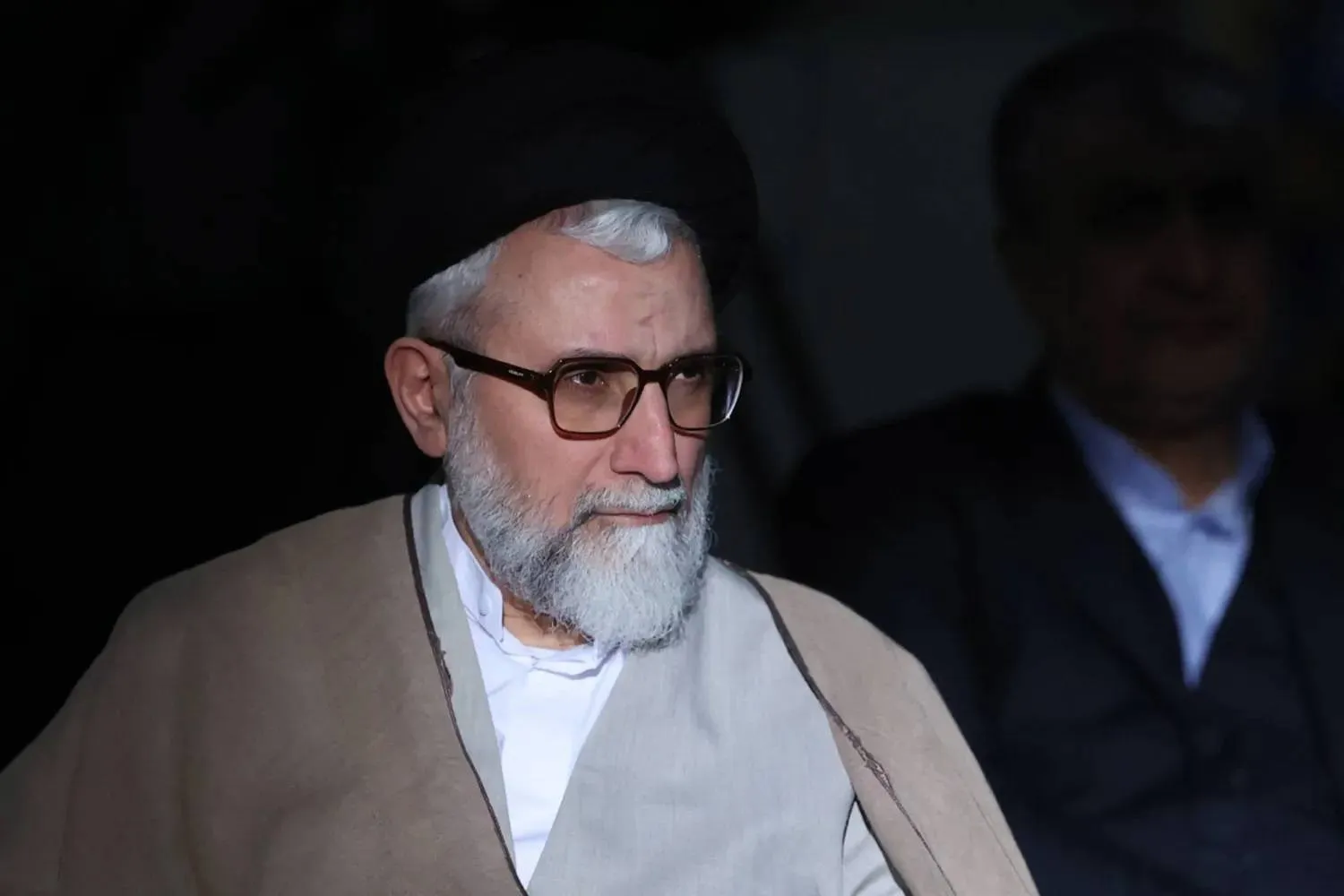

Mystery Shrouds Leadership of Iran’s Intelligence Agencies

Questions mount over the identity of Iran’s deputy intelligence minister months after Esmail Khatib’s death (Iranian Presidency)
TT

Mystery Shrouds Leadership of Iran’s Intelligence Agencies

Questions mount over the identity of Iran’s deputy intelligence minister months after Esmail Khatib’s death (Iranian Presidency)

Six months into Supreme Leader Mojtaba Khamenei’s rule, Iran has reshuffled its military and security leadership after a war that killed two cabinet ministers and a string of senior Revolutionary Guards commanders.

Yet two of the country’s most sensitive posts remain shrouded in secrecy: who is running the Intelligence Ministry, and who now commands the Guards’ powerful intelligence arm.

Defense Minister Aziz Nasirzadeh was killed on Feb. 28 in the opening strikes targeting the leadership, including the office of former Supreme Leader Ali Khamenei in Tehran’s heavily fortified Pasteur district.

On March 2, Iranian President Masoud Pezeshkian appointed Majid Ben Reza as deputy defense minister. He is expected to be formally nominated to parliament to take over the ministry.

Pezeshkian announced the death of Intelligence Minister Esmail Khatib on March 18. Since then, Iranian authorities have not disclosed who is serving as acting minister.

The government-affiliated news outlet reported last week that the deputy intelligence minister had sent separate congratulatory messages to Supreme National Security Council Secretary Mohsen Rezaei and newly appointed military commanders, pledging the ministry’s cooperation with the new leadership on priorities set by the supreme leader for the armed forces.

Deadline to name two ministers

Pezeshkian is under pressure from close reformist allies over the delay in naming a new intelligence minister, one of five cabinet posts that require the supreme leader’s approval.

In practice, the intelligence minister is usually chosen with the supreme leader’s direct involvement.

The minister also sits on the 12-member Supreme National Security Council, giving the officeholder a direct role in Iran’s main security decision-making body.

Abbas Goudarzi, a lawmaker and spokesman for parliament’s presiding board, said this week that Mojtaba Khamenei had given the government a deadline to submit nominees for the intelligence and defense ministries.

“Under the authorization obtained from the supreme leader, the government has one and a half months from Aug. 20 to submit its proposed ministers for intelligence and defense to the Iranian parliament,” Goudarzi said.

But naming a new intelligence minister may first require a change in the law.

Current legislation requires the minister to have attained the religious rank of ijtihad, a senior scholarly qualification that sharply narrows the pool of candidates to clerics who meet the requirement.

“The idea was raised that ijtihad should not be a requirement for the intelligence minister,” Goudarzi said. “Since the current law conflicts with this proposal, the law must be amended. It was therefore decided that the government would submit a bill to parliament on the matter.”

Legacy of security breaches

Khatib served as intelligence minister under former President Ebrahim Raisi and kept the job when Pezeshkian formed his government two years ago, despite mounting criticism of the security services over a series of breaches attributed to Israel’s Mossad.

Those criticisms intensified after Israeli intelligence reached military commanders and officials involved in the nuclear program who were killed during the war.

The next minister will inherit an agency battered by a string of security breaches and assassinations targeting military, nuclear and security officials, as well as the legacy left by successive ministers who ran the institution.

Fresh questions over the security surrounding senior intelligence officials were raised by Khatib’s son.

In an interview published by the state-run IRNA news agency on Aug. 10, he said his father had faced four assassination attempts before he was killed, including two during the June 2025 war.

He said Khatib was later killed at the home of his second wife despite tight security surrounding his movements.

Cultural Heritage Minister Reza Salehi Amiri is among the names being considered for the intelligence portfolio.

Salehi Amiri, previously known as Reza Fallah, worked at the Intelligence Ministry during the 1980s and 1990s and was one of the agency’s leading interrogators before gradually moving into political and government posts.

He later held positions at strategic research centers affiliated with the Iranian presidency and the Expediency Council.

Under President Hassan Rouhani, he served for a year as deputy minister of sports and youth before becoming a presidential adviser and head of the National Library and Archives.

He also served for a year as culture minister at the start of Rouhani’s second term before returning to government after Pezeshkian became president.

Vacuum in Revolutionary Guards intelligence

The picture is even murkier inside the Revolutionary Guards’ intelligence organization and its protection unit after several senior commanders were killed in the war.

On April 6, the Revolutionary Guards confirmed that Brigadier General Majid Khademi, head of its intelligence organization, had been killed in an Israeli-US attack, hours after Israeli Defense Minister Israel Katz first announced his death.

Khademi had previously headed the Guards’ protection organization before becoming intelligence chief on June 19, 2025, succeeding Mohammad Kazemi.

Before that, he oversaw the unit responsible for protecting political figures and sensitive sites, including key state institutions and nuclear facilities.

Kazemi was killed in Israeli strikes on June 15, 2025, three days after dozens of Revolutionary Guards commanders were killed in the opening strikes of the 12-day war.

That attack also killed Mohammad Reza Nasir Bagban, known by the alias Mohsen Bagheri, head of the Quds Force intelligence unit, and Brigadier General Hassan Mohaghegh, one of the Guards’ most prominent intelligence commanders and a figure with close ties to current Supreme Leader Mojtaba Khamenei.

Tehran has yet to disclose who now leads the Revolutionary Guards’ intelligence organization, its deputy command, or the Quds Force intelligence unit.

Hossein Taeb, however, who spent 13 years at the helm of Guards intelligence, has returned to a senior security role as commander of the Basij, tasked with expanding the “popular intelligence network.”



French ISIS Extremist Gets 30 Years for Syria Crimes

French police gather outside a local police station in Paris, France, October 11, 2016. REUTERS/Charles Platiau 
TT

French ISIS Extremist Gets 30 Years for Syria Crimes

French police gather outside a local police station in Paris, France, October 11, 2016. REUTERS/Charles Platiau 

A French court on Tuesday, September 22, sentenced a former ISIS member in Syria, Othman Garrido, to 30 years' imprisonment for murders committed as part of an organized group.

Garrido, a 32-year-old French citizen, was convicted by a special court in Paris at the end of a week-long trial.

He was convicted over a September 2015 public execution in Syria of two Iranians, but was acquitted on another charge of being their executioner. His sentence came with a 20-year non-parole period.

ISIS had attempted in 2014 to create what it called a “caliphate” in Syria, but it ended up being defeated in 2019 by a US-led international coalition.

Garrido, during his trial, had portrayed himself as forced to follow ISIS or risk death himself.

Some 1,500 French nationals had transited through Iraq and Syria to join ISIS in the 2010s.


Guterres Calls on China, US to Establish AI Dialogue

United Nations Secretary-General Antonio Guterres during the 81st session of the United Nations General Assembly at United Nations headquarters, Tuesday, Sept. 22, 2026. (AP Photo/Heather Khalifa)  
TT

Guterres Calls on China, US to Establish AI Dialogue

United Nations Secretary-General Antonio Guterres during the 81st session of the United Nations General Assembly at United Nations headquarters, Tuesday, Sept. 22, 2026. (AP Photo/Heather Khalifa)  

UN chief Antonio Guterres called Tuesday for AI superpowers, the United States and China, to start a dialogue on the fast-moving technology's future, as calls grow to rein in the sector’s rapid development amid concerns about its potential impact on humanity.

“Governments with the greatest AI capabilities have the greatest responsibilities to humanity, to establish channels for dialogue, transparency, trust and cooperation,” Guterres said at the General Debate of the 81st Session of the UN General Assembly in New York.

“At a pivotal moment during the Cold War, strategic rivals came to recognize the need to manage shared existential risks,” he noted.

China and the US are currently discussing creating a communication channel for AI concerns in anticipation of a Washington summit meeting between US President Donald Trump and Chinese President Xi Jinping on Thursday.

The talks come as both powers confront rising fears that increasingly capable artificial intelligence systems could wipe out humanity, offering a rare incentive for cooperation despite an intensifying race for technological supremacy.

Power Has Polarized the World

In his final address to the annual high-level gathering at the UN General Assembly, Guterres urged leaders to avoid what he called “the great fracture – the division of the world into two rival blocs with separate economic, technological and security systems.”

He rebuked might-makes-right thinking, telling superpowers to recognize “that their power isn’t so super” — that “military power alone cannot secure peace” and that “no power can solve today’s challenges alone,” according to AP.

The future will be shaped by how the world addresses “four great tests of power” – power over war and peace, power fueling climate chaos, power unleashed by artificial intelligence and “power that concentrates wealth and drives inequality,” he said

The UN Chief said geopolitical divides have deepened, inequalities have intensified and trust has frayed.

“The climate crisis went from distant warning to daily reality. And artificial intelligence (AI) moved at a speed that has blindsided even those who created it,” he noted.

He said that on January 1, when he is no longer Secretary-General, he will keep championing the conviction that peace is possible and that human dignity is universal.

Guterres’ speech opened the main portion of the world's biggest diplomatic meeting of the year. Leaders from the UN's 193 member countries address each other and the international community and air their hopes, plans and grievances.

AI is a major theme at this year's UN General Assembly. Ahead of the week of meetings and speeches in New York, leaders of more than 20 countries urged binding safety measures for advanced artificial intelligence, warning that the technology's development could outpace the ability to control it.

China and the United States were not signatories.

Trump has come out strongly against AI safety measures, vowing on Saturday not to allow the “destruction” of the AI industry over what he calls unjustified fears.

China's President Xi Jinping in July said AI should not be dominated by a single country and urged international cooperation on its development.


Iranian President Pezeshkian Arrives in New York

Iranian President Masoud Pezeshkian waves before departing for New York, at Mehrabad Airport in Tehran, Iran, September 22, 2026. Iran's Presidential website/WANA (West Asia News Agency)/Handout via REUTERS
TT

Iranian President Pezeshkian Arrives in New York

Iranian President Masoud Pezeshkian waves before departing for New York, at Mehrabad Airport in Tehran, Iran, September 22, 2026. Iran's Presidential website/WANA (West Asia News Agency)/Handout via REUTERS

Iranian President Masoud Pezeshkian arrived in New York where he is expected to speak at the United Nations General Assembly, Iranian state media reported on Wednesday.

State broadcaster IRIB posted a video clip of Pezeshkian exiting a plane with a caption saying that the Iranian president has arrived at a New York airport, AFP reported.

This is the first time that a leader whose country is at war with the United States sets foot on American soil to address a UN gathering, analysts say.