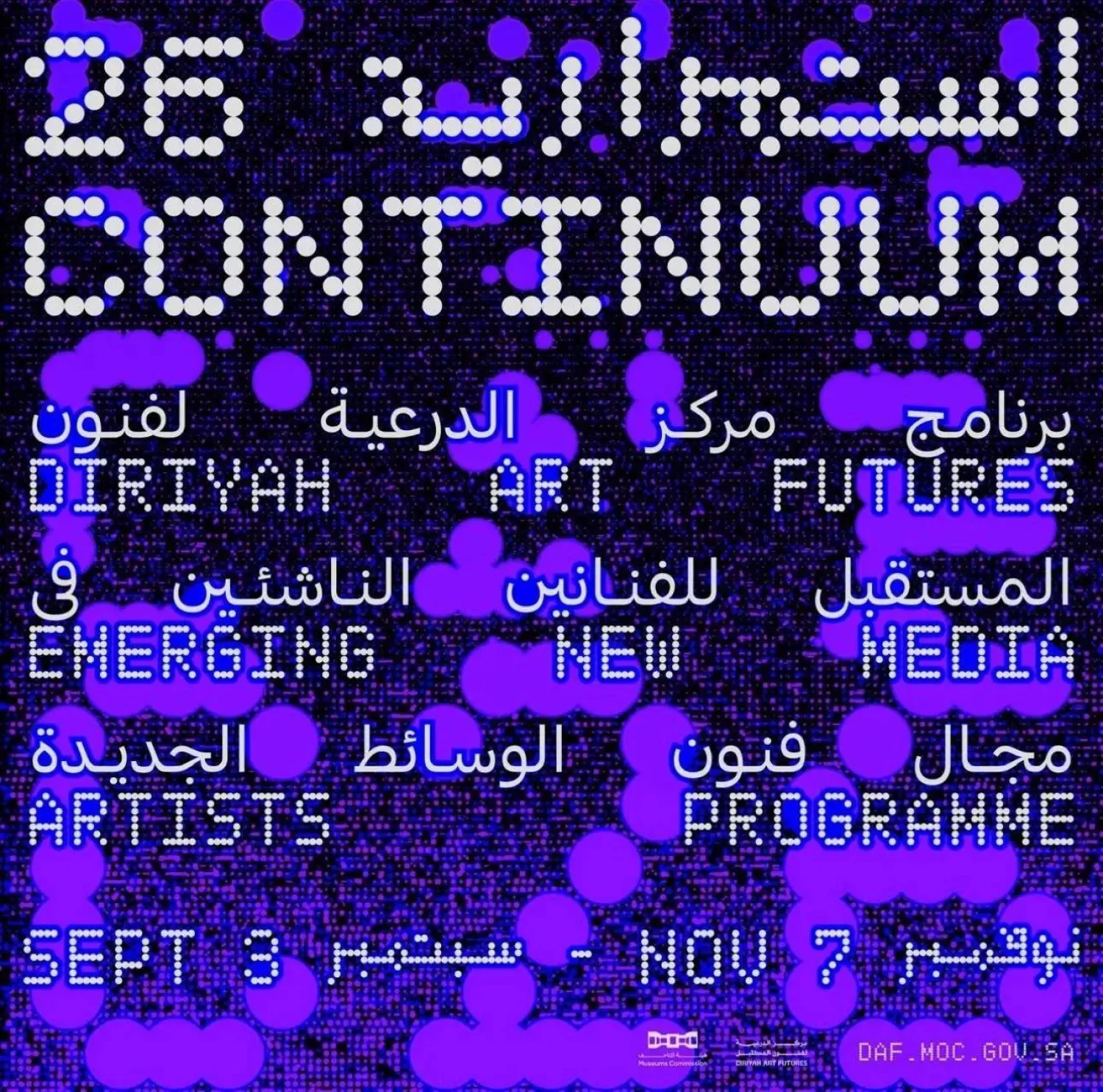
Diriyah Art Futures Launches CONTINUUM 26

CONTINUUM 26 runs from September 3 to November 7. (SPA)
TT

Diriyah Art Futures Launches CONTINUUM 26

CONTINUUM 26 runs from September 3 to November 7. (SPA)

Diriyah Art Futures (DAF), an asset of Saudi Arabia’s Museums Commission under the Ministry of Culture, announced on Tuesday the lineup for CONTINUUM 26, an exhibition celebrating the creative output of the participants in its second Emerging New Media Artists Program.

The first New Media Arts center in the Middle East and North Africa, DAF is dedicated to advancing interdisciplinary creative practice at the intersection of art, science and technology. The exhibition reflects DAF's efforts to combine arts, research and education to empower the next generation of artists, foster new forms of creative expression and expand Saudi Arabia's creative ecosystem in line with the ambitions of the Museums Commission as part of Saudi Vision 2030.

Running from September 3 to November 7, in Diriyah, Riyadh, CONTINUUM 26 is the second installment in an annual exhibition series spotlighting innovative voices shaping the future of new media and digital art in the region and beyond.

CONTINUUM 26 showcases the artists' major new works developed during a year-long educational program at Diriyah Art Futures with support from across DAF's Education, Production, and Exhibition departments.

Working under the mentorship of acclaimed mentor-artists Louis-Philippe Demers and Rick Treweek, the participants explored new forms of creative expression spanning immersive and multimedia installations, light, sound, moving image, virtual reality, mixed reality, and AI-generated projects.

The title CONTINUUM speaks to the ever-evolving nature of creative inquiry that defines the Emerging New Media Artists program. It represents a dynamic process in which divergent artistic trajectories converge around shared thematic inquiries. This continuum reflects both the developmental journey of the participating artists and the fluid boundaries of the topics explored: worlds between reality and artificial reality, organic and synthetic, and human and artificial intelligences.

The exhibition is structured around four key thematic pillars that bridge technological experimentation with deeply human questions. Memory as a living process explores personal, collective, environmental, and cultural remembering. Systems of power and optimization examine technology as an extension of human decisions, desires, and control. The Body, perception, and presence shift focus toward embodiment, interspecies relationships, and immersive sensory environments. Repetition, rhythm, and collective experience explore the choreography of automated systems, labor, and human endurance.


King Khalid Cultural Center in Buraidah Fosters Cultural Activity in Qassim

The center holds significant cultural and social value, featuring facilities, halls, and theaters that host diverse events, festivals, exhibitions, and forums - SPA
TT

King Khalid Cultural Center in Buraidah Fosters Cultural Activity in Qassim

The center holds significant cultural and social value, featuring facilities, halls, and theaters that host diverse events, festivals, exhibitions, and forums - SPA

The King Khalid Cultural Center in Buraidah is a prominent cultural landmark in Qassim Region. It holds significant cultural and social value, featuring facilities, halls, and theaters that host diverse events, festivals, exhibitions, and forums.

Official spokesperson for the Qassim Region Municipality Nayef Al-Nufai stated that the center serves as a vibrant space for activities and programs that bring together various segments of society, providing an ideal environment for specialized events and professional gatherings, SPA reported.

He added that the municipality is committed to maximizing the utility of such cultural facilities, ensuring they serve the community effectively, align with residents' aspirations, invigorate cultural and tourism activity, and elevate Buraidah's urban landscape.


Northern Borders Region’s Heritage Preserves Cultural Identity

Folk arts are another integral part of the region’s social fabric, characterized by rhythmic performances and communal chants that express courage, enthusiasm, and social cohesion - SPA
TT

Northern Borders Region’s Heritage Preserves Cultural Identity

Folk arts are another integral part of the region’s social fabric, characterized by rhythmic performances and communal chants that express courage, enthusiasm, and social cohesion - SPA

Northern Borders Region preserves a diverse intangible cultural heritage, including social customs, folk arts, and knowledge rooted in desert life that remain deeply embedded in the local community's consciousness and daily practices.

The region evokes its collective memory and cultural heritage through social practices passed down through generations, including generosity, hospitality, and traditional gathering spaces where community members meet to exchange news and ideas, SPA reported.

Saudi coffee is also central, along with the etiquette and traditions surrounding its preparation and service, which embody the values of welcoming others and fostering social connection.

Folk arts are another integral part of the region’s social fabric, characterized by rhythmic performances and communal chants that express courage, enthusiasm, and social cohesion.

The region’s traditional way of life is reflected in various crafts and manual practices developed to meet the needs of desert life. This includes specialized knowledge of camels and traditional methods for traveling and living in the desert, as well as the expertise gained from navigating its challenging climatic conditions.


Jazan’s Traditional Sweets Preserve Culinary Heritage, Cultural Identity

Halqum, meanwhile, has a soft, elastic, gelatinous texture and comes in various flavors and colors depending on its ingredients and preparation methods - SPA
TT

Jazan’s Traditional Sweets Preserve Culinary Heritage, Cultural Identity

Halqum, meanwhile, has a soft, elastic, gelatinous texture and comes in various flavors and colors depending on its ingredients and preparation methods - SPA

Traditional sweets in Jazan Region tell a story that goes beyond their taste, evoking customs passed down through generations, with some varieties becoming familiar and cherished. Mashbak and Halqum are among these sweets, combining visual appeal with familiar flavors.

Mashbak is usually made from a dough mixture shaped into interwoven strands, then fried until golden, SPA reported.

Halqum, meanwhile, has a soft, elastic, gelatinous texture and comes in various flavors and colors depending on its ingredients and preparation methods. Differences in texture and shape give each sweet its own distinctive character within a diverse world of confectionery preparation and presentation.

Food heritage is an important way to introduce the cultural identity of different regions. Understanding a place extends beyond its natural and historical landmarks to include its local products and the customs, skills, and practices passed down through generations.

From this perspective, traditional sweets represent part of the cultural experience through which visitors can discover aspects of daily life and local hospitality.