

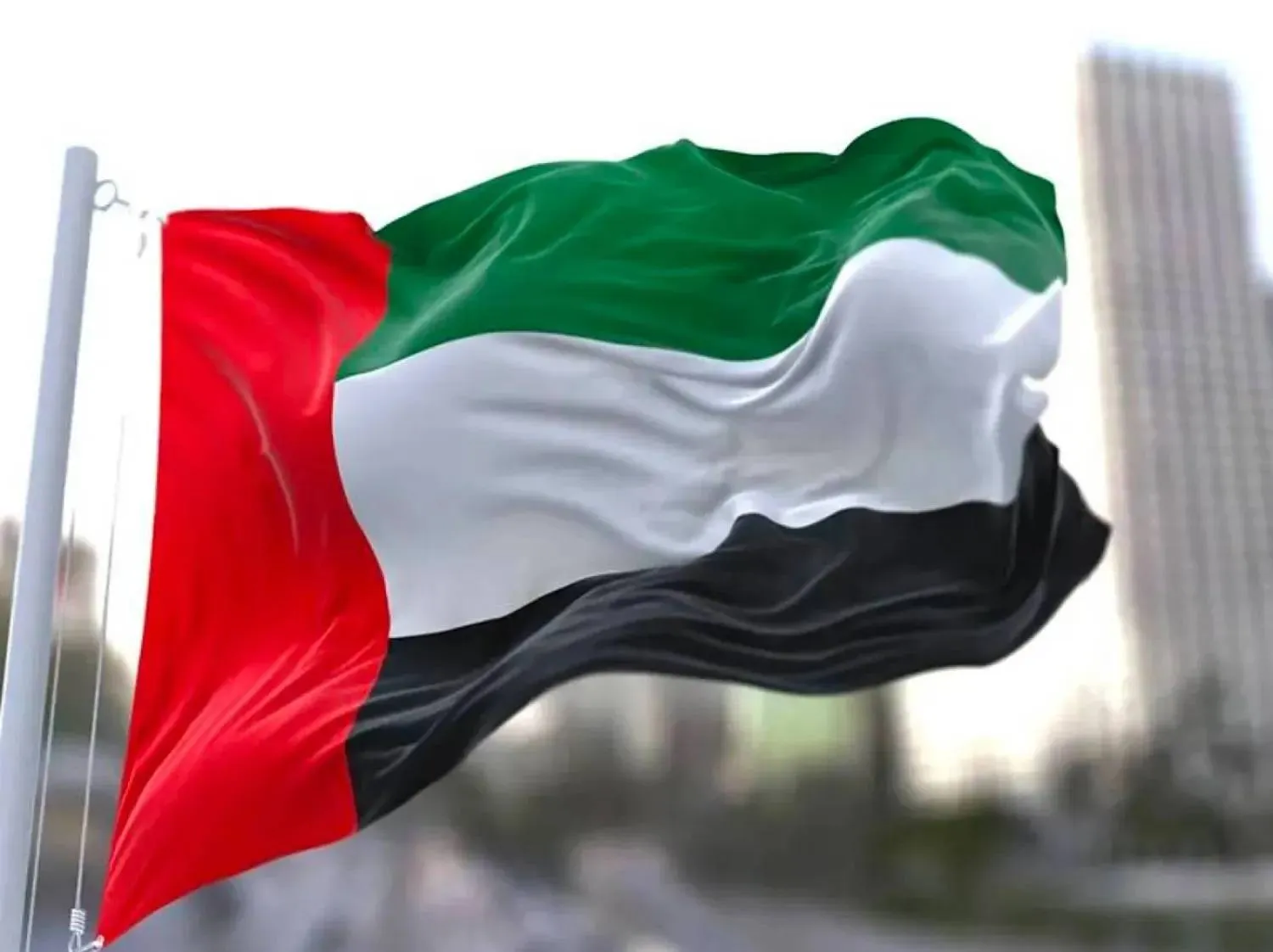

UAE Halts All Trade, Financial Dealings with Iran after Attack

Tuesday's announcement is the latest measure against Iran by the UAE after it recalled its ambassador early in the conflict. (Asharq Al-Awsat)
TT

UAE Halts All Trade, Financial Dealings with Iran after Attack

Tuesday's announcement is the latest measure against Iran by the UAE after it recalled its ambassador early in the conflict. (Asharq Al-Awsat)

The United Arab Emirates has said it is suspending all trade and financial dealings with Iran after reporting an Iranian missile attack directed at its ships.

The announcement comes after a period of relative calm in the UAE, with no Iranian missiles aimed at the country since May after it bore the brunt of attacks in the early weeks of the Middle East war.

Abu Dhabi has however accused Tehran of repeatedly targeting its tankers at sea in recent weeks.

"In light of regional escalations... all trade, commercial exchanges, and financial transactions with Iran have been halted until further notice," said UAE foreign ministry communications director Afra Al Hameli.

The UAE is home to a sizeable Iranian community and has been a major trading partner for US-sanctioned Iran, at least before the war.

Tuesday's announcement is the latest measure against Iran by the UAE after it recalled its ambassador early in the conflict.

- Navigation -

Abu Dhabi on Tuesday accused Iran of firing two ballistic missiles towards the country, the first such attack since May.

It later said the salvo was directed at shipping, but Tehran denied firing missiles at the UAE.

"UAE air defenses detected two ballistic missiles launched from Iran towards the country, with the first falling outside the country's territorial waters, while the second fell within the territorial waters," the UAE ministry said in a statement posted to social media.

A second statement released later said the missiles "were targeting maritime navigation and fell into the sea".

Iranian foreign ministry spokesman Esmaeil Baqaei "categorically rejected the United Arab Emirates' claim that Iran had launched a missile towards that country", calling it harmful to regional trust and security efforts.

The first UAE statement came nearly two hours after a phone alert that warned residents of a "potential missile threat".

It was the first such alert since a false alarm in June and an alert in July for an attack that ultimately did not enter UAE territory.

Before that, the last missile warning came in early May.

However, tankers belonging to the UAE's state-owned oil company ADNOC have been repeatedly targeted in the past few weeks.

When the Middle East war began on February 28, the UAE bore the brunt of Iran's attacks, with nearly 3,000 missiles and drones directed at the country -- more than anywhere else in the region.

After a memorandum of understanding between Iran and the United States came into effect in June, which has since collapsed, the UAE reported no attacks, unlike other Gulf states.



GCC Secretary-General Highlights Growing Gulf Role on Global Stage

GCC Secretary-General Jasem Albudaiwi. SPA
TT

GCC Secretary-General Highlights Growing Gulf Role on Global Stage

GCC Secretary-General Jasem Albudaiwi. SPA

Secretary-General of the Gulf Cooperation Council (GCC) Jasem Mohamed Albudaiwi underscored that the proactive Gulf engagement across international forums, alongside the council’s continually expanding relations with sovereign nations, regional blocs, and global organizations, mirrors the prominent stature achieved by member states on the world stage, SPA reported.

His statement came during the GCC Ministerial Coordination Meeting, chaired by Minister of Foreign Affairs of the Kingdom of Bahrain Dr. Abdullatif bin Rashid Al Zayani and attended by the foreign ministers of the GCC member states, held on the sidelines of the 81st session of the United Nations General Assembly (UNGA) in New York, United States of America.

He pointed out that the gathering forms part of ongoing consultative mechanisms among member states regarding diverse matters of mutual concern, thereby solidifying a unified Gulf posture and reinforcing collective action across regional and global bodies.

He explained that the session examined upcoming joint ministerial dialogues scheduled with several countries, regional groupings, and international entities during UNGA 81, aligning agenda priorities to advance shared objectives and steer cooperative frameworks toward broader horizons.

"These joint meetings reflect reciprocal dedication between the council and its counterparts to cultivate closer ties, anchored in the pivotal role and rising weight of Gulf nations in underwriting security, stability, and sustainable progress, while opening fresh pathways for constructive engagement regionally and internationally," he stated.

Concluding his remarks, the GCC secretary-general emphasized that GCC countries remain resolute in developing impactful, long-term partnerships founded on mutual respect and shared interests, endeavors that foster peace, tranquility, and comprehensive development worldwide, while reflecting the council's cohesive consensus on pressing regional and international issues.


Saudi FM Discusses Regional Developments in Calls with Kuwaiti, Egyptian, and Turkish Counterparts

Saudi Minister of Foreign Affairs Prince Faisal bin Farhan bin Abdullah in Moscow on July 4, 2025. (Reuters)
TT

Saudi FM Discusses Regional Developments in Calls with Kuwaiti, Egyptian, and Turkish Counterparts

Saudi Minister of Foreign Affairs Prince Faisal bin Farhan bin Abdullah in Moscow on July 4, 2025. (Reuters)

Saudi Minister of Foreign Affairs Prince Faisal bin Farhan bin Abdullah discussed the latest regional developments in separate phone calls with Minister of Foreign Affairs of the State of Kuwait Sheikh Jarrah Jaber Al-Ahmad Al-Sabah, Minister of Foreign Affairs, Emigration, and Egyptian Expatriates of the Arab Republic of Egypt Dr. Badr Abdelatty, and Minister of Foreign Affairs of the Republic of Türkiye Hakan Fidan.
According to SPA, the calls covered joint efforts to de-escalate tensions and help maintain regional security and stability.


WAMY Commends Saudi Arabia’s Efforts to Support Peace, Security, Stability

File photo of the Saudi flag/AAWSAT
TT

WAMY Commends Saudi Arabia’s Efforts to Support Peace, Security, Stability

File photo of the Saudi flag/AAWSAT

The World Assembly of Muslim Youth (WAMY), on the occasion of the International Day of Peace observed annually on September 21, commended the efforts undertaken by the Kingdom of Saudi Arabia to support peace initiatives, enhance security and stability, and back efforts aimed at de-escalation and resolving conflicts through dialogue and peaceful means.

WAMY noted that its mission of serving youth and communities around the world is based on the values of coexistence, cooperation, dialogue, and human solidarity through its educational, health, development, relief, and youth programs and projects, which seek to build people and enhance their ability to make positive contributions to their communities, SPA reported.

On this occasion, WAMY renewed its commitment to continuing to promote a culture of peace among youth, building bridges of communication and cooperation between communities and international institutions, and reinforcing the values of dialogue, moderation, and joint action, believing that youth are key partners in shaping a safer, more stable, and prosperous future for all.