


Iran Slams Trump's Economic Pressure Plan as a 'Diversion from America's Own Crisis'

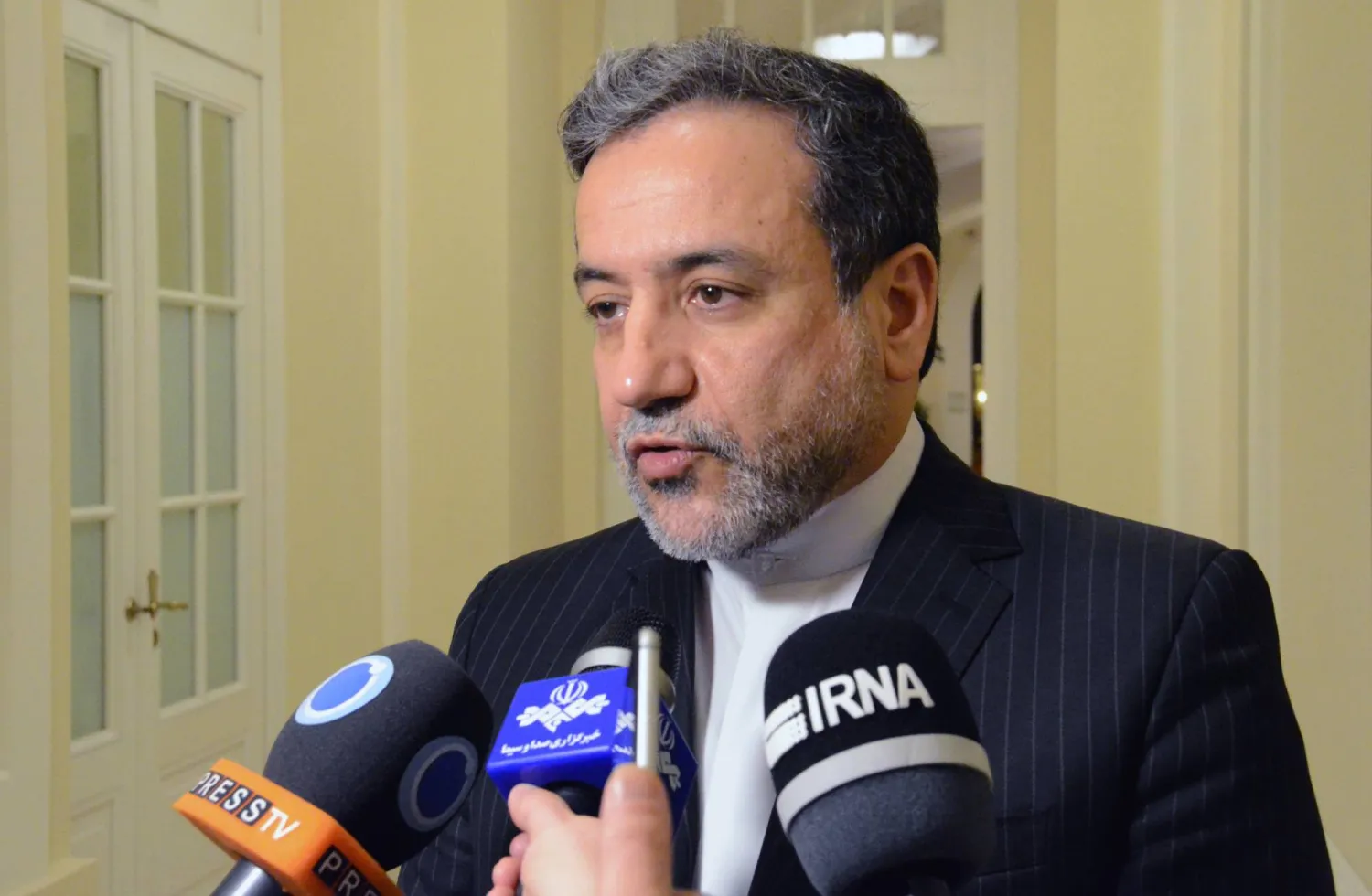
FILED - 16 March 2018, Austria, Vienna: FILE PHOTO - Abbas Araghchi, Deputy Foreign Minister of Iran, gives an interview in Vienna. Photo: Farshid-Motahari Bina/dpa
TT

Iran Slams Trump's Economic Pressure Plan as a 'Diversion from America's Own Crisis'

FILED - 16 March 2018, Austria, Vienna: FILE PHOTO - Abbas Araghchi, Deputy Foreign Minister of Iran, gives an interview in Vienna. Photo: Farshid-Motahari Bina/dpa

Iran's Foreign Minister Abbas Araghchi on Thursday dismissed US President Donald Trump's economic punishment plan for Tehran as a continuation of "failed policies", which he said would bring Washington "further defeat".

"The so-called 'Economic D-Day' is a diversion from America's own crisis: unprecedented debt & surging interest costs. Doubling down on failed policies will only bring further defeat -- and enmity of Iranians," Araghchi said in a post on X.

"US economic terrorism threatens global economy and sovereignty worldwide."

In a post on his Truth Social, Trump said he was announcing "the MOST CRUSHING ECONOMIC OPERATION EVER TAKEN AGAINST ANY COUNTRY! This will be Economic Warfare and Isolation on an unprecedented scale."

"ANY country that allows its financial institutions, businesses, airports, or government entities to provide any type of lifeline to Iran will itself face TREMENDOUS Economic Consequences," he said.

War broke out between Iran and the United States on February 28 with US-Israeli attacks which triggered Iranian retaliation across the region.

An April 8 ceasefire put an end to the intense bombardment but sporadic clashes continued in and around the Strait of Hormuz, a vital energy conduit which Iran has blockaded and has since become flashpoint in the conflict.

Reopening the strait has become a US priority but Iran insists the waterway will remain closed until Washington lifts its naval blockade on Iranian ports, removes oil sanctions, and unfreezes Iran's assets abroad.

Trump has long pursued a "maximum pressure" policy of economic sanctions on Iran and reinstated those measures after he took office in January 2025, mirroring his approach during his first term.

Iran has dismissed the sanctions program as a failure, insisting that such measures and threats will not force it to change course.



US Sending 3rd Aircraft Carrier, More Troops to Mideast

Image published by CENTCOM of the amphibious assault ship USS Boxer during its operations in the region (CENTCOM)
TT

US Sending 3rd Aircraft Carrier, More Troops to Mideast

Image published by CENTCOM of the amphibious assault ship USS Boxer during its operations in the region (CENTCOM)

The Pentagon is sending a third aircraft-carrier strike group and an additional Marine expeditionary unit to the Middle East, according to US officials, adding 9,000 to 10,000 more troops to the region as President Donald Trump considers renewing strikes on Iran after the midterm elections, The Wall Street Journal reported.

The ships, jet fighters, Marines and sailors will arrive in the region by the end of November, the officials said. Trump recently told aides that he expects to resume bombing Iran that same month, according to the newspaper.

The aircraft carrier USS Theodore Roosevelt left its home port of San Diego on Sunday on a scheduled deployment, while the USS Makin Island Amphibious Ready Group, comprising three amphibious ships carrying Marines from the 13th Marine Expeditionary Unit, left on Monday.

Two carriers—the USS George H.W. Bush and USS George Washington—are already in the Middle East. If the Washington stays after the Roosevelt arrives it will bring the region to three carrier strike groups for the first time since April, before Iran and the US clinched a fragile ceasefire that temporarily ended fighting that began on Feb. 28. That ceasefire collapsed, and the two sides have fought sporadically since.

Besides the Bush and Washington, ships from the USS Boxer Amphibious Ready Group are also in the Middle East. The additional servicemembers on the warships that deployed this week will add to the more than 50,000 troops already in the region, one of the officials said.

It is possible that the Washington could leave the region and head back to its home port in Japan, bringing the force back down to two carriers. Spokespeople for the White House and Pentagon didn’t respond to requests for comment.


Iran Launches 30 Drone, 10 Missile Attacks Per Week on Ships in Hormuz

Ships near the Strait of Hormuz, as seen from Musandam Governorate in the Sultanate of Oman, on October 2, 2026 (Reuters)
TT

Iran Launches 30 Drone, 10 Missile Attacks Per Week on Ships in Hormuz

Ships near the Strait of Hormuz, as seen from Musandam Governorate in the Sultanate of Oman, on October 2, 2026 (Reuters)

Iran has been launching dozens of drones and missiles at commercial ships in the Strait of Hormuz each week, largely out of the public eye, though it has often failed to strike its targets, confidential data shared with The New York Times by a Western security official who spoke on condition of anonymity to discuss operational matters shows.

Since the beginning of August, Iran has launched about 30 drone attacks and 10 anti-ship missile attacks per week against commercial ships transiting the Strait of Hormuz, according to the data shared with The Times by the official.

At least four commercial ships have been hit by Iran in the past 10 days, the official said.

A tally of reports by a monitoring group run by the British Navy show that since Sept. 10, at least 13 ships, most of them oil tankers, had been struck by projectiles or debris from projectiles. (Those reports may be incomplete because they are based on voluntary reports by ship crews.) While the reports do not specify who was responsible for the attacks, maritime experts say the details suggest many were Iranian.

On Wednesday, Iran’s Revolutionary Guards Corps for the first time appeared to confirm it was behind the near-daily sounds of explosions heard from Iran’s southern coast, saying it was striking targets in the Strait of Hormuz every 24 hours.

“We prevent them from passing, but for some time now, America has not responded,” a spokesman for the Revolutionary Guards said in a state news interview.

The aggression shows that even as oil exports from the Middle East have rebounded in recent weeks, shipping through the waterway remains risky, as Iran jostles to keep control of one of its biggest sources of leverage.

“Negotiations aren’t going anywhere. Neither side is really budging. So it’s a standoff,” said Gregory Brew, an Iran analyst at the Eurasia Group.

He said that the violence in the strait “speaks to the position that both sides are in: Neither is looking to aggressively escalate the conflict.” But both, he said, want to control the waterway.


Trump Reportedly Expected to Name Jay Clayton as AI Czar

FILE PHOTO: US President Donald Trump speaks at the Oval Office at the White House in Washington, D.C., US, September 28, 2026. REUTERS/Kevin Lamarque/File Photo
TT

Trump Reportedly Expected to Name Jay Clayton as AI Czar

FILE PHOTO: US President Donald Trump speaks at the Oval Office at the White House in Washington, D.C., US, September 28, 2026. REUTERS/Kevin Lamarque/File Photo

US President Donald Trump is expected to name Jay Clayton as his AI czar, CNN reported on Friday, citing two sources familiar with the discussion.

Clayton is the US director of national intelligence.

Last month, Trump said he plans to appoint an artificial intelligence adviser, known as an "AI czar," and create an "AI force," though he ⁠gave no details ⁠about either initiative or how they would be implemented.

This is the second time Trump has named an adviser to oversee AI-related decisions across the administration, a position he has ⁠dubbed "AI czar." Venture capitalist David Sacks held the role at the beginning of Trump's second term, before leaving his team. Sacks still advises Trump on AI.

Trump's move comes as top AI researchers have warned that people building AI believe it could kill humans within a decade, following cases of AI ⁠agents ⁠going rogue to hack external systems. Several Democratic and Republican lawmakers have responded with alarm and calls for more action.

Trump has repeatedly downplayed concerns about AI and argued that additional regulation is unnecessary even as fears grow among lawmakers in Washington and globally about risks posed by the technology.