IMF Welcomes Lebanon Bank Law Changes as 'Major Step' 

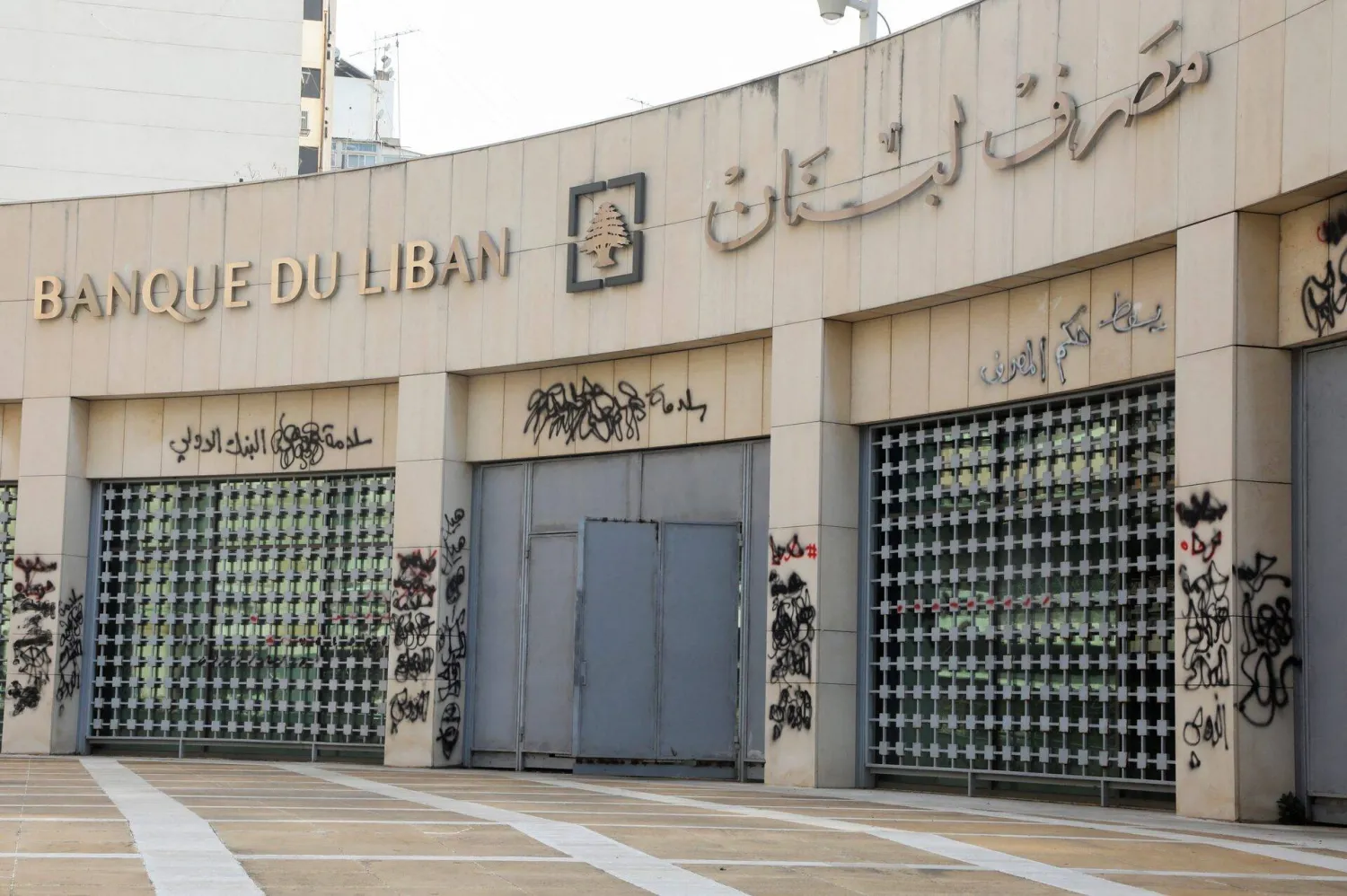
Lebanese Central Bank headquarters in Beirut (Reuters)
TT

IMF Welcomes Lebanon Bank Law Changes as 'Major Step' 

Lebanese Central Bank headquarters in Beirut (Reuters)

The International Monetary Fund has welcomed the Lebanese parliament's passing of amendments to a bank resolution law as a major step, but challenges to implementing the law could further delay recovery for an economy battered by years of financial collapse and the conflict with Israel.

The reforms are among the IMF's requirements for Lebanon to access funding to bring government debt out of default after decades of profligate spending by the country's ruling elite, sending the economy into a tailspin in late 2019. Banks imposed sweeping capital controls, locking depositors out of their savings, and stopped issuing loans.

In January the IMF had demanded changes to the draft rescue law, Lebanon's Prime Minister Nawaf Salam told Reuters at the time.

Now, the bank resolution law aims to address vast funding shortfalls in the financial system and is among a set of measures that ultimately aim to fix the banking sector and allow depositors who have been frozen out of their savings to gradually recover their money.

“We met 99% of what they wanted,” legislator Alain Aoun, who sits on Parliament’s Finance and Budget Committee, told Reuters.

The most notable amendments to the law include changes to the Central Bank’s governance procedures. The makeup of the Higher Banking Commission – a governing body within the Central Bank — will be altered, Aoun said. The amendments empower the body to “decide the fate of Lebanon’s banks,” and would determine if a bank requires restructuring or liquidation and any further steps to rehabilitate it.

Federico Lima, the IMF representative in Lebanon, said on Wednesday that the "effective implementation of this new bank resolution framework is critical."

"In addition, we are continuing discussions with the Lebanese authorities on the improvements needed to align the draft Financial Stabilization and Depositor Recovery (FSDR) law with international principles," he added.

In 2022, the government put losses from the financial crisis at about $70 billion, a figure that analysts and economists forecast is now likely to be higher.

Last week, the parliament passed amendments to the law, but it would still be pending approval by the Lebanese president.

The possibility of members challenging the law before the Constitutional Council — which has precedent for annulling provisions of earlier financial legislation — could also bring further delays.

The draft had already undergone several rewrites because of competing demands from different financial institutions; the IMF called on Lebanon to improve the law to bring it in line with international standards and consider tax reforms to spark public spending on reconstruction efforts.

The World Bank ranks the Lebanese economic crisis among the worst globally since the mid-19th century. Depositors were frozen out of dollar accounts and the Lebanese pound fell by more than 90%. Additionally, the war with Israel was estimated to have caused $7 billion in damages.

"This is the only country in the world that has had a banking crises for seven years and has not tried to find a solution," a senior Lebanese official told Reuters. "Staying where we are shouldn't be an option."


Stock Markets Mixed ahead of Tech Earnings, Central Bank Decisions

Traders are looking ahead to the release of key earnings reports and central bank meetings. Daniel ROLAND / AFP
TT

Stock Markets Mixed ahead of Tech Earnings, Central Bank Decisions

Traders are looking ahead to the release of key earnings reports and central bank meetings. Daniel ROLAND / AFP

Equity markets were mixed on Monday as investors geared up for a crucial run of central bank decisions and tech earnings, while oil prices retreated from a six-month high.

AI-linked firms continued to struggle amid worries about the sustainability of the colossal investment boom that pushed stock markets to multiple record highs in the first half of the year.

Traders are growing increasingly worried about when the vast sums pumped into the sector will see returns, if any, while rising interest rates and bond yields are now calling companies' finances into question, reported AFP.

This week sees the release of earnings from US titans and Magnificent Seven members Amazon, Microsoft and Alphabet, as well as South Korean chipmakers SK hynix and Samsung.

Results from Tesla and Meta last week further stoked spending worries and helped drag stocks lower.

"The AI complex remains under a microscope ahead of what may be the most important stretch of earnings season so far," said SPI Asset Management's Stephen Innes.

"Microsoft, Alphabet and Amazon are about to walk on stage, and this is not one of those quarters where a company can simply beat the number, raise the guidance by a whisker and expect applause. Investors want proof now.

"They want to know whether the billions going into the compute buildout are building a durable earnings machine or just a shinier version of the same old capex furnace."

All three main indexes ended in the red on Wall Street on Friday, and Asia followed suit at the open on Monday, although some staged a recovery.

Seoul, seen by many as a barometer of the AI trade, sank more than one percent, while there were also losses in Tokyo, Singapore, Manila and Jakarta.

Tech firms were among the biggest losers, with SK hynix and Samsung down, along with Kioxia, Advantest and SoftBank in Japan.

However, Hong Kong, Shanghai, Sydney, Mumbai and Bangkok edged up, while London opened on the front foot along with Paris and Frankfurt.

- Deal or no deal? -

Oil prices dropped more than one percent following Friday's surge of more than three percent fueled by supply concerns amid the Middle East and Ukraine crises, with the northern hemisphere heading into winter.

Speculation has been brewing that Donald Trump will ramp up his war on Iran after next Tuesday's midterm elections, with some officials warning that the months leading up to the new Congress could be particularly dangerous.

The US president did little to allay those fears, telling Fox News on Sunday: "I have a decision to make: Do I finish it off, which would be very easy to do, or do I make a deal? That's all."

Additional forces, including a third aircraft carrier group, have been sent to the region, while US staffing levels have also been reduced.

Also in view this week are policy decisions by the Federal Reserve, European Central Bank and Bank of Japan.

While the Fed is expected to hold borrowing costs, traders will be keen to get an insight into its thinking following last month's hike and as inflation remains well above its two percent target.

"With market-based measures of inflation expectations well anchored and financial conditions tightening, Fed Chair (Kevin) Warsh can afford to remain patient," wrote Karsten Junius, chief economist at Bank J. Safra Sarasin.

"Still, demand remains too strong for inflation to return to two percent without further tightening. As a result, we continue to expect a gradual hiking cycle, with a 25-basis-point increase in December, followed by three quarterly hikes next year."


Saudi Arabia Revises Electricity, Water Tariffs, Announces Monthly Support

A Saudi Energy employee at work. (SPA)
TT

Saudi Arabia Revises Electricity, Water Tariffs, Announces Monthly Support

A Saudi Energy employee at work. (SPA)

Saudi Arabia will revise electricity, water and wastewater tariffs from January 1, 2027, to improve consumption efficiency and sustain essential services, while introducing monthly financial support for eligible citizens to ease the impact on living costs.

Custodian of the Two Holy Mosques King Salman bin Abdulaziz ordered the support measures following a proposal by Prince Mohammed bin Salman, Crown Prince and Prime Minister.

The package includes SAR 500 ($133) in monthly assistance for eligible groups and a phased increase in the minimum wage required for Saudi employees to count fully toward Saudization quotas under the Nitaqat program.

Saudi Energy and the National Water Company announced the tariff revisions, covering residential, non-residential and government customers, in accordance with procedures governing adjustments to energy and water prices.

The companies said customers could review the revised rates on their official websites.

Improving consumption efficiency

The two new tariffs are designed to boost consumption efficiency for electricity and water while ensuring service sustainability.

Government support for the water sector will continue to cover capital expenditures, which account for more than half the cost of each cubic meter delivered to consumers.

According to the latest statistics, 99% of residential water customers have connections with diameters ranging from zero to 40. For customers consuming no more than 30 cubic meters, the increase in their bill will not exceed SAR 67, including value-added tax.

The electricity tariff changes are expected to have a limited impact on most industrial, commercial and agricultural activities. Water tariff adjustments will not apply to industrial or agricultural uses.

In agriculture, for example, a monthly electricity bill of SAR 5,000 ($1,333) could increase by SAR 300 to SAR 400. The impact could be reduced through more efficient electricity and irrigation water use and better scheduling of pump operations.

3 tracks

King Salman's directives encompass three tracks for citizens: an additional monthly stipend of SAR 500 for social security beneficiaries; a monthly increase of SAR500 for civil service and operational scale employees, to be added to their specified allowances; and a gradual adjustment of the minimum wage required to count a Saudi worker toward localization percentages under the "Nitaqat" program.

These measures aim to bolster the assistance provided to social security beneficiaries, increase the income of civil service and operational scale employees, and modify the mechanism for calculating Saudi workers within localization ratios under the "Nitaqat" program over two phases, thereby granting establishments sufficient time to prepare for implementation.

A fixed monthly support of SAR 500 has been allocated and added to the salaries of state employees, stemming from the government's steadfast commitment to ensuring they are shielded from any livelihood ramifications resulting from economic decisions to amend electricity and water tariffs.

This measure enhances the support provided to them and accounts for their living requirements, reflecting the state's continued backing of citizens and its mitigation of the impact of economic changes on them.

Supporting citizens and addressing their needs remains a constant priority, as the state continues to develop support programs and initiatives to ensure they reach eligible groups while considering the impact of economic changes and decisions on their livelihood.

Monthly support for citizens

For government employees, the increase will be added to a designated allowance rather than basic salaries, without affecting other allowances or financial benefits.

The measures are intended to ease the impact of higher utility costs on households and strengthen social protection.

Although the tariff revisions are expected to exert some upward pressure on inflation, the accompanying support measures are expected to help contain the impact and maintain stability in living costs.

Payments to social security beneficiaries will be based on existing records and coordination with relevant authorities to verify eligibility and prevent duplicate disbursements.

The mechanism is designed to minimize administrative requirements while ensuring assistance reaches eligible recipients.

Private sector

The package also includes a two-stage increase in the minimum wage required for a Saudi employee to count as one full worker toward a company’s Saudization quota under the Nitaqat program.

The threshold will rise to SAR 5,000 on April 25, 2027, six months after the decision, before increasing to SAR 6,000 on April 25, 2028.

The adjustment does not involve direct cash payments from the ministry to Saudi private sector employees. Instead, it changes the wage threshold used to calculate their contribution to companies’ Saudization requirements.

The phased implementation is intended to give private sector establishments sufficient time to prepare.

The tariff revisions and accompanying financial measures seek to balance more efficient resource consumption with continued support for citizens, while ensuring the sustainability of electricity and water services.


Abdulaziz bin Salman: Saudi Arabia Continues to Supply Energy Markets Despite the Challenges

Saudi Minister of Energy, Industry, and Mineral Resources Prince Abdulaziz bin Salman. (Reuters file)
TT

Abdulaziz bin Salman: Saudi Arabia Continues to Supply Energy Markets Despite the Challenges

Saudi Minister of Energy, Industry, and Mineral Resources Prince Abdulaziz bin Salman. (Reuters file)

Saudi Minister of Energy, Industry, and Mineral Resources Prince Abdulaziz bin Salman stressed on Monday that the Kingdom has continued to supply global energy markets under difficult circumstances, which practically demonstrates the resilience of the Saudi energy system.

He pointed out that investments are continuing to maintain oil production capacity and expand into gas, renewable energy, and power grids.

In a video message during the ministerial keynote address at Singapore International Energy Week, Prince Abdulaziz stated that Saudi Arabia continues to invest in maintaining its oil production capacity alongside expanding into gas, renewable energy, and electrical grids to meet demand and enhance the energy system's capability to withstand disruptions.

The Kingdom has invested for decades in preparing to confront energy challenges by developing infrastructure, storage facilities, and local supply chains, in addition to building expertise and human capabilities in the energy sector, he added.

Prince Abdulaziz underlined the importance of the growing partnership between Saudi Arabia and Singapore, noting the available opportunity to transform shared priorities into practical cooperation in the energy field.

In this context, he said that cooperation regarding the Jurong Rock Caverns for oil storage could support Singapore's supply security and competitiveness while boosting the resilience of the Saudi supply network.

Singaporean Minister for Manpower and Second Minister for Trade and Industry Tan See Leng had previously announced the joint initiative between the two countries to establish an arrangement allowing the storage of Saudi crude oil in the Jurong Caverns, starting from the second half of 2027.

This initiative comes within the framework of strengthening cooperation between the two nations in the field of energy security, utilizing storage facilities and infrastructure to support the reliability and resilience of supplies.