


Are Defections Eroding Sudan’s Rapid Support Forces From Within?

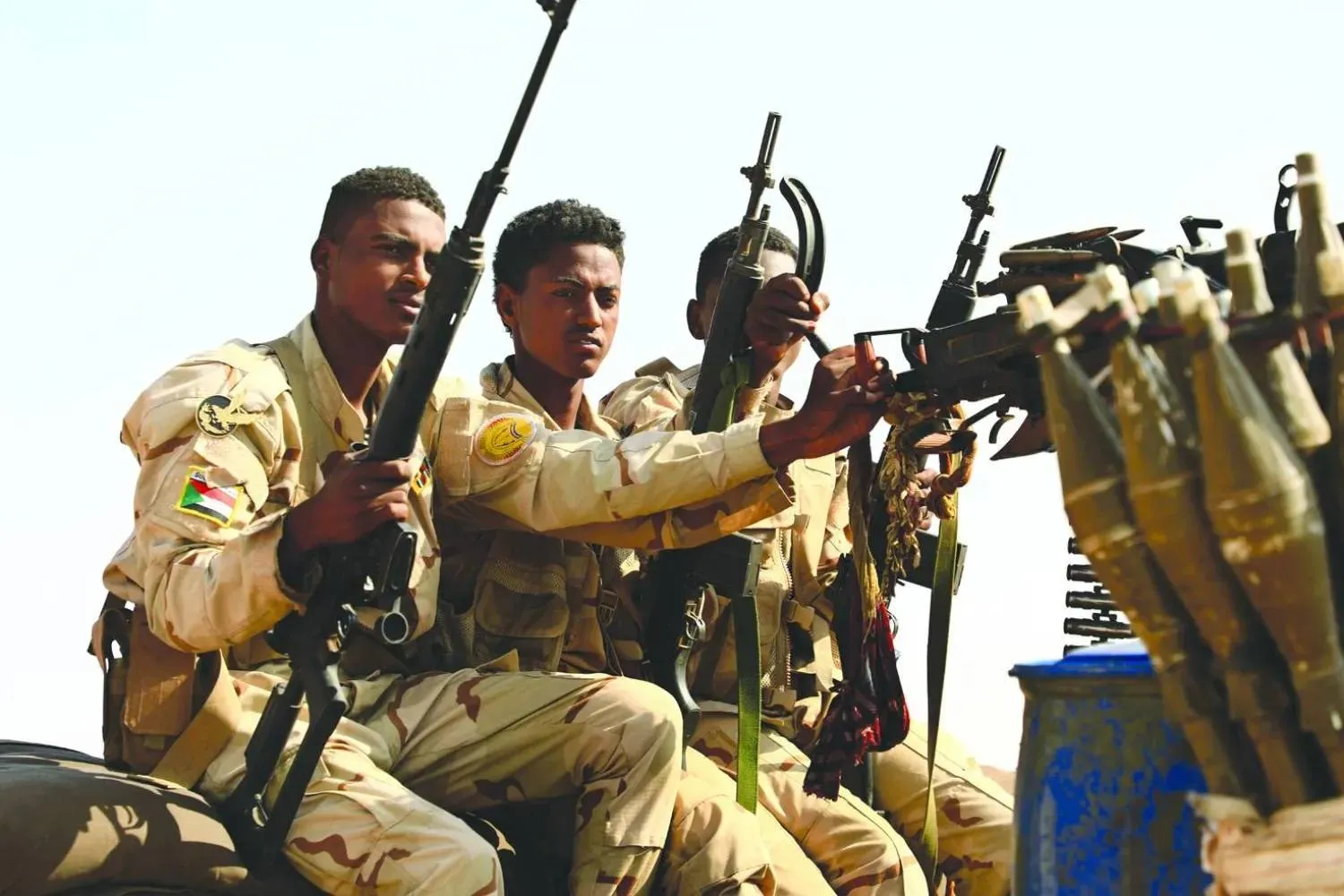
Rapid Support Forces fighters (File photo - AP)
TT

Are Defections Eroding Sudan’s Rapid Support Forces From Within?

Rapid Support Forces fighters (File photo - AP)

A force of dozens of fighters led by General Musa Khamsin has defected from Sudan’s Rapid Support Forces (RSF) and joined the army, the latest in a series of defections in recent months involving field commanders, fighters, and political officials from the RSF-led Sudan Founding Alliance (Tasis).

The defections are raising questions over what is happening inside the RSF: whether they mark the start of deeper military and political erosion, or remain limited losses that its leadership can contain and replace.

Khamsin said that after reaching army-held territory, his group had come from North Darfur and that Major General al-Nour Ahmed al-Qubba, one of the most prominent RSF defectors, had helped them reach Khartoum.

He also cited disappointment with the Tasis project, saying they had initially believed it would establish a new state but later reached a different conclusion.

Welcoming Khamsin and his fighters, al-Qubba said he expected more commanders and forces to defect. He urged RSF fighters in Darfur and Kordofan to join the army.

Army moves to absorb defectors

The latest defection comes as the army takes further steps to integrate former RSF members.

On Wednesday, it said it had completed the first phase of procedures to regularize the status of those who had joined its ranks. The process included taking an oath and completing security and administrative arrangements ahead of their deployment to army formations and units.

The army did not disclose how many people were involved.

Major General al-Walid Abdel Qader Ajabna, director of the army’s Administration Branch, welcomed the new arrivals and praised what he called their decision to “side with the state” and leave the RSF.

One of the most significant defections came in October 2024, when Abu Aqla Keikel, commander of the Sudan Shield forces and a senior RSF commander responsible for Gezira state in central Sudan, left the RSF and joined the army.

The trend gathered momentum this year.

In April, Major General al-Nour al-Qubba, one of the RSF’s most prominent commanders in Darfur, defected and joined the army. He later said he had been the “third man” in the RSF by military rank and had left with three groups, along with their vehicles and equipment.

More defections follow

Further defections followed.

In May, field commander Ali Rizqallah, known as al-Safna, announced his departure from the RSF after fighting on several fronts. Smaller defections were also reported in Kordofan.

The trend spread to Blue Nile state in southern Sudan, where Dhaifallah Adam, deputy commander of the Fourth Combat Group, defected in June.

He said his decision was driven by what he described as “racism and the absence of a cause or purpose for the war.”

The defections have also reached the RSF’s political circle.

Faris al-Nour, a former adviser to the RSF commander and a member of the Tasis alliance’s Presidential Council, resigned from the council and from his post as governor of Khartoum.

He was followed this month by Hamed Mohammed Khalifa, a Presidential Council member whom the alliance had appointed governor of the Kordofan region.

The resignations add a political dimension to the military defections, as Tasis seeks to present itself as the political framework for the RSF-led project and its allies.

Questions over loyalty

Journalist and political analyst Osman Mirghani said the developments represented a “major shift” that had moved beyond the military sphere into politics.

He said the defections reflected the “collapse of the political project” and declining belief among some RSF members that there was a genuine political cause worth fighting for.

Mirghani said the way the government and army received defectors, particularly al-Qubba, had encouraged others to follow, after seeing that the army was prepared to accept and absorb them.

At the same time, comments by Major General Ahmed Qajja, a senior RSF commander, have raised concerns within the group about the loyalty of some political and military figures.

Qajja recently said there was what he called a “fifth column” inside both the RSF and Tasis.

He said his forces had information raising suspicions about around 50% of political advisers, without providing evidence.

He also said he had information about politicians planning to defect and that a file containing their names was being prepared for submission directly to the RSF leadership. He added that there were similar concerns among military personnel.

Qajja called for tighter controls on the movements of senior leaders, saying: “No senior political figure should move without the commander-in-chief’s permission.”

He denied the existence of any agreement with the army and described joining it as “a betrayal of the cause.”

RSF still able to fight

Despite signs of internal strain, the RSF has not yet lost its ability to operate militarily.

It remains capable of mobilizing fighters, moving forces and launching attacks on several fronts, as seen recently in North Kordofan and Blue Nile, despite conflicting accounts from the two sides over the outcome of those battles.

That continuing capacity makes it difficult to treat the defections alone as evidence of an imminent military collapse.

As long as the RSF can recruit, move units and sustain operations across distant fronts, the impact of the defections remains uncertain.

Retired army Lieutenant Colonel al-Tayeb al-Malkabi cautioned against viewing them as proof that the RSF’s collapse was inevitable.

He described the defections as “an indicator that needs to be monitored.”

Their impact, he said, depended on the importance of the commander who defects, the size of the force leaving with him and the RSF’s ability to replace its losses.

Still, al-Malkabi said the defections were “not a good sign” for the RSF because of their potential effect on cohesion and troop movements, as well as their psychological and political impact.

What does the army gain?

The defections also raise questions about the army’s motives for absorbing former RSF members.

Is it mainly seeking to turn the defections into a political gain and weaken its rival from within, or is integrating them also a way to make up for any shortage in its own fighting forces?

With defections spreading from the battlefield into politics, public concern inside the RSF over the loyalty of some advisers and military personnel, and the army moving to absorb those leaving its rival, the picture remains mixed.

Pressure on RSF cohesion is growing, but the group has so far retained its ability to mobilize, fight and open new fronts.

The key test will be whether the RSF can replace those who leave and preserve cohesion in its command and control.

That will determine whether the current defections remain manageable losses or mark the start of a broader process of internal erosion.



Yemen Govt Expands Community Mobilization to Support Fighters on Frontlines

This frame grab taken from AFPTV video footage shows fighters affiliated with the Yemeni government engaging in clashes with Houthi militants in Al-Jawf province on September 15, 2026. (AFPTV / AFP)
TT

Yemen Govt Expands Community Mobilization to Support Fighters on Frontlines

This frame grab taken from AFPTV video footage shows fighters affiliated with the Yemeni government engaging in clashes with Houthi militants in Al-Jawf province on September 15, 2026. (AFPTV / AFP)

The Yemeni government has expanded community support for the armed forces and frontlines by mobilizing various social groups and provinces to participate in backing fighters and providing essential supplies to the frontlines.

Nayef Al-Bakri, Minister of Youth and Sports and head of a committee for popular support and government backing for the armed forces, told Asharq Al-Awsat that the committee operates under the directives of Chairman of the Presidential Leadership Council Dr. Rashad Muhammad Al-Alimi, council members, and the prime minister.

The committee aims to organize and activate popular support for the armed forces and fighters across various frontlines, which includes providing food, petroleum products, fuel, and essential materials needed for fighters to maintain their positions, he added.

The committee includes representatives from several ministries, including Interior, Defense, Social Affairs, Transport, Health, and Industry. A broader committee includes representatives from more than 15 provinces, aiming to unify popular efforts and strengthen the state of mobilization.

Several provinces, including Socotra, are preparing to dispatch relief convoys to battle areas, Al-Bakri revealed.

Community support encompasses the health sector through blood donations and backing provincial blood banks. Various social groups have become part of the support system, he went on to say.

Taiz, Hodeidah, Lahij, Dhale, Marib, Al-Jawf and Shabwa are priority frontlines, the minister said.

Taiz is witnessing a "decisive battle," he stressed.

On whether the support committee would handle preparing youths to join the frontlines, Al-Bakri explained that the responsibility for recruitment is the responsibility of military authorities.

The minister said that the Iran-backed Houthi group is threat to Yemen and regional stability, especially in light of its "attempts to undermine the security of navigation and regional waters."

He stressed that Saudi Arabia stands as the primary supporter of Yemen, a role that encompasses all economic, political, and military sectors, in addition to relief and development aid.

Al-Bakri was optimistic that the Yemeni armed forces would make progress on several fronts, including in Taiz, Kahbub, and Shabwah.


'Basis for Understanding' Brings Iraqi Kurdistan Closer to New Government

A Kurdish voter prepares his ballot during parliamentary elections at a polling station in Sulaimaniyah in Iraq's autonomous Kurdistan region on October 20, 2024. (Photo by Ahmad Al-rubaye / AFP)
TT

'Basis for Understanding' Brings Iraqi Kurdistan Closer to New Government

A Kurdish voter prepares his ballot during parliamentary elections at a polling station in Sulaimaniyah in Iraq's autonomous Kurdistan region on October 20, 2024. (Photo by Ahmad Al-rubaye / AFP)

Positive signs have emerged in Erbil and Sulaymaniyah indicating that an agreement leading to the formation of a new government in the Kurdistan Region of Iraq may be nearing, after the process was delayed for nearly two years by disputes between the region’s two historic political rivals, the Kurdistan Democratic Party (KDP) and the Patriotic Union of Kurdistan (PUK).

A PUK leader told Asharq Al-Awsat, speaking on condition of anonymity, that “talks are underway these days with the KDP and have begun on a clear basis between the two sides,” noting that “some details still require further consultation.”

The latest understanding between the two parties is based on “maintaining the presidency of the Kurdistan Region and the premiership for the KDP, with their deputies going to the PUK, along with the speakership of parliament,” according to the PUK leader. He added that his party “requires, in order to preserve the historic distribution of posts, that the two deputy positions be granted new powers that expand the partnership in governing the region.”

Regarding the allocation of key portfolios in the new cabinet, the leader said that “the PUK will receive the finance and Peshmerga portfolios, while the oil and interior ministries will go to the KDP.”

In the parliamentary elections held in October 2024, the KDP came first with 39 seats in the Kurdistan Region Parliament, followed by the PUK with 23 seats. The PUK subsequently allied with the New Generation Movement, which won 15 seats, in an effort to balance the scales in negotiations over forming a government with its historic rival.

Elected lawmakers were required to choose the new parliament speaker, deputy speaker, and secretary in a single session held on December 2, 2024. The session was limited to the swearing-in ceremony. Since then, parliament has remained inactive because of disputes between the two main parties.

‘Basis for Understanding’

An atmosphere of optimism is emerging from within the KDP camp. KDP leader Dlawar Faiq told Asharq Al-Awsat that reports of an emerging basis for understanding were “close to being accurate, but no agreement has been reached yet,” particularly because “neither party has made any official announcement about it.” KDP leader Abdul Salam Barwari also told Asharq Al-Awsat that “dialogue between the two parties is continuing, with a serious willingness this time to form the government.”

Last Saturday, Kurdistan Region President Nechirvan Barzani said that “efforts are underway aimed at enabling the Kurdish political parties to reach positive results,” noting that “the two parties are continuing to hold meetings, and we hope these efforts will culminate in understandings that serve the interests of Kurdistan and all its components.”

Since the Kurdistan Region’s parliamentary elections in October 2024, efforts to form a new government have stalled amid disputes between two camps of competing parties seeking greater influence over the anticipated cabinet.

Demands and Conditions

This time, emerging parties such as the New Generation Movement have entered the political competition and become part of the alliance landscape. However, the KDP and PUK continue to dominate the political process in the region.

The PUK-New Generation alliance, which holds 38 of the 100 seats in the Kurdistan Region Parliament, is demanding half of the cabinet, a proposal rejected by the KDP. The KDP argues that the seats held by other parties will give it the advantage, while nevertheless saying it does not object to its historic rival participating in government formation on a fair and balanced basis.

Members of the KDP have floated the possibility of holding new elections unless the PUK agrees to its demands, while some PUK members have raised the possibility of “near-independent rule for Sulaymaniyah from Erbil.”

PUK spokesperson Karwan Gaznayi said at a news conference in Sulaymaniyah on Sunday that his party “remains committed to its demands regarding government formation, but its doors remain open to reaching an understanding.”

Gaznayi added that a meeting between Kurdistan Region Prime Minister Masrour Barzani and his deputy, Qubad Talabani, had been “positive,” but had not produced an agreement on forming the new government. The distribution of posts was also not discussed at the meeting, he said, stressing that the PUK’s alliance with the New Generation Movement remains in place.

‘Balanced Government’

PUK leader Ahmed Al-Harki told Asharq Al-Awsat that a meeting of the party’s Political Bureau last Saturday and another meeting of its Leadership Council the following day reaffirmed the need to continue consultations and seek an understanding over the formation of the new government. He stressed that the government should be balanced and that no side should monopolize power.

PUK leader Soran Al-Daoudi told Asharq Al-Awsat that “the past few days have seen rapprochement with the KDP, as both sides have demonstrated their desire to reach an understanding and then agree on a balanced cabinet.”

“Nevertheless, forming the government requires further effort and pressure to achieve this as soon as possible,” Al-Daoudi added.


Taiz Battles and Bab al-Mandab Curb Houthi Push Eastward

A Yemeni fighter on the front line on one of the Taiz fronts during battles against the Houthis (Military Media)
TT

Taiz Battles and Bab al-Mandab Curb Houthi Push Eastward

A Yemeni fighter on the front line on one of the Taiz fronts during battles against the Houthis (Military Media)

Yemeni government forces intensified airstrikes on Houthi positions, fortifications, and reinforcements in Taiz Governorate in southwestern Yemen on Tuesday, as fighting continued on several fronts. The forces said they had retaken positions in the south and west of the governorate, shot down two drones, and captured several members of the group near Bab al-Mandab.

The Taiz Military Axis, affiliated with the Yemeni armed forces, said warplanes carried out five airstrikes on Houthi positions, gatherings, and vehicles on the Al-Ahkoum front in Hayfan District, southeast of the governorate. It said military sources indicated that the strikes targeted reinforcements heading toward the Hayfan and Al-Subaiha fronts.

In western Taiz, fighting continued in the areas of Al-Anin, Bani Bakari, Jurdad, and Al-Kadaha amid Houthi attempts to infiltrate and launch attacks. The Taiz Military Axis announced that two drones had been shot down, one over Mount Jurdad in the southwest of the governorate and the other on the Al-Kadaha front. It said the latter was carrying a mortar shell before reaching its target.

Field sources reported that government forces had retaken positions and hilltops on the southern and western fronts in Taiz, including positions around Kahboub near Bab al-Mandab, following heavy clashes with the Houthis.

The sources said the Giants Brigades and Nation’s Shield Forces had retaken several key strategic hilltops in Kahboub after the group had seized them in recent days. Government forces also announced that they had captured seven Houthi fighters on the Al-Saqiya coast, south of Bab al-Mandab, and seized a military vehicle belonging to the group.

On the western Jurdad Bani Omar front, located between the districts of Al-Wazi'iyah and Al-Shamayatain, sources said government forces had repelled a Houthi attack and forced the attackers to withdraw.

Al-Wazi'iyah also came under airstrikes targeting Houthi positions in the areas of Al-Dharifa and Al-Mashjab, as clashes continued in several contact zones. Military sources said the strikes inflicted losses on the group and thwarted attempts to reinforce its positions and advance along the front.

On the Kahboub front overlooking Bab al-Mandab, the Southern Giants Brigades announced the capture of a Houthi commander and one of his escorts. It also said it had carried out strikes that destroyed vehicles and targeted Houthi gatherings in Kahboub and Al-Wazi'iyah.

Casualties

The battlefield developments came amid reports of heavy casualties over the past two days. Agence France-Presse, citing military sources from both sides, reported that at least 154 people had been killed in fighting across several Yemeni governorates.

Houthi-affiliated military sources said 118 people had been killed in airstrikes, clashes, and artillery shelling in Taiz, Al-Jawf, Marib, and Saada, most of them in Taiz. Government military sources, meanwhile, reported that 36 military personnel had been killed during two days of fighting, most of them on the southern and western fronts in Taiz.

Field sources also reported the death of Houthi commander Mohammed Abdullah Saad Jallafa Al-Aweer, known as Abu Malik Al-Aweer, along with several of his escorts, during clashes around Mount Jurdad in Al-Wazi'iyah District.

Fighting Spreads

The clashes are not confined to Taiz and the area around Bab al-Mandab. Shelling and fighting continued on several other fronts. In Marib, clashes continued in Harib, Al-Jubah, Al-Kassarah, and Al-Mashjah, with no change in the balance of territorial control.

In Al-Jawf, government forces announced airstrikes on Houthi positions in Rahoub and Salbah in Barat Al-Anan District, as well as positions in Al-Marashi and Al-Dhahir. Government forces also announced that they had targeted Houthi fighters and equipment in Al-Bayda and shot down a drone in Shabwa.

In a separate development, Yemen's Ministry of Human Rights condemned a missile attack on a popular market in Al-Hajf in Al-Mudharabah wa Ras Al-Arah District of Lahj Governorate, saying the attack wounded several civilians and damaged property and vehicles.

The ministry said the market was hit Monday by two ballistic missiles that landed about an hour apart. It said preliminary information regarding the timing and trajectory indicated that, according to its assessment, the missiles were launched from areas under Houthi control in Al-Sabrah District of Ibb Governorate. The ministry said it was continuing to collect information and verify the extent of the casualties and damage.

In Al-Subaiha, Chief of Staff and Acting Commander of the Nation's Shield Forces Major General Abdul Rahman Saleh Al-Lahji said the forces remained firmly positioned on the front, stressing that the area would not become a route for the Houthis to return to Aden. He called for continued fighting and steadfastness in confronting the group.

The latest developments follow clashes in recent days across the highlands between western Taiz and northern Lahj. Fighting has focused on mountainous positions in Al-Shamayatain, Jabal Habashi, Al-Wazi'iyah, and Kahboub, amid reciprocal attempts to consolidate positions and control the high ground overlooking the coastal routes and Bab al-Mandab. Government forces had previously announced that they had retaken positions and thwarted Houthi attacks and infiltration attempts on several of these fronts.