Greece Moves Patriot System over Reported Iran Threats to US Bases

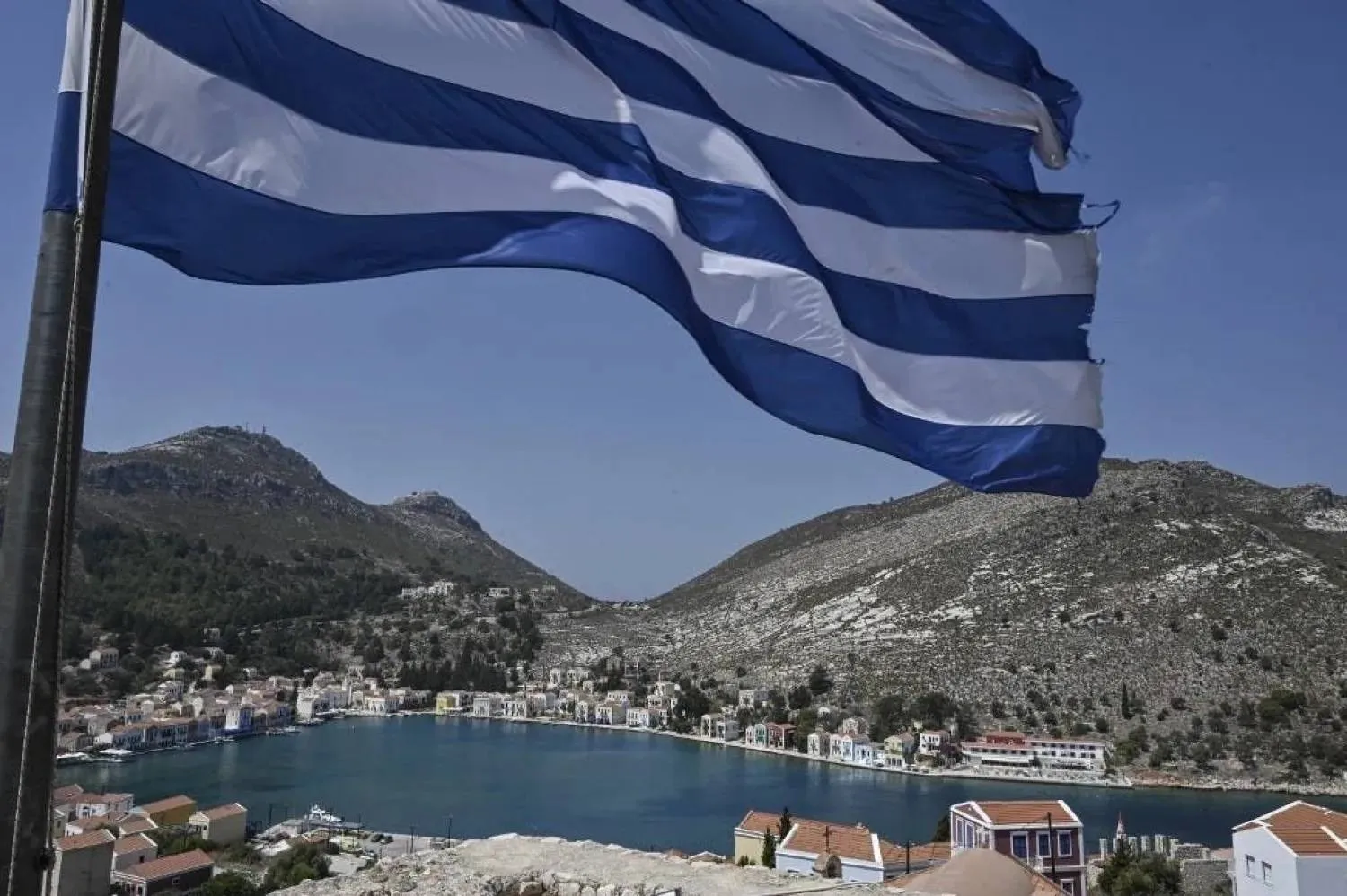
A view of the port of the tiny Greek island of Kastellorizo, officially Megisti, the most southeastern inhabited Greek island in the Dodecanese. (AFP)
TT

Greece Moves Patriot System over Reported Iran Threats to US Bases

A view of the port of the tiny Greek island of Kastellorizo, officially Megisti, the most southeastern inhabited Greek island in the Dodecanese. (AFP)

The Greek military on Monday moved one of its Patriot missile interceptor systems to the island of Crete in response to Iranian threats to hit US military bases in Europe, media reports said.

The battery was moved from the eastern island of Karpathos to Crete, where there is a major US base at Souda, the reports said. Media images showed the Patriot system on a truck waiting to be loaded on a barge, said AFP.

The Financial Times reported last week, quoting Iranian sources, that Iran would fire missiles at US targets in Europe if President Donald Trump steps up military pressure over the Strait of Hormuz.

The Greek defense ministry did not comment on the reported transfer of the missile system.


Report: Pakistan’s Munir Spoke to Trump Ahead of Tehran Visit

Pakistan's army chief Asim Munir. (Reuters file)
TT

Report: Pakistan’s Munir Spoke to Trump Ahead of Tehran Visit

Pakistan's army chief Asim Munir. (Reuters file)

Pakistan's army chief Asim Munir spoke with US President Donald Trump last week, according to three Pakistani sources, days before Munir was expected to hold talks in the Iranian capital Tehran on Monday.

The call, which has not been previously reported, came as the US threatened to roll out major economic sanctions targeting Iran and its trade partners.

The White House Office of the Press Secretary did not immediately respond to a request for comment. It was unclear what Munir and Trump ‌discussed.

Pakistan's military ‌confirmed the visit on Monday, saying ‌it was "part ⁠of Pakistan’s efforts ⁠to promote regional peace and stability." Iranian officials had confirmed the visit on Sunday, saying it was focused on security and peace.

Trump last week warned of economic consequences against any country that provided "any type of lifeline to Iran" as he seeks to isolate the country. Iran in turn vowed ⁠to shut down all oil exports from the ‌Gulf.

Pakistan, which has played ‌a key mediating role between the US and Iran this year, has ‌remained a trading partner of Iran throughout the recent ‌fighting.

Munir was expected to meet with people close to Iran's Supreme Leader Mojtaba Khamenei on Monday, one Pakistani source said.

Pakistan's earlier mediation efforts between the US and Iran resulted in an interim peace agreement signed in June. But the Islamabad Memorandum quickly faltered, amid new fighting between Iran and the US that has threatened to spiral into a wider regional conflict in recent weeks.

"There is a trust deficit on both sides," a third Pakistani source said about the US and Iran, adding that Munir's aim was to mitigate the lack of mutual trust on Monday.


Iran Says France's Move to Expel Two Iranian Diplomats 'Illegal'

Iranian Foreign Ministry spokesperson Esmaeil Baqaei (Archive photo – MEHR)
TT

Iran Says France's Move to Expel Two Iranian Diplomats 'Illegal'

Iranian Foreign Ministry spokesperson Esmaeil Baqaei (Archive photo – MEHR)

Iran's foreign ministry said on Monday that France's decision to expel two Iranian diplomats in response to Tehran's ban on two French diplomats was "illegal".

"The action that France took is an illegal action in response to Iran's legal action, and is in no way helpful to bilateral relations," ministry spokesman Esmaeil Baqaei said at a weekly press conference.

Last week, Baqaei said two French diplomats who were briefly arrested in Iran in July over "interference" in Iran's internal affairs "would not be permitted to return".

French Foreign Minister Jean-Noel Barrot responded by saying that two Iranian diplomats in France would be expelled "in the coming days".

Barrot said the French move was a consequence of "intolerable" treatment of the French diplomats, who were briefly detained last month in Tehran.

He said the pair had been targeted by Iranian officials "in flagrant violation of diplomatic immunity".

They had also suffered "an extremely serious act of intimidation" at the hands of Iran's security service, he added.

Baqaei had previously said Paris should apologize for the actions of the French diplomats, which he said had violated the Vienna Convention.


Iran’s Currency Hits New Record Low as US Prepares to Announce More Sanctions

People walk in the Grand Bazaar in Tehran, Iran, August 23, 2026. Majid Asgaripour/WANA (West Asia News Agency) via Reuters
TT

Iran’s Currency Hits New Record Low as US Prepares to Announce More Sanctions

People walk in the Grand Bazaar in Tehran, Iran, August 23, 2026. Majid Asgaripour/WANA (West Asia News Agency) via Reuters

Iran’s currency hit a new record low Monday as Washington prepared to announce new sanctions it said would be an “economic D-Day” and would add further pressure on an economy already battered by previous sanctions and a US naval blockade.

The rial dropped to 2.02 million to the US dollar as trading opened on informal currency markets. Iran’s official Central Bank rate stood at around 1.5 million rial to the dollar, but the informal rate is what most Iranians pay.

The currency had already been under pressure before the US and Israel attacked Iran on Feb. 28, with double-digit inflation and negative growth, but has been hitting new record lows as nearly six months of war have taken an even greater toll.

Still, US President Donald Trump has been unable to win concessions from Iran, which continues to keep a firm grip on shipping through the Strait of Hormuz, the key waterway through which a fifth of the world’s traded oil transited freely before the war began.

Iranian attacks and threats have severely hampered that traffic during the war.