


Iran Vows to Retaliate After US Widens Sanctions

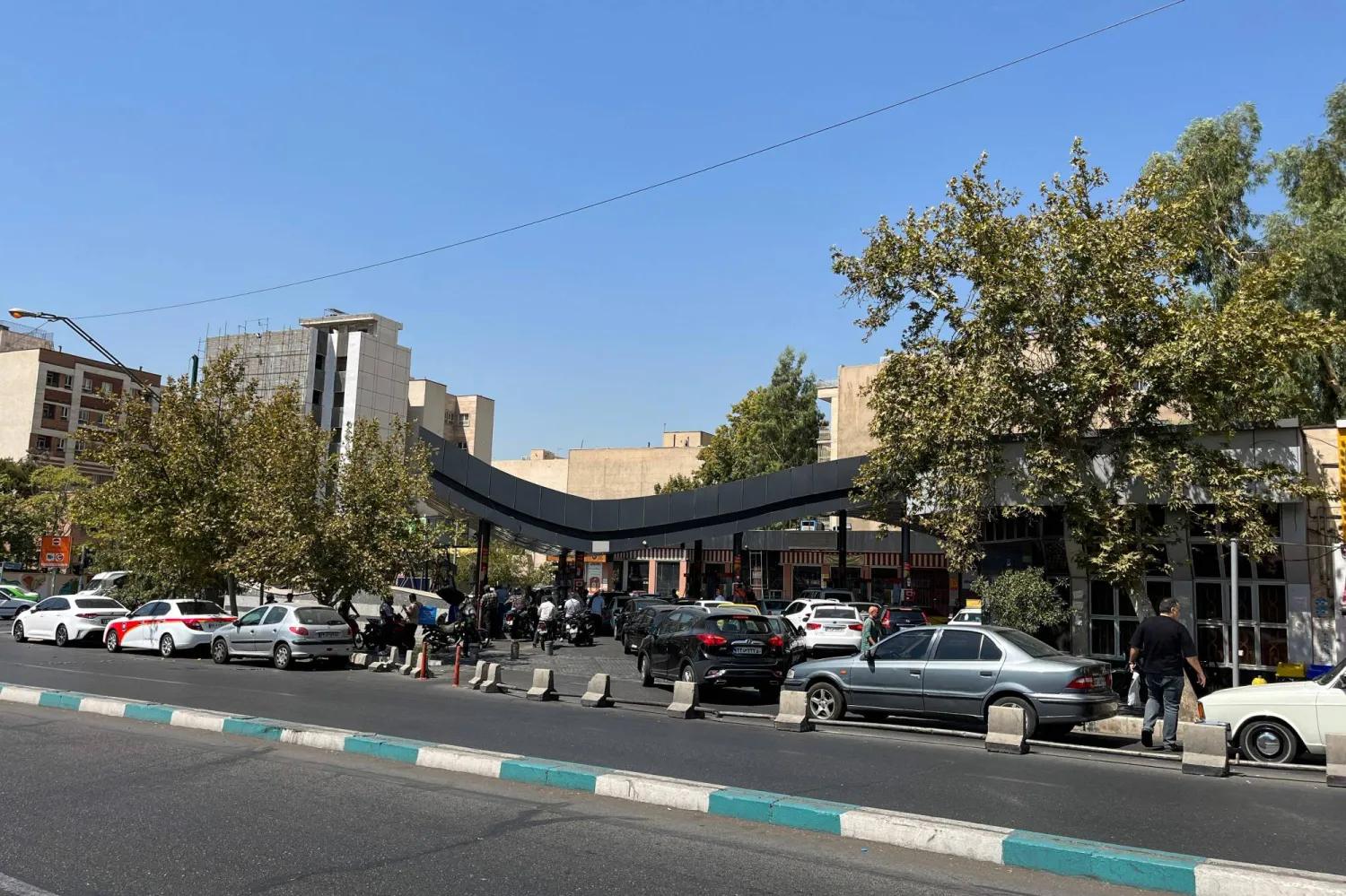
Drivers queue at a petrol station to refuel in Tehran, on August 25, 2026. (AFP)
TT

Iran Vows to Retaliate After US Widens Sanctions

Drivers queue at a petrol station to refuel in Tehran, on August 25, 2026. (AFP)

Iran promised to retaliate against expanded US sanctions that the Americans said would cut Iran's economic lifeline, with Tehran expressing confidence that major trading partners would resist Washington's pressure campaign.

US Treasury Secretary Scott Bessent unveiled the measures on Monday but stopped short of the most punishing sanctions, saying countries that continued trading with Iran risked being forced out of the dollar-based financial system.

Bessent declined to identify the countries that would be targeted or reveal when the penalties would take effect, saying he would instead give them time to comply with the new directive.

The Treasury Department did announce new sanctions on 60 individuals, entities and vessels, but the list did not feature any of the Chinese financial institutions suspected of facilitating Iran's oil trade.

Iran and the United States signed an interim deal in June aimed at ending the war that began with US and Israeli attacks on Iran, but the Islamabad memorandum, as it is known, quickly faltered.

Mediator Pakistan made "significant progress" in the latest talks with Tehran that focused on measures such ‌as prevention of further escalation ‌of the conflict and the reopening of the Strait of Hormuz, the Pakistani military said in ‌a statement ⁠on Tuesday.

"The Iranian president ⁠candidly shared his government's perspective and we had a very constructive exchange on the issues involved," Interior Minister Mohsin Naqvi, who accompanied army chief Asim Munir to Tehran, said on X.

The White House and the State Department did not immediately respond to requests for comment made outside business hours.

Iran has not yet commented on the latest talks with Pakistan.

Before news of the latest sanctions, Iran threatened both a possible military response and further reduction in oil exports from the Gulf in retaliation for any US economic measures.

After they were unveiled, Iranian Economy Minister Ali Madanizadeh said: "We are fully prepared for the US sanctions."

He told state television: "Naturally, the enemies intend to launch an economic terrorist attack on us, but we also have our own tools and know how to play the game. ⁠Our defense is no longer so defensive; the enemies should wait for an attack."

Neither China nor Russia ‌had "accepted" the US measures, he added, predicting that other countries would resist them.

Brigadier General Hossein Mohebbi, ‌a spokesperson for Iran's Revolutionary Guard Corps, vowed heavy blows to US vital interests and energy chokepoints if Iran's infrastructure is threatened, Press TV reported.

LITTLE SIGN ‌OF DIPLOMATIC SOLUTION

Struggling to resolve an unpopular war that has pushed up energy prices, the administration of President Donald Trump appears to be counting ‌on further economic pressure, even though Iran has spent decades under layers of US and international sanctions that have battered its economy but have not deterred its leadership.

Despite no major strikes by either side in weeks, the war shows little sign of reaching a diplomatic solution.

The United States is seeking new ways to end Iranian attacks on ships in the Gulf.

Just two commodity vessels transited the key energy chokepoint of the Strait ‌of Hormuz on Monday, for the lowest daily tally since early May, shipping data showed.

Before the conflict, the strait carried about a fifth of global flows of crude oil and liquefied natural gas.

Almost six ⁠months have passed since the US ⁠and Israel launched strikes on Iran. Thousands of people have died, most of them in Iran and Lebanon.

While the war has degraded much of Iran's conventional military capacity, inflicted economic pain and killed then-Supreme Leader Ali Khamenei, Iran has preserved enough missile and drone capability to attack Gulf neighbors and threaten oil tankers in the Strait of Hormuz.

The exact state of Iran's nuclear program, which the Americans and Israelis aim to wipe out, remains unknown.

Oil prices steadied on Tuesday, having fallen more than $2 a barrel a day earlier.

CHINESE OIL TRADE

Asked why he stopped short of imposing penalties on Iran and declined to identify targeted countries, Bessent responded: "Why would I want to blow up the global financial system?"

He said he wanted to give countries and companies time to sever ties. Bessent previously urged cooperation from China, the biggest buyer of Iranian oil for several years, although the US blockade of Iran's ports, renewed in mid-July, has already cut Iranian oil flows to China.

Experts say Washington is wary of Chinese retaliation for any sanctions on its banks ahead of expected talks next month between Trump and Chinese President Xi Jinping, with any curbs on China's exports of critical minerals especially sensitive.

Asked about Chinese banks on Monday, Bessent said: "We want to make clear here today that no one is above the reach of US sanctions."

The Chinese Foreign Ministry said sanctions and pressure tactics do not help and Beijing would do what was necessary to protect China's interests.



Iran President: Peace Talks Will Only Succeed Without 'Threats'

Iranian President Masoud Pezeshkian attends an expanded format meeting of the Commonwealth of Independent States (CIS) Council of Heads of State at the Avaza national tourist zone outside Turkmenbashi, Turkmenistan, 09 October 2026.  EPA/SERGEY BOBYLEV/SPUTNIK/KREMLIN POOL
Iranian President Masoud Pezeshkian attends an expanded format meeting of the Commonwealth of Independent States (CIS) Council of Heads of State at the Avaza national tourist zone outside Turkmenbashi, Turkmenistan, 09 October 2026. EPA/SERGEY BOBYLEV/SPUTNIK/KREMLIN POOL
TT

Iran President: Peace Talks Will Only Succeed Without 'Threats'

Iranian President Masoud Pezeshkian attends an expanded format meeting of the Commonwealth of Independent States (CIS) Council of Heads of State at the Avaza national tourist zone outside Turkmenbashi, Turkmenistan, 09 October 2026.  EPA/SERGEY BOBYLEV/SPUTNIK/KREMLIN POOL
Iranian President Masoud Pezeshkian attends an expanded format meeting of the Commonwealth of Independent States (CIS) Council of Heads of State at the Avaza national tourist zone outside Turkmenbashi, Turkmenistan, 09 October 2026. EPA/SERGEY BOBYLEV/SPUTNIK/KREMLIN POOL

Iranian President Masoud Pezeshkian said Friday at a regional summit in Turkmenistan that peace negotiations will only succeed without "pressure and threats,” with the months-long Middle East war locked in a stalemate.

"Dialogue holds meaning and a chance of success only when based on mutual respect and mutual commitments, and when devoid of pressure and threat," he said during his speech at the Commonwealth of Independent States (CIS) summit.

President Donald Trump ruled out Thursday attacking Iran before the US midterms on November 3, saying Washington was holding "productive discussions" with Tehran.

"I want to make it clear to everybody that, while Iran is in very bad condition, both Economically and Militarily, and while the Blockade will remain in full force and effect...we will not be attacking Iran at any time prior to the Midterm Elections," he wrote.

"We are having productive discussions with the Islamic Republic of Iran," he added.

The Atlantic magazine reported on Wednesday that the White House had asked the Pentagon to develop options to strike Iranian targets that could be used before the midterms.

The New York Times said Thursday the plans were being developed despite Trump's "ambivalence."


UN: Livestreaming US Execution Would Amount to Torture

The new Department of War logo is seen inside the Pentagon in Arlington, Virginia, US. (AFP)
TT

UN: Livestreaming US Execution Would Amount to Torture

The new Department of War logo is seen inside the Pentagon in Arlington, Virginia, US. (AFP)

A decision by US officials to livestream the execution of convicted killer Nidal Hasan would amount to torture, the UN said Friday.

US defense officials said US Army psychiatrist Hasan, who shot and killed 13 people at a military base in 2009, would face a firing squad and the execution would be broadcast live, adding that details would come later.

"The livestreaming of an execution is tantamount to a public execution and would breach the absolute prohibition of torture," the Office of the High Commissioner for Human Rights said in a message sent to AFP.

The UN body said it had made similar statements about public executions in Afghanistan and Iran, saying they "constitute a form of cruel, inhuman or degrading treatment or punishment".

Hasan's execution will be the first by the US military since 1961, and the first it has carried out by firing squad since World War II.

According to rights group Amnesty International, at least 17 public executions are known to have been carried out in 2025 -- six in Afghanistan and 11 in Iran.


Navanethem 'Navi' Pillay Wins the Nobel Peace Prize for Her Work in International Justice

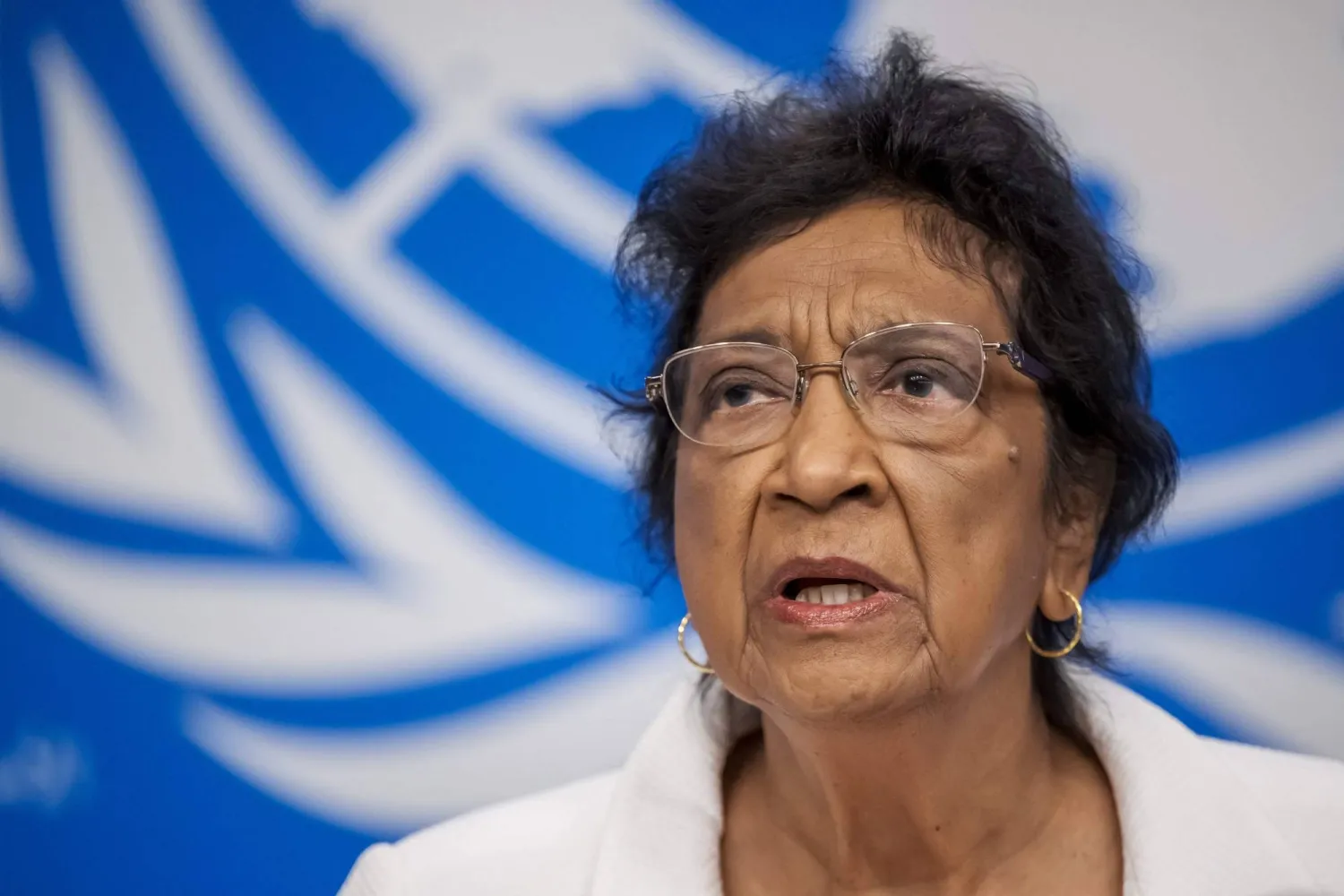
(FILES) Chair of the Independent International Commission of Inquiry on the Occupied Palestinian Territory, including East Jerusalem, and Israel, South African judge Navi Pillay, speaks during a press conference in Geneva on September 16, 2025. (Photo by Fabrice COFFRINI / AFP)
TT

Navanethem 'Navi' Pillay Wins the Nobel Peace Prize for Her Work in International Justice

(FILES) Chair of the Independent International Commission of Inquiry on the Occupied Palestinian Territory, including East Jerusalem, and Israel, South African judge Navi Pillay, speaks during a press conference in Geneva on September 16, 2025. (Photo by Fabrice COFFRINI / AFP)

Former UN human rights chief Navanethem “Navi” Pillay, a judge on the International Court of Justice, won the Nobel Peace Prize on Friday in Oslo, Norway. 

The South Africa-born Pillay, 85 years old, was recognized for her efforts to promote peace and international law, said Jørgen Watne Frydnes, Chair of the Norwegian Nobel Committee. 

Pillay’s work “is a source of hope and inspiration to all those who seek to bring about a more peaceful world,” Watne Frydnes said announcing her win. 

Watne Frydnes said the committee had not yet been able to reach Pillay to inform her she had received the peace prize, which is often considered the most prestigious honor on the planet. 

“At a time when the number of wars and conflicts is rising, and when judges and institutions of international law are under political attack, the Nobel Committee wishes to issue a reminder that the ability to resolve conflicts without force or violence is dependent on the international rule of law,” the committee wrote in a news release. 

“An international legal system in which war criminals are held to account and the victims of abuse see justice served is a precondition for a peaceful world.” 

The Norwegian Nobel Committee in Oslo received nominations for 287 candidates for this year’s prize, with just over a quarter of them organizations. Experts say the committee typically focuses on the durability of peace, the promotion of international fraternity and the quiet work of institutions that strengthen those goals. 

Last year, Venezuelan opposition leader María Corina Machado won the Nobel Peace Prize for her struggle to achieve a democratic transition in the South American nation, winning recognition as a woman “who keeps the flame of democracy burning amid a growing darkness.” 

Machado gave Trump her Nobel medal shortly after the United States ousted then-President Nicolás Maduro. But it was largely a symbolic gesture: the Nobel Committee has said the honor itself cannot be transferred. 

Nominations can be made by a select group of people and organizations, including heads of state or politicians serving at a national level, university professors, directors of foreign policy institutes, past Nobel Prize recipients and members of the Norwegian Nobel Committee itself. 

Four of this year's Nobels were announced earlier this week. The Nobel for medicine went to three scientists whose work led to a tool that uses light to help unravel how the brain works. The physics award recognized a scientist’s efforts to demystify a rare group of neutrinos. The chemistry prize recognized two scientists for untangling mysterious mirror images in molecules, a discovery that has been used to develop countless drugs. 

Canadian poet, essayist and translator Anne Carson won the literature prize Thursday for “bold and inventive” works that fuse the classical and the modern and blur the boundaries of poetry and prose. 

The Nobel Memorial Prize in Economic Sciences will be announced Monday. 

The prize money this year is 12 million Swedish kronor (about $1.2 million), whether for an individual, small group of laureates or organization. 

Peace prize marks its 125th anniversary This year marks the 125th anniversary of the peace prize, which so far has gone to 112 individuals and 28 separate institutions since its inception in 1901. The Red Cross has won three times and the U.N. refugee agency twice. 

The prize has gone unawarded on 19 occasions, most of them during the world wars. In 1948, the year Mahatma Gandhi was assassinated, no prize was awarded; he had been nominated 12 times and never won. 

In 1939, a Swedish member of parliament nominated Adolf Hitler, then withdrew the nomination, saying it was never meant seriously.