


Saudi Arabia Stresses Support for Diplomatic Solutions to Conflicts

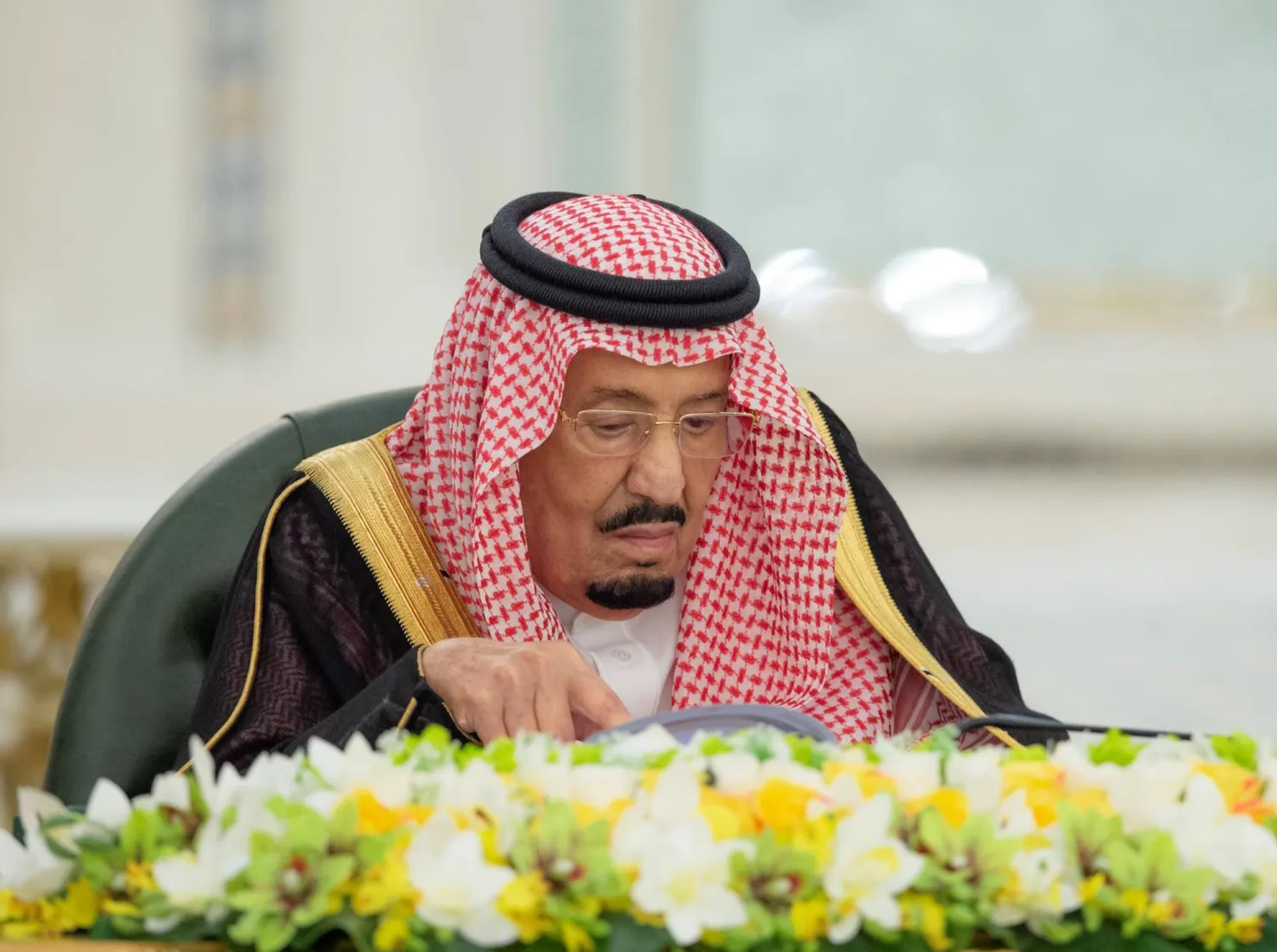
Custodian of the Two Holy Mosques King Salman bin Abdulaziz chairs a cabinet session in Jeddah (SPA)
TT

Saudi Arabia Stresses Support for Diplomatic Solutions to Conflicts

Custodian of the Two Holy Mosques King Salman bin Abdulaziz chairs a cabinet session in Jeddah (SPA)

The Saudi Cabinet stressed on Tuesday its support for comprehensive diplomatic solutions to conflicts and safeguarding the freedom of maritime navigation.

The Cabinet, which was chaired by Custodian of the Two Holy Mosques King Salman bin Abdulaziz Al Saud in Jeddah, stressed the need to keep the straits of Hormuz and Bab al-Mandab, as well as all vital waterways, open, secure, and free from any threats.

The Cabinet praised the state visit of Prince Mohammed bin Salman bin Abdulaziz Al Saud, Saudi Crown Prince and Prime Minister, to Paris, as well as his talks with French President Emmanuel Macron.

The meeting reaffirmed the strength of the longstanding relations between the two countries, their shared desire to deepen strategic cooperation across various fields, and continued coordination and consultation based on a common vision.

This vision aims to promote stability in the region and the world by safeguarding state sovereignty, respecting international law, prioritizing political and diplomatic solutions to conflicts, and addressing security threats.

The Cabinet also welcomed the outcomes of the inaugural meeting of the Saudi-French Strategic Partnership Council, co-chaired by the Crown Prince and the French president, which saw the launch of new initiatives, agreements, and memoranda of understanding in defense, healthcare, artificial intelligence and emerging technologies, as well as entertainment.

It also welcomed the results of the French-Saudi Investment Roundtable Meeting, which included the announcement of 21 agreements and memoranda of understanding, contributing to the development of the economic partnership between the two countries and opening new horizons for cooperation and joint investment amid growing bilateral ties and the wide-ranging opportunities offered by Saudi Vision 2030.

The Cabinet was briefed on discussions held in recent days between the Kingdom and several countries, including the two messages received by the Custodian of the Two Holy Mosques and the Crown Prince from President of the United Arab Emirates Sheikh Mohamed bin Zayed Al Nahyan and British Prime Minister Andy Burnham.

The Cabinet also hailed the outcomes of the third Strategic Dialogue between the Saudi and Japanese foreign ministers, which underscored the importance of further strengthening longstanding bilateral relations, expanding cooperation into broader horizons by capitalizing on economic opportunities in both countries, particularly in investment, energy, resources, supply chains, and technology, and enhancing the exchange of expertise and capabilities to advance shared priorities and objectives.



Saudi Arabia Reaffirms Rejection of Using Vital Waterways to Harm States' Interests

Prince Mohammed bin Salman bin Abdulaziz Al Saud, Crown Prince and Prime Minister, chaired the Cabinet session held Tuesday in Riyadh - SPA
TT

Saudi Arabia Reaffirms Rejection of Using Vital Waterways to Harm States' Interests

Prince Mohammed bin Salman bin Abdulaziz Al Saud, Crown Prince and Prime Minister, chaired the Cabinet session held Tuesday in Riyadh - SPA

Prince Mohammed bin Salman bin Abdulaziz Al Saud, Crown Prince and Prime Minister, chaired the Cabinet session held Tuesday in Riyadh.

At the outset of the session, the Crown Prince briefed the Cabinet on the contents of phone calls with President of the Russian Federation Vladimir Putin; Emir of the State of Qatar Sheikh Tamim bin Hamad Al Thani; and President of the Transitional Sovereignty Council of the Republic of Sudan Abdel Fattah Al-Burhan.

He also briefed the Cabinet on his meeting with United Arab Emirates Vice President, Deputy Prime Minister, and Chairman of the Presidential Court Sheikh Mansour bin Zayed Al Nahyan.

The discussions reviewed relations between the Kingdom of Saudi Arabia and these brotherly and friendly nations, as well as ways to strengthen and develop these ties across various fields. Additionally, the talks addressed regional developments and efforts to enhance security and stability at both regional and international levels.

In a statement to the SPA following the session, Minister of Media Salman Al-Dossary said that the Cabinet reviewed the outcomes of the Kingdom of Saudi Arabia's participation in the High-Level Week of the 81st session of the United Nations General Assembly.

In this context, the Cabinet praised the national efforts and the Kingdom's significant role in this global event, particularly its leadership and support for multilateral action at various levels. These efforts promote international peace and security, enhance dialogue and diplomacy, aid in addressing global crises and challenges, and strengthen responses to humanitarian needs.

The Cabinet viewed the Kingdom's financial support for the United Nations Counter-Terrorism Center's programs as an essential part of its ongoing efforts to combat terrorism in all its forms. This support underscores the importance of the center in enhancing national capacities, unifying global efforts, and strengthening international cooperation in this field.

The Cabinet noted the progress made in establishing the General Secretariat of the Makkah Joint Defense Agreement and forming its committees and working groups.

It also noted the steps taken at the meetings of the foreign ministers and chiefs of general staff of the Kingdom of Saudi Arabia, the Islamic Republic of Pakistan, and the Republic of Türkiye to advance coordination and integration among the three countries and begin translating the agreement's commitments into military cooperation that strengthens deterrence and collective defense.

The Cabinet followed developments in political issues at the regional and international levels, expressing its welcome for the statement issued by members of the United Nations Security Council (UNSC), which condemned the continued attacks by the Houthi terrorist militia against Saudi Arabia and commercial vessels, threats to the security of navigation in the Red Sea and the Bab al-Mandab Strait, and the undermining of efforts aimed at achieving peace in Yemen.

The Cabinet also stressed the importance of ensuring freedom of navigation in the Strait of Hormuz, the Bab al-Mandab Strait, the Red Sea, and the Gulf of Aden, and of restoring conditions in the Strait of Hormuz to those prevailing before February 28, while imposing no fees or restrictions.

It rejected the use of these vital waterways as a means of exerting pressure, issuing threats, or harming the interests of states, in line with international law and relevant UN resolutions.

Minister Al-Dossary said the Cabinet strongly condemned continued assaults by officials of the Israeli occupation authorities and extremist settlers on the sanctity of Al-Aqsa Mosque and its religious and historical status, as well as continued expansionist attempts to infringe upon the legitimate rights of the Palestinian people.

He also indicated that the Cabinet renewed Saudi Arabia's affirmation that a just and lasting peace can only be achieved through implementing the two-state solution and establishing an independent Palestinian state on the 1967 borders, with East Jerusalem as its capital.

The Cabinet also reviewed a number of reports on domestic affairs, commending the successive international recognition of the leadership of the “Saudi Model for Education and Training Quality” in building an integrated ecosystem of programs, tools, and measures, supported by a broad database of data and information.

This contributes to ensuring the adequacy of education outcomes, preparing national talent capable of competing globally, and fostering a culture of excellence and innovation, in line with the objectives of the Human Capability Development Program and Saudi Vision 2030.


Crown Prince, Italian Prime Minister Discuss Bilateral Ties, Maritime Security

Prince Mohammed bin Salman bin Abdulaziz Al Saud, Saudi Crown Prince and Prime Minister. SPA
TT

Crown Prince, Italian Prime Minister Discuss Bilateral Ties, Maritime Security

Prince Mohammed bin Salman bin Abdulaziz Al Saud, Saudi Crown Prince and Prime Minister. SPA

Prince Mohammed bin Salman bin Abdulaziz Al Saud, Crown Prince and Prime Minister, received a phone call on Tuesday from Italian Prime Minister Giorgia Meloni, with whom he discussed ways to enhance joint cooperation across various fields and addressed the latest developments in the region.

They also emphasized the importance of supporting efforts to ensure the security and freedom of navigation in vital waterways to bolster regional stability.


Albudaiwi: Ministerial Committees Continue Drive to Advance Joint Gulf Action

Gulf Cooperation Council (GCC) Secretary-General Jasem Albudaiwi
TT

Albudaiwi: Ministerial Committees Continue Drive to Advance Joint Gulf Action

Gulf Cooperation Council (GCC) Secretary-General Jasem Albudaiwi

Secretary-General of the Gulf Cooperation Council (GCC) Jasem Albudaiwi underscored that ministerial committees remain actively engaged in following up on milestones achieved through ministerial sessions and workshops alongside member states, building upon their outcomes to complete the execution of decisions issued by the Consultative Meeting of the Supreme Council, thereby fulfilling the aspirations of the Leaders of GCC states and bolstering the march of joint Gulf action.

​Albudaiwi's remarks were delivered during the 10th meeting of the High-Level Committee for Following up on the Implementation of Decisions of the GCC Supreme Council Consultative Meeting, convened in the presence of committee members on Tuesday at the General Secretariat headquarters in Riyadh, SPA reported.

​"The upcoming phase demands rigorous monitoring of achieved progress and intensified coordination with relevant authorities across member states to identify remaining steps and resolve potential hurdles," he stated.

He underlined the imperative of translating the outcomes of ministerial meetings and workshops into concrete practical measures, tracking their execution in accordance with designated timelines.

Concluding his statement, the GCC secretary-general commended the efforts exerted by member states, ministerial committees, and specialized working teams, praising their sustained collaboration in advancing the rollout of resolutions.

He emphasized the General Secretariat's keenness to maintain continuous follow-up and engagement, ensuring the durability of accomplishments and propelling Gulf integration pathways toward further advancement.