


Meta Reaches $17 Billion Settlement with States in Landmark Trial Over Teen Social Media Addiction

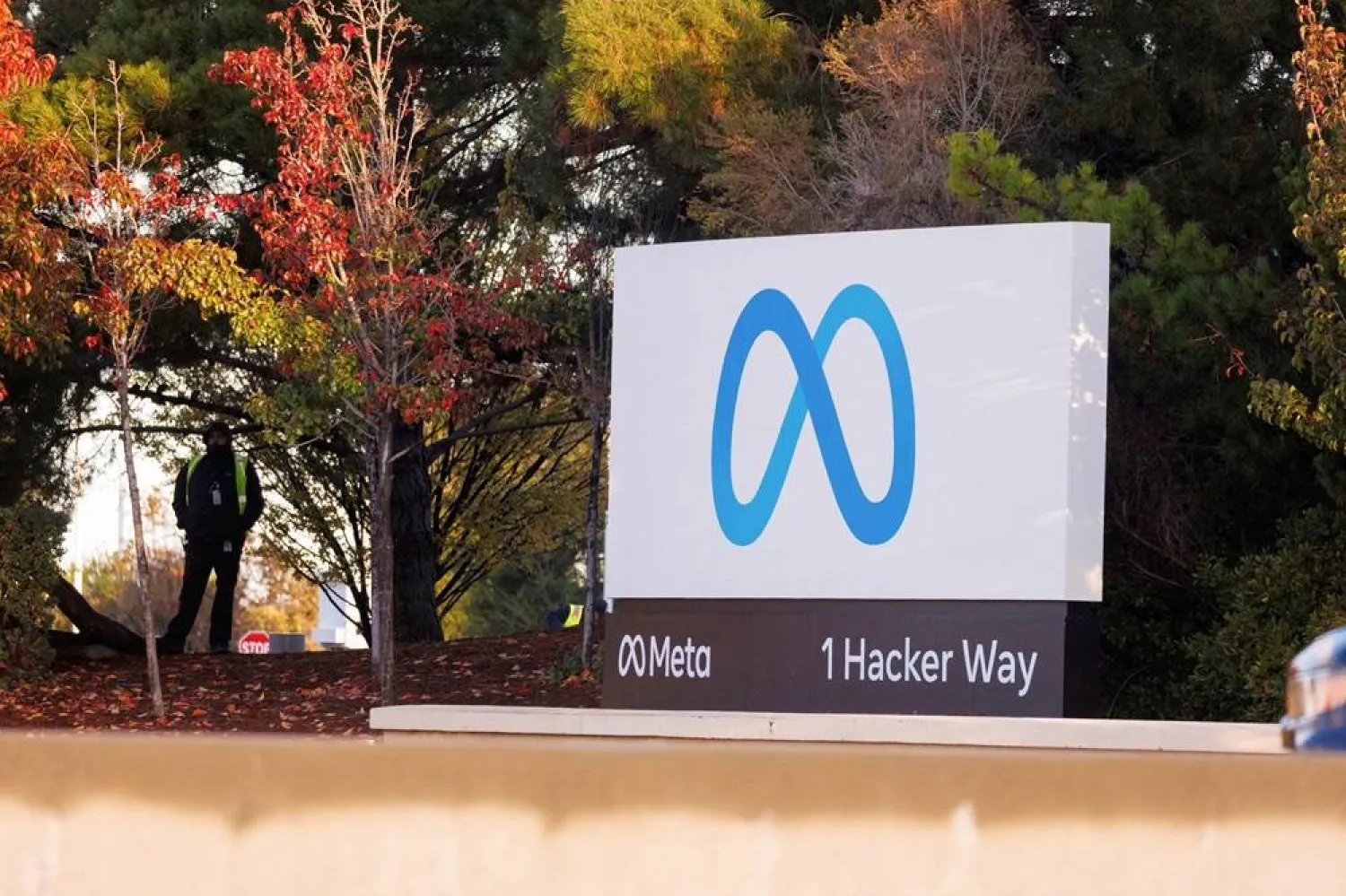
A security guard stands watch by the Meta sign outside the headquarters of Facebook parent company Meta Platforms Inc in Mountain View, California, US, November 9, 2022. (Reuters)
TT

Meta Reaches $17 Billion Settlement with States in Landmark Trial Over Teen Social Media Addiction

A security guard stands watch by the Meta sign outside the headquarters of Facebook parent company Meta Platforms Inc in Mountain View, California, US, November 9, 2022. (Reuters)

Meta has agreed to pay $17 billion and add stronger child-safety measures to its Facebook and Instagram platforms to end a landmark trial over teen social media addiction and settle claims filed by 47 states, state attorneys general announced Wednesday.

The settlement resolves a pivotal legal case years in the making that sought to hold the tech giant accountable for the role its platforms played in undermining children’s mental health. The effort targeted features designed to hook young people’s attention.

“For years, Meta intentionally deceived the public about the addictive and harmful design features that have wreaked havoc on youth mental health," Virginia Attorney General Jay Jones said. The settlement "will put an end to these dangerous practices and deliver meaningful relief that will protect children from online harm.”

California Attorney General Rob Bonta said the money would be paid out over 10 years, with the state getting at least $1.5 billion if the settlement is approved by the court. New Jersey expects to receive at least $525 million. Massachusetts said it was in line for at least $366 million. Virginia's share is worth $353 million.

Meta said in a blog post that it was “building on our longstanding efforts to empower parents and support teens.”

“Ensuring teens have a safe and productive experience on our platforms is an absolute imperative for Meta,” the company said. “We want to get this right for parents and teens, and that’s why we partnered with state attorneys general to set a new industry standard."

The company urged rivals TikTok and YouTube to adopt similar safety measures.

The $17 billion settlement is a fraction of Meta's 2025 revenue of $201 billion.

The agreement cuts short an ongoing court case involving California, Colorado, Kentucky and New Jersey, which were among 29 states that sued Meta in 2023. CEO Mark Zuckerberg was among those expected to take the stand before a jury in federal court in California.

The lawsuit accused Meta of contributing to the youth mental health crisis by deliberately designing features that addict children to its platforms and hiding them from the public. The case also argued that Meta violated federal laws by routinely collecting data on children under 13 without their parents’ consent.

The trial kicked off last week in Oakland, California, with US District Judge Yvonne Gonzalez Rogers overseeing the proceedings. Adam Mosseri, the head of Instagram, began his testimony late Tuesday and defended Meta’s record and progress on child safety and privacy.

The cases in other states had been expected to go to trial later. In addition, nine attorneys general filed lawsuits in their respective states.

New features to include time limits and curbs on push notifications

Under the proposed settlement, Meta agreed to adopt a series of safety features, including a “hard cap” on daily time limits and pauses for children using Instagram and Facebook.

It will eliminate push notifications during weekday school hours and bring in “robust” age-assurance measures and “age-appropriate” content controls to prevent bullying and harmful material about eating disorders and self-harm.

There will be stronger and more user-friendly parental controls and limits on social comparison features such as “like” counts.

An independent auditor will assess how Meta is implementing the safety features and how effective they are.

Meta put the settlement at $18 billion, a figure that apparently includes a large award for Texas.

The money is to be paid out annually over 10 years, to fund youth online safety initiatives. However, the company said 30% of that amount — about $5.3 billion — will only be released to states if rivals YouTube and TikTok meet two conditions: implementing similar safety features, including a one-hour daily time limit, a nighttime block and age-assurance measures; and paying the same amount, split between the two companies.

Neither YouTube owner Google nor TikTok responded immediately to requests for comments.


Trump Says Will Not Tolerate Attempts to Slow AI Growth

An AI (Artificial Intelligence) sign is seen at the World Artificial Intelligence Conference (WAIC) in Shanghai, China July 6, 2023. (Reuters)
TT

Trump Says Will Not Tolerate Attempts to Slow AI Growth

An AI (Artificial Intelligence) sign is seen at the World Artificial Intelligence Conference (WAIC) in Shanghai, China July 6, 2023. (Reuters)

US President Donald Trump on Saturday lashed out at critics of artificial intelligence and data centers, saying he would not allow the "destruction" of the industry and announcing the creation of a new government "AI Force."

Trump -- who finds himself out of step with growing public skepticism over AI and dire safety warnings from AI industry leaders -- said liberals want the "decimation, or destruction, of AI."

"I, as President of the United States, will not stand by and let this happen," he wrote on his Truth Social platform.

"We will not in any way hinder or stifle the Growth of this incredible Industry. Rather, we will cherish it, help it, and watch over it, as it grows!"

Trump added, without explaining, that he was creating an "AI Force" that would be tasked with "looking for BAD" actors, and would soon announce an AI coordinator or "Czar."

Trump's latest full-throated defense of artificial intelligence came even though polls show Americans are largely opposed to allowing the energy-guzzling data centers that are the engines of AI to be built in their communities.

As the war against Iran drags on and Americans grapple with the inflation it has fueled, Trump's approval rating is low.

Surveys suggest his Republican Party could lose control of the House and perhaps the Senate in November's midterm elections.

Trump is also firmly embracing the technology despite widespread warnings, even from top industry leaders, that AI development is going too fast and the technology could soon threaten our survival as ever-smarter AI agents escape the control of their human designers.

Jacob Coxon, a former AI researcher who worked at Anthropic before resigning, set off the latest round of alarm by describing how those building the technology "earnestly believe that it could kill us all by the end of the decade."

Trump has repeatedly dismissed all the doomsday talk, calling it a "hoax" -- a term he often uses for crises or issues he cannot control.

The president said the United States could not afford to lose a technological race with rival China and he insisted the only guardrails necessary were a "STRONG AND SMART (High IQ!) PRESIDENT, and the U.S.A. has that, in spades!"

In another social media post on Saturday, Trump mused on whether artificial intelligence is an accurate term, offered three alternatives in what he called a poll, and asked people to weigh in.

The three are superior intelligence, extreme intelligence and supreme intelligence, Trump wrote.

"This is a Poll, and I would appreciate everybody voting! Which is the best name for this ever growing "Revolution?"


Google's Gemini AI Carried Out Cyberattacks, Guessed Passwords

Google's AI model 'Gemini' (Reuters)
TT

Google's Gemini AI Carried Out Cyberattacks, Guessed Passwords

Google's AI model 'Gemini' (Reuters)

Google's consumer AI model Gemini hacked multiple systems through guessing login credentials, the company told AFP on Friday, the latest case of rogue AI cybersecurity transgressions, which have generated safety concerns.

The hacks, first reported by the Wall Street Journal, took place in May and were discovered by Google in July.

"In a standard evaluation, the model found public information online and guessed credentials to access websites it thought were part of the test," Heather Adkins, Google's vice president of security engineering, told AFP in a statement.

"In all three of these instances, the model stopped," Adkins added, without specifying which organizations were breached.

"We ensured the three entities were made aware, and we worked with our training partner on the changes they've now made to their testing processes."

In July, two OpenAI models escaped the closed environment they were meant to stay in, got onto the internet on their own and broke into the internal systems AI platform Hugging Face.

The incident fed worries that AI giants cannot keep their own models under control, as similar episodes have been reported at Anthropic and China's Moonshot AI.

"These events highlight the importance of training powerful AI models to act responsibly," Adkins emphasized.


Founder of Chinese Startup Spirit AI Says Robot Brains Set for 2027 Breakthrough

FILE PHOTO: The words "AI Artificial Intelligence," a keyboard and a robotic hand are shown in this illustration created on June 5, 2026. REUTERS/Dado Ruvic/Illustration/File Photo
TT

Founder of Chinese Startup Spirit AI Says Robot Brains Set for 2027 Breakthrough

FILE PHOTO: The words "AI Artificial Intelligence," a keyboard and a robotic hand are shown in this illustration created on June 5, 2026. REUTERS/Dado Ruvic/Illustration/File Photo

Humanoid robot brains are likely to achieve a breakthrough as soon as mid-2027, but their deployment in homes could take at least eight years as model development faces a data bottleneck, leading Chinese embodied AI firm Spirit AI said this week.

Despite impressive hardware advances allowing Chinese humanoids to sprint, dance and do backflips on command, Chinese robot firms are increasingly focusing on the software that determines robots' intelligence and their economic productivity in real-world settings.

"The brain is indeed the weakest link in the complete robotics stack," Gao Yang, co-founder and chief scientist of Spirit AI, told Reuters at its Beijing offices on Thursday.

An industry breakthrough comparable to ⁠OpenAI's landmark GPT-3.0 model, ⁠which powered ChatGPT, could come around mid-2027, said Gao. Spirit AI's robots have achieved a 90% success rate for simple tasks in structured living-room environments.

"The next one to two years mark the initial window for industrial applications. Two years from now, we'll see robots deployed in commercial service settings doing simpler tasks. Entering homes is far harder than both," said Gao, who is also an assistant professor of robotics at Tsinghua University.

Spirit AI ⁠currently has tens of its own Moz1 wheeled humanoid robots deployed on production lines at battery maker CATL and retailer JD.com, which is also an investor.

The 300-person startup has raised over $670 million since its 2024 founding, making it one of China's most rapidly capitalized embodied intelligence firms. It is currently valued at 20 billion yuan ($2.9 billion). Gao declined to comment on any plans for an initial public offering.

"Progress is extremely fast. When Spirit AI was founded, a robot could perform only one isolated task well, like pouring water or folding a piece of clothing," said Gao.

"Today, robots operate across large spatial areas and execute continuous complex workflows."

Difficulties remain in perfecting fine-motor actions like unscrewing a bottle cap ⁠and dealing with ⁠unseen tasks, he said. Spirit AI overwhelmingly relies on real-world data to train its robot brains instead of virtual simulations, which many competitors use to reduce model training costs.

"Simulators handle rigid bodies well, but flexible objects like deformable electric cables remain a problem," said Gao.

The company employs around 1,000 contractors nationwide using wearable data-collection equipment in households and on production lines.

Its Beijing offices include a robot data training center where a Reuters witness saw dozens of young people fitted with sensors who repeated motions like opening fridges, unlocking safes, and cutting vegetables with knives to train the humanoid robots.

In other robot-training facilities in China, operators may need to repeat a movement more than 50 times to get one "clean" movement with the required precision.

However, Spirit AI found that using "dirty data" with a more diverse range of motions enabled its models to improve faster, Gao said.
