


Once a Top Export, Prized Kashmir Carpet Fades

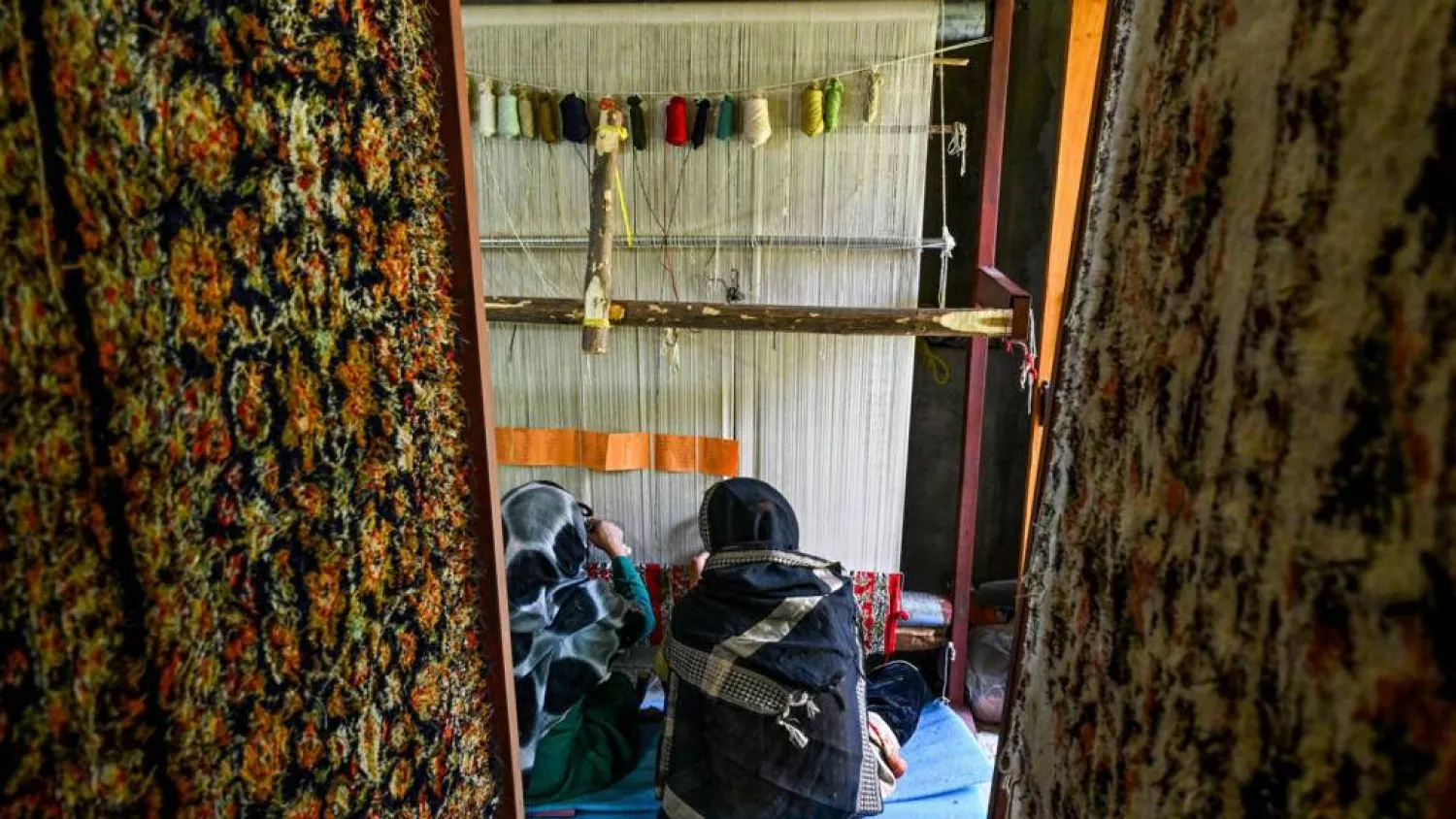
(FILES) Kashmiri craftswomen weave silk carpets at a factory in Srinagar on May 6, 2026. Tauseef MUSTAFA / AFP
TT

Once a Top Export, Prized Kashmir Carpet Fades

(FILES) Kashmiri craftswomen weave silk carpets at a factory in Srinagar on May 6, 2026. Tauseef MUSTAFA / AFP

It has survived wars and upheavals, but the famed handwoven Kashmir carpet industry is now battling a steady decline as younger generations abandon the painstaking craft.

Masterpieces woven from mulberry silk or pure sheep wool by artisans have adorned imperial courts, museums and luxury homes across the world over the centuries, said AFP.

The hand-spun yarn dyed in natural colors is woven on handlooms, packing in between 300 and several thousand knots per square inch, depending on the intricacy of the design.

Until the 1980s, carpets were Kashmir's top export, but volumes have since steadily declined, with wars in Ukraine and the Middle East the latest blows to the trade.

"It hurts me to see this," weaver Bashir Ahmad, 78, told AFP.

"If more young people had taken up this craft, they could have made a living from it."

But the long hours, low wages and changing aspirations have made the profession less attractive to younger Kashmiris.

A master weaver today earns only around 500 rupees ($5) a day, less than many unskilled laborers.

"There are no government jobs for everyone, and my child, or anyone else's child, could have taken up this work and tried to make a career out of it," said Ahmad.

"But things are no longer the same."

- Modern looms -

As they craft, artisans chant aloud the design code handwritten on a strip of paper known as talim -- shorthand of ancient symbols for numbers and colors -- knotting the threads string by string.

Depending upon the size and design of the carpet, a piece can take a group of artisans up to a year to weave. They can fetch $20,000 in the international market.

The art of fine carpet weaving was introduced in the Himalayan valley of Kashmir in the 15th century by Persian travelers, and received patronage during the reign of its last local king Zain-ul-Abidin Budshah.

The handicraft flourished in Srinagar and later spread to other towns and villages across Indian-administered Kashmir.

Despite the decline in volume of work, some weavers are determined to carry on with the beloved tradition.

"As long as I have the strength and the days ahead of me, I will continue doing this work," said Mushtaq Ahmad, 75, who has been weaving carpets for 50 years.

Industry estimates suggest the sector employs around 30,000 people, down sharply from hundreds of thousands three decades ago.

Officials say efforts are underway to modernize the sector and attract new workers.

"As part of those efforts, we are providing modern carpet looms free of cost," said Zubair Ahmad, director of the Indian Institute of Carpet Technology in Srinagar.

The government has also introduced "geographical indication" tags that help distinguish genuine Kashmiri carpets from cheap imitations.

"The idea is to ensure their authenticity because there was a trust deficit between buyers and sellers," director Ahmad said.



Japan to Survey Animal Cafes over Hygiene, Welfare Concerns

A Japanese customer at a 'cat cafe' in Tokyo. TORU YAMANAKA / AFP/File
TT

Japan to Survey Animal Cafes over Hygiene, Welfare Concerns

A Japanese customer at a 'cat cafe' in Tokyo. TORU YAMANAKA / AFP/File

Japan plans to probe popular animal cafes, where visitors can interact with anything from cats to capybaras, following concerns about hygiene and the creatures' welfare, authorities said Thursday.

Japan has hundreds of the cafes where campaigners say animals are sometimes kept in cramped spaces, and that their popularity encourages the capture and illegal trade of rare wildlife.

A fact-finding survey will begin as early as next month, starting with obtaining basic facts such as the number of establishments and what animals they keep, an environment ministry official told AFP.

The ministry will examine whether they comply with relevant laws, including whether animals have enough space and how often cleaning takes place, said the official, without wishing to be named.

"We may then do on-site inspections if we find facilities that appear to be breaching rules" stipulated by the animal welfare law, he said.

The decision to launch the survey followed recommendations by members of an expert panel about animal welfare.

Animal welfare groups have long been alarmed by the cafes, where visitors can pet and play with a dizzying array of animals including micro-pigs, hedgehogs, owls and snakes.

A 2025 survey by World Wide Fund for Nature Japan said that some kept endangered species listed on the Red List of the International Union for Conservation.

They also included species covered by the Convention on International Trade in Endangered Species, which regulates international trade in wildlife.

Some shops had inadequate hygiene management without nudging users to handwash after contact with animals, and its "microbiological testing detected pathogenic bacteria in multiple facilities", the report said.

"Whether the animals are otters, capybaras, raccoons, owls, reptiles, or other wild species, these businesses are built around close encounters that prioritize customer entertainment over the animals' needs," said Laila Imai, campaign coordinator in Asia of animal welfare group PETA.

"Many are subjected to constant handling, noise, flashing cameras, and interactions with strangers throughout the day," Imai said.

"What may appear charming to visitors can be stressful and unnatural for the animals forced to live that way."

Some animal cafes act as adoption centers, helping to find new homes for rescued cats and dogs.


Prince Harry, Wife Meghan Arrive in the UK as They Make a Fresh Start in Britain

Britain’s Prince Harry and his wife, Meghan. (AP)
TT

Prince Harry, Wife Meghan Arrive in the UK as They Make a Fresh Start in Britain

Britain’s Prince Harry and his wife, Meghan. (AP)

Prince Harry and his wife Meghan arrived in the United Kingdom on Wednesday, as they make a fresh start in Britain after six years in the United States, UK media reported.

The news comes less than a week after the couple surprised fans and critics alike with plans to return to Britain. The return was reported by media outlets including the BBC and Sky News, with the Daily Telegraph reporting their plane landed at Birmingham International Airport around noon.

Flight tracking websites showed a private charter flight from Van Nuys, California, arrived at the airport at 11:56 a.m.

The couple’s children, Prince Archie, 7, and Princess Lilibet, 5, have already enrolled at British schools and will start classes in September. The family plans to live at a private, nonroyal residence outside of London, but haven’t said exactly where that will be.

Harry and Meghan gave up their royal duties and moved to California more than six years ago to earn their living through lucrative contracts with Netflix and Spotify.

Relations with the rest of the royal family quickly soured as the couple said palace staff had been insensitive to Meghan’s mental health and leveled charges of racism and media manipulation at members of the royal family.

Harry recently expressed an interest in reconciliation so he could spend more time with his father, King Charles III, who is being treated for an undisclosed form of cancer. But relations with his brother, Prince William, who is heir to the throne, remain tense.


Social Media Use on the Rise Among Australian Under-16s After Ban

The TikTok logo is displayed on signage outside TikTok social media app company offices in Culver City, California on September 30, 2025. (AFP)
TT

Social Media Use on the Rise Among Australian Under-16s After Ban

The TikTok logo is displayed on signage outside TikTok social media app company offices in Culver City, California on September 30, 2025. (AFP)

Australian under-16s are increasing their use of social media apps, such as Instagram and TikTok, despite a world-leading ban, data provided by a parental control software company showed Wednesday.

Australia implemented legislation barring children from social media platforms in December, with the UK, France and others following suit.

Youngsters' use of social media fell across the board when the legal restrictions were first implemented, data from parental control app Qustodio showed.

But since then their social media activity has climbed -- even approaching pre-ban levels for some apps.

The use of apps TikTok, Instagram and Snapchat among 10–12-year-olds and 13- to 15-year-olds was on the rise, data from parental control app Qustodio showed.

In the case of video-sharing site TikTok, 25.9 percent of 13-15 year-olds are still using the app -- just over a percentage point lower than before the ban came into force.

And use among 10–12-year-olds was just 0.06 percentage points below where it was before the ban.

"They could be accessing these platforms with VPNs, or obfuscating their ages," Yasmin London, Global Online Safety Expert for Qustodio, said.

"But it could really be as simple as they're just accessing these apps because the restrictions aren't working."

The data also showed children increasingly turning to messaging platform WhatsApp, which is not affected by the ban.

Qustodio said the data was gathered by analyzing anonymized monthly social media app usage among Australian children and showed the percentages of kids that had used the app for more than five consecutive minutes at least once in a given month.

Australian officials have said the ban is designed to protect children from online bullying and "predatory algorithms".

A team of Australia-based researchers in a peer-reviewed study published in June found little evidence to suggest teenagers have turned away from social media as a consequence, however.

New Zealand's government also this week said it would introduce legislation that could see firms like Meta fined up to 10 percent of their global revenue if they fail to comply.