Saudi FM: Islamic Cooperation, Solidarity Now ‘Urgent Need’

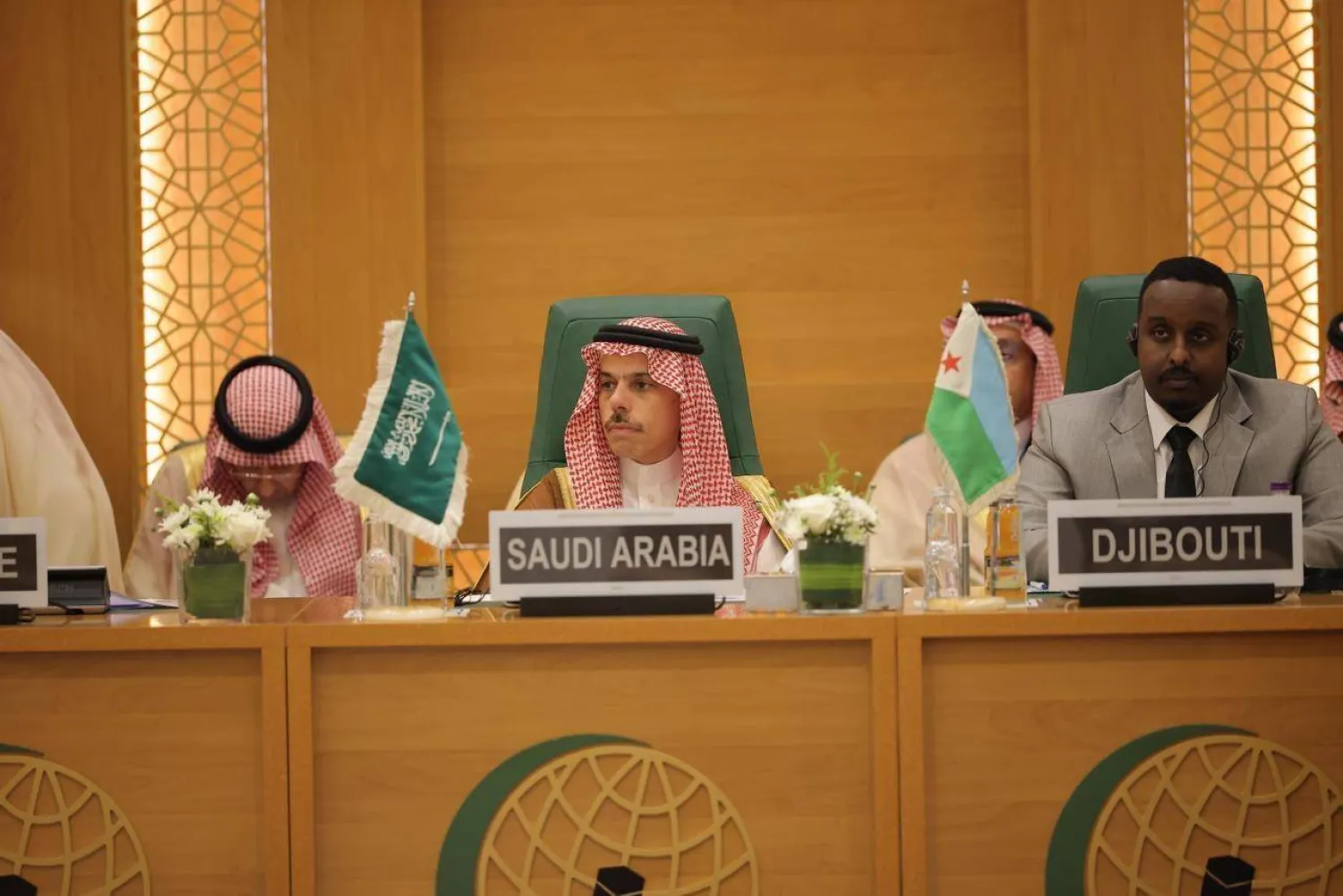
Prince Faisal bin Farhan attends the extraordinary Council of Foreign Ministers meeting in Jeddah on Thursday (Organization of Islamic Cooperation)
TT

Saudi FM: Islamic Cooperation, Solidarity Now ‘Urgent Need’

Prince Faisal bin Farhan attends the extraordinary Council of Foreign Ministers meeting in Jeddah on Thursday (Organization of Islamic Cooperation)

Saudi Foreign Minister Prince Faisal bin Farhan said the region’s volatile conditions and multiple crises, coupled with the political, security, economic, social and humanitarian challenges facing the Islamic world, had made cooperation and solidarity an urgent necessity.

He spoke at an extraordinary meeting of the Council of Foreign Ministers of the Organization of Islamic Cooperation in Jeddah, western Saudi Arabia, on Thursday.

The meeting, focused on the Palestinian cause, elected Mauritanian diplomat Ismail Ould Cheikh Ahmed as secretary-general of the 57-member organization, succeeding Chad’s Hissein Brahim Taha.

Saudi Arabia renewed its strongest condemnation of a new plan by the Israeli occupation authorities to build settlement units under the E1 project.

It warned that the plan would not merely add new units but isolate East Jerusalem from its Palestinian surroundings, directly threatening the prospect of a viable, independent Palestinian state.

Prince Faisal said the E1 project formed part of a broader policy to impose settlement realities and carry out gradual annexation on the ground.

He reaffirmed the kingdom’s longstanding position on the Palestinian issue, its support for the Palestinian people’s right to establish an independent state under the two-state solution and their right to a just, comprehensive and lasting peace in the region.

Riyadh also condemned repeated incursions into Al-Aqsa Mosque by Israeli officials and settlers under the protection of Israeli forces.

It categorically rejected any attempt to impose a temporal or spatial division of the mosque or alter its Islamic character and identity, and stressed the need for humanitarian and food aid to reach the Gaza Strip without obstruction.

Serious Reform

Alongside Saudi Arabia’s position on Palestine, Prince Faisal set out the kingdom’s vision for the organization’s future as its leadership changes hands.

The kingdom believes the next phase requires serious reform of the organization to strengthen its ability to implement its resolutions, improve the efficiency of its institutions, and give joint Islamic action more effective tools, he said.

No country can confront these interconnected challenges alone. This makes it imperative to strengthen collective action and unify positions and efforts to safeguard the interests of states and peoples, the Saudi minister added.

According to him, the Islamic world, with its demographic, political, economic and civilizational weight, possesses the capabilities to become an effective participant in shaping international balances.

Prince Faisal said the OIC’s strength depended on solidarity among its member states, unity in their positions and their ability to turn shared principles and interests into “effective collective action”.

He reaffirmed Saudi Arabia’s continued support for every effort to strengthen the organization’s role and standing and advance the causes of the Islamic world and its peoples’ aspirations for security, stability, prosperity and peace.

The Saudi foreign minister said his country hoped Ould Cheikh Ahmed would succeed in “advancing the organization and enhancing its role”. He also praised the efforts of outgoing Secretary-General Hissein Brahim Taha and his staff.

Stronger Influence

In his first address after his election, Ould Cheikh Ahmed outlined his vision for the next phase, saying he accepted the mandate “with a profound awareness of the magnitude of the responsibility and the weight of the trust placed upon me”.

He invoked the hopes of nearly 2 billion Muslim men and women seeking an organization with a stronger presence, greater influence and a greater capacity to serve their causes.

The secretary-general-elect said the organization’s influence would depend on how effectively its member states harnessed their collective weight. They span four continents, possess vast human, natural and economic resources, and have predominantly young populations, he said.

Ould Cheikh Ahmed put the member states’ combined gross domestic product at nearly $30 trillion. He said those resources gave the organization both a major responsibility and a historic opportunity to strengthen its role and influence.

“The challenge lies in making effective use” of those assets, Ould Cheikh Ahmed said, as global power balances shift, technological change accelerates, artificial intelligence and the digital economy exert growing influence, and the multilateral system faces mounting challenges.

He said he approached the future “not with apprehension, but with hope and optimism”.

The new secretary-general placed Palestine at the top of the organization’s priorities, stressing that it would remain “the central cause” in its political, humanitarian and civilizational dimensions.

He said defending the legitimate rights of the Palestinian people — foremost among them establishing an independent state with East Jerusalem as its capital and protecting the sanctity of Al-Quds Al-Sharif — would remain an unwavering commitment.

Ould Cheikh Ahmed also pledged to strengthen the organization’s efforts to combat Islamophobia and hate speech, promote dialogue and mutual respect, and build broader partnerships with the international community.

Critical Juncture

Taha said the meeting was taking place at “an extremely delicate and sensitive juncture to elect a new secretary-general and discuss our central cause: Palestine and Al-Quds Al-Sharif”.

He said the past five years had brought achievements in political, economic, cultural and scientific cooperation.

Taha, whose term officially ends in November, thanked Saudi Arabia in particular for its unlimited support for the organization and its contributions to strengthening joint Islamic action. He also expressed his “full readiness to extend a helping hand” to his successor.

As the organization’s leadership passes from Taha to Ould Cheikh Ahmed, Palestine and Jerusalem remained at the center of the political messages from the Jeddah meeting. Speakers rejected Israeli policies and measures, reaffirmed their commitment to an independent Palestinian state and said the Palestinian issue would remain at the forefront of the organization’s work.

Ould Cheikh Ahmed will arrive in Jeddah, home to the OIC General Secretariat, with more than three decades of experience in United Nations work and crisis zones.

The OIC charter sets the secretary-general’s term at five years, renewable only once. The Council of Foreign Ministers elects the officeholder according to the principles of equitable geographical distribution, rotation and equal opportunity, while taking competence, integrity and experience into account.

The charter sets no fixed order for the transfer of the post among the Arab, African and Asian groups. Instead, it bases the selection on rotation and equitable geographical distribution.

In February, the African Union formally endorsed Ould Cheikh Ahmed’s candidacy for the 2027-2032 term, listing Mauritania as part of North Africa.

The charter does not limit the secretary-general’s role to diplomatic representation. It tasks the officeholder with following up on resolutions adopted by Islamic summits and the Council of Foreign Ministers, coordinating the work of the organization’s bodies and raising issues that could advance or obstruct its objectives.


Saudi Arabia and 17 Arab, Islamic Countries Condemn Israeli Strike on Nasser Medical Complex in Gaza

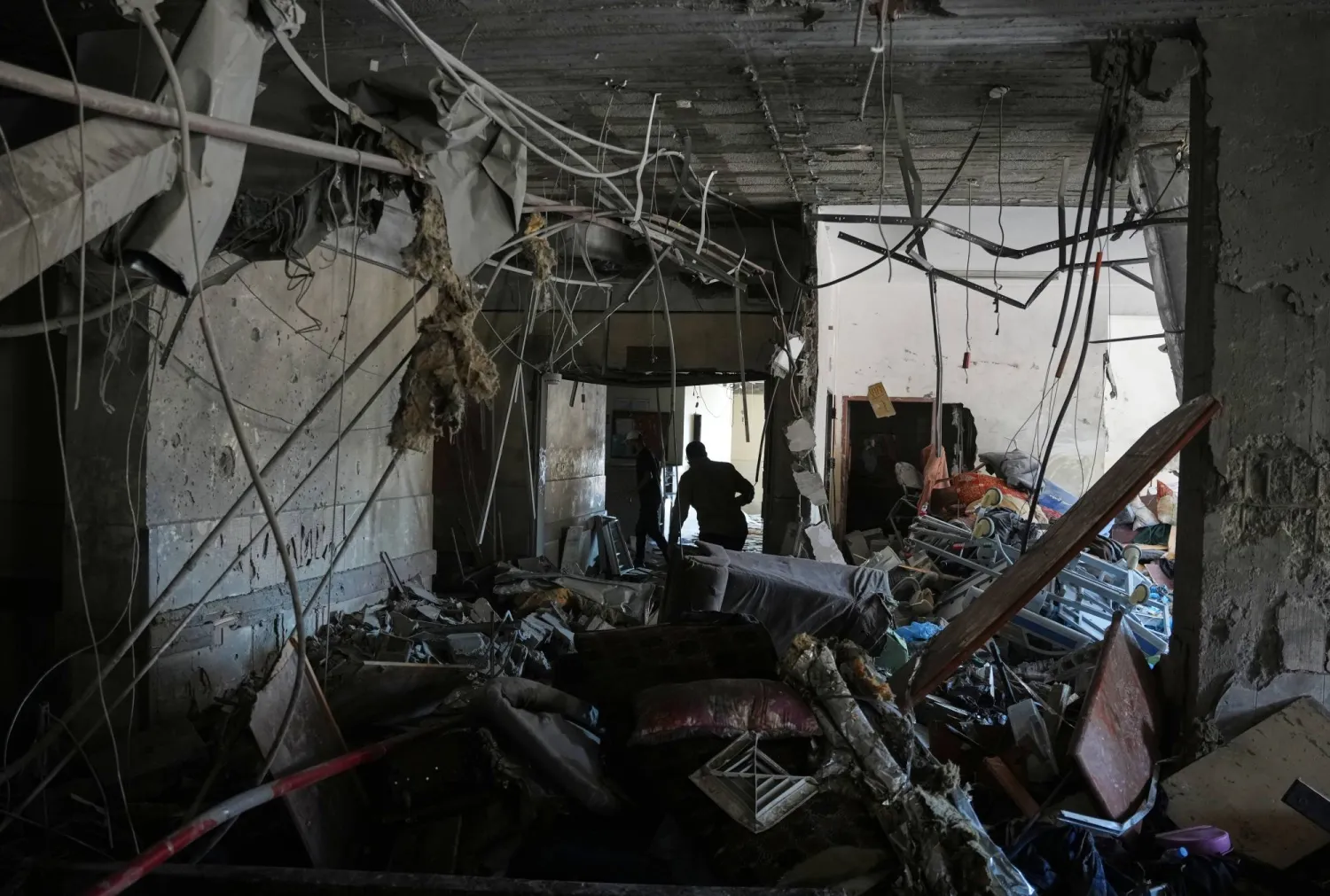
 People inspect damage to Nasser Hospital after it was hit by an Israeli airstrike overnight in Khan Younis, Gaza Strip, Thursday, Nov. 12, 2026. (AP)
People inspect damage to Nasser Hospital after it was hit by an Israeli airstrike overnight in Khan Younis, Gaza Strip, Thursday, Nov. 12, 2026. (AP)
TT

Saudi Arabia and 17 Arab, Islamic Countries Condemn Israeli Strike on Nasser Medical Complex in Gaza

 People inspect damage to Nasser Hospital after it was hit by an Israeli airstrike overnight in Khan Younis, Gaza Strip, Thursday, Nov. 12, 2026. (AP)
People inspect damage to Nasser Hospital after it was hit by an Israeli airstrike overnight in Khan Younis, Gaza Strip, Thursday, Nov. 12, 2026. (AP)

Saudi Arabia and 17 Arab and Islamic countries strongly condemned on Saturday the Israeli on the Nasser Medical Complex in Khan Younis earlier this week.

The foreign ministers of Saudi Arabia, Egypt, Sudan, Libya, Palestine, Djibouti, Somalia, Oman, Mauritania, Jordan, Qatar, Kuwait, the United Arab Emirates, Türkiye, Pakistan, Indonesia, Lebanon, and Algeria slammed the attack “as a violation of international humanitarian law, which affords special protection to medical facilities and healthcare workers.”

In a statement, they also condemned “continued Israeli attacks on Palestinian civilians, including strikes on tents and other sites sheltering displaced persons.”

“These attacks undermine the ceasefire and efforts to restore security and stability in Gaza and are inconsistent with President Trump’s Comprehensive Plan,” they added.

An Israeli airstrike hit one of the main hospitals still operating in the Gaza Strip on Thursday, killing six people and wounding 28 others.

The Israeli military said the strike on Nasser Hospital in southern Gaza targeted an unidentified Hamas commander and other fighters, without providing evidence.

The FMs expressed on Saturday “grave concern that continued Israeli restrictions on humanitarian aid, shelter materials, including tents, caravans and mobile homes, as well as medical supplies are deepening Gaza's humanitarian catastrophe as winter approaches.”

“Inadequate shelter and deteriorating water, sanitation and healthcare services put civilian lives at grave risk, particularly those of children and infants, who could once again die from exposure to freezing temperatures,” they warned.

The FMs called on Israel “to heed appeals from the international community and the Board of Peace, for increased aid and to fulfil immediately and in full its obligations under the Sharm El-Sheikh Agreement, President Trump's Comprehensive Plan and United Nations Security Council Resolution 2803.”

“Israel must uphold the ceasefire, protect civilians and medical facilities, and ensure the safe, sustained and unimpeded delivery of humanitarian aid in sufficient quantities, including shelter and early recovery supplies and equipment to restore essential infrastructure,” they demanded.

“It must also allow UN agencies and humanitarian organizations to carry out their mandates without obstruction,” they said.

“These first-phase commitments were due to take effect upon signature. Israel must implement them without further delay or additional conditions, including political and security conditions, that impede humanitarian access,” they continued.

“Urgent humanitarian assistance must proceed independently of progress on subsequent phases. The ministers called on the United States and the Board of Peace, within their respective roles, to intensify their efforts to ensure Israel's full implementation of these commitments and the lifting of all restrictions on the entry of humanitarian aid, thereby preserving the credibility of the agreements and consolidating the ceasefire,” they stressed.

The ministers reaffirmed their determination “to work with regional and international partners to consolidate the ceasefire, implement all phases of the Plan and scale up humanitarian assistance to alleviate the suffering of the brotherly Palestinian people.”


Coalition Destroys 2 Houthi Drones Fired at Riyadh, Southern Regions

Saudi air defenses. (Saudi Ministry of Defense)
TT

Coalition Destroys 2 Houthi Drones Fired at Riyadh, Southern Regions

Saudi air defenses. (Saudi Ministry of Defense)

The Coalition to Restore Legitimacy in Yemen announced on Saturday the interception and destruction of two drones in the Riyadh and Southern Regions launched by the terrorist Houthi militia toward Saudi Arabia.

In Yemen, the army announced that it had carried out 723 strikes and targeting operations "hitting Houthi militia sites, gatherings, fortifications, firing positions, vehicles, and combat equipment."

According to an army statement, the operations included "37 airstrikes by warplanes, 56 targeting operations by drones, 89 by rocket launchers, and 541 by field artillery."

Internationally, the United Nations Security Council condemned earlier this week the Houthi attacks on Saudi Arabia and their threats to commercial vessels in the Bab al-Mandeb Strait and the Red Sea, affirming the Kingdom's right to self-defense.

The Council unanimously adopted Resolution 2837, which calls for an immediate halt to the attacks, intensified efforts to combat weapons smuggling to the group, and stricter oversight on its access to drone and ballistic missile components, alongside tasking the Panel of Experts with tracking the group's funding sources and revenues.

The Gulf Cooperation Council welcomed the resolution, calling for it to be translated into a concrete commitment that protects civilians, facilities, and the safety of international navigation.


Türkiye, Qatar Sign Mutual Defense Agreement

Turkish President Recep Tayyip Erdogan meets with Qatar's Emir Sheikh Tamim bin Hamad Al Thani in Istanbul, Türkiye, November 13, 2026. (Murat Cetinmuhurdar/Turkish Presidential Press Office/Handout via Reuters)
TT

Türkiye, Qatar Sign Mutual Defense Agreement

Turkish President Recep Tayyip Erdogan meets with Qatar's Emir Sheikh Tamim bin Hamad Al Thani in Istanbul, Türkiye, November 13, 2026. (Murat Cetinmuhurdar/Turkish Presidential Press Office/Handout via Reuters)

Türkiye and Qatar announced on Friday that they signed a mutual defense agreement, which they said was aimed at adopting a "unified position" in the face of an external attack.

The announcement came after Turkish President Recep Tayyip Erdogan met Qatari Emir Sheikh Tamim bin Hamad Al Thani in Istanbul.

Erdogan had said the agreement would further strengthen ties between them, according to his office.

Qatar's ruler travelled to Istanbul after attending the United Nations COP31 climate summit in southern Türkiye.

"The two parties hailed the signing of the mutual defense agreement between Qatar and Türkiye," according to a joint statement carried by Qatar's state news agency.

The agreement was "aimed at bolstering collective defense and achieving regional security and stability, as well as adopting a unified position in the face of any external armed attack targeting either or both parties", the statement said.

"The two parties agreed to hold consultations on threats to their security... and to strengthen cooperation through joint military exercises, collaboration in the field of defense industries, and the exchange of personnel training."

Erdogan's office had earlier announced the agreement, without going into the details of its contents.

"A mutual defense agreement signed by Türkiye and Qatar today will add a new dimension to the brotherly ties between the two countries," Erdogan said during the meeting, according to the statement from his office.

Erdogan also said Türkiye and Qatar would expand cooperation in the defense industry.