


Syria President Appoints Kurdish Leader Mazloum Abdi as His Adviser

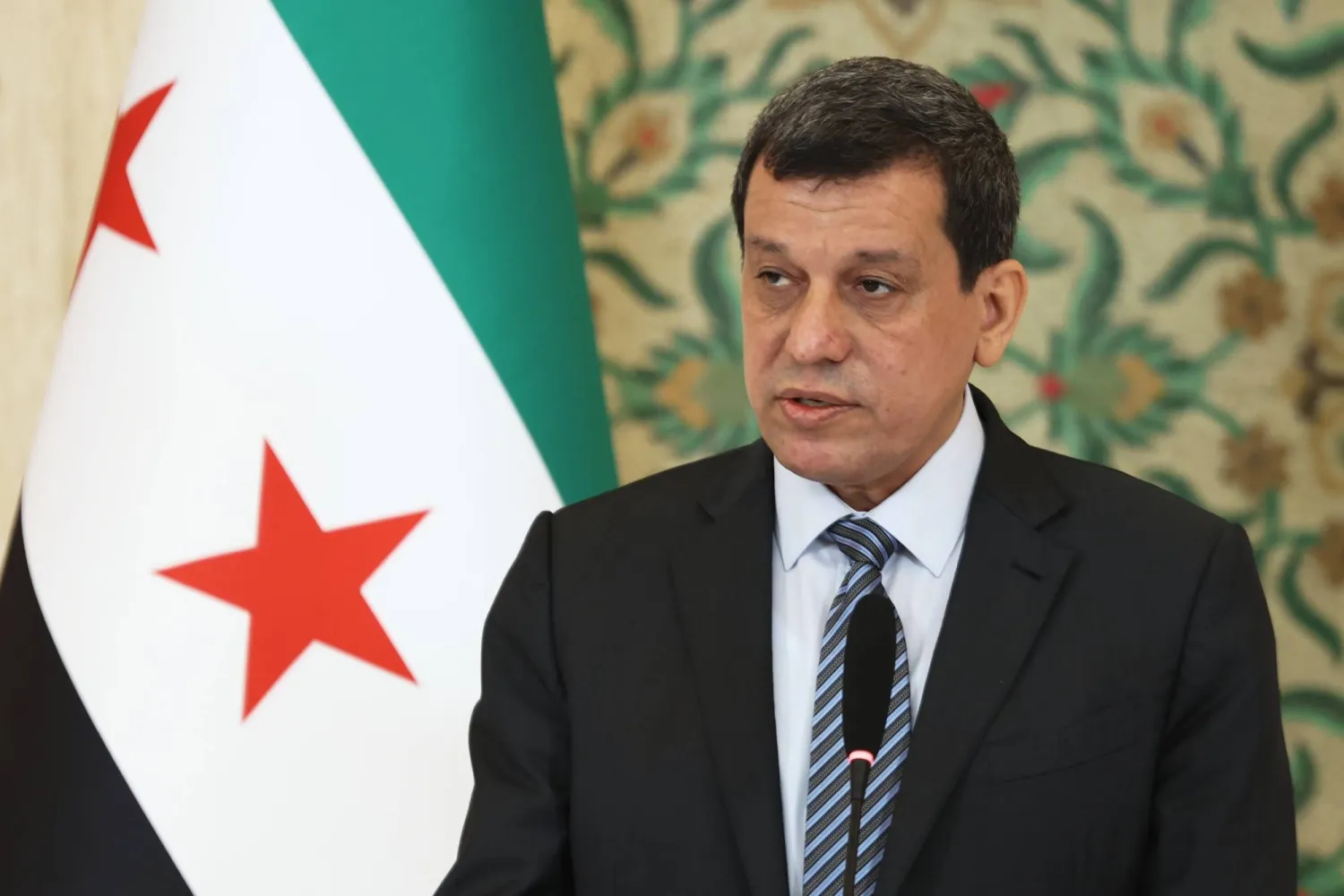
The commander of the Kurdish-led Syrian Democratic Forces Mazloum Abdi speaks during a news conference at the presidential palace in Damascus, Tuesday, Aug. 25, 2026. (AP)
TT

Syria President Appoints Kurdish Leader Mazloum Abdi as His Adviser

The commander of the Kurdish-led Syrian Democratic Forces Mazloum Abdi speaks during a news conference at the presidential palace in Damascus, Tuesday, Aug. 25, 2026. (AP)

Syrian President Ahmed al-Sharaa appointed Kurdish leader Mazloum Abdi as a presidential adviser, state media said on Friday, days after Abdi announced the dissolution of his Kurdish forces under an integration deal with Damascus.

"Mustafa Khalil Abdi is appointed as adviser to the presidency of the republic," announced the decree, signed by Sharaa and published by state news agency SANA.

Abdi, who has been known by several different names, was for years the leader of the Kurdish-led Syrian Democratic Forces (SDF), the Washington-backed group at the forefront of the battle against the ISIS group.

On Tuesday, he announced the SDF's dissolution, part of a deal he made with Sharaa in January to integrate the Kurds' forces and civilian administration into the state.

Syria's new authorities who toppled longtime ruler Bashar al-Assad in December 2024 have been seeking to extend state control across the whole country.

The integration deal was a major victory for Sharaa, but an end to long-held Kurdish hopes for autonomy.

US special envoy to Syria Tom Barrack said on Tuesday that "this is what real integration looks like... former counterparts with differing points of view crafting a diplomatic solution to strengthen the sovereign nation of Syria".

"Securing substantive roles for our valued partners" including Abdi within the government "pays due respect to their leadership, the sacrifices of our Kurdish partners, and the constructive contribution they have made to regional stability", Barrack added, without indicating what role Abdi was to have.

Abdi said Tuesday that the SDF's dissolution followed "the completion of the process of integrating our forces into the brigades of the Syrian army".

The SDF was formed in 2015 at the instigation of the United States, which was impressed by the Kurdish fighters who had defeated ISIS in Kobane in the north and was seeking a reliable partner in the ongoing battle against the extremists.

It was the de facto army of the semi-autonomous administration which the Kurds set up in north and northeast Syria after seizing territory battling ISIS during Syria's civil war.

But Abdi signed up to the integration deal following clashes this January that saw the Kurds lose swathes of territory to government troops, and as the Kurds' longtime backer Washington drew close to the new authorities in Damascus.

During the violence, Sharaa signed a decree enshrining the Kurds' national rights and recognizing Kurdish as a national language -- an unprecedented step since Syria's independence in 1946.

Last week, Abdi announced that the integration of the Kurdish administration with the Syrian state was complete, adding: "Our struggle will continue, to cement our people's rights in the constitution."

From joining the Kurdistan Workers' Party (PKK) in 1990 through to announcing the dissolution of the SDF, Abdi has amassed significant influence among Syria's Kurds.

Born in northern Syria's Kobane area near the Turkish border in 1967, Abdi was for years seen in fatigues -- a modest, mildly spoken but savvy military leader, more comfortable in his native Kurdish than Arabic.

Nanar Hawach, Syria analyst at the International Crisis Group, said Abdi was among "PKK veterans" who established the People's Protection Units, or YPG, in Syria, in an announcement that came after the civil war erupted in 2011.

The PKK, considered a "terrorist" group by Türkiye and its Western allies, waged a deadly insurgency against Ankara for decades before last year formally renouncing its armed struggle.

Abdi rose to prominence in Syria during the battle for Kobane, now symbolic for the Kurds after their 2015 victory there over ISIS following months of fierce battles.

During the civil war, Abdi maintained a careful balancing act between various sides including Washington, an ally of Türkiye, which launched cross-border offensives targeting Syrian Kurdish fighters it views as PKK offshoots.

Abdi also held cautious ties with the Assad government, which accused the Kurds of "separatism", and with its ally Russia.

After Assad's ouster, Abdi showed openness to the new authorities and started negotiations as the balance of power shifted and as Western powers including Washington moved to support Sharaa.

Abdi, who studied engineering in Aleppo, was reportedly close to the PKK's now-jailed founder Abdullah Ocalan and took part in clashes inside Türkiye, leading to his arrest in Syria under Hafez al-Assad in the 1990s.

Abdi has said he later went to Europe then to Iraq, where the PKK long had its rear base in the country's north.

He was identified in the presidential decree as Mustafa Khalil Abdi, and has been known by other names including Ferhat Abdi Sahin and Mazloum Kobane.

He is on Türkiye’s list of "wanted terrorists" with a bounty on his head and an Interpol red notice out for him.



Syria Sentences to Death Former Regime Informant as Moscow Says Took in Assad on Humanitarian Grounds

The fourth Criminal Court of the transitional justice in Damascus sentences former regime informant Abdel Nasser Buraqi to death. (SANA)
TT

Syria Sentences to Death Former Regime Informant as Moscow Says Took in Assad on Humanitarian Grounds

The fourth Criminal Court of the transitional justice in Damascus sentences former regime informant Abdel Nasser Buraqi to death. (SANA)

The fourth Criminal Court of the transitional justice in Damascus issued on Thursday a death sentence against former regime informant Abdel Nasser Buraqi after convicting him of grave crimes during the rule of ousted President Bashar al-Assad.

The accusations include forced disappearance, denial of freedom, participation in murder, torture leading to death, theft and criminal defamation.

Lawyer Radif Mustafa, Director of the Accountability and Justice Department at the National Commission for Transitional Justice, told the state news agency SANA that the court relied on international law to characterize the offenses as war crimes and crimes against humanity, in line with the Constitutional Declaration, to determine the nature, gravity, and causes of the crimes. Meanwhile, the court based its sentencing on the provisions of Syrian national law

Mustafa said the court decided to merge the sentences and apply the harshest penalty, which is execution.

It upheld the provisional seizure of the convict's assets, converting it into an executive seizure, and denied him any discretionary mitigating circumstances due to the massive scale and gravity of the committed crimes, he said in a post on Facebook.

He added that the ruling was a "the first judicial precedent in Syria's history."

"While informants were protected during the era of the ousted regime, they are now facing justice. This is the group that harmed people the most," he stressed.

Meanwhile, internal security forces in Latakia announced the arrest of Major Generals Haitham Barakat and Marwan Barakat, both officers from the ousted regime, during an operation in the city of Qardaha.

This operation follows several similar ones across various governorates. Security forces in Daraa announced on August 15 the arrest of Musab Abu Rukba, a former regime lieutenant colonel in the Raqqa Political Security branch.

The forces said the arrests are part of counter-terrorism efforts aimed at strengthening security and stability.

Separately, Russian Foreign Ministry spokeswoman Maria Zakharova said Russia granted Assad asylum on humanitarian grounds, not political ones.

Speaking at a press conference during which she was asked whether Moscow would turn him over to the new Syrian authorities, she replied: "There were and are no political grounds behind his stay in our country. The decision was made solely on humanitarian grounds: the dramatic circumstances of the change of power in Syria meant that he and his family faced death."

The authorities in Syria sentenced Assad to death in absentia earlier in August.


Reports Accuse Netanyahu of Holding Secret Talks with Hamas in 2014

Israeli Prime Minister Benjamin Netanyahu (dpa)  
TT

Reports Accuse Netanyahu of Holding Secret Talks with Hamas in 2014

Israeli Prime Minister Benjamin Netanyahu (dpa)  

Israeli Prime Minister Benjamin Netanyahu held direct contact and negotiations with Hamas behind the security establishment's back in 2014, reports in Tel Aviv said on Thursday, inciting upheaval in the Israeli political arena.

The Prime Minister’s Office denied Thursday’s reports, describing it as a “powerful blow” to the PM and his Likud party in the run-up to Israel's elections scheduled for late October.

The reports from the Walla news site and Maariv newspaper said Netanyahu maintained a secret, direct channel of communication with Hamas during Operation Protective Edge in 2014 without informing senior Israeli security officials.

Operation Protective Edge began in July 2014 following a limited exchange of rocket fire between Hamas and Israeli forces in Gaza. The war was preceded by a critical flashpoint when a settler kidnapped and murdered Mohammed Abu Khdeir, a 16-year-old Palestinian boy.

In the 50-day war, more than 2,251 Palestinians were killed, mostly civilians. Israel put the number of its dead at 69 soldiers and five civilians. Israeli air strikes and shelling hammered the densely populated Gaza Strip, dominated by Hamas, causing widespread destruction of thousands of homes and schools.

At the time, official negotiations were underway in Cairo to end the monthlong war, the reports said, adding that the Cairo delegation was unaware of Netanyahu’s backchannel talks.

During official talks in the Egyptian capital, the PM was put in contact with Hamas official Ghazi Hamad by Shlomi Fogel, an Israeli businessman who leads major companies in the maritime, real estate, cement, and construction sectors.

At the time, opposition Knesset Member Yulia Malinovsky officially filed a police complaint following a major investigative report revealing that Netanyahu authorized a secret, direct communication channel with Hamas during the 2014 Gaza war.

Israeli journalist Ben Caspit wrote on Thursday that officials had learned that Fogel, who was close to Netanyahu, was the person conducting the talks with Hamad.

At the time, Hamad served as deputy minister in the Hamas government in Gaza.

Fogel was operating under the guidance of then-National Security Council chief Yossi Cohen.

Senior defense officials confronted Netanyahu and asked him for an explanation. Netanyahu denied the matter and instructed them to contact Fogel and ask him to stop. However, it later became clear that Fogel had been acting with authorization and approval, behind the defense establishment’s back.

The journalist then uncovered that Fogel was initially warned, but after he continued the contacts despite the warning, officials discovered that he was acting with Netanyahu’s approval.

On Thursday, the PM’s Office issued a statement denying the publication, stating the report was based on “false briefings by political elements trying to harm the Prime Minister.”

"There was no such thing, and there will never be. Prime Minister Netanyahu has never approved such contacts," Netanyahu's office stated.

Additionally, Fogel's representative said the report was “Fake news.”

But both denials could not stop the storm of attacks issued mainly by military and intelligence chiefs, who denounced the direct talks with Hamas as “stabbing in the back” and “bypassing the security services.”

Yisrael Beytenu chair Avigdor Liberman declared in response to the report that the prime minister is a “danger to Israel’s security.”

“While I sought to eliminate Hamas, the PM was running secret talks with Hamas behind the Israeli army and intelligence officials,” he said.

Yashar chair and election frontrunner Gadi Eisenkot said in response to the report that “every day, the explanation for why Benjamin Netanyahu is fighting for his life to thwart the establishment of a state committee of inquiry... becomes clearer.”

Former prime minister and current head of the B’Yachad party, Naftali Bennett, who was a cabinet minister under Netanyahu in 2014, posted to X that the prime minister is “no longer capable of taking care of our security and certainly not of overcoming the enemy.”


Strong 6.0-Magnitude Earthquake Strikes in Gulf of Aden

The shallow quake hit at 12:07 am local time. (Reuters)
TT

Strong 6.0-Magnitude Earthquake Strikes in Gulf of Aden

The shallow quake hit at 12:07 am local time. (Reuters)

A strong 6.0-magnitude earthquake struck Friday morning in the Gulf of Aden, between Somalia and Yemen, the United States Geological Survey (USGS) reported.

The shallow quake hit at 12:07 am local time (2107 GMT Thursday), about 145 kilometers off the Somali coast, the USGS added.