




Russia and Israel both spread and amplified disinformation related to the mass entry of migrants into Spain's North African enclave of Ceuta last month, Prime Minister Pedro Sanchez said on Monday, citing research by the European Union's foreign service EEAS.
Sanchez said it was "evident" that the two countries had used the crisis to criticize the Spanish government, as they were at odds with Madrid over its position on the wars in Ukraine and the Middle East.
He ruled out any responsibility on the part of the Moroccan authorities in the incident.
"No intelligence service with which the Spanish government normally cooperates sheds any doubt, or rather, suggests any doubt, about the involvement in one way or another of the Moroccan authorities," he told Cadena Ser radio.
"We are continuing to investigate" what happened, Sanchez said.
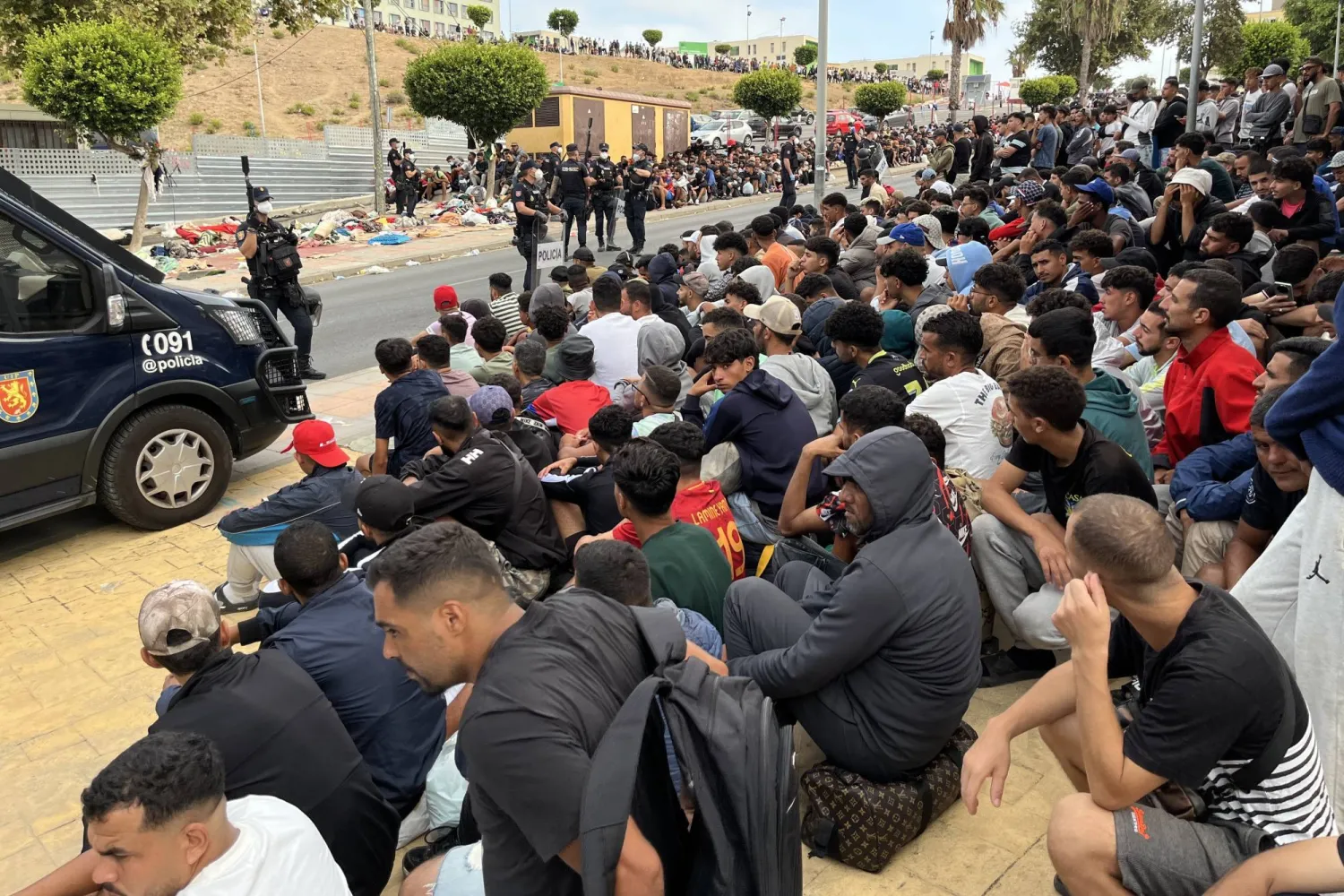
More than 70,000 migrants entered the small Spanish enclave in North Africa in late July, swimming or crossing on foot from neighboring Morocco in a chaotic influx that left scores dead and fueled fresh tensions in the European Union over migration.
Although the vast majority returned to Morocco within hours, thousands remain in the territory 18 square kilometers (seven square miles) in size, many living rough on the streets.
Ahead of the crisis, a Spanish Supreme Court ruled that irregular migrants arriving by sea cannot be immediately returned.
The fate of the migrants has become a major political flashpoint, with Spain's government facing demands from the conservative opposition and far-right parties for all those who entered, including minors, to be returned to Morocco.
The left-wing government has said between 3,500 and 7,000 migrants remain in the territory, while Ceuta's right-wing leaders allege it is at least 10,000.
Sanchez on Monday said that 6,000 spaces at reception centers would soon be available in the territory for migrants, whose status must be verified by the Spanish authorities before any possible return to Morocco.
He also pledged an additional 168 million euros ($195 million) in aid for Ceuta to respond to the crisis.


