Fast-Fashion Giant Shein Plunges 10% on Hong Kong Debut

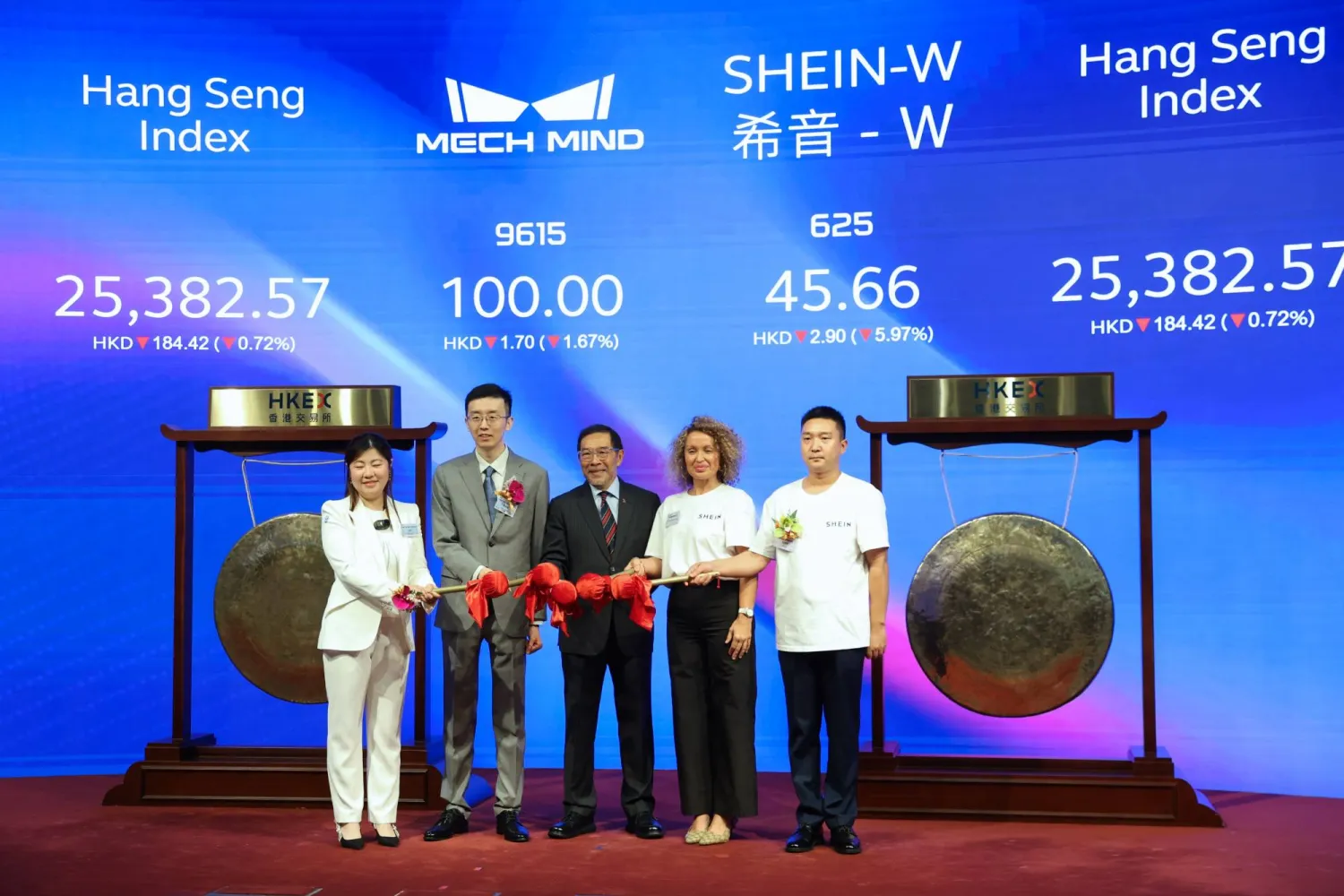
Carlson Tong (C), Chairman of Hong Kong Exchanges and Clearing Limited, attends SHEIN’s listing ceremony at the Hong Kong Exchanges and Clearing Limited (HKEX) in Hong Kong, China, 01 September 2026. (EPA)
TT

Fast-Fashion Giant Shein Plunges 10% on Hong Kong Debut

Carlson Tong (C), Chairman of Hong Kong Exchanges and Clearing Limited, attends SHEIN’s listing ceremony at the Hong Kong Exchanges and Clearing Limited (HKEX) in Hong Kong, China, 01 September 2026. (EPA)

Fast-fashion retailer Shein fell 10 percent on its long-awaited Hong Kong trading debut Tuesday, having raised US$1.7 billion in a high-profile initial public offering.

The flotation comes after the company's plans to list in New York and London were derailed by regulatory scrutiny, but it won approval from Chinese officials in July for the sale in the southern financial hub.

However, its shares fell to as low as HK$43.72 soon after the open, compared with its listing price of HK$48.56.

The IPO put the company's valuation at around US$26.3 billion -- well short of the nearly US$100 billion during private fundraising rounds in 2022.

Shein, known for its ultra-low prices and rapidly produced clothes, said proceeds from the sale would be used to finance its technological capabilities and boost its international presence.

The online retailer moved its headquarters to Singapore between 2021 and 2022, which analysts say was intended to avoid increasing global scrutiny of Chinese firms.

Its European customer base rose to 156 million average monthly users by the end of 2025, making it one of the continent's biggest e-commerce platforms alongside China's AliExpress and US titan Amazon, which have 193 million and around 180 million users respectively.

The company has faced scrutiny over its environmental footprint and allegations of human rights violations, and faces growing competition from low-cost e-commerce companies such as Temu and AliExpress.

Executive chairman Donald Tang told AFP last year that the company has "zero tolerance" for forced labor.

Morningstar analyst Lorraine Tan said in an August note that revenue growth "has converged to the pace seen by the fast fashion industry at below 10 percent in 2025".

She added the fall in valuation "does reflect that drop off in investor appetite for Shein's shares".

The company pioneered a formidable model that is hard to replicate, said Ken Pucker, a sustainable fashion expert at Tufts University.

- Chinese roots -

But its unprecedented growth also invited challenges of "newly imposed taxes and duties, compromised sustainability, privacy and copyright practices and competition", he added.

"Timing is not ideal given the company's slowing growth. That said, it has been trying to go public for around five years, and I am guessing that many of its investors were eager to get paid out."

In 2025, Shein reported a full-year net profit of US$2.06 billion but swung to a US$99 million loss in the first three months of this year after the United States scrapped an import duty exemption on small packages.

In a similar move, the European Union last month imposed a duty of three euros (US$3.50) per item for packages valued at less than 150 euros.

And France will impose a fee on ultra-fast fashion items from Tuesday that could eventually reach almost 20 euros per garment, as the government targets major Asian e-commerce platforms.

"Shein's near future is going to be marked by negative growth," e-commerce analyst Juozas Kaziukenas told AFP.

The retailer needs a "mid-air engine swap" to rebuild its supply chain on diversified inventory sources beyond shipping directly from China, he added.

Shein's CEO Sky Xu made a rare public appearance this year in the southern Chinese province of Guangdong, pledging to allocate greater resources in the country, which was seen by analysts as an attempt to realign the company with its roots.

The Hong Kong listing represents a "new Asian story for the company", as it redefines itself institutionally with "roots in China", said Lawrence Loh, a professor specializing in ESG markets at the National University of Singapore.

"The listing opens a new chapter for Shein to access new capital to resolve the sustainability issues, but this comes with a price of even higher levels of public scrutiny."
AI Helps Cosmetic Giants Overcome Perfume’s Nasal ‘Paradoxes’

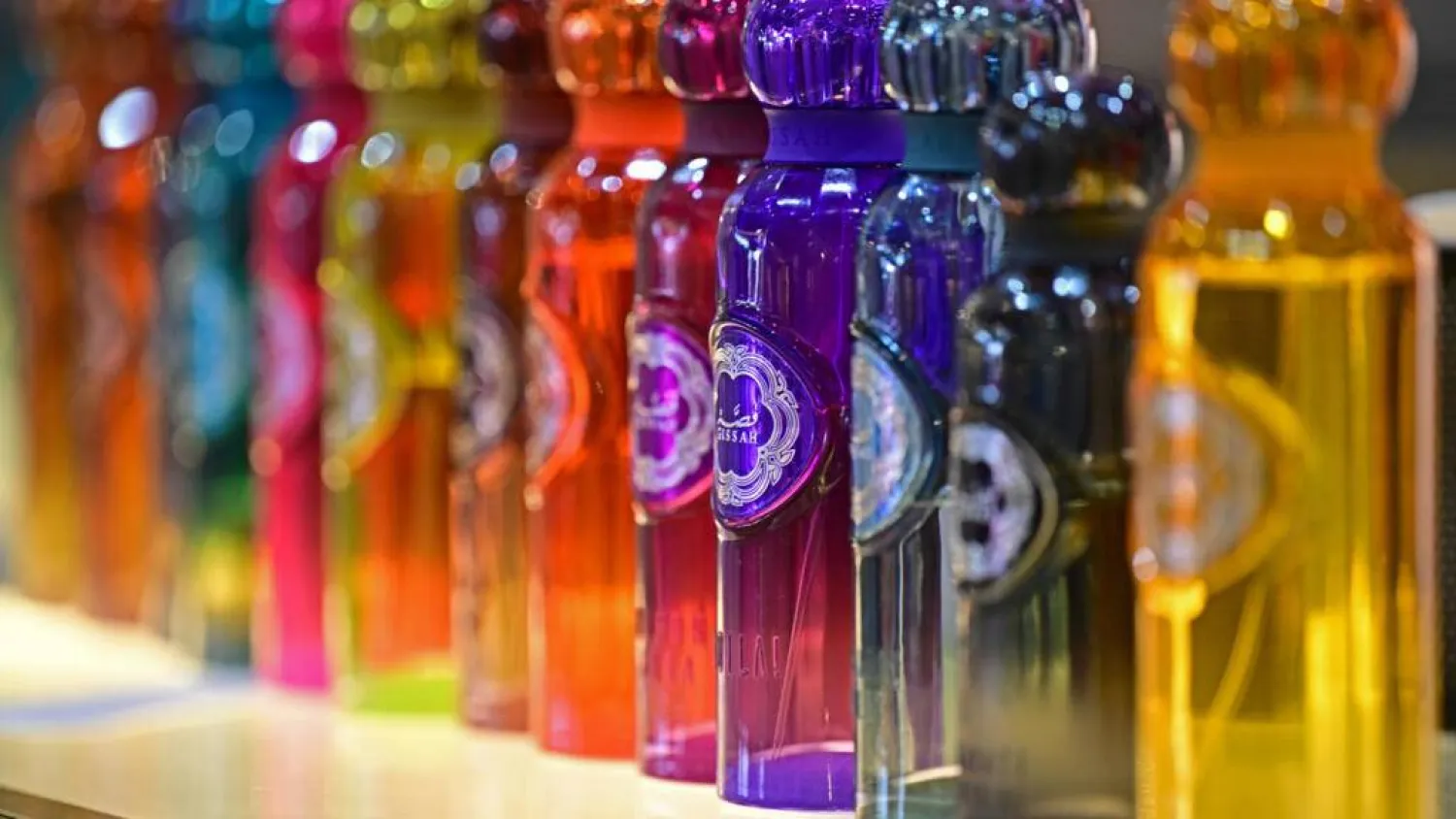
 Artificial intelligence is increasingly being used to develop new perfumes. (AFP)
Artificial intelligence is increasingly being used to develop new perfumes. (AFP)
TT

AI Helps Cosmetic Giants Overcome Perfume’s Nasal ‘Paradoxes’

 Artificial intelligence is increasingly being used to develop new perfumes. (AFP)
Artificial intelligence is increasingly being used to develop new perfumes. (AFP)

There may be a hint of bergamot in the top notes and sweet iris as a follow-up, but there is a noticeable dose of Artificial Intelligence emerging in new perfumes, according to industry specialists.

The traditional world of perfumes has not been able to turn up its nose to new technology and algorithms even though the industry insists that human sensorial expertise can never be fully replaced.

The US cosmetics giant Estee Lauder opened a perfume innovation center in Paris in 2025 that uses AI to mix savoir faire and cutting edge technology and help its billion dollars brands that include Jo Malone of London, Kilian Paris, Le Labo and Tom Ford Beauty, according to Lucas Nanini, the group's vice president for fragrance innovation.

He tests some of the new formulas uncovered on visitors to the Maison des Parfums.

"AI will allow us to work on what we call 'paradoxes'," Nanini told AFP. "For example, how can we create an oil that is rich, yet fine enough to be diffused?"

AI helps perfumers identify oils with properties that would take them years to develop by manual trial and error.

Machine intelligence also helps with regulatory tasks. Nanini highlighted the time it takes to check whether different countries allow each ingredient in a perfume.

With a single click he can now verify whether an ingredient from the one thousand-plus used is legal in a specific country as well as the maxium concentration allowed.

AI can also be used to find molecules to substitute for certain animal-derived ingredients.

Civet, taken from the glands of African civet and other cats in the species, was traditionally used to give perfume a musky tone but has been phased out in the face of animal rights protests.

- Fast fragrance -

International Flavors and Fragrances (IFF), another major US player, estimates that AI cuts between 25 and 30 percent of the time needed to develop and make a perfume.

With niche perfumes taking a bigger share of a growing market, enterprises like Givaudan of Switzerland and Robertet of France have heavily invested in tools to help them find new molecules.

IFF has developed its own AI tools using decades of internally collected data.

One suggests ingredients that complement each other and is used by IFF perfumer Tanguy Guesnet.

"Every perfumer is searching for that 'accord' -- that combination -- that will spark the emotion of tomorrow," he said.

The tool looks at the molecules in a single ingredient and suggests others with similar characteristics. Mint essence, for example, contains menthone, and the tool can propose other ingredients that also include the compound.

"Some pairings might seem obvious, while others might appear a bit outlandish, but that is precisely the richness of the tool," said Guesnet.

"It stimulates creativity and so I consider highly original combinations."

Not everyone is convinced by the AI revolution, however.

Guillaume Teule, co-founder of the French fragrance house Helius, insisted that he remains in control of how a scent develops. "I maintain my own vision."

"Much like in music, resonances and dissonances emerge when you start altering ingredients -- and it is precisely these dissonances that are interesting, and which only a human being knows how to leverage effectively," he said.

"I don't believe any AI would have suggested 'Angel'," he said of Thierry Mugler's so-called 'gourmand' fragrance launched in 1992 and considered revolutionary because of its sweet notes.

"It was like a stone thrown into a pond, when it was first released," commented Teule.


Cartier-Owner Richemont Quarterly Sales Beat Estimates as Jewellery Demand Continues

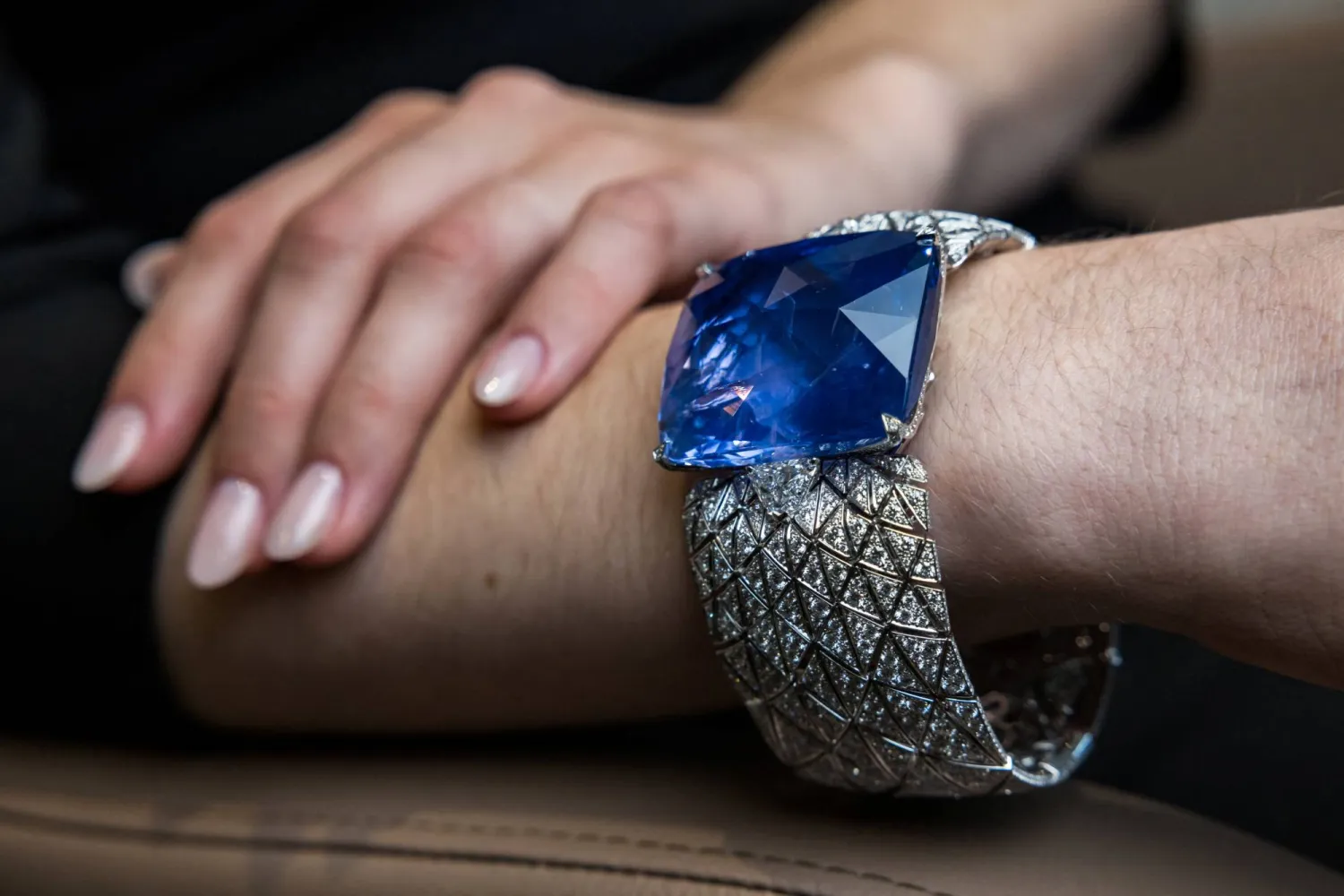
 A rock crystal and diamond bracelet by Cartier, estimated at US$1-2 million, during a preview ahead of Christie's auction in Geneva, Switzerland, November 5, 2026. (Reuters)
A rock crystal and diamond bracelet by Cartier, estimated at US$1-2 million, during a preview ahead of Christie's auction in Geneva, Switzerland, November 5, 2026. (Reuters)
TT

Cartier-Owner Richemont Quarterly Sales Beat Estimates as Jewellery Demand Continues

 A rock crystal and diamond bracelet by Cartier, estimated at US$1-2 million, during a preview ahead of Christie's auction in Geneva, Switzerland, November 5, 2026. (Reuters)
A rock crystal and diamond bracelet by Cartier, estimated at US$1-2 million, during a preview ahead of Christie's auction in Geneva, Switzerland, November 5, 2026. (Reuters)

Cartier-owner Richemont reported a faster-than expected quarterly sales increase on Friday, helped by continued demand for its jewellery and bumper growth in the United States and Japan.

The company, which also owns Swiss watch brands Piaget and IWC, said its sales rose by 13% when measured in constant currencies to €5.95 billion ($6.58 billion) in the three ‌months to the end ‌of September.

The figure beat analyst ‌forecasts ⁠for €5.89 billion in ⁠a consensus compiled by Visible Alpha.

Although a slowdown from the 20% growth rate in the prior quarter, the figure showed the resilience of Richemont's largely jewellery-based business and a strong performance in the United States, Japan and Europe, where sales ⁠increased by 15% or more.

The Swiss-based ‌company, which makes ‌brooches, earrings and necklaces under the Cartier, Buccellati, Van Cleef & ‌Arpels and Vhernier brands, has bucked the trend ‌in a struggling luxury industry thanks to its higher exposure to jewellery, with its jewellery brands accounting for about 75% of its revenues.

Sales of Richemont's jewellery ‌unit grew 14% in the quarter, while those of its specialist watchmakers division ⁠rose ⁠12%.

The company, which does not report quarterly earnings, said its first-half net profit improved to €2.53 billion from €1.81 billion a year earlier, ahead of analyst forecasts for €2.26 billion.

"The group delivered a strong first half, carried by sustained excellent performance of our Jewellery Maisons, robust growth at our specialist watchmakers and solid momentum at our fashion and accessories Maisons, despite a challenging fashion market," Richemont Chairman Johann Rupert said in a statement.


Frasers Executive David Epstein Becomes Hugo Boss CEO after Takeover

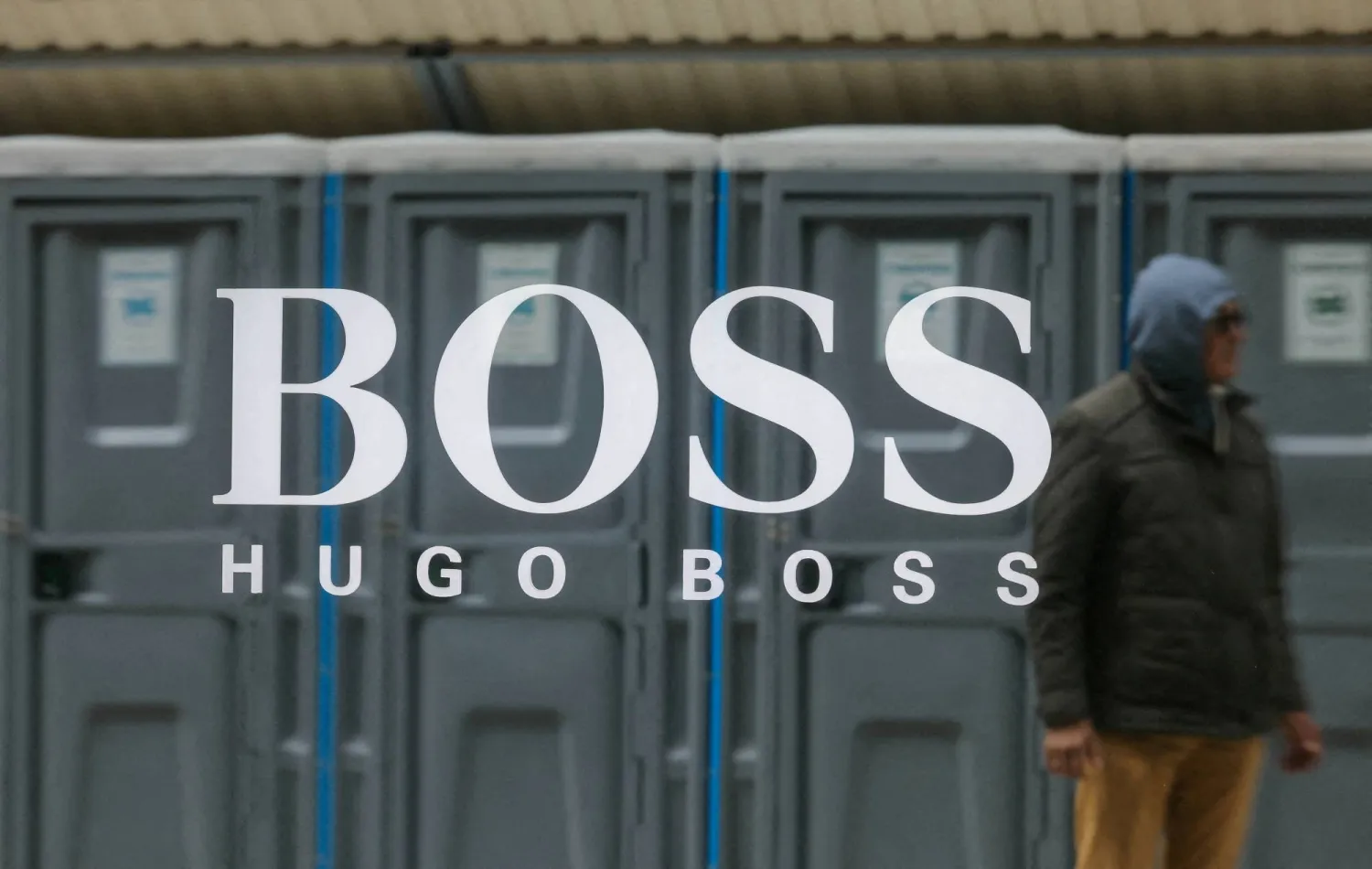
FILE PHOTO: Plastic toilet cabins are reflected in a window with the logo of Hugo Boss fashion company in central Moscow, Russia, May 8, 2025. REUTERS/Maxim Shemetov//File Photo
TT

Frasers Executive David Epstein Becomes Hugo Boss CEO after Takeover

FILE PHOTO: Plastic toilet cabins are reflected in a window with the logo of Hugo Boss fashion company in central Moscow, Russia, May 8, 2025. REUTERS/Maxim Shemetov//File Photo

Hugo Boss said on Thursday CEO Daniel Grieder would step down and leave the company at his own request, effective January 1, 2027.

The German fashion group said David Epstein from Frasers Group will ⁠succeed him as ⁠CEO, Reuters reported.

Frasers Group, already Hugo Boss's largest shareholder, took majority control of the company in October after raising its stake above 50%, months ⁠after an unsuccessful 2 billion euro takeover bid.

The move follows a series of leadership changes at Hugo Boss this year. In September, the company named Michael Murray, chief executive of Frasers Group, as chairman of its supervisory board.

The British retailer, ⁠controlled ⁠by billionaire Mike Ashley, has been expanding its presence in the premium and luxury segments.

Epstein has served as chief brand partnerships officer at Frasers Group since 2024, overseeing brand partnerships across its Sport, Premium, and Luxury businesses.