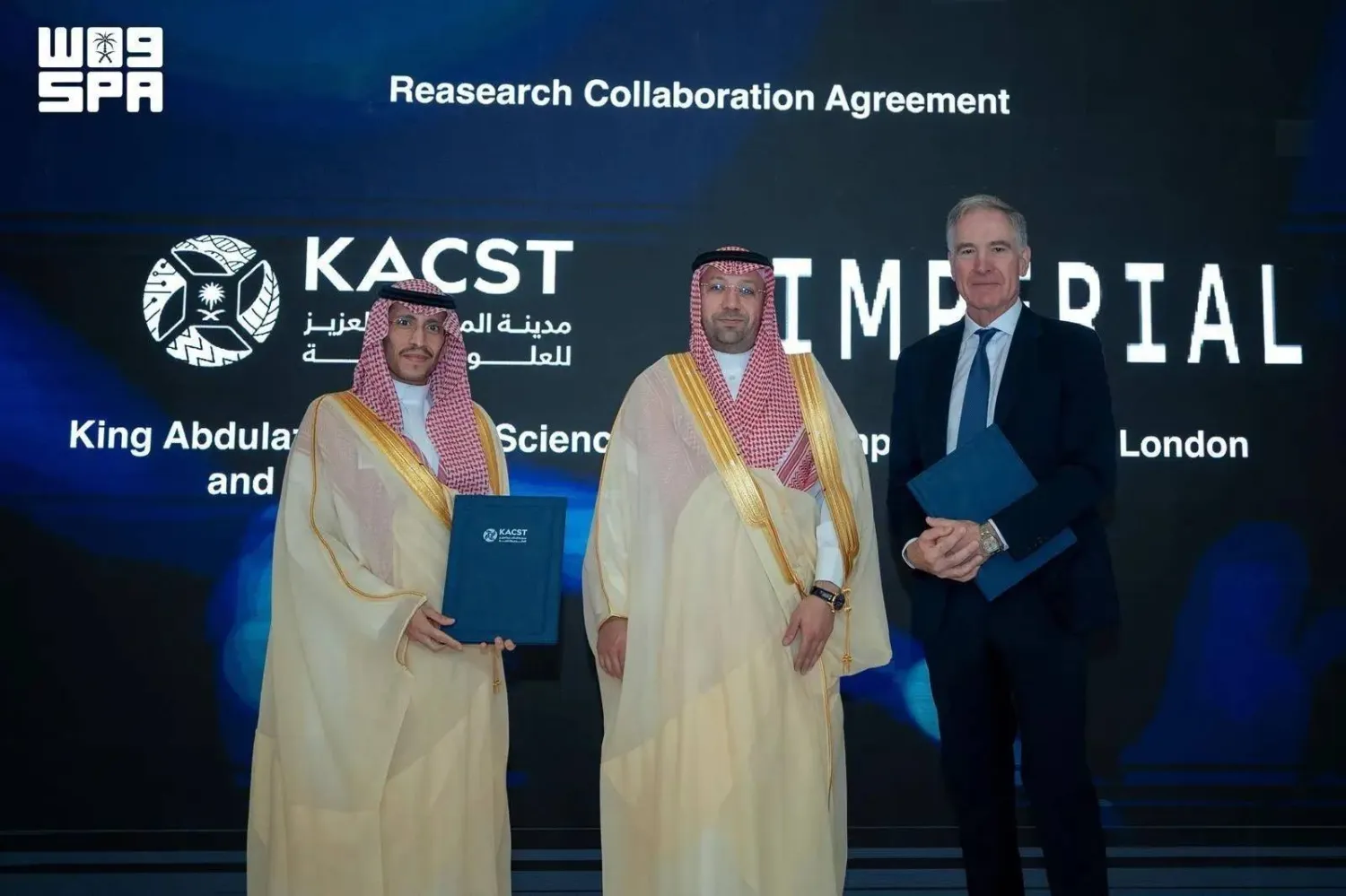

Saudi Arabia’s King Abdulaziz City for Science and Technology (KACST) signed a research partnership with Imperial College London to advance quantum brain research, study quantum mechanical phenomena, and connect quantum science with engineering, neuroscience, and biochemistry.
The agreement was signed in the presence of President of KACST Dr. Munir Eldesouki on the sidelines of the Quantum Forum. The event is organized by the Center for the Fourth Industrial Revolution in Saudi Arabia, an affiliate of the World Economic Forum, in partnership with KACST and King Salman Science Oasis, under the theme “Shaping the Future Quantum Workforce.”
The partnership focuses on developing an engineering framework to study quantum properties associated with neuronal cell membranes and the role of fatty acids in neural signaling.
It includes the development of measurement and testing technologies and tools that bring together quantum electronics, semiconductors, biomimetic platforms, and neuroimaging. The partnership also includes a research track examining the relationship between maternal fatty acid nutrition and fetal brain development and function, particularly in relation to cognitive abilities.
Director General of the Bioengineering Institute at KACST Dr. Mai Alzaydi said the partnership is focused on advancing quantum brain research as part of KACST’s efforts to support multidisciplinary research that brings together fundamental science and promising technological applications, enabling Saudi researchers to participate in this scientific field.
Head of Research at the Quantum Brain Laboratory at Imperial College London Professor Mark Johnson said the collaboration represents a significant milestone in quantum brain research by integrating quantum physics, neuroscience, engineering, and biochemistry within a testable research framework.
It also opens new opportunities for KACST researchers to take a leading role in shaping this emerging field in collaboration with leading scientists from Imperial College London, he added.