The rare Patek Philippe & Co Calatrava Reference 448 belonged to the vendor's grandfather who passed it to his daughter. (Hansons Auctioneers)
A rare vintage Swiss watch found in a late mother's jewelry box has fetched £59,000 at auction, according to the Daily Mail.
The 1930s Patek Philippe timepiece defied expectations after experts originally valued it at just £5,000.
It was unearthed during a house clearance at a property in Camborne, Cornwall, before selling at Hansons Auctioneers in Penzance on Tuesday.
The stainless-steel wristwatch had been sitting among old jewelry for years. The owner's daughter said she remembered her mother had told her she possessed an expensive watch, but never knew its true value.
She added nobody expected the treasured family heirloom to be worth almost 12 times its estimate.
Darren Ashley, senior valuer at Hansons Cornwall, said: “When I finally had the watch in my hands and was able to examine it properly, I knew we had something extremely rare.”
He added that Patek Philippe produced very few stainless-steel watches during this period and that rarity makes surviving examples incredibly desirable to collectors.
“But one of the things I loved most was its mechanical perfection. This was a watch dating back around 90 years which had spent decades within the same Cornish family and, when it was placed in my hands, it was still finely ticking away,” Cornwall said.
He noted that “combined with its wonderful provenance, it was an absolute pleasure to be entrusted with selling such an incredible timepiece.”
The rare Patek Philippe & Co Calatrava Reference 448 belonged to the vendor's grandfather who passed it to his daughter.
It is believed their grandmother, who had a love for designer clothes and luxury items, bought it as a gift for her husband decades ago.
Rare Family of Barn Owls Move into Manhattan's Upper West Sidehttps://english.aawsat.com/varieties/5330261-rare-family-barn-owls-move-manhattans-upper-west-side
Rare Family of Barn Owls Move into Manhattan's Upper West Side
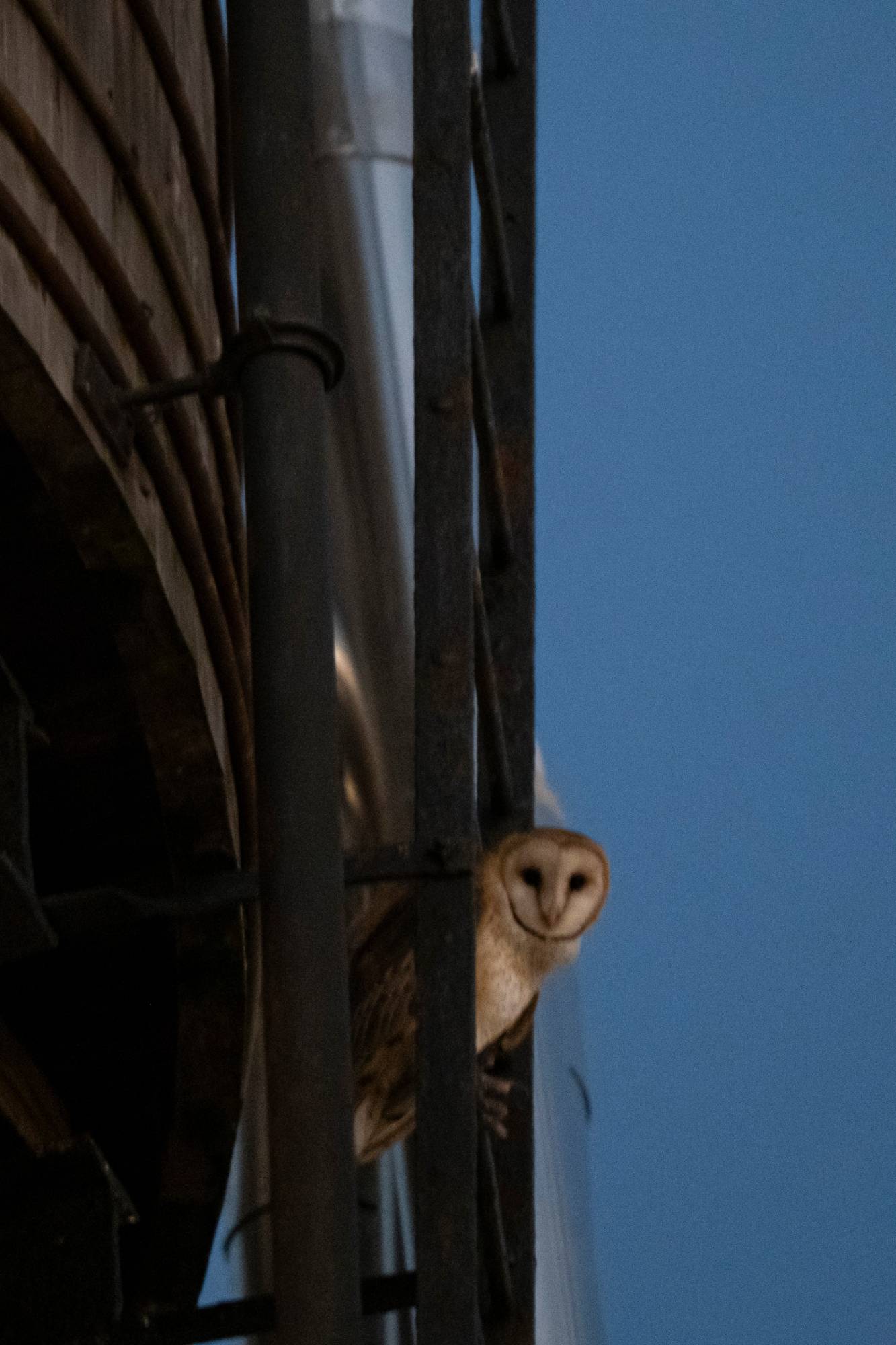
An American Barn Owl sits perched on a water tower on the Upper West Side neighborhood, Wednesday, Oct. 14, 2026, in New York. (AP Photo/Yuki Iwamura)
Manhattan's Upper West Side has been reveling in the company of its latest celebrities: A family of barn owls nested in a water tower atop a building near Central Park.
This is the first documented instance of barn owls nesting in Manhattan in modern history, according to one expert, and the owls have attracted nightly crowds of people in the street eager to get a glimpse of the elusive birds.
“It was, like, totally shocking,” Andrew Farnsworth, a migration ecologist at the Cornell Lab of Ornithology, said of the barn owls. “To the best of our knowledge, like the collective birding knowledge, there hasn’t been a nest in, you know, in Manhattan, at least in recorded history.”
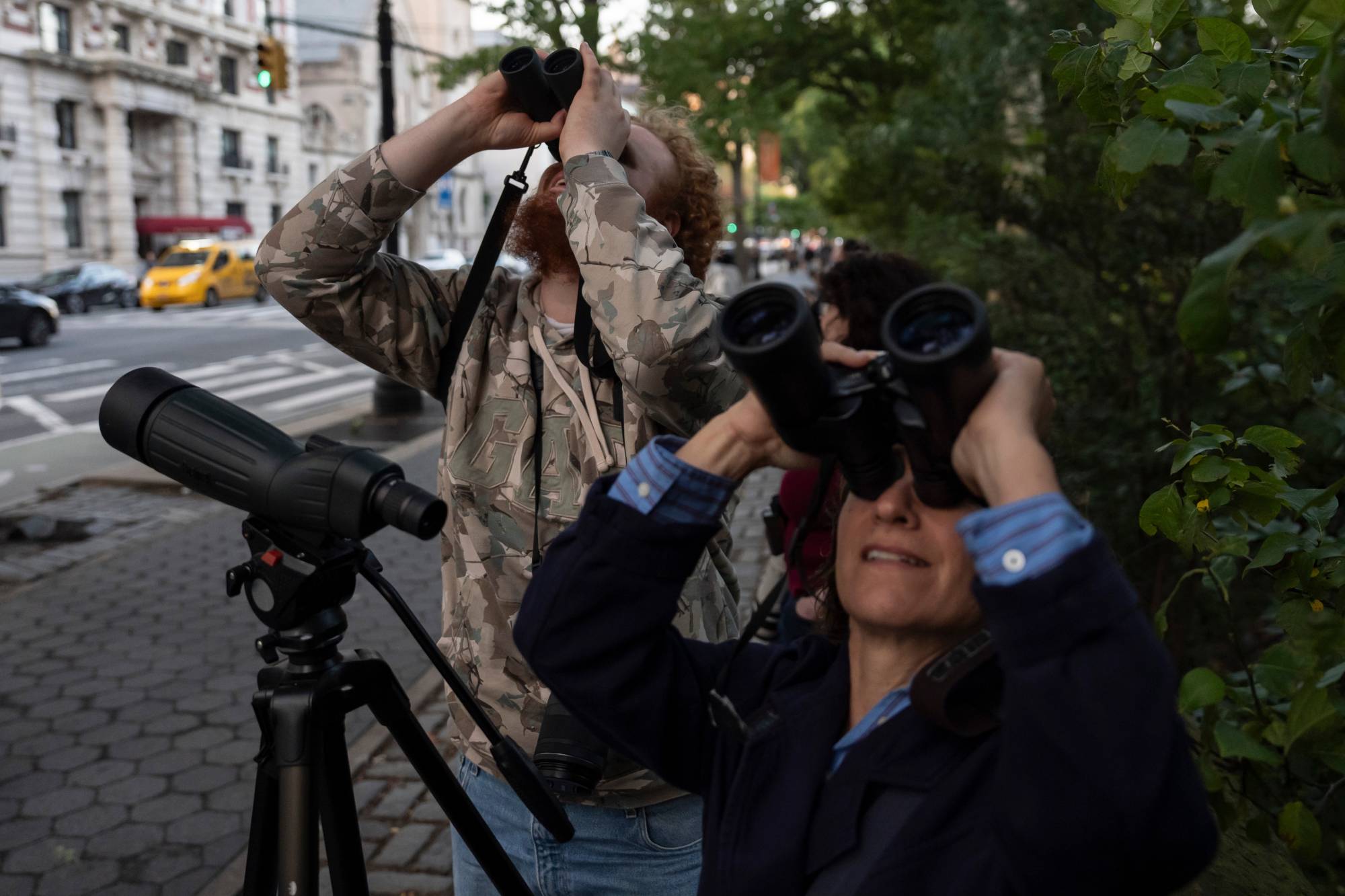
People look at American Barn Owls sit perched on a water tower on the Upper West Side neighborhood, Tuesday, Oct. 13, 2026, in New York. (AP Photo/Yuki Iwamura)
Word of the barn owl family didn't get around until last week, when Elisabeth Williams, an Upper West Side resident, notified a local news outlet on Oct. 6 that she and her husband saw multiple owls at the water tower atop a building on West 75th Street close to Central Park West.
The couple had previously seen a single owl on an apartment windowsill a few days earlier and were shocked even then, Williams recalled, according to The Associated Press.
“In a place like Manhattan, you normally really have to go out of your way to encounter nature,” she said. “And here it was, just sort of right outside our window.”
Barn owl sightings are rare in New York City It's not the first time that birds have captivated New Yorkers. Residents have fallen in love with American woodcocks, who are known to stop in Midtown Manhattan’s Bryant Park every year as they migrate north in early spring.
After Flaco the Eurasian eagle-owl died in 2024, dozens of mournful fans gathered to say goodbye to the beloved creature who flew around Manhattan and became a joy to many after someone let him out of his zoo enclosure the previous year. Then there was Pale Male, a red-tailed hawk who nested above Fifth Avenue for three decades before dying in 2023.
But barn owl sightings in New York City parks are very rare, according to the New York City Department of Parks & Recreation. New York is at the northern fringe of the barn owl's range and the barn owl population has declined “at an alarming rate” over time, according to the state Department of Environmental Conservation.
“There’s lots of excitement among New Yorkers, both birders and non-birders alike, about these owls because owls really capture the attention,” said Jessica Wilson, executive director of NYC Bird Alliance. “They’re magical, they’re nocturnal, they are secretive, they’re not commonly seen, especially on the Upper West Side of Manhattan. And to have this chance to see these birds is really thrilling.”
Photographers and casual onlookers have gathered on the street on a nightly basis to spot the owls.
“I’ve only seen one barn owl ever, and that was in California,” said Val Coleman, a retired New York City resident who was on the Upper West Side earlier this week trying to spot the owls.
“At dusk, we hope they will come out to hunt. We hope they don’t eat poisoned rats with rodenticide in ’em.”
David Barrett, a Manhattan-based birder who runs the popular social media account, Manhattan Bird Alert, said he’s observed at least one adult barn owl and five fledglings at the water tower. He’s also seen an adult owl carrying rodents back to the water tower. There are believed to be two adult owls, and some photographers have claimed to have seen six fledglings, Barrett added.
“Having one barn owl is a rarity, but it’s not national news. Having a family, for the first time ever, breeding in Manhattan in recorded history, that’s special news,” Barrett said.
Screeching was heard by residents Before the recent barn owl sightings, Williams and her husband heard periodic screeching noises outside going back to early September. They initially assumed it was a bird of some kind but were skeptical when a phone app indicated the noise was from a barn owl.
Thomas Obersteiner said that he first heard bizarre screeching and wailing noises from outside one evening in mid-September. It sounded like someone was “being murdered outside,” he said.
“That lasted for two or three weeks, every night, sometimes more, sometimes less, coming from different directions,” Obersteiner added. “But I had no idea what that was.”
An American Barn Owl sits perched on a water tower on the Upper West Side neighborhood, Wednesday, Oct. 14, 2026, in New York. (AP Photo/Yuki Iwamura)
On multiple occasions, Obersteiner or his wife ran into their children's bedroom after mistaking the owls' screech for a child in pain, he said. It wasn't until he saw a news report that he realized that owls were making the sounds.
Farnsworth said the screech is typical of barn owls, who use it to communicate with one another. The screech is like a “horror movie kind of experience,” he said.
Obersteiner, who said his roof deck is “probably the best location in town right now” to watch the owls, has been letting nature photographers access that perch to observe the owls “almost every night” since news of the barn owls spread. On one night last week, 20 people had gathered.
“We can’t say no because it’s so much fun and these people are so serious,” Obersteiner added. “It's beautiful.”
Williams and her husband were not bird watchers before the barn owl family moved in to the water tower. But that may change soon after their “delightful” experience.
“I think we’re about to become birders,” Williams said.
Spain Sizzles in Hottest September on Recordhttps://english.aawsat.com/varieties/5330222-spain-sizzles-hottest-september-record
The unprecedented heat in September came after Spain's hottest summer on record. Oscar DEL POZO / AFP
Mainland Spain sizzled in its warmest September since records began in 1961, with exceptional heat effectively making it another summer month, national weather agency AEMET said on Friday.
The announcement is the latest in a series of new temperature records this year across Europe, scorched by successive summer heatwaves that scientists say were turbo-charged by human-driven climate change.
The average temperature in September was 22.5C, 3.4C above the norm for the 1991-2020 reference period, said AEMET, with the unprecedented reading coming after Spain's hottest summer on record, said AFP.
It was the first time the figure for September exceeded the average summer temperature of 22.1C for the 1991-2020 period, AEMET added in a statement.
The country equaled its all-time heat record for the month when 45.7C was registered in the southwestern municipality of El Granado on September 3.
AEMET briefly issued the highest red alert for heat in small areas of the southern region of Andalusia in September, the first time such warnings had been sent in the month since they started in 2007.
Last month was also extremely dry, recording just 36 percent of the normal rainfall expected in September in mainland Spain based on the 1991-2020 reference period.
Extreme temperatures have been linked to tens of thousands of excess deaths across the continent, as well as disrupting daily life and the economy through drought and low river levels.
Indonesian Rescue Center Takes in More Orangutans as Fires Ragehttps://english.aawsat.com/varieties/5330213-indonesian-rescue-center-takes-more-orangutans-fires-rage
An 11-year-old male orangutan named Didik eats on a rehabilitation island at a rehabilitation facility run by wildlife foundation Yayasan Inisiasi Alam Rehabilitasi Indonesia in Ketapang Regency, West Kalimantan, Indonesia, August 31, 2026. REUTERS/Willy Kurniawan
Indonesian Rescue Center Takes in More Orangutans as Fires Rage
An 11-year-old male orangutan named Didik eats on a rehabilitation island at a rehabilitation facility run by wildlife foundation Yayasan Inisiasi Alam Rehabilitasi Indonesia in Ketapang Regency, West Kalimantan, Indonesia, August 31, 2026. REUTERS/Willy Kurniawan
In the jungles of Indonesian Borneo, a rehabilitation center is taking in more orangutans as the country's worst wildfires in a decade sweep through the forest home of the critically endangered animals.
The intense wildfires, burning mainly on the islands of Borneo and Sumatra, began in July and could continue until November, aggravated by a severe El Niño weather pattern, the government has warned.
"I think so far this looks quite similar to the 2015 fires," said Karmele Llano Sanchez, co-founder of Yayasan Inisiasi Alam Rehabilitasi Indonesia (YIARI), who has worked in Indonesia for more than 20 years. "It's possible that in the months to come, they (the orangutans) will also be affected by not having enough to eat, not having enough room, enough habitat, and starvation."
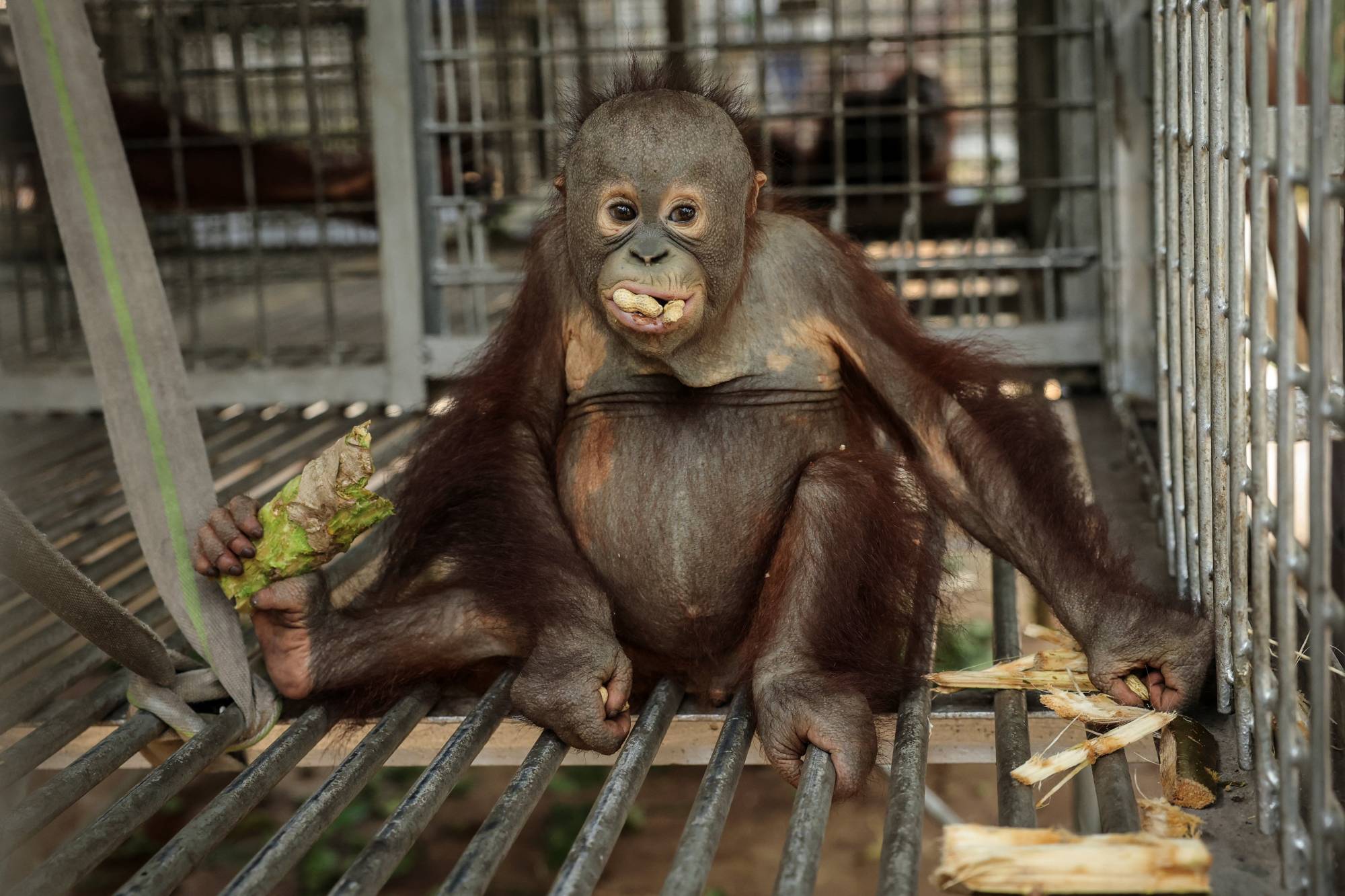
A three-year-old baby orangutan named Xavier holds food inside a medical cage used for orangutans evacuated from a rehabilitation island due to nearby wildfires at a rehabilitation facility run by wildlife foundation Yayasan Inisiasi Alam Rehabilitasi Indonesia in Ketapang Regency, West Kalimantan, Indonesia, August 31, 2026. REUTERS/Willy Kurniawan
The world's three species of orangutan are native only to Borneo and Sumatra.
YIARI, in the Ketapang region of Indonesia's West Kalimantan province, is now looking after 90 orangutans, after rescuing 49 since August, foundation spokesperson Heribertus Suciadi said.
Over the last three years, the center rescued three to five animals a year, he added.
The fires and haze have shrouded parts of Borneo, which also includes the Malaysian states of Sarawak and Sabah, in a hazardous smog that has also spread to Singapore and the Malaysian peninsula, forcing some schools to close and causing a spike in respiratory illnesses.
Sampurna, an orangutan that Reuters encountered in August, was found gasping for air and writhing on the ground in a palm oil plantation.
Sampurna died on August 30, the forestry ministry said last month. Sanchez, who performed the necropsy on the great ape, said Sampurna died less than 12 hours after being rescued and had very dark lungs owing to respiratory problems, likening them to those of a heavy smoker.
From January to July this year, fires burned around 202,000 hectares (500,000 acres) in Indonesia. No official data for subsequent months has been released, but non-governmental organizations estimate fires have burned at least 600,000 hectares more since.
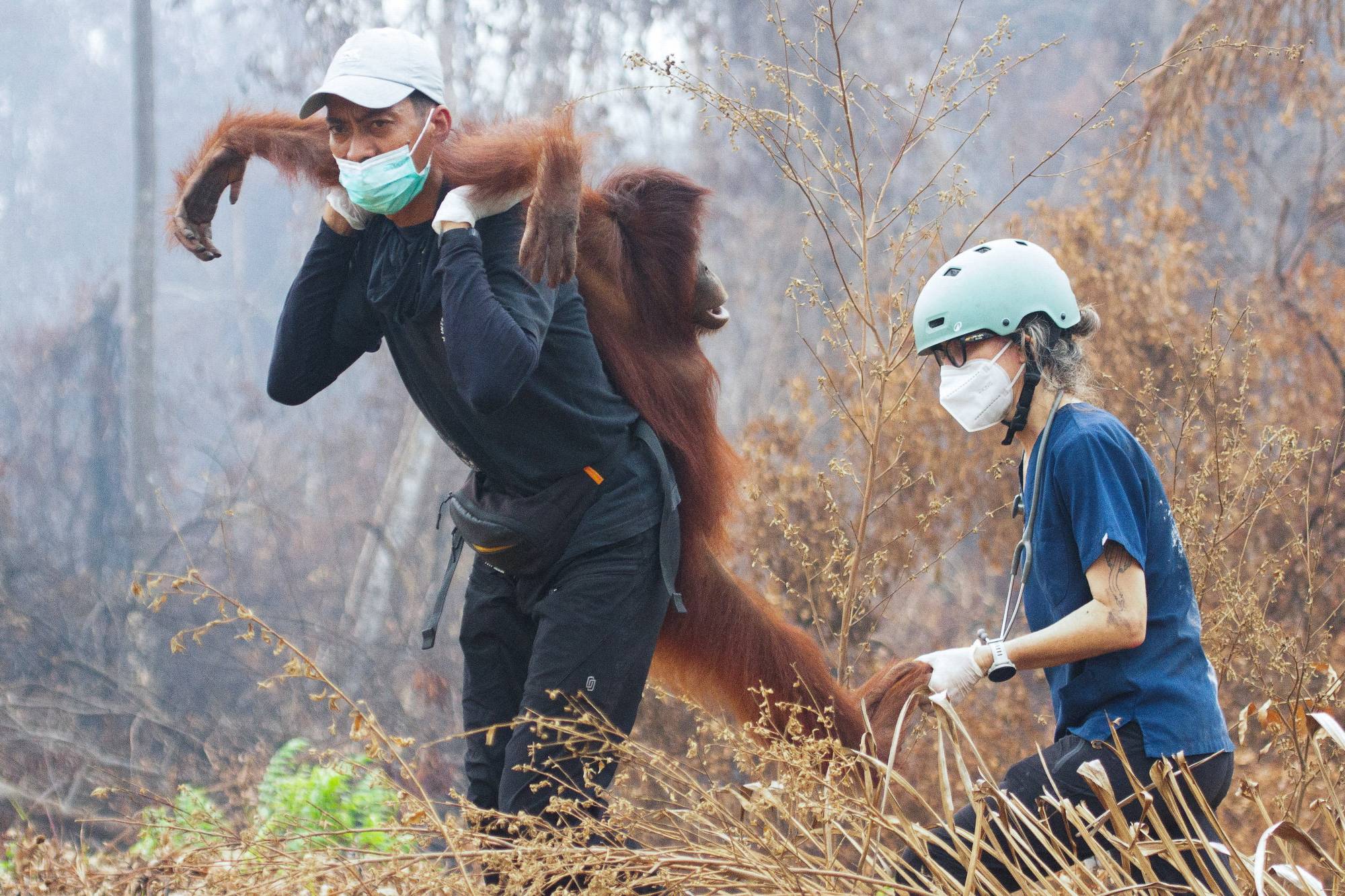
FILE PHOTO: A rescuer and a veterinarian with wildlife foundation Yayasan Inisiasi Alam Rehabilitasi Indonesia (YIARI) carry an orangutan after rescuing it in a palm-oil plantation affected by wildfires in Laman Satong village, Ketapang Regency, West Kalimantan, Indonesia, September 30, 2026. REUTERS/Victor Fidelis Sentosa
In 2015, fires burned nearly 960,000 hectares, forestry ministry data showed.
"I think in general, what we see is that these orangutans that were surviving in these fragments of forest, and the forest fragments are becoming smaller and smaller and smaller," Reuters quoted Sanchez as saying.
Once YIARI volunteers receive reports of orangutan sightings, they use a drone to determine the areas ravaged by the fires and whether orangutans were living there, Heribertus said.
Equipped with tranquilizers, rescuers then drive for hours to the burned forest to find the orangutans, sometimes using a net to capture the apes before taking them to safety.
The foundation has more than 200 staff, including firefighters and veterinarians.
"Fires are occurring in many areas. As a result, the orangutans are being displaced into plantations," said Relly Susanto, a YIARI patroller.
On a recent August day at the YIARI center, orangutans swung through the trees and walked on vines, as youngsters ate fruit next to their mothers. While there is no escape from the smoke even at YIARI, the center is not currently at risk from the fires themselves and some of the rescued orangutans have been returned to the wild in safer locations.
At the moment, YIARI has enough capacity to take in the orangutans, Sanchez said. But with the fires showing little sign of abating, she is not sure how long that will last.
"It's difficult to quantify how many orangutans will need to be rescued," she said. "One of our concerns is whether we'll have enough capacity to really get all of these rescued orangutans into the facility."
لم تشترك بعد
انشئ حساباً خاصاً بك لتحصل على أخبار مخصصة لك ولتتمتع بخاصية حفظ المقالات وتتلقى نشراتنا البريدية المتنوعة