
Iran Strikes Back Against Latest US Attacks

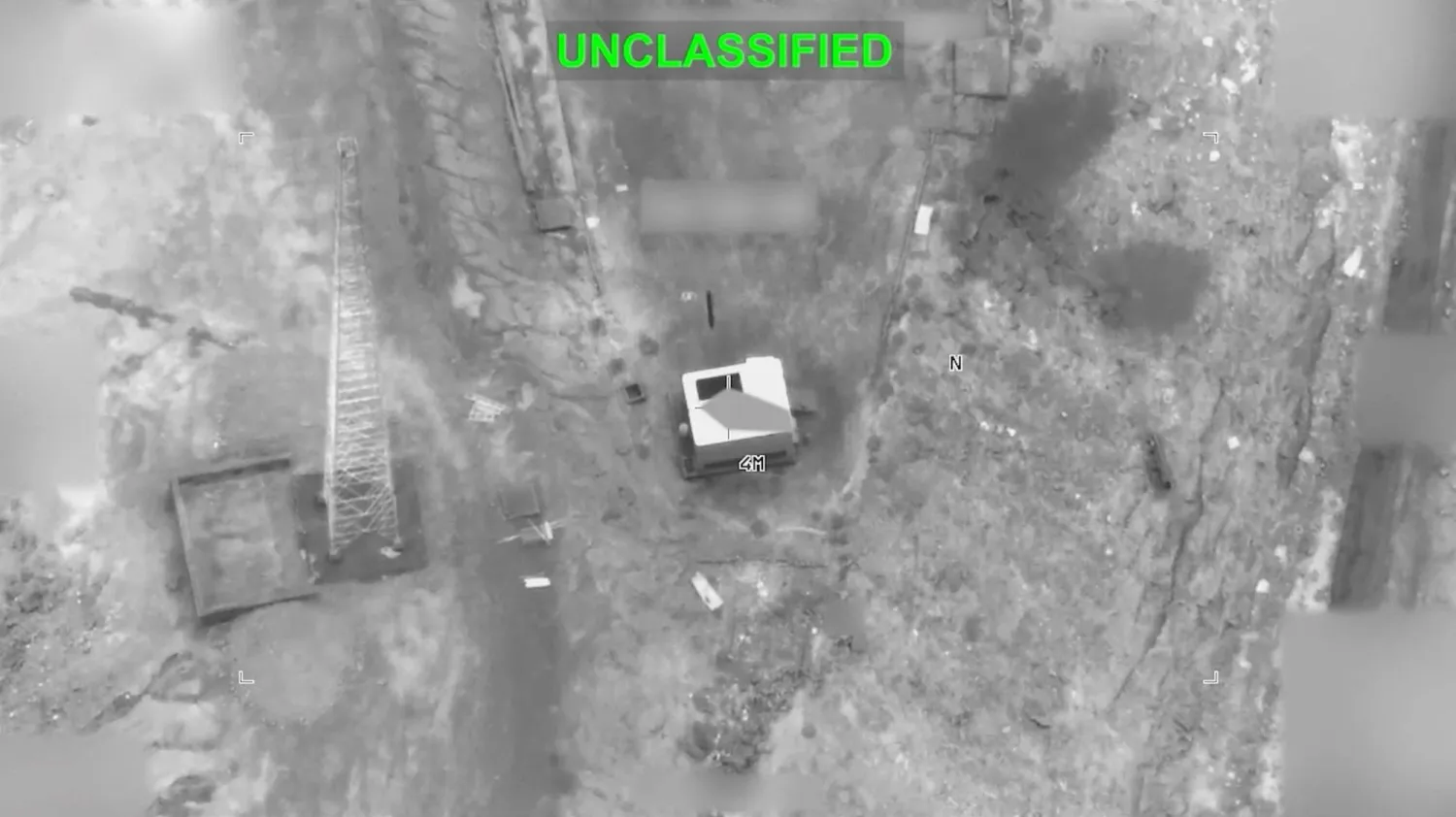
A screengrab from a video obtained from social media on September 1, 2026, shows a view shortly before what US Central Command (CENTCOM) says was a US strike on an Iranian military target. (US Central Command/Handout via Reuters)
TT

Iran Strikes Back Against Latest US Attacks

A screengrab from a video obtained from social media on September 1, 2026, shows a view shortly before what US Central Command (CENTCOM) says was a US strike on an Iranian military target. (US Central Command/Handout via Reuters)

Iran struck US interests around the Middle East on Wednesday, vowing "severe" consequences for renewed American attacks on the country.

The latest fighting over the Strait of Hormuz once again expanded to US military bases in the region and drew Gulf countries deeper into the six-month conflict.

US President Donald Trump had warned earlier of "much harder and higher" attacks if Iran retaliated to the US strikes which Iranian state media said had killed 11 people in the country's south and southwest.

Tehran said it launched ballistic missile attacks on two US bases in Jordan, according to Iranian media.

The Jordanian army said it intercepted 10 ballistic missiles fired from Iran, and did not confirm any injuries or hits.

Three other missiles landed in remote areas, it said.

Missile and drone attacks were also reported in Kuwait, where the army said they were responding to Iranian hostilities, and AFP reporters in Bahrain heard air raid alerts ring out early Wednesday.

In Iraq's autonomous Kurdistan region, Iran's Revolutionary Guards said Wednesday that they struck US bases with missiles and drones, destroying a maintenance center, warehouses and equipment, state-run IRNA reported.

The latest round of conflict began when Washington hit Iranian targets on Sunday, the first known strikes in several weeks, after which Tehran's forces targeted US troops in Jordan, and projectiles struck two oil tankers in unclaimed attacks.

More US strikes came on Tuesday, with Iranian state television reporting explosions in the country's south along the Hormuz strait and on an island in the Gulf, and that US forces hit an airport in the southern province of Kerman.

And IRNA reported that "four projectiles hit areas within the counties of Chabahar and Konarak", without specifying whether there was any damage.

Seven people were killed and eight others wounded in a missile attack in the southern Khuzestan province, IRNA reported.

Earlier, Iran's Red Crescent had said shrapnel from a US missile killed four people, including a child, and wounded more than 50 in Kuhestak, Hormozgan province.

The US military did not address the wedding strike directly.

US Central Command (CENTCOM) spokesman Tim Hawkins said "the US military never targets civilians, unlike the IRGC", referring to Iran's Revolutionary Guards.

- 'Large, powerful strikes' -

Trump said the "large and powerful" strikes were "in retaliation for the Iranians' failed attempt at adding sea mines to the Strait" and "the Iranians shooting eight missiles, all successfully knocked down, at our Military Base in Jordan".

Revolutionary Guards spokesman Hossein Mohebi warned on X that Washington "will regret its new attacks", saying that "severe punishment awaits the aggressors".

And Ebrahim Zolfaghari, the spokesperson for Iran's Khatam-al Anbiya central military command, warned Wednesday that "any country that cooperates with the aggressive American army will face more severe, more widespread and destructive responses".

After six months of war, the foes remain at an impasse, with Iran keeping the Strait of Hormuz closed and the United States persisting with a counter-blockade of Iranian ports.

Washington said its forces attacked Iranian rocket launchers on the island of Larak on Sunday to prevent Tehran from planting mines in the strait's key shipping lanes.

The Middle East war began in late February with US-Israeli attacks on Iran that killed its supreme leader Ali Khamenei.

A fragile ceasefire between the United States and Iran collapsed after attacks on commercial ships in the Hormuz strait, through which one-fifth of world oil supplies flowed before the war.

Trump warned on his Truth Social platform Tuesday that if Iran retaliated, "they will be hit again at a much harder and higher level, but it will not be the biggest attack of them all."

"That is waiting in the wings and, when it is over, there will be very little left of the Islamic Republic of Iran!" he wrote.

Separately, he said that he was "not trying to force Iran to the bargaining table", adding that he "couldn't care less if they sign a worthless, to them, agreement".

He also asked: "When are the Iranian people going to rise up and fight?"

Despite the diplomatic deadlock, Iran's President Masoud Pezeshkian vowed on Tuesday to match any US move to return to a deal aimed at ending the war.

He also warned that a return by the United States to "a policy of pressure and threats could derail the path of diplomacy".


Peru Cuts Ties with Iran, Accusing Tehran of Escalating Middle East War

Peruvian Foreign Minister Carlos Espa gestures during his presentation ceremony at the Foreign Ministry building in Lima on July 31, 2026. (AFP)
TT

Peru Cuts Ties with Iran, Accusing Tehran of Escalating Middle East War

Peruvian Foreign Minister Carlos Espa gestures during his presentation ceremony at the Foreign Ministry building in Lima on July 31, 2026. (AFP)

Peru's Foreign Ministry said Tuesday it has severed diplomatic relations with Iran, accusing Tehran of inciting "an escalation of conflicts" in the Middle East and hindering maritime transit in the Strait of Hormuz.

Citing a historic pacifist stance, the Peruvian government "has made the decision to sever diplomatic relations with Iran," the ministry said in a statement.

The war in the Middle East has restarted in recent days, with new US attacks on Iran on Sunday, and retaliatory tit-for-tat strikes since then.

"Peru views with deep concern the severe restrictions imposed by the Iranian regime, as well as the disruption of international trade through the Strait of Hormuz," the ministry said in a statement.

Peru also accused Iran of obstructing the work of the International Atomic Energy Agency, saying Tehran had denied inspectors access to nuclear facilities on different occasions and hindered verification needed to prevent the production of nuclear weapons.

Despite severing diplomatic ties, Peru said consular relations would remain in place to protect the interests and nationals of both countries, in accordance with the relevant Vienna conventions.

Peru's conservative President Keiko Fujimori campaigned on iron-fist security policies and took steps to join US President Donald Trump's Shield of Americas initiative days after taking office July 28, signaling a willingness to work with Washington.

A few days ago, Peru's neighbor Chile announced the closure of its embassy in Tehran, but did not decide to sever ties for economic and security reasons.

Peru's statement came as the US launched a barrage of airstrikes against Iran on Tuesday, prompting Iranian retaliation, in the most serious escalation in weeks in a conflict that has driven up global energy prices.


Hopes of Finding Survivors Dim a Week After Catastrophic Nepal Flood

People work during a search and rescue operation near the Hydropower Project sites, following deadly flash floods and mudslides hit parts of Nepal, in this handout obtained by Reuters on September 1, 2026. (Nepal Army/Handout via Reuters)
TT

Hopes of Finding Survivors Dim a Week After Catastrophic Nepal Flood

People work during a search and rescue operation near the Hydropower Project sites, following deadly flash floods and mudslides hit parts of Nepal, in this handout obtained by Reuters on September 1, 2026. (Nepal Army/Handout via Reuters)

Hopes of finding more survivors among the thousands still missing in Nepal were fading, authorities said on Wednesday, a week after a glacier collapse in the Himalayas unleashed flash floods that devastated the mountainous nation.

At least 1,050 people have been killed and nearly 4,000 remain unaccounted for, with officials fearing many are buried under debris left by the floods that tore through towns and valleys near the Chinese border.

Across the border in Tibet, China's official toll has held steady since Sunday at 16 dead and 546 missing.

"The hope of finding survivors is decreasing," Phanindra Paudel, a senior official at the government’s National Emergency Operation Center (NEOC), said. "We pray ‌and are hopeful. ‌Hope is hope!"

Rescuers are trying to find survivors believed to be ‌trapped inside ⁠the tunnels of ⁠several hydroelectric plants, whose powerhouses have spaces and rooms for people to stay, army spokesperson Raja Ram Basnet said.

Authorities said 279 people had been rescued from the ruins of hydropower projects, but at least 639 more were still missing, some of whom are believed to be trapped in tunnels.

FOCUS SHIFTING TO REHABILITATION

"Looking at the nature of the disaster and the area which has been hit by the flood, as days go by there are less chances of human survivors," Binoj Basnet, a ⁠retired senior army general who oversaw the search and rescue operation ‌during the 2015 earthquake in which about 9,000 people were ‌killed, said.

Prime Minister Balendra Shah said the focus would shift from search, rescue and relief operations towards ‌rehabilitation and reconstruction.

"The government is now focusing on rehabilitation while working to protect the lives of ‌people in the affected areas and providing necessary medical treatment and psychological counselling," Shah said in a late-night post on social media on Tuesday.

The disaster left at least 2.2 million tons of debris, according to a preliminary estimate by the United Nations Development Program (UNDP), including parts of buildings, rocks, and sediment, the equivalent of ‌six Empire State buildings.

"The amount of debris shows the scale of the destruction and the challenge communities face as they clear homes, roads ⁠and public spaces and begin ⁠to rebuild," it said.

PUBLIC HEALTH RISK

UN spokesperson Stephane Dujarric said aid agencies were "very concerned" about the growing public health risk from overcrowded shelters, contaminated water and damaged health facilities, particularly for women and children during the monsoon season.

About 3,900 people remain unaccounted for and nearly 3,500 people are living in 27 displacement sites across the hardest-hit districts of Nuwakot and Rasuwa, Dujarric told a regular UN press briefing on Tuesday.

Shah said his government had stepped up surveillance and response measures to prevent possible outbreaks of disease in flood-affected areas.

The Himalayan region faces severe risks from future glacial floods, a senior UN official said on Tuesday, a sentiment that Shah echoed in his post.

"Questions about why the ice and rock collapsed and how such a large volume of water was generated must be answered by the global community," Shah said.

China has linked the flood to climate change as well.


G20 Finance Leaders Close Talks Marked by US Welcoming Russia

A plenary session meeting on financial literacy takes place as world leaders in finance join with US Treasury Secretary Scott Bessent for the 2026 G20 Financial meetings on September 1, 2026 in Asheville, North Carolina. (Getty Images/AFP)
TT

G20 Finance Leaders Close Talks Marked by US Welcoming Russia

A plenary session meeting on financial literacy takes place as world leaders in finance join with US Treasury Secretary Scott Bessent for the 2026 G20 Financial meetings on September 1, 2026 in Asheville, North Carolina. (Getty Images/AFP)

G20 finance leaders closed their two-day gathering on Tuesday with a statement that all but China backed in full, as Washington insisted that the presence of a Russian minister had no effect on talks.

US Treasury Secretary Scott Bessent said the fact that nearly all participants agreed to the chair's statement suggested "there has been no impact" from Russia's attendance.

Ukraine's European allies had expressed frustration after Russian Finance Minister Anton Siluanov was welcomed at the US-hosted meetings in Asheville, North Carolina.

The broiling Middle East war and President Donald Trump's tariffs also loomed over the gathering.

The chair's statement called for "free, safe, and predictable navigation through the Strait of Hormuz," though China dissented from that section.

The key waterway has been largely blocked by Tehran since the war began in late February with US-Israeli strikes on Iran.

A traditional "family photo" of G20 participants was taken Monday without Siluanov, following European officials' protests.

At a separate G20 innovation gathering in Chapel Hill, North Carolina, participants took two group photos, allowing European leaders to be separated from Russia's delegation.

An EU spokesperson said representatives were only given short notice of Siluanov's attendance.

"It created discomfort, no doubt about that," Canadian Finance Minister Francois-Philippe Champagne told AFP on Tuesday when asked if Siluanov's appearance had a bearing on discussions.

EU economy chief Valdis Dombrovskis told reporters that it was not the time to "normalize" Russia's presence at such events.

He said Moscow's inclusion entails discussing sensitive economic matters with representatives of a government that is "waging an aggressive war" and "killing civilians on a daily basis" in its conflict in Ukraine.

But Bessent countered at a press conference: "I know that some Europeans had a sour taste, but I think it's very important to engage."

"And I will point out that the finance minister who I met with is unsanctioned," he added of Siluanov.

The tension also comes as Germany blamed Russia on Tuesday for an attempted "hybrid attack" involving a drone at a strategic German airport last month, and unveiled diplomatic counter-measures.

The United States holds the rotating G20 presidency, and Washington was also pushing this week to rally support from partners on Iran sanctions and reducing trade imbalances.

Asked if he also pressured Russia to cut its support for Iran, Bessent earlier told reporters that "many conversations are best done privately."

- 'Persistent imbalances' -

Another topic China took issue with was a declaration that "excessive and persistent imbalances pose risks and can generate economic distortions."

The section called for countries to "take steps to eliminate non-market policies." This echoed criticism of excess industrial capacity in the world's second biggest economy, which critics say creates unfair competition and drives prices lower.

"We need to discuss and look at collective action, because global imbalances as they are today are not sustainable," Champagne said. "Everyone has to be at that table."

The G20 comprises 19 nations plus the EU and the African Union, and was established in the wake of the 1997-1998 Asian financial crisis to boost global economic and financial stability.

The Asheville finance talks also set the stage for a G20 leaders' summit that Trump will convene in December in Miami.

Another issue that came up was support for Ukraine, which was discussed on the sidelines at a meeting by the narrower Group of Seven advanced economies.

Moscow has intensified its strikes on Kyiv this summer. US-brokered talks remain frozen while the Kremlin has maintained its maximalist demands to end the war.

German Finance Minister Lars Klingbeil said Tuesday there has been an "increase in brutal rocket attacks on the civilian population."

"This all has to come to an end," he added.

Klingbeil said he and other European ministers "made our position on Ukraine absolutely clear." As G7 leaders met late Monday, he said Ukraine's finance minister joined remotely for talks on support for Kyiv.