


Winter Tests European Energy Security... Algeria Advances to the Forefront

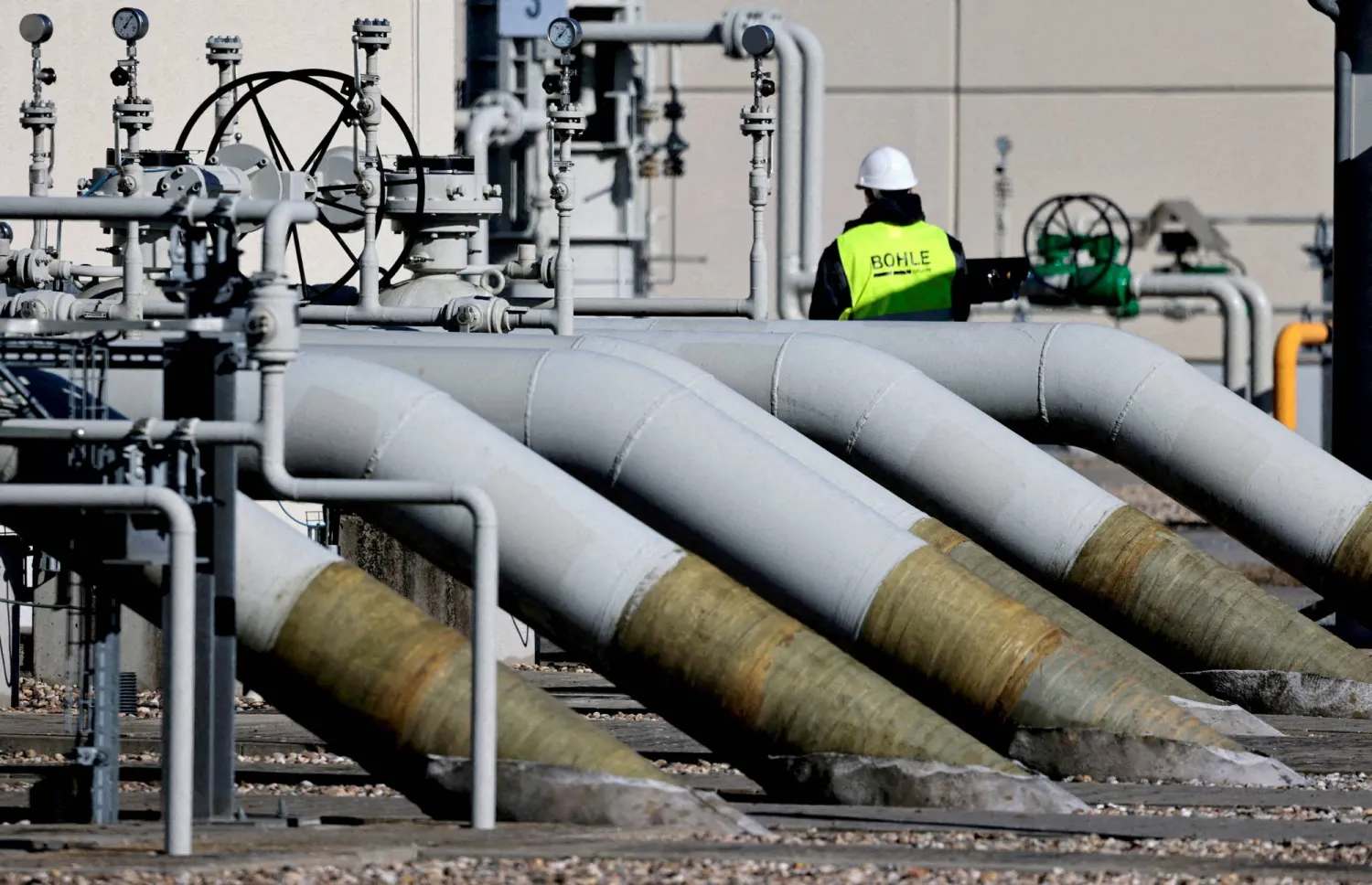
Pipes at the landfall facilities of the “Nord Stream 1” gas pipeline are pictured in Lubmin, Germany, March 8, 2022. (Reuters)
TT

Winter Tests European Energy Security... Algeria Advances to the Forefront

Pipes at the landfall facilities of the “Nord Stream 1” gas pipeline are pictured in Lubmin, Germany, March 8, 2022. (Reuters)

Europe is approaching winter facing a more complex gas equation than in previous years: lower-than-usual inventories, prices that have surged to levels the market has not witnessed in years, and disrupted Qatari supplies due to the war in the Middle East, all while Brussels moves forward with phasing out Russian gas.

At the heart of this equation, Algeria emerges as one of the most critical available alternatives, particularly for European countries bordering the Mediterranean, while Germany is moving more seriously for the first time to secure long-term contracts for Algerian gas.

Europe’s primary concern is not an immediate gas shortage, but a narrow safety margin ahead of the heating season, with EU inventories at approximately 64.7 percent in early September and Germany in a particularly vulnerable position. Simultaneously, the benchmark Dutch TTF gas price climbed to roughly 69.90 euros per megawatt-hour - its highest level since January 2023 - amid rising anxieties over liquefied natural gas (LNG) supplies from the Gulf.

The sensitivity of the situation is heightened because the European market does not only need to fill its storage facilities before winter, but must do so at a time when Asia is competing for the exact same shipments of LNG, making any additional supply shortfall even more costly.
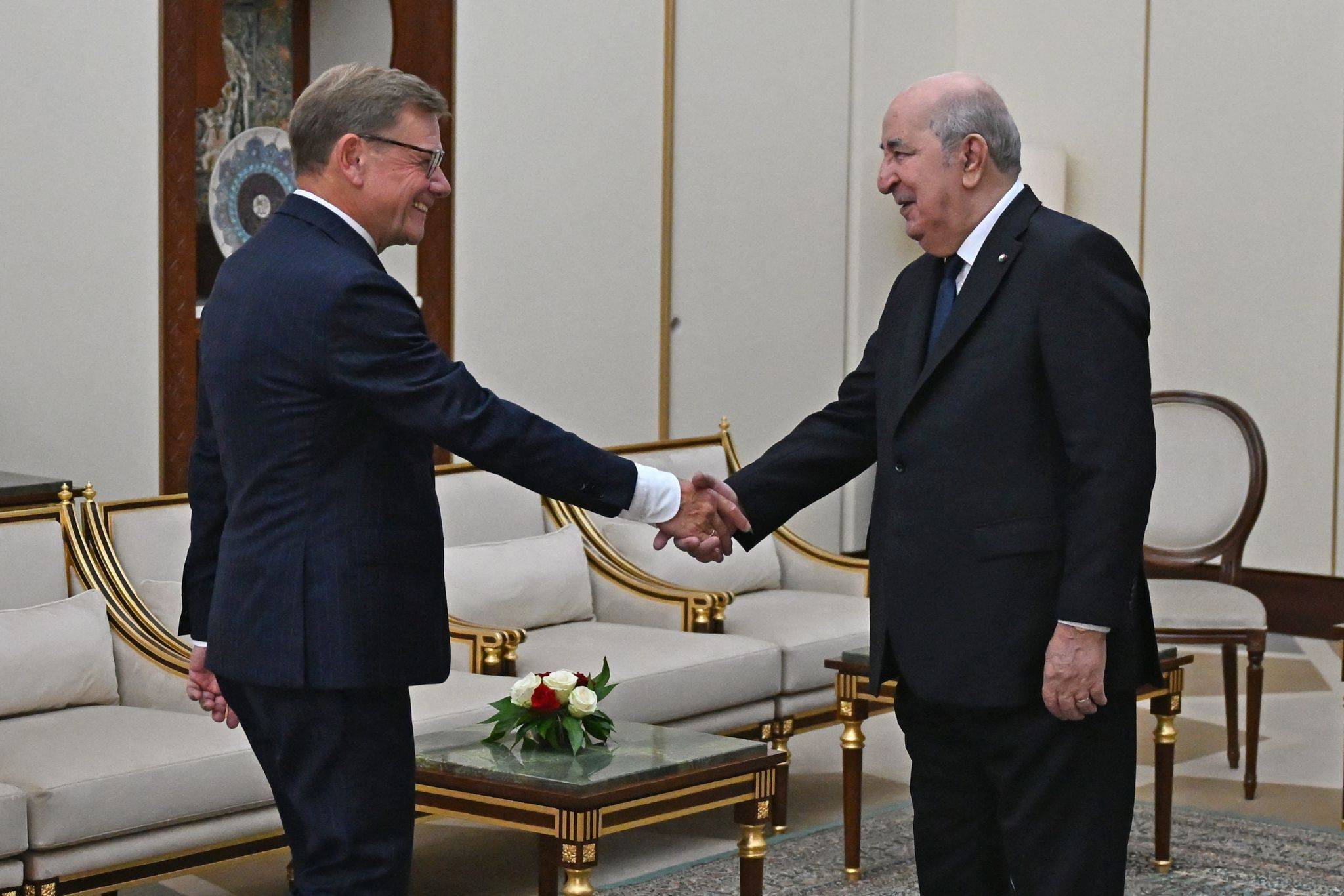
01 September 2026, Algeria, Algier: Johann Wadephul (L), German Foreign Minister, meets with Abdelmadjid Tebboune, President of Algeria. (dpa)

Algeria enters the spotlight

In this scene, Algeria is advancing to the forefront of the European scene as a nearby supplier capable of providing gas through pipelines, alongside LNG shipments.

During his visit to Algeria on Tuesday, German Foreign Minister Johann Wadephul said his country wants to negotiate long-term gas contracts with Algeria, stressing that diversifying supply sources has become a necessity and that Algeria represents a reliable source that can help meet Germany’s needs.

The German move does not come from a vacuum; Germany’s VNG and Algeria’s company Sonatrach signed a new gas supply contract in July, with deliveries scheduled to begin in 2027, as part of expanding and diversifying the German company's portfolio of gas sources.

Germany and Algeria underscored the importance of their energy partnership in July, expressing mutual interest in increasing gas supplies and cooperating on the Southern Hydrogen Corridor project. This collaboration reflects a strategic effort to establish an enduring energy relationship that extends beyond short-term supply security.

Why Algeria?

Algeria is gaining increasing importance in the European energy security equation, not only as a primary supplier of gas but also due to its weight in the oil market as a member of the Organization of the Petroleum Exporting Countries (OPEC) since 1969, producing around one million barrels per day of crude oil, including high-quality Sahara Blend. Alongside its oil wealth, Algeria possesses around 4.5 trillion cubic meters of proven natural gas reserves, cementing its position as the largest gas producer in Africa and providing a resource base capable of supporting its role as a long-term supplier to global markets.

Algeria's importance to Europe is magnified by its geographic proximity to the continent's markets and its existing export infrastructure, which includes pipelines and LNG networks. These advantages allow Algeria to respond to shifts in European demand more rapidly than suppliers that require massive investments and new infrastructure before increasing their deliveries.

The vast scale of the European market reveals both the scope of the opportunity and the challenge facing Algeria simultaneously. European Union natural gas consumption reached around 339 billion cubic meters in 2025, while domestic production did not exceed 33 billion cubic meters, leaving the continent heavily dependent on imports.
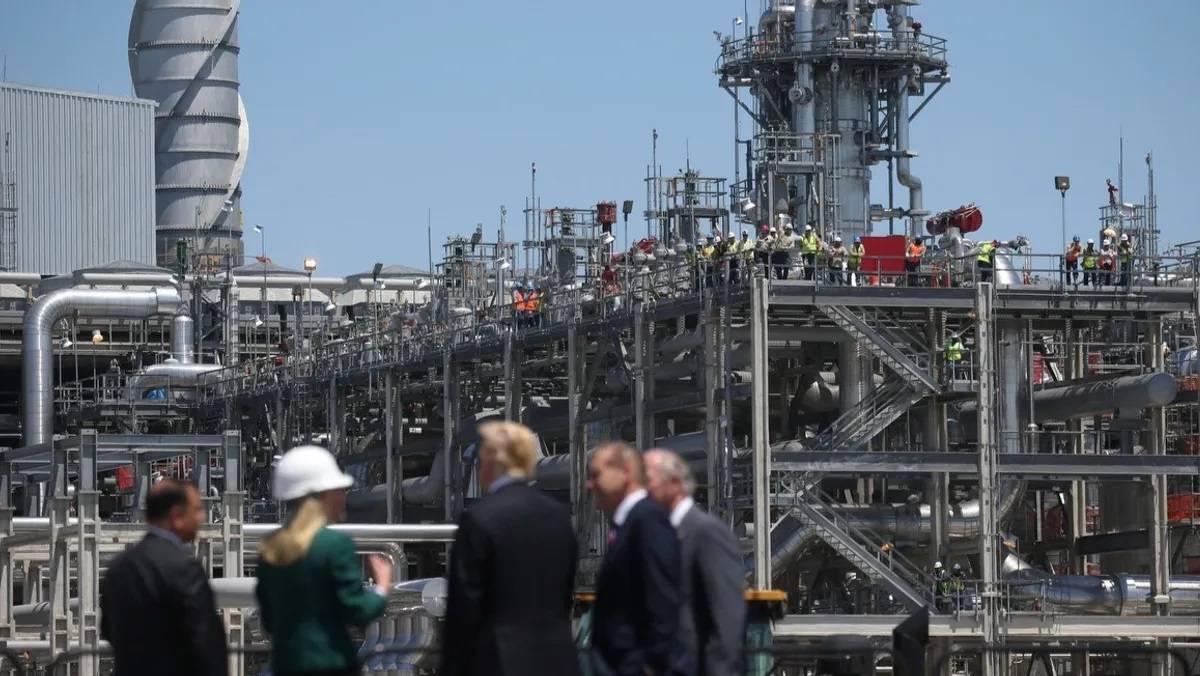
US President Donald Trump during a visit to a liquid natural gas export terminal in Louisiana. (Reuters)

With European demand projected to decline by more than 2 percent in 2026, the primary issue is not consumption growth, but rather securing supplies and diversifying their sources, particularly as Europe continues to reduce its reliance on Russian gas.

Algeria already plays a pivotal role in supplying southern Europe, particularly Italy and Spain, while Germany seeks to secure a share of Algerian supplies as part of its efforts to diversify gas sources and reduce reliance on traditional suppliers. The movement of Algerian flows to Europe reveals flexibility in directing exports according to market needs; while some flows to Italy declined, supplies heading to Spain rose, reinforcing Algeria's role in balancing the European market.

However, this importance does not mean that Algeria is capable on its own of filling the gap left by the decline of Russian supplies or any potential shortfall in Qatari deliveries. The scale of Algerian production and export capacities is insufficient to fully compensate for these supplies. Consequently, the European wager on Algeria is not based on replacing one supplier with another, but rather on a gradual reshaping of the European energy map, diversifying supply sources, and reducing the risks of relying on any single provider.
3D-printed oil pump jacks and the QatarEnergy logo appear in this illustration taken March 2, 2026. (Reuters)

Qatar absent at the worst time

The larger issue for Europe is that Qatar, which has been one of the world's most critical sources of LNG, is absent from the market at a time when the continent needs every possible additional shipment.

According to Reuters data, Qatar's LNG exports fell by around 96 percent during the first six months of the US-Israel war on Iran, with the number of shipments leaving Qatar dropping to just 18, compared to 509 during the same period last year.

This is no longer limited to a temporary disruption; QatarEnergy has extended the suspension of gas shipments to Italy’s Edison until early November, resulting in the cancellation of five additional shipments. This brings the total number of suspended shipments to 29, equivalent to around 3.8 billion cubic meters of gas.

Herein lies the paradox: Europe is entering the phase of replenishing its inventories, while one of the world's largest suppliers of LNG is unable to return to the market at full capacity.

Russia leaving the picture but not fast enough for Europe

On the opposing side, Europe is moving forward along the political and legal path to end its reliance on Russian gas. The European Union has adopted a gradual plan to ban Russian gas imports, with a full ban on long-term liquefied natural gas contracts set to begin in January 2027, and pipeline gas contracts facing a ban by September or November 2027 at the latest.

Russian gas remains present in the European market despite EU efforts to reduce reliance on it. EU countries imported over 16 percent more Russian liquefied natural gas during the first half of 2026 compared to the same period last year, totaling approximately 5.96 billion euros (USD$6.9 billion), with France, Belgium, and Spain leading as the top importers according to data from the German non-profit organization Urgewald.

These figures reflect the continued reliance of some European markets on Russian gas during the transitional phase, even as the EU moves toward a gradual phase-out of these imports and the diversification of its supply sources. This reveals the contradiction facing Europe: a political decision to eliminate Russian gas versus an ongoing market need for supplies before alternative options are fully realized.
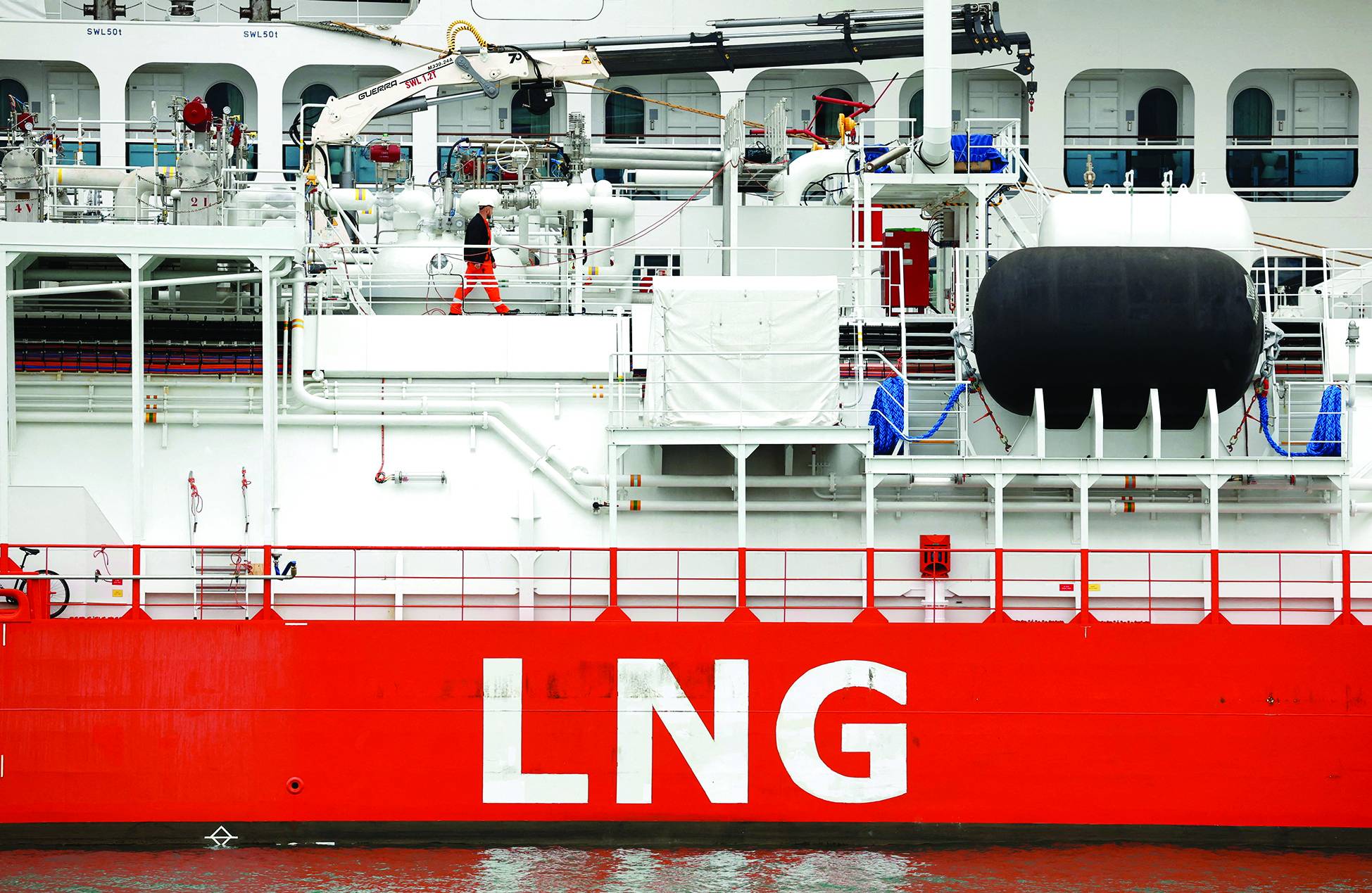
An LNG (Liquefied Natural Gas) ship loads gas to a cruise ship in Barcelona, Spain, January 29, 2024. (Reuters)

Market prices the risk

This equation was directly reflected in prices as the Dutch TTF gas contract rose to approximately 69.90 euros per megawatt-hour on September 1, marking a 4.4 percent increase in a single session. Market data indicates that European gas prices have surged by more than 130 percent since the beginning of the year.

Most importantly, the price curve itself reflects anxiety regarding the winter season, as near-term prices have become higher than some futures contract prices. This phenomenon, known as backwardation, means the price of a commodity for immediate or near-term delivery is higher than its price for future delivery, which weakens the economic incentive for traders to store large quantities of gas now, despite Europe’s need for it ahead of winter.

In the most severe scenario, European gas prices could exceed 100 euros per megawatt-hour if LNG supplies from the Middle East remain limited and competition with Asian buyers intensifies.

Winter is the real test

Therefore, the European question this winter will not be: Is there gas in the market? Rather, it will be: Is there enough gas at a price that Europe can afford?

Europe today possesses more diverse sources than it did during the 2022 crisis, with increased reliance on Norway, the United States, and Algeria, alongside the expansion of infrastructure to receive liquefied natural gas. However, this new flexibility has not eliminated the market's sensitivity to geopolitical shocks.

Europe requires substantial volumes of US LNG to offset a portion of the shortfall, but the US itself faces growing domestic gas demand, particularly with the expansion of data centers and artificial intelligence, while US gas exports cannot be increased indefinitely at a rapid pace. In July, Europe received 4.76 million tons of US gas, compared to 3.32 million tons that went to Asia.
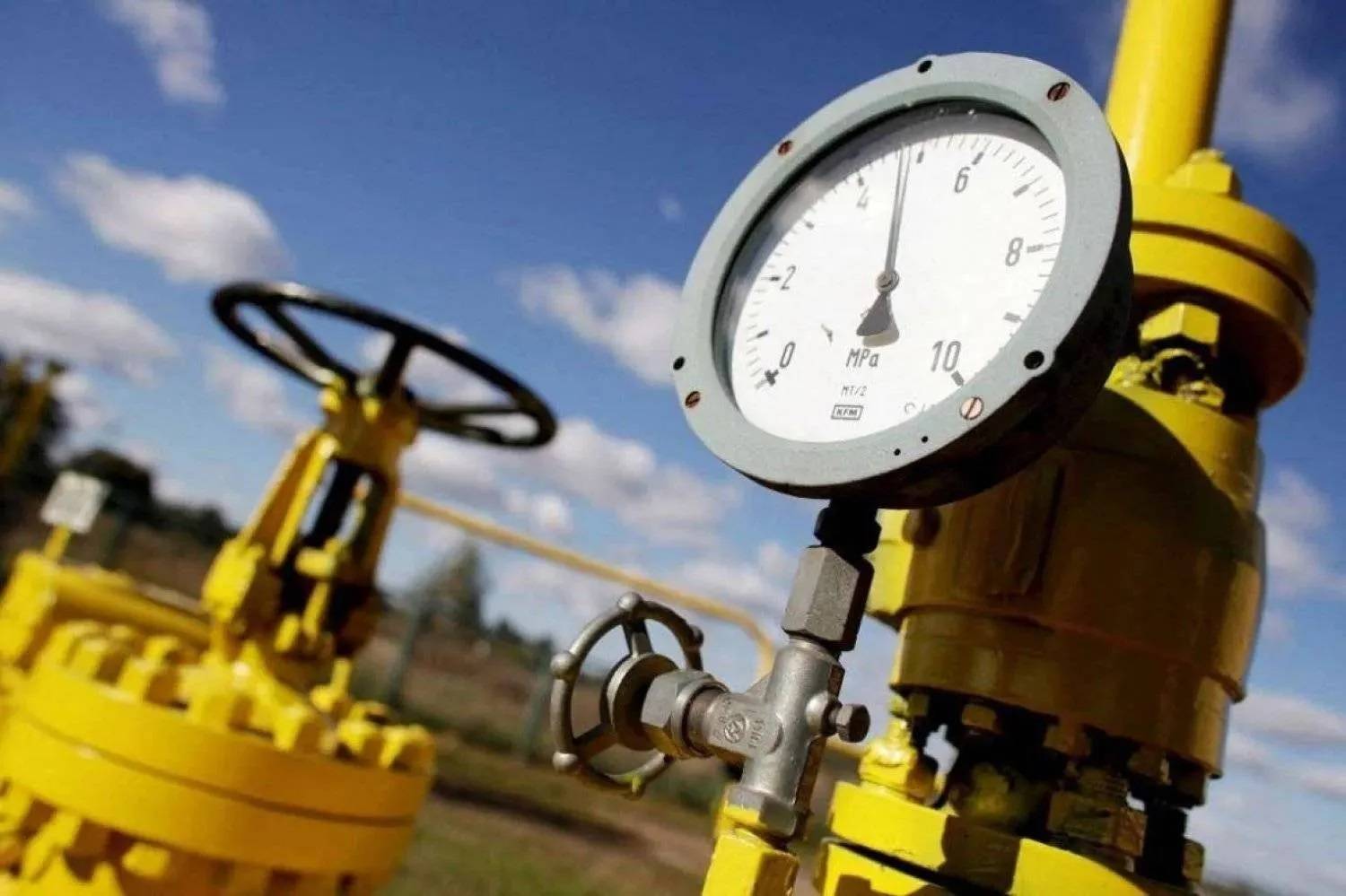
A pressure gauge is pictured at a Gaz-System gas compressor station in Rembelszczyzna outside Warsaw October 13, 2010. (Reuters)

Algeria is an important, not a sole alternative

Algeria is therefore acquiring increasing strategic importance. It is located close to Europe, possesses existing pipelines, and has extensive experience in gas exports, while it has already begun expanding its relations with European companies.

However, the European wager on Algeria does not mean the country can single-handedly fill the supply gap left by Russia and Qatar. New German demand for Algerian gas and emerging contracts reflect a broader strategic shift toward diversifying suppliers and minimizing reliance on any single source.

Ultimately, Europe's ability to safely navigate the winter will be determined by three interconnected factors: the volume of available supplies, the speed of inventory replenishment, and the severity of winter temperatures. If a cold winter coincides with the continued absence of Qatari gas and weak Russian supplies, Europe may find itself forced to pay higher premium prices to attract global shipments, while Algeria, Norway, the US, and other sources become central to the battle to secure every additional unit of gas.

So, the upcoming European gas crisis does not appear to be a mere storage issue, but rather a test of the new system built by Europe following the collapse of the Russian gas model; a system that is more diversified, yet more exposed to global prices, Asian competition, and geopolitical shocks.



Mideast Oil Exports Rebound to 12.8 Million Barrels Per Day

FILED - 27 December 2011: FILE PHOTO - A satellite picture provided by the National Aeronautics and Space Administration (NASA), shows the Arabian Gulf, the Strait of Hormuz, and the Gulf of Oman. Photo: -/The Visible Earth/NASA/dpa
TT

Mideast Oil Exports Rebound to 12.8 Million Barrels Per Day

FILED - 27 December 2011: FILE PHOTO - A satellite picture provided by the National Aeronautics and Space Administration (NASA), shows the Arabian Gulf, the Strait of Hormuz, and the Gulf of Oman. Photo: -/The Visible Earth/NASA/dpa

Crude oil exports from key Middle East producers rebounded in September to 12.8 million barrels per day, the highest since the US-Israeli war with Iran started in February, data from Kpler showed on Monday, as Saudi Arabia and the United Arab Emirates boosted exports.

The rebound came following a recovery in exports via the Strait of Hormuz, ⁠which were set ⁠to hit about 7.4 million bpd this month, as Saudi Arabia diverted oil exports from the Red Sea port of Yanbu following attacks that damaged its East-West pipeline, the preliminary data showed.

While exports from the region - which includes Saudi Arabia, the United Arab Emirates, Iraq, Oman, ⁠Qatar, Kuwait, Iran - have rebounded, they were still about 6 million bpd down from 18.8 million bpd in February, according to Kpler.

The region's top exporter Saudi Arabia was on track to ship about 5.4 million bpd this month, rebounding from 2.446 million bpd in August, the data showed, according to Reuters.

September shipments from the Ras Tanura port in the Gulf jumped to about 3.6 million bpd, from 929,000 bpd in August, but still lower than the 6.411 million bpd ⁠recorded in ⁠February, according to the data.

A total of 19 very large crude carriers, carrying 2 million barrels of Saudi oil each, exited the Strait of Hormuz last week, Kpler data showed.

The figures exclude any vessels that might have crossed the strait with their Automatic Identification System transponders turned off to avoid detection.

Before the Iran war started on February 28, the strait typically handled about 125 large commercial vessels per day, including tankers, gas carriers, bulkers and container vessels, accounting for some 20% of the world’s daily crude oil and liquefied natural gas supply.


Syria Central Bank Expects More Than $1 Billion to Establish New Banks

President Ahmad al-Sharaa issued a decree appointing Nebras Mohammad Wahid Khayyata as first deputy governor of the Central Bank of Syria. (X) 
TT

Syria Central Bank Expects More Than $1 Billion to Establish New Banks

President Ahmad al-Sharaa issued a decree appointing Nebras Mohammad Wahid Khayyata as first deputy governor of the Central Bank of Syria. (X) 

Syria expects more than $1 billion in foreign capital to flow into the country to establish new banks, Central Bank Governor Mohammad Safwat Raslan said, as the bank seeks to encourage investment, protect customers’ rights and open secure money-transfer channels through official institutions.

Raslan told state news agency SANA on Sunday that licensing requirements already exist for both Islamic and conventional banks. Key criteria include applicants’ experience and reputation and the founders’ financial solvency, as well as a requirement for a strategic banking partner to hold at least a 10 percent stake in the new bank.

The timeframe for granting licenses depends on applicants submitting the required documents and meeting the stipulated conditions, he explained. The Central Bank is working to ensure that preliminary licenses are issued within three to four months of receiving all requirements.

Raslan dismissed concerns about financial risks, noting that the law allows foreign investors to retain 60 percent of their paid-in capital in foreign currency. Investors’ rights to profits and their transfer are also protected, he added, pointing to the removal of all restrictions on buying, selling or transferring foreign currency.

On regulatory risks, Raslan stressed that the Central Bank issues its regulatory and supervisory decisions in accordance with international risk and accounting standards, meaning investors should find no difference between standards applied in Syria and those in their home countries.

The Central Bank is also encouraging international money-transfer providers to enter the Syrian market through Syrian financial institutions to create secure transfer channels for Syrians and foreigners and protect their rights and interests.

Daily and monthly transfer limits will be determined by agreements between Syrian financial institutions and banks or service providers abroad, according to the official.

Separately, President Ahmad al-Sharaa issued Decree No. 176 of 2026 appointing Nebras Mohammad Wahid Khayyata as first deputy governor of the Central Bank of Syria. The decree also repealed any provisions conflicting with its terms.


Riyadh to Host Global Energy Leaders for Talks on Markets, Supply

The Saudi Energy Minister during the opening ceremony of the 24th World Petroleum Congress in Calgary, Canada, in 2023 (Reuters)
TT

Riyadh to Host Global Energy Leaders for Talks on Markets, Supply

The Saudi Energy Minister during the opening ceremony of the 24th World Petroleum Congress in Calgary, Canada, in 2023 (Reuters)

Saudi Arabia will bring together some of the world’s most influential energy leaders in Riyadh from Oct. 11-15 for high-level talks on energy security, oil and gas markets, investment and the technologies reshaping the global energy industry.

At the heart of Riyadh Energy Week will be the 25th WPC Energy Congress, hosted by Saudi Arabia for the first time in the event’s nearly 90-year history. Held under the theme “Pathways to an Energy Future for All,” the congress will feature more than 30 ministerial, strategic and leadership sessions spanning global energy markets, investment and financing, artificial intelligence, critical minerals, carbon management, natural gas and the future energy mix.

The congress will run from Oct. 11-15 at the Riyadh Front Exhibition & Conference Center, with its official opening ceremony on Oct. 12. Organizers expect more than 25,000 participants, including 100 ministers, 500 CEOs and around 800 speakers, as well as representatives from about 1,000 companies. The exhibition will cover more than 50,000 square meters.

Riyadh Energy Week will also include an International Energy Forum ministerial meeting, Clean Energy Ministerial and Mission Innovation events, along with other sessions bringing together governments, international organizations and companies from across the energy value chain.

The Saudi Energy Minister upon his arrival to participate in the World Petroleum Congress in Calgary, Canada in 2023 (Reuters)

Global Government and Industry Leaders

Saudi Energy Minister Prince Abdulaziz bin Salman will formally open the congress on Oct. 12 alongside WPC Energy President Pedro Miras.

The executive program will include Saudi Economy and Planning Minister Faisal Alibrahim and Investment Minister Fahad Abduljalil Al-Saif, as well as Egyptian Petroleum and Mineral Resources Minister Karim Badawi, OPEC Secretary General Haitham Al Ghais, World Energy Council Secretary General and CEO Angela Wilkinson and International Energy Forum Secretary General Jassim Al Shirawi.

Leading industry speakers include ExxonMobil Chairman and CEO Darren Woods, TotalEnergies Chairman and CEO Patrick Pouyanne, Shell CEO Wael Sawan, BP CEO Meg O’Neill, Baker Hughes Chairman and CEO Lorenzo Simonelli, Siemens Energy CEO Christian Bruch, SLB CEO Olivier Le Peuch and ConocoPhillips President and CEO Andy O’Brien.

Prominent energy-market analysts will also participate, including S&P Global Vice Chairman Daniel Yergin, RBC Capital Markets’ Helima Croft, Carlyle senior adviser Jeffrey Currie, Energy Aspects founder and Director of Market Intelligence Amrita Sen and Rapidan Energy Group founder and President Bob McNally.

Energy Security and Markets

Energy security and global oil and gas markets will be among the congress’s main themes, with ministerial sessions bringing together representatives of producing and consuming countries to discuss market developments and the future of supply.

The agenda extends beyond oil and gas, with discussions on forces reshaping the industry, including AI and digitalization, critical minerals, energy-project financing, carbon management and renewables.

AI and digital transformation will feature prominently, with companies including Aramco, Siemens Energy, SLB, Hitachi Energy, Microsoft and Samsung E&A discussing the impact of digital technologies on energy operations, productivity and efficiency.

The discussions come as AI moves from experimental uses toward applications in operations, maintenance, data analysis and process optimization, while also driving increased demand for electricity and infrastructure to support expanding data centers.

A panel discussion at the 24th World Petroleum Congress in Calgary Canada in 2023

Saudi Arabia’s Economic and Energy Transformation

The congress will hold a ministerial session titled “Vision 2030: Economic Transformation and Global Competitiveness,” focusing on Saudi Arabia’s economic transformation and its growing role in the global energy system.

The agenda covers critical minerals and supply chains, carbon capture, utilization and storage, carbon markets, renewable energy and hydrogen, broadening the discussion from security of conventional fuel supplies to the technology, infrastructure and materials required for the future energy system.

The congress will also feature a technical program with more than 30 research and technical forums across five areas: primary energy supply, infrastructure, fuels and molecules, energy technologies and industry leadership.

Riyadh Energy Week will include specialized programs on the circular carbon economy, women in energy, young professionals, social responsibility, AI and digital transformation, as well as an Energy Hackathon and knowledge-sharing and networking events.