


IAEA: Status of Iran’s Nuclear Program Is Unclear

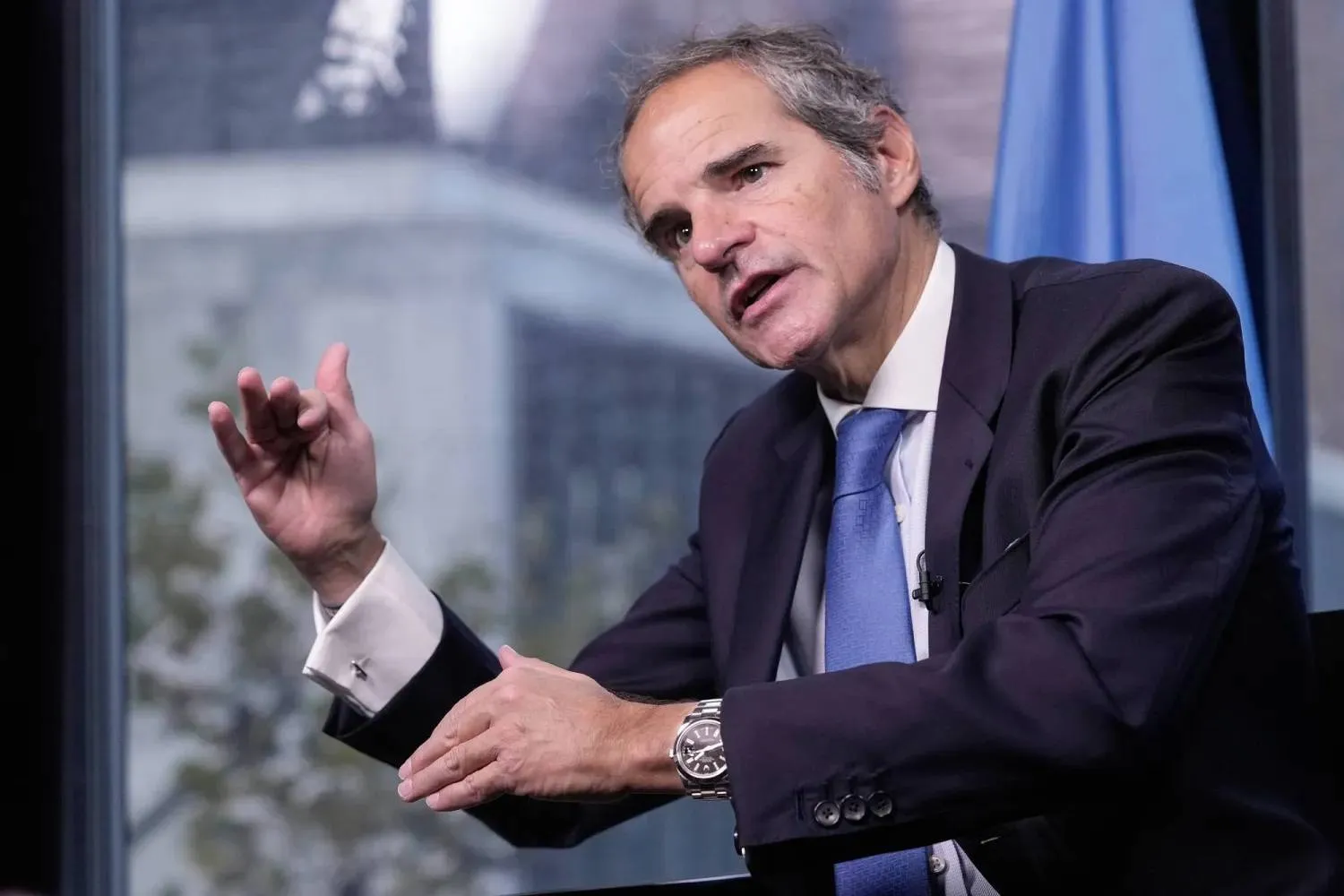
IAEA Director General Rafael Grossi (AP) 
TT

IAEA: Status of Iran’s Nuclear Program Is Unclear

IAEA Director General Rafael Grossi (AP) 

The status of a key part of Iran's nuclear program remains unknown while international inspectors have yet to gain access to nuclear facilities, the International Atomic Energy Agency reported on Tuesday, as the country’s six-month conflict with the United States shows no signs of resolution.

IAEA monitors cannot verify the location or status of Iran’s stockpile of near-bomb grade uranium, according to the 11-page restricted report that was sent to member states and cited by Bloomberg and Reuters.

“The agency’s lack of information about this nuclear material and access to facilities to verify it is a matter of proliferation concern,” IAEA Director General Rafael Grossi wrote in the report.

He added that Iran needs to allow inspectors back in “with the utmost urgency.”

The IAEA report on Iran followed Grossi's visit to Washington. It also came as the US launched a new wave of strikes against targets in Iran, increasing tensions as both countries compete for control of the Strait of Hormuz waterway.

Grossi repeated his demands for Iran to allow inspectors to resume their work and called for a negotiated resolution to the US-Iran conflict.

Stockpiles Cannot Be Verified

The report on Iran showed there had again been no progress. Inspectors have yet to return to nuclear sites the United States and Israel bombed in June 2025.

Until those attacks, the IAEA estimates Iran had 440.9 kg of uranium enriched to up to 60% purity, a short step from the roughly 90% of weapons-grade uranium. That is enough material, if enriched further, for 10 nuclear weapons, according to an IAEA yardstick, and Iran also had material enriched to lower levels.

Before the June 2025 strikes, the IAEA reported that Iran held approximately 8,599.6 kilograms of low-enriched uranium alongside over 440 kilograms of highly enriched uranium, according to Bloomberg.

How much of that remains is unclear.

“It is more than a year since the Agency lost continuity of knowledge in relation to the previously declared inventories of LEU (low-enriched uranium) and HEU (highly enriched ⁠uranium) enriched up to 60% U-235 at the declared nuclear facilities affected by the attacks of June 2025,” the report said.

“The Agency's lack of information about this nuclear material and access to facilities to verify it is a matter of proliferation concern ... and needs to be addressed with the utmost urgency,” it added.

IAEA inspections of Iran dropped by more than half last year after the country imposed new restrictions following a 12-day conflict in which Israel and the US attacked its nuclear sites.

Inspectors will be allowed to visit Iran's Bushehr nuclear power plant in mid-September, the IAEA reported.

A War that Disrupted the Nuclear Path

Uncertainty around Iran’s nuclear program has exasperated with the war that began on February 28, when the United States and Israel launched attacks on Iran.

Since then, Washington and Tehran witnessed several months of fighting and attempts to negotiate, before reaching a tentative understanding in June. The accord was supposed to allow the agency access to Iran’s nuclear sites and begin a new set of talks on Iran’s nuclear program, but that agreement quickly collapsed.

US President Donald Trump insists that military action is necessary to ensure Iran never acquires a nuclear weapon.

Iran has always denied seeking a nuclear weapon but has never satisfactorily explained to the agency why it has enriched uranium to 60%.

The IAEA report comes before a meeting next week of the agency’s board of governors in Vienna to consider a new resolution censuring Iran.

Iran Urges US to Accept Proposal to Reopen Strait of Hormuz

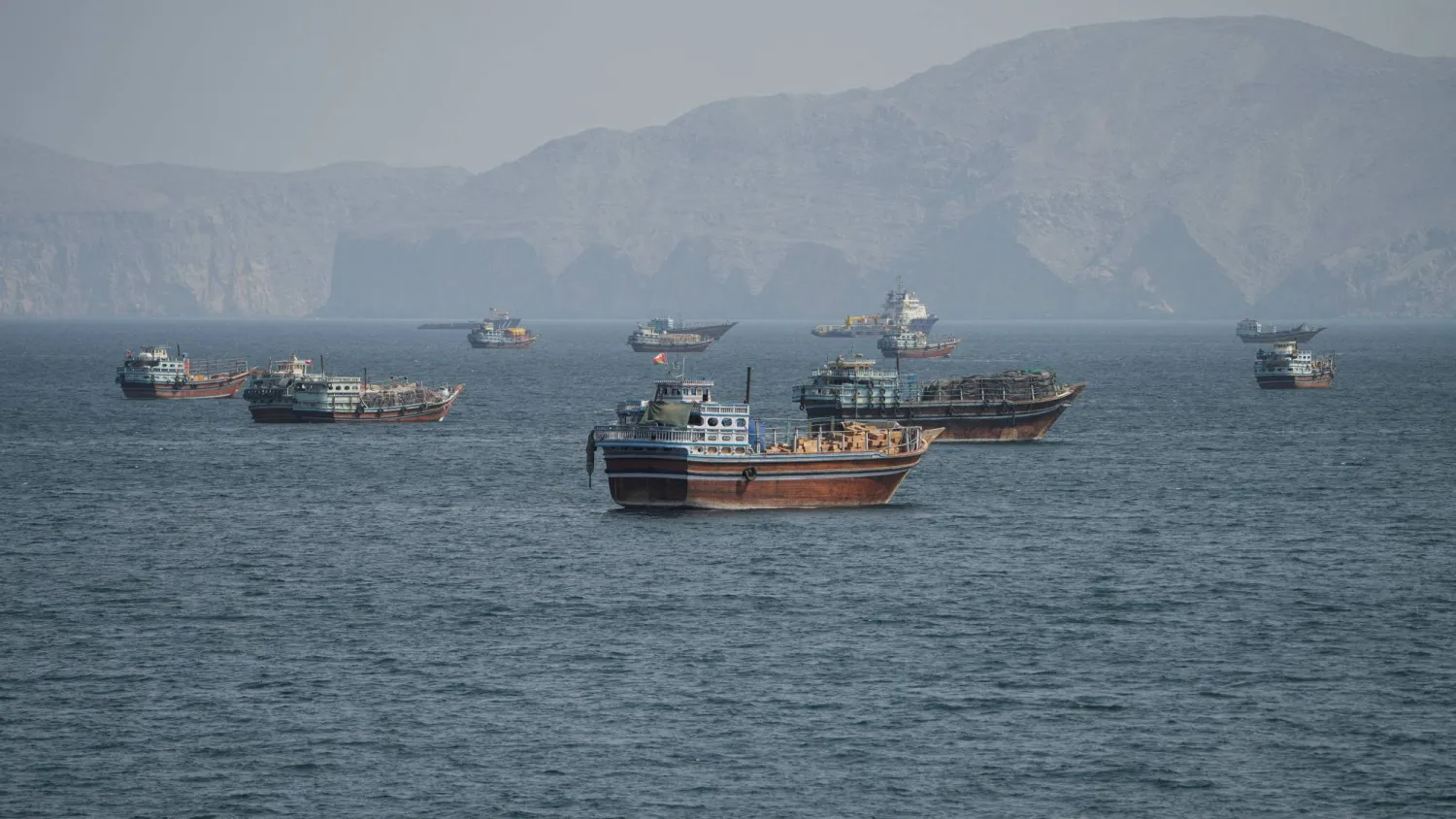
Vessels at the Strait of Hormuz, as seen from Musandam, Oman, October 2, 2026. (Reuters)
TT

Iran Urges US to Accept Proposal to Reopen Strait of Hormuz

Vessels at the Strait of Hormuz, as seen from Musandam, Oman, October 2, 2026. (Reuters)

Iran's ‌offer to the United States to reopen the Strait of Hormuz within seven days is still on the table, Foreign Minister Abbas Araghchi told Iranian media outlets on Sunday. 

Iran presented its proposal in mid-September after an interim ceasefire collapsed. Tehran later acknowledged receiving a US response, but Iran’s security chief said last week negotiations have stalled because Washington failed to address all seven conditions for ‌reopening the strait. 

"Our ‌situation is clear and based ‌on ⁠the seven-days proposal presented ⁠to the US. They shared comments which we are reviewing, but our proposal is still on the table and if there is any honesty on the US part, which there isn't, the way to reopening the Strait of Hormuz ⁠is obvious," Araghchi said while in Baghdad ‌for a meeting ‌of the Organization of Islamic Cooperation. 

Iran's conditions include, among other ‌demands, the lifting of the US blockade on ‌its ports, the lifting of US sanctions on its oil exports as well as ending hostilities on all regional fronts. 

If Washington accepts Tehran's conditions, the strait ‌could reopen within six days, with talks resuming the following day, Araghchi said. 

A central ⁠point ⁠of disagreement has been Washington’s insistence on addressing Iran's nuclear program from the outset. 

US Vice President JD Vance said earlier this month that Iran must make a "meaningful" reduction in its uranium enrichment capacity to satisfy US demands and end the countries' eight-month war. 

Tehran says negotiations should initially focus on reopening the Strait of Hormuz, which before the war carried about a fifth of the global trade in oil and liquefied natural gas (LNG), and restoring security in the waterway. 


Congo Confirms Ebola Outbreak Spreads to Eighth Province

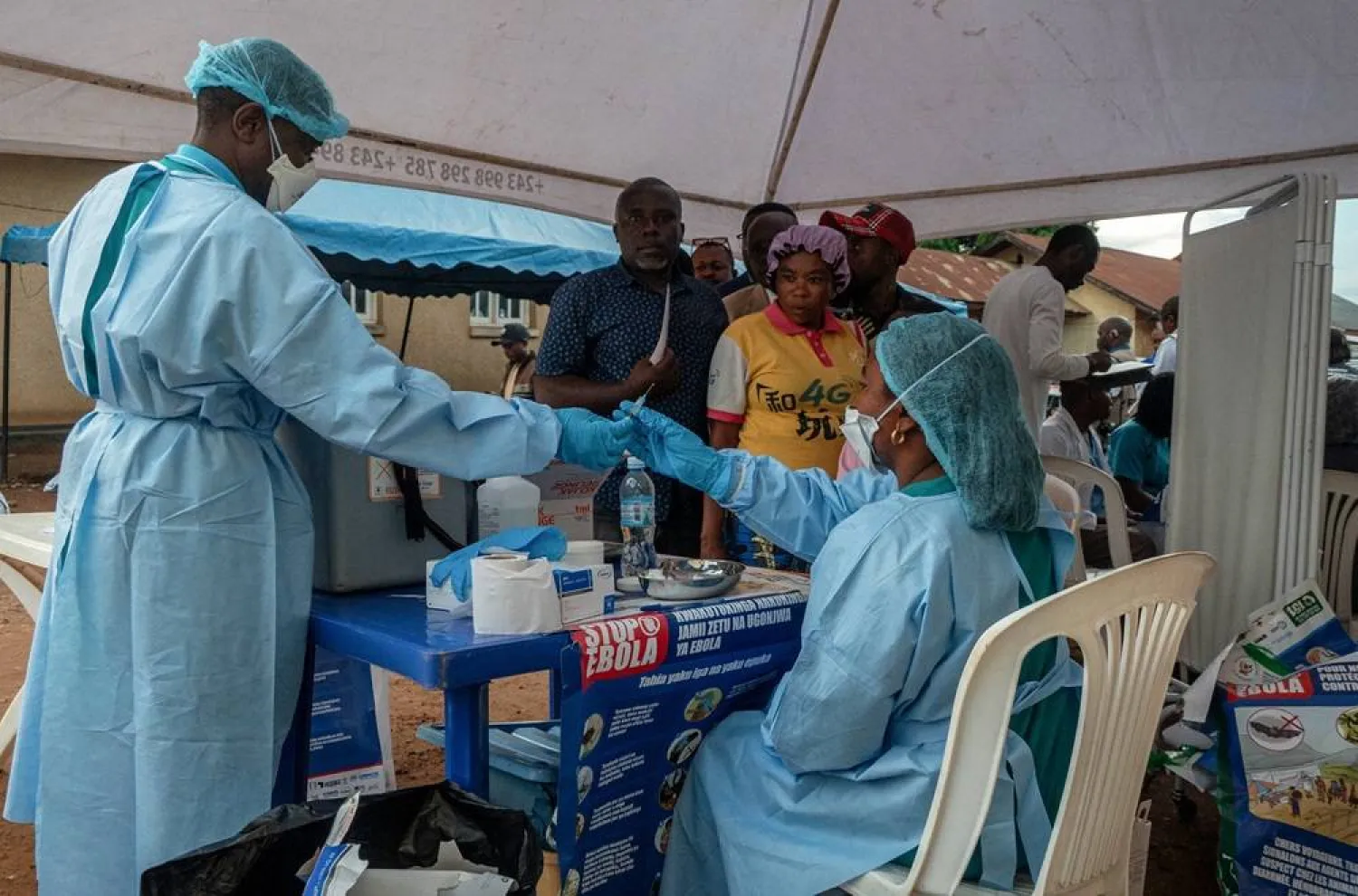
Health workers and humanitarian responders on the front lines of the Ebola response gather to receive a vaccination due to their potential exposure to the virus as part of their work with suspected cases, including contacts, as aid agencies intensify efforts to contain the Ebola outbreak involving the Bundibugyo strain, in the North Kivu Province of the Democratic Republic of the Congo, October 16, 2026. (Reuters)
TT

Congo Confirms Ebola Outbreak Spreads to Eighth Province

Health workers and humanitarian responders on the front lines of the Ebola response gather to receive a vaccination due to their potential exposure to the virus as part of their work with suspected cases, including contacts, as aid agencies intensify efforts to contain the Ebola outbreak involving the Bundibugyo strain, in the North Kivu Province of the Democratic Republic of the Congo, October 16, 2026. (Reuters)

The Ebola outbreak in Democratic Republic of Congo has spread to an eighth province, North Ubangi, Congo's public health institute said on Sunday, confirming earlier Reuters reporting. 

The emergence of cases in the province, which borders Central African Republic, poses a new challenge for health authorities struggling ‌to contain ‌the outbreak. 

The National Institute ‌for ⁠Biomedical Research confirmed ⁠two cases - including one death - in North Ubangi. 

Reuters reported on Thursday that two cases were confirmed in the province, citing two health officials. At the time, there was no ⁠official statement by Congolese ‌authorities. 

North Ubangi ‌becomes the eighth province affected by the outbreak, ‌alongside North Kivu, Ituri, Haut-Uele, ‌Tshopo, Sud-Kivu, Bas-Uele and South Ubangi. 

The outbreak, the worst Ebola epidemic in Congo's history, has already spread beyond the country's ‌borders, with cases recorded in Uganda and seven infections confirmed ⁠in ⁠Kenya this month. 

Congo's latest situation report showed 67 new confirmed cases and 26 new deaths in the 24 hours to Oct.16, bringing the cumulative total to 9,415 cases and 4,536 deaths since the outbreak began. 

The outbreak remains concentrated in eastern Congo, with Ituri province reporting 44 of the 67 new cases. 


Iran’s New Defense Minister Threatens ‘Enormous Damage’ if US Attacks

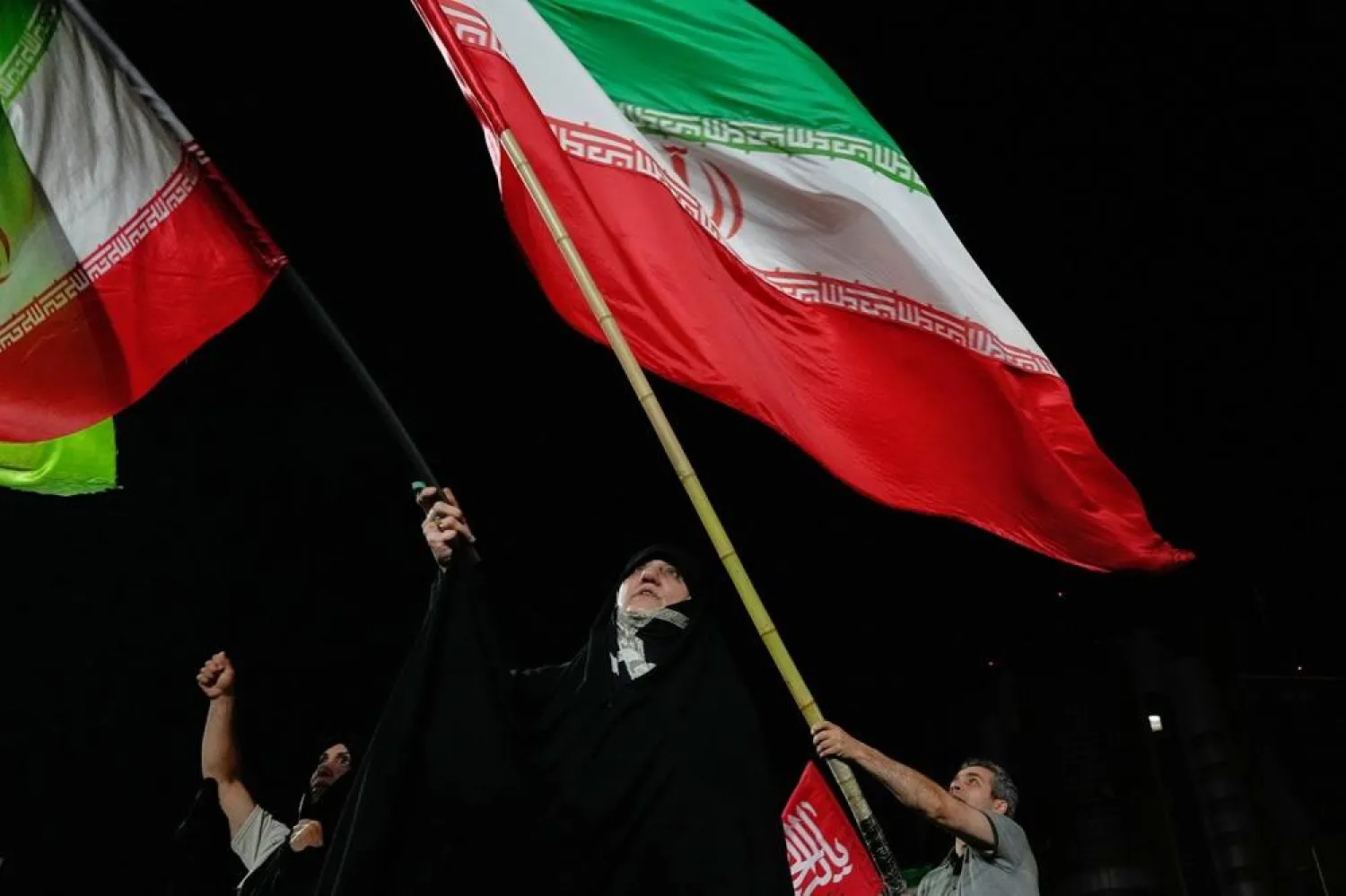
 Demonstrators wave Iranian flags during a pro-government gathering at a square in Tehran, Iran, Thursday, Oct. 8, 2026. (AP)
Demonstrators wave Iranian flags during a pro-government gathering at a square in Tehran, Iran, Thursday, Oct. 8, 2026. (AP)
TT

Iran’s New Defense Minister Threatens ‘Enormous Damage’ if US Attacks

 Demonstrators wave Iranian flags during a pro-government gathering at a square in Tehran, Iran, Thursday, Oct. 8, 2026. (AP)
Demonstrators wave Iranian flags during a pro-government gathering at a square in Tehran, Iran, Thursday, Oct. 8, 2026. (AP)

Newly appointed Iranian defense minister Mehrdad Akhlaghi threatened on Sunday to inflict "enormous damage" on the United States and its allies in the Middle East if Washington resumes its military campaign against the country. 

"People can rest assured that they will most likely not dare to attack us," Akhlaghi told reporters shortly after securing parliament's vote of confidence. "If they (the US) do, they themselves and the region will suffer enormous damage." 

Iranian lawmakers had earlier approved Akhlaghi's appointment as the country's new defense minister, after his predecessor was killed on the first day of the war with the United States. 

"Members of the Islamic Consultative Assembly (parliament) today gave a vote of confidence to Mehrdad Akhlaghi, the nominee for minister of defense and armed forces logistics," state television reported, nearly eight months after the initial US-Israeli strikes that sparked the conflict. 

According to the government website, Akhlaghi "was elected to the post with 237 votes in favor", out of a total of 277 votes cast. 

The veteran defense official replaces Aziz Nasirzadeh, who was killed in a US-Israeli attack on a leadership compound on February 28, alongside former supreme leader Ali Khamenei and senior military commanders. 

"If I receive parliament's vote of confidence, responsibility for the Ministry of Defense will fall to me at a sensitive juncture," Akhlaghi said before the vote, according to the ISNA news agency. 

"Under such circumstances, defending the country requires an accurate understanding of the environment, an understanding of the logic behind developments, the identification of influential trends, and preparedness to face different possible futures," he added. 

Although he does not hold a military rank, Akhlaghi has worked in the defense ministry for 42 years and has headed the Iranian Defense Industries Organization, the state's weapons manufacturer, since 2013. 

The United Nations sanctioned Akhlaghi in 2007 over his alleged involvement in nuclear or ballistic missile activities.