Danish Intelligence Warns of Russian Plans to Sabotage Defense Industry

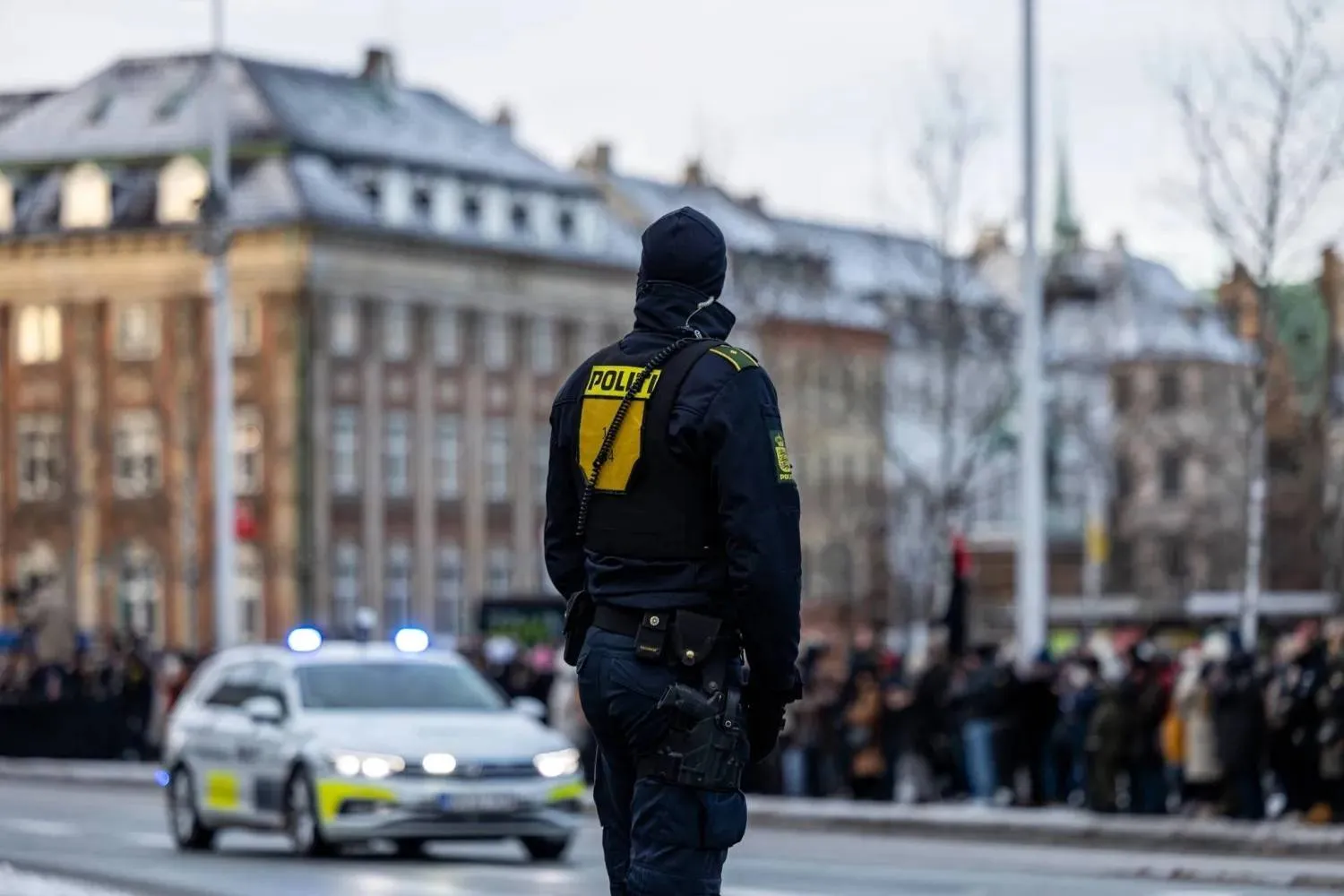
A police officer in Denmark (Danish Interior Ministry via Facebook) 
TT

Danish Intelligence Warns of Russian Plans to Sabotage Defense Industry

A police officer in Denmark (Danish Interior Ministry via Facebook) 

Danish authorities have uncovered plans and preparations for Russian sabotage in Denmark, the newspaper Berlingske reported on Wednesday.

Companies in the defense industry linked to military aid for Ukraine are among the main targets, Emil Græsholm, head of counter-intelligence at the Danish Security and Intelligence Service (PET), told the newspaper.

“The main objective is to stop specific deliveries for Ukraine's defense,” Græsholm was quoted as saying. “At the same time, the aim is to frighten us so that we no longer support the Ukrainians and do not expand our own defense capabilities.”

The intelligence service usually keeps a low profile, but Græsholm said the threat was sufficiently concrete to warrant a public warning.

“The selection of targets and the preparations are so specific that we believe it is necessary to go public with the message that this is a threat that must be taken seriously,” he told Berlingske.

Græsholm cited arson as one possible aim of the Russian plans and urged companies in the defense industry to tighten security measures.

Russia is also trying to recruit “ordinary Danes” for its plans, often without them knowing they are working for Moscow, according to Græsholm.

“It could involve taking photos or videos of companies or facilities that can then be used for sabotage plans,” he said. He urged people in Denmark to be suspicious if they were approached with such requests.

PET expects the threat to continue to grow “in scale and complexity,” the report said.

“It is directed against Ukrainian defense manufacturers in Denmark,” Græsholm said. “But we can see that the Russians are generally interested in the defense industry in Denmark.”


Far-right Leader Le Pen Kicks Off Tilt at French Presidency amid Nationwide Protests

26 September 2026, France, Paris: Jordan Bardella and Marine Le Pen arrive at Place de la Concorde ahead of Pope Leo XIV's Mass in Paris. Photo: Pierre Teyssot / Agf/AGF via ZUMA Press/dpa
TT

Far-right Leader Le Pen Kicks Off Tilt at French Presidency amid Nationwide Protests

26 September 2026, France, Paris: Jordan Bardella and Marine Le Pen arrive at Place de la Concorde ahead of Pope Leo XIV's Mass in Paris. Photo: Pierre Teyssot / Agf/AGF via ZUMA Press/dpa

Marine Le Pen, France's far-right candidate to succeed President Emmanuel Macron in elections in six months, was to give her first campaign speech on Sunday, a day after protests sweeping the country again flared into violence.

Le Pen -- the frontrunner according to surveys -- is seen benefiting from the convulsions France has been going through for weeks, punctuated by mass rallies and violent clashes on Saturday and a week earlier, said AFP.

More than 400,000 people marched in major French cities on Saturday to protest the rising cost of living, with groups of masked youths breaking away to provoke police, who responded with tear gas and water cannon. Police made more than 1,000 arrests.

Officers faced "an extremely elevated level of violence" from black-clad "ultra-left" extremists who had trailed in the demonstrations, Interior Minister Laurent Nunez said late Saturday.

A week earlier, on October 17, similar nationwide marches took place, also against rising inflation sent surging by the war in the Middle East. They, too, degenerated into street violence, with public buildings vandalized and hundreds of shops looted.

The mass rallies were fed by four weeks of student protests across France, over classroom conditions and access to university places, which at times also descended into clashes.

Unions and Yellow Vest protesters have vowed to keep up their street marches in the weeks ahead, pointing to a febrile period as the elections draw near.

- Anger at Macron -

Le Pen, who will address 10,000 members of her National Rally (RN) party in the city of Orleans, has accused Macron's centrist government of being soft on violent protesters and lacking authority.

Police were on Sunday filtering traffic going into Orleans, after thousands of counter-protesters opposed to Le Pen and her anti-immigration, nationalist RN marched in the city on Saturday chanting anti-fascist slogans.

Police put their numbers at 13,000, while organizers estimated the turnout at twice that.

If Le Pen wins the two-stage presidential elections in April and May, she has vowed to cut the cost of living through capped household energy bills, reduced taxes and trimming France's contribution to the European Union.

She is also critical of NATO, and of France's support of Ukraine as it battles Russia's invasion.

The RN, which portrays itself as a party of law and order, has also sided strongly with the police in the current unrest.

The head of Le Pen's party, Jordan Bardella, whom she intends to make prime minister if she becomes president, has visited police stations to underline that credential.

French voters, angry over Macron's perceived detachment over his two terms and his recent orders to curb the protests, are turning to more extremist politics, polling shows.

An Ipsos survey published Saturday suggested Le Pen would score 32 to 34 percent of the vote in the first round of the election, with a far-left rival, Jean-Luc Melenchon, getting 17 percent. Centrist candidates from mainstream parties trailed them.

Asked about the protest violence, a majority of the 1,500 people questioned in the survey -- 58 percent -- said they felt anger.

It found 81 percent believed the government was "responsible for this situation", while 79 percent thought radical political groups were, 62 percent blamed the left, and 52 percent blamed the police.

- No money -

Whoever wins the presidency will find limited room to throw money around to placate various clamoring interest groups.

France's public debt and budget deficit have climbed well beyond the ceilings EU member countries are meant to stick to.

Macron's government is trying to get a cost-cutting budget adopted, but faces headwinds from both the sustained protests demanding more spending and the political jockeying by parties eyeing power.

As Macron sees out the final months of his presidency, he has to tread a line between cracking down on street violence and opening dialogue with unions, students and other groups to attempt to restore order.

Although the French president has not invoked a state of emergency, he has ordered bans on non-union demonstrations deemed "illegitimate", and officials under him have imposed bans on protests in city centers and localized curfews in certain zones.

Many protesters on Saturday raged against the measures, describing them as an assault on the French right to protest.

The Yellow Vest movement, which challenged Macron eight years ago with street disruptions, has called for another day of protests next Saturday.

And the powerful CGT union, prominent in the demonstrations, is urging a campaign of strikes starting from November 5.


Iran Parliament Speaker Calls for Cutting Gas Consumption by 10 Percent as Winter Nears

 Traffic moves past an installation depicting butterflies forming the Iranian national flag in Tehran on October 21, 2026. (AFP)
Traffic moves past an installation depicting butterflies forming the Iranian national flag in Tehran on October 21, 2026. (AFP)
TT

Iran Parliament Speaker Calls for Cutting Gas Consumption by 10 Percent as Winter Nears

 Traffic moves past an installation depicting butterflies forming the Iranian national flag in Tehran on October 21, 2026. (AFP)
Traffic moves past an installation depicting butterflies forming the Iranian national flag in Tehran on October 21, 2026. (AFP)

Iran's parliament speaker Mohammad Bagher Ghalibaf on Sunday called for a campaign to cut gas consumption by at least 10 percent, with officials anticipating shortages as winter approaches.

While a major producer, Iran has long suffered shortages of natural gas, essential for powering heating systems, which have been exacerbated by war with the United States and Israel that began in February.

During the most intense phase of the fighting, which lasted nearly 40 days, the two countries struck key Iranian infrastructure including natural gas refineries, according to Tehran.

Winter in Iran often sees temperatures drop below freezing, especially in the country's north.

"To get through the approaching winter, a nationwide effort is essential ... to reduce gas consumption by at least 10 percent," said Ghalibaf in a video carried by Iranian media.

"Anyone who saves gas, regardless of the amount, will immediately receive the corresponding proceeds in their bank account, allowing everyone to see the tangible impact of those savings on their household budget."

Earlier in October, First Vice-President Mohammad Reza Aref said the government anticipated a daily "gas shortfall of 100 million to 250 million cubic meters during the cold season because of the damage caused by the war," according to the official IRNA news agency.

He added that he hoped to restore the supply of around 100 million cubic meters by the start of winter.

An April ceasefire brought an end to the initial phase of intense bombardment, but the two sides have continued to vie for control over the Strait of Hormuz, through which around a fifth of the world's oil and liquefied natural gas used to travel.

Iran has claimed control over the strait since the outbreak of the war and has regularly targeted vessels that attempt crossings without its authorization.

In response, Washington has imposed a counter-blockade on Iranian ports and in August announced what it called an "economic asphyxiation" campaign on Iran aimed at strangling its already battered economy.


Two Killed in Ukrainian Drone Strike on Russian City

This handout photograph posted on the official Telegram account of Belgorod mayor Valentin Demidov, on October 25, 2026, shows damages following an overnight drone attack on Belgorod. (Photo by Handout / Telegram / @v_v_demidov / AFP)
TT

Two Killed in Ukrainian Drone Strike on Russian City

This handout photograph posted on the official Telegram account of Belgorod mayor Valentin Demidov, on October 25, 2026, shows damages following an overnight drone attack on Belgorod. (Photo by Handout / Telegram / @v_v_demidov / AFP)

Two people were killed and 13 others wounded as Ukraine unleashed a drone barrage on the Russian border city of Belgorod, Russian authorities said Sunday.

Over the past 24 hours, acting Belgorod regional governor Alexander Shuvaev said there had been 154 Ukrainian attacks across the region, with Belgorod city hit particularly hard overnight.

"Belgorod last night was subjected to a massive drone attack," Belgorod mayor Valentin Demidov said on social media.

Two men were killed in the city of Belgorod, including one who died of his injuries in hospital, while 13 people there were injured, authorities said.

Demidov said he was visiting the affected sites and that there had been "significant damage" to residential properties and vehicles. "Social and commercial facilities" had also been damaged, he added.

He posted images from the city center, showing apartment buildings and vehicles in flames.

Shuvaev said Ukrainian attacks had also targeted other parts of the Belgorod region.

Two men had been killed in attacks in the Shebekinsky and Grayvoron districts, while another five were wounded across the region, including a 17-year-old, he said.

On the Ukrainian side, President Volodymyr Zelensky said Russian strikes killed four people on Saturday evening in the Dnipro region. Another 22 people were injured, including an 11-year-old girl, he said.

And early Sunday in Vinnytsia, in the center of the country, authorities said six people were wounded when a Russian drone struck a five-storey residential building, destroying four apartments.

"A private retirement home was also damaged," regional governor Natalia Zabolotna said on Telegram.

The Ukrainian air force said Russia had launched 153 drones from several southwestern regions overnight.

At least 119 of those drones had been "shot down or suppressed", it said.