

Global debt markets are entering a new era of higher borrowing costs, with US, Japanese and British bond yields climbing to levels not seen in years amid three overlapping pressures: inflation fueled by oil prices, ballooning fiscal deficits and rising government borrowing needs.
As investors reassess the risks of holding long-term debt, the repercussions are spreading to regional markets through higher financing costs for governments and companies. This is placing Gulf economies under a fresh cost-of-capital test, although they have stronger financial buffers than many emerging markets.
In an exclusive assessment for Asharq Al-Awsat, Tarek Fadlallah, chief executive officer of Nomura Asset Management Middle East, said the latest jump in bond yields had a temporary component linked to geopolitical tensions and oil prices.
“But it also reveals a deeper shift in debt markets, amid growing concerns that elevated yields could prove more persistent because of chronic fiscal deficits and increasing borrowing needs in major economies,” he said.
Fadlallah’s assessment comes as global bond markets undergo a broad repricing, with yields on major government debt rising as concerns over energy-driven inflation converge with widening fiscal deficits and growing borrowing requirements.
In the United States, the 10-year Treasury yield approached 5% after rising by more than 80 basis points since the beginning of March, while the 30-year yield surpassed levels not seen in nearly 19 years. In Japan, the 10-year government bond yield exceeded 3% for the first time since 1996, while its British counterpart climbed to 5.268%, its highest level since June 2008.

These moves are particularly significant because they point to a change in how debt-market risks are priced, with investors focusing increasingly on long-term fiscal prospects rather than only on central banks’ next policy decisions. That means borrowing costs could remain elevated even if some short-term pressures subside, placing public finances and debt sustainability under greater market scrutiny.
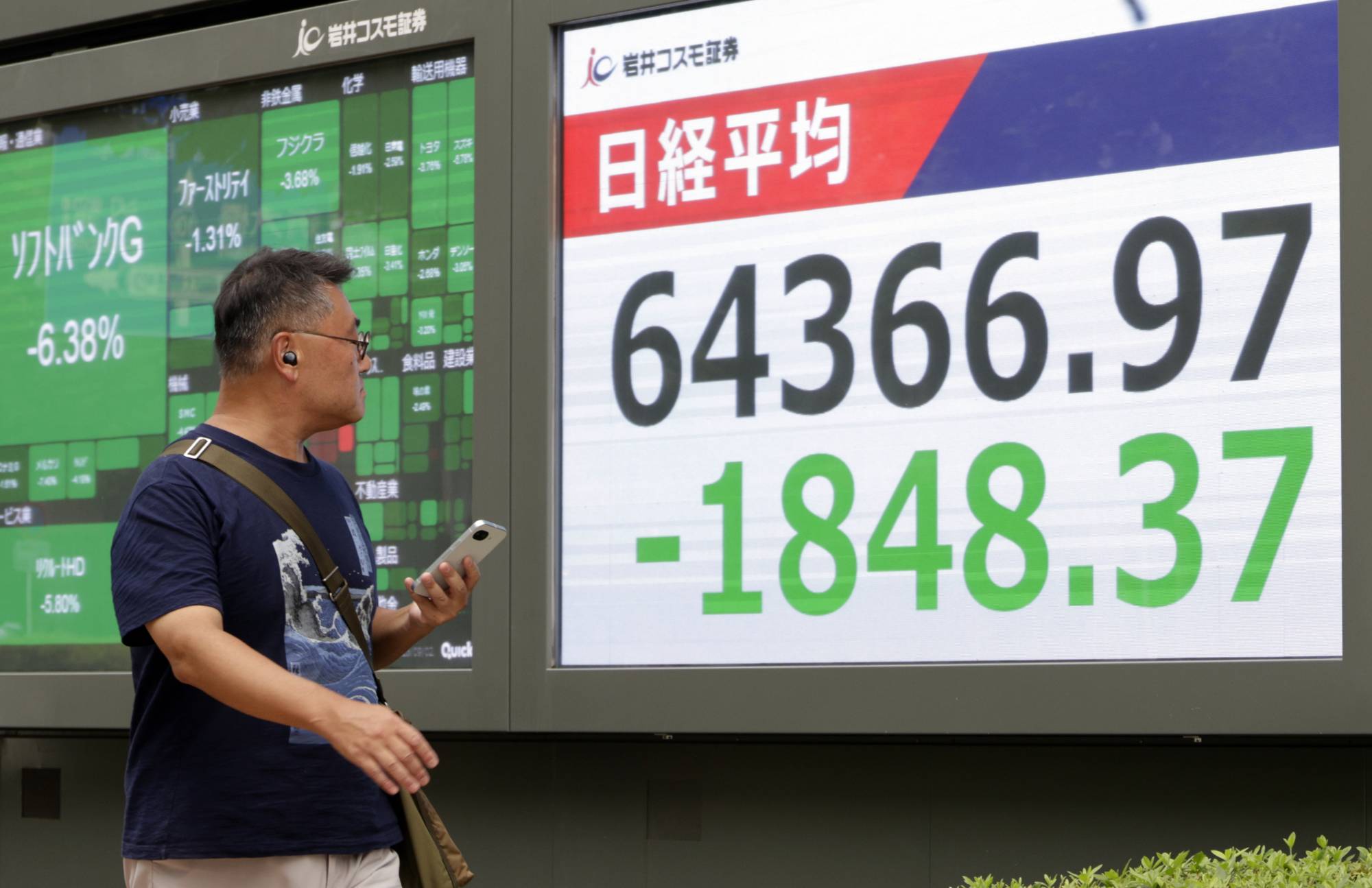
Bond markets showed early signs of stabilizing on Thursday, with the US 10-year Treasury yield easing to about 4.77% and its Japanese counterpart falling back below 3%. Yields, however, remained elevated compared with their levels before the latest sell-off, leaving open the question of whether the recent turbulence represents a temporary correction or the start of a deeper shift in global borrowing costs.
The surge in yields coincided with growing global attention to borrowing costs and public debt, which have emerged among the economic and financial issues under discussion within the G20. Finance ministers and central bank governors have been examining the implications of tighter financing conditions for the global economy and financial markets. This reflects how the bond issue has broadened beyond market movements into a wider economic and financial concern involving fiscal sustainability, the trajectory of inflation and major economies’ capacity to shoulder mounting debt burdens.
These concerns have also coincided with International Monetary Fund warnings that rising bond yields in advanced economies are increasing borrowing costs worldwide and putting greater pressure on financial markets, as global public debt approaches 100% of gross domestic product and progress in bringing down inflation loses momentum in several economies.
Energy shocks and rising investment linked to artificial intelligence are adding new sources of pressure on inflation and growth.
Is the rise temporary or the start of a new yield regime?
Fadlallah said the most important shift in the bond market was the move away from pricing based on short-term monetary policy expectations toward a reassessment of the risks involved in holding long-term debt, with investors demanding higher returns to compensate for duration, inflation and fiscal risks.
US debt lies at the heart of this equation after the national debt exceeded $40 trillion - a development Fadlallah described as “a clear reminder of the scale of the fiscal challenge facing the world’s largest bond market.”
“With long-term bonds leading the sell-off, markets are repricing what governments must pay to finance their needs, not merely what central banks determine through short-term interest-rate decisions,” he said.
The consequences of this shift extend beyond debt markets. US Treasuries serve as the main pricing benchmark for what is known as the “risk-free asset,” meaning that higher Treasury yields raise the discount rate used to value a broad range of assets, from equities to sovereign and quasi-sovereign bonds worldwide.
5% puts equities to the test
This equation is particularly important for US equities as the 10-year Treasury yield approaches 5%, a level investors view as a psychological threshold that could prompt some to shift their portfolios away from riskier assets and toward bonds.
The developments follow a strong US corporate earnings season, potentially shifting investors’ attention gradually from company results to broader economic and financial variables, led by yields, inflation and monetary policy.
Equity valuations also remain relatively high. The S&P 500’s forward price-to-earnings ratio stood at about 19.7, down from 22.2 at the beginning of the year but still above its historical average of about 16.
For Fadlallah, the combination of fiscal concerns, higher yields, elevated asset valuations and concentrated investment portfolios presents an important test for equities.
The market response has so far remained relatively limited, he said, “but the coming weeks will be crucial in determining whether investors can absorb higher yields or whether the pressure will trigger a broader shift toward reducing risk.”

Japan: The end of cheap money?
The significance of the yield surge is not limited to the US and Europe. Fadlallah said the more profound development could come from Japan, which for nearly three decades has played a central role in supplying low-cost capital to global markets.
With the 10-year Japanese government bond yield reaching 3%, the equation is becoming more complicated for investors accustomed to borrowing cheaply in yen and investing the proceeds in higher-yielding assets abroad through what is known as the “carry trade.”
“The era of near-zero Japanese yields may be approaching its end, potentially changing the direction of global capital flows,” Fadlallah said.
“Higher domestic yields in Japan could make Japanese assets more attractive to hold while reducing the appeal of borrowing in yen to finance investments in overseas markets.”

Gulf faces higher borrowing costs, but has buffers
These developments have a “direct” impact on Gulf economies because most regional currencies are pegged to the US dollar. This transmits the effect of higher US yields to the borrowing costs of governments and companies, both in domestic markets and when issuing debt internationally.
Fadlallah said this would raise the cost of financing projects and refinancing existing debt.
“But it does not eliminate the region’s ability to continue pursuing its investment and economic diversification plans, given its oil revenue, financial buffers and strong sovereign positions,” he added.
Higher financing costs do not necessarily mean a decline in Gulf investment.
“But they will make efficient capital allocation and the economic returns generated by projects more important, with priority given to investments capable of delivering sustainable returns and benefiting from the strong fiscal and sovereign positions that give regional states greater room to maneuver,” he noted.
Will the yield surge subside?
Despite the structural shift in some of the bond market’s driving forces, Fadlallah does not believe yields are destined to keep rising in a straight line.
He said the fastest scenario for reversing the current surge “would be an easing of geopolitical tensions and a decline in oil prices, which would reduce the risk premium and calm inflation expectations.”
“A sharp fall in equity markets, data confirming that inflation has returned to a clear downward path, or coordinated intervention by central banks” could also “drive investors back toward bonds and push yields lower,” he stressed.
The greater risk, according to Fadlallah, is that large fiscal deficits and mounting borrowing needs become a permanent reality.
“This would mean markets may have to live with ‘higher for longer’ yields, not only because of monetary policy but also because investors will demand greater returns in exchange for financing heavily indebted governments,” he explained.
The current sell-off may therefore be more than a temporary episode in the interest-rate cycle. It could mark the beginning of a broader repricing of the cost of global capital - an equation that will shape equities, bonds and investment, as well as Gulf economies entering this phase from a position of greater strength but not insulated from the worldwide rise in borrowing costs.