US Sanctions Grandson of Former Cuban Leader Raúl Castro

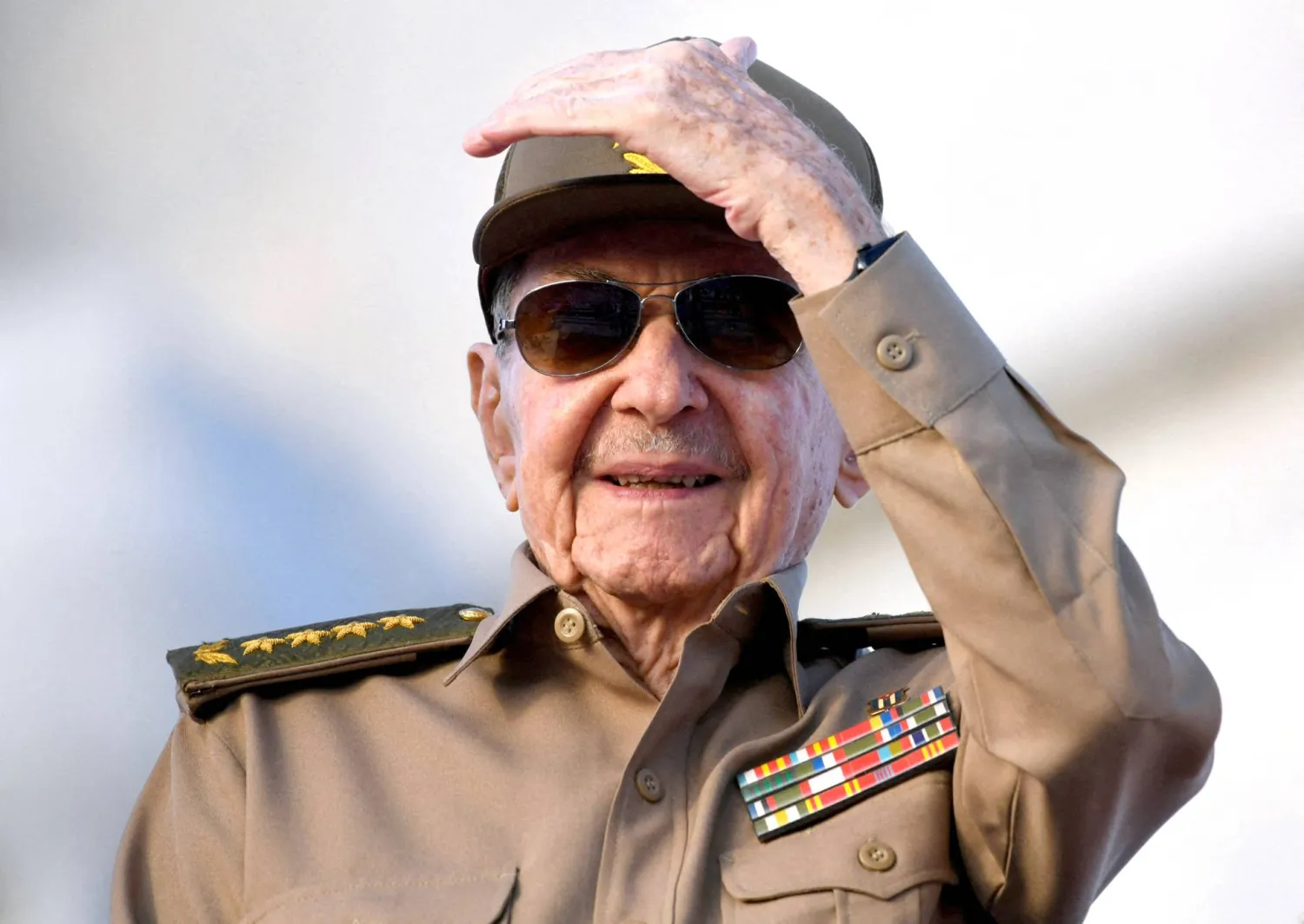
FILE PHOTO: Cuba's former President Raul Castro watches a May Day rally in Havana, Cuba May 1, 2025. REUTERS/Norlys Perez/File Photo/File Photo
TT

US Sanctions Grandson of Former Cuban Leader Raúl Castro

FILE PHOTO: Cuba's former President Raul Castro watches a May Day rally in Havana, Cuba May 1, 2025. REUTERS/Norlys Perez/File Photo/File Photo

The US government on Thursday slapped new sanctions on Cuba in a fresh push to strangle the island’s economy and deepen its multiple crises.

Among those hit with sanctions are Fidel Ernesto Castro, grandson of former President Raúl Castro, and Cuba’s Oil Industry Supply Import Company, known as Abapet. The company is responsible for importing special equipment and spare parts needed to sustain Cuba’s crumbling power grid.

The sanctions aim to push Cuba’s critical machinery offline and exacerbate its energy crisis, said Brett Erickson, a sanctions expert and managing principal at Obsidian Risk Advisors, a consulting firm.

“The US is trying to really tighten the screws as much as possible,” The Associated Press quoted him as saying.

“The Trump administration seems to have no seriousness to accept any change from Cuba other than a toppling of regime. Marco is not going to let that go,” he added, referring to US Secretary of State Marco Rubio.

Erickson anticipated that Cuba’s government would try to circumvent the sanctions “because they have to.”

“They’ll get creative in how they try to procure these maintenance parts,” he said, warning it would be a costlier alternative, which in turn would raise inflation and further hurt Cuba’s economy.

Islandwide blackouts have become increasingly common, while daily outages in Cuba now surpass 24 hours as the aging grid fails and fuel reserves dwindle ever since US President Donald Trump in late January threatened tariffs on any country that sells or provides oil to the island.

“The goal in theory is to create so much civilian hardship and suffering that they have no option but to essentially rise up and topple their government,” Erickson said. “It is an attempt to cause a humanitarian crisis.”

Talks earlier this year between the US and Cuba have since halted, while sanctions have increased in recent months.

Erickson said he expects the US to keep targeting smaller and smaller state companies to try and push them “into a death spiral.” The US has previously sanctioned entities including Cuba's state-owned oil and gas company.

The US State Department made the announcement just hours after Cuban officials held a press conference to share more details on the historic economic reforms approved in June.

When asked about the current situation in Cuba, Oscar Pérez-Oliva Fraga, Cuba’s deputy prime minister and minister of foreign investment, blamed the US government.

“This past year has been very complex, and we know why,” he said. “The blockade is a genocide.”

He spoke before the sanctions were announced.

Among the Cubans exhausted by the ongoing outages is 49-year-old Yaqueline Bernal. She said Thursday that she hasn’t had electricity since Sunday and worries most about the consequences for her eight young grandchildren.

“If we don’t have power, we don’t have water,” she said. “You really don’t know what’s going to happen to you.”

Bruno Rodríguez, Cuba's foreign affairs minister, decried the latest sanctions on X.

“Collective punishment is a crime. So, too, is inflicting suffering on an entire population through measures coldly calculated to trigger a humanitarian crisis,” he said. “Enough with the abuse. Put an end to the blockade once and for all and allow Cuba to live in peace.”

Eugenio Martínez Enríquez, Cuba’s ambassador in Mexico, called Rubio “a liar without scruples.”

“We will not forget his crimes,” he wrote on X.

Meanwhile, Rubio asserted on X that those sanctioned “are part of the corrupt Castro financial and intelligence network.”

“Cuba’s Communist regime elites preside over a failed state where ordinary Cubans go hungry while the Castro family and other insiders enrich themselves through sanctions evasion and other illicit schemes — and seek to export subversive Marxist ideology to the United States and other states in the Western Hemisphere,” he wrote.

“Trump and I are unwavering in our commitment that Cuba will be free.”


Iran Says Outcome of Israeli Elections ‘Makes No Difference’

A woman walks past a mural bearing the Iranian national flag in Tehran on October 26, 2026. (AFP)
TT

Iran Says Outcome of Israeli Elections ‘Makes No Difference’

A woman walks past a mural bearing the Iranian national flag in Tehran on October 26, 2026. (AFP)

Iran's foreign ministry said Monday that the outcome of the Israeli elections in which Prime Minister Benjamin Netanyahu is facing a tight race will make "no difference".

"It makes no difference to us who, in these elections, takes the helm of a regime that has brought nothing but violence and massacres to our region," said ministry spokesman Esmaeil Baqaei in a weekly press briefing.

Tuesday's legislative elections will take place amid mounting threats by Israel and the United States to renew attacks on Iran after they launched their war in late February.

Netanyahu has in recent days repeatedly said the only way to remove the threat posed by Iran is to topple its government.

On Sunday, he told Israel's Channel 14 that he had "instructed the Mossad and the Israeli army to overthrow the Iranian regime".

Baqaei dismissed Netanyahu's remarks as "empty threats" and a "sign of desperation".


Thousands of Trucks Stuck as Partial Iran-Pakistan Trade Resumes

 Cargo trucks remain halted at the Gabd-Rimdan border crossing in Pakistan's Balochistan province on October 21, 2026, following the temporary suspension of trade between Pakistan and Iran. (AFP)
Cargo trucks remain halted at the Gabd-Rimdan border crossing in Pakistan's Balochistan province on October 21, 2026, following the temporary suspension of trade between Pakistan and Iran. (AFP)
TT

Thousands of Trucks Stuck as Partial Iran-Pakistan Trade Resumes

 Cargo trucks remain halted at the Gabd-Rimdan border crossing in Pakistan's Balochistan province on October 21, 2026, following the temporary suspension of trade between Pakistan and Iran. (AFP)
Cargo trucks remain halted at the Gabd-Rimdan border crossing in Pakistan's Balochistan province on October 21, 2026, following the temporary suspension of trade between Pakistan and Iran. (AFP)

Thousands of trucks remain stranded on both sides of the Iran-Pakistan border despite the resumption of limited overland trade between the two countries, southwest Pakistan business representatives told AFP on Monday.

Mir Naveed Jan Kalmati, president of the chamber of commerce for Gwadar city on Pakistan's Arabian Sea coast, said the frontier with Iran was "only partially open" to trade, with a vast backlog of vehicles at the border.

There were "three to four thousand trucks on the Iranian side and two to three thousand trucks on the Pakistani side," Kalmati said.

Only certain vehicles were being allowed across the border to clear the backlog after a week-long closure, he said.

Iran's ambassador to Pakistan, Reza Amiri Moghadam, said on X on Sunday there were no restrictions on the Iranian side, including for the export of liquefied petroleum gas (LPG).

He blamed the closures on "changes in the implementation of Pakistan's E-Form procedure for imports from Iran", which he said "have created a situation in which traders are effectively and literally unable to dispatch cargo from Iran to Pakistan".

Kalmati said companies on both sides of the border were urging authorities to allow the complete resumption of trade.

He said his members and drivers were "frustrated, they want to go back home, they want to continue their business".

Fida Ahmad Dashti a businessman in Kech district in Pakistan's southwest Balochistan province, said he had been told that only vehicles with paperwork prepared before October 16 were being allowed to cross the border.

Two other businessmen based in Balochistan confirmed their drivers had said only vehicles with documents prepared before October 16 were being allowed across the frontier.

The Gwadar Chamber of Commerce said in a statement on Saturday the suspension of the import of LPG and the "abrupt closure of the border" had led to "disrupting the national LPG supply chain, and causing prices to skyrocket".

Pakistan has attempted to mediate a peace deal in the Middle East war with Iran and its army chief, Field Marshal Asim Munir, was due to travel to Tehran on Monday, his second visit to the country in less than a week.


Brazil’s Lula Wins Historic Fourth Term, Flavio Bolsonaro Refuses to Concede

 Brazil's President Luiz Inacio Lula da Silva, the Workers' Party (PT) candidate for re-election, gestures as he addresses supporters after his victory in the presidential runoff election, at Paulista Avenue, in Sao Paulo, Brazil, October 26, 2026. (Reuters)
Brazil's President Luiz Inacio Lula da Silva, the Workers' Party (PT) candidate for re-election, gestures as he addresses supporters after his victory in the presidential runoff election, at Paulista Avenue, in Sao Paulo, Brazil, October 26, 2026. (Reuters)
TT

Brazil’s Lula Wins Historic Fourth Term, Flavio Bolsonaro Refuses to Concede

 Brazil's President Luiz Inacio Lula da Silva, the Workers' Party (PT) candidate for re-election, gestures as he addresses supporters after his victory in the presidential runoff election, at Paulista Avenue, in Sao Paulo, Brazil, October 26, 2026. (Reuters)
Brazil's President Luiz Inacio Lula da Silva, the Workers' Party (PT) candidate for re-election, gestures as he addresses supporters after his victory in the presidential runoff election, at Paulista Avenue, in Sao Paulo, Brazil, October 26, 2026. (Reuters)

Brazilian President Luiz Inacio Lula da Silva won a historic fourth term on Sunday, the country's electoral court said, in a shock result that defied polls, precedent and global anti-incumbent sentiment to put the brakes on a wave of right-wing election victories across Latin America.

However, his opponent Senator Flavio Bolsonaro, the eldest son of former President Jair Bolsonaro, refused to accept defeat and said he would ask for the result to be annulled due to a Sunday ruling from a Supreme Court justice that extended voting for two hours.

Bolsonaro led the election's first round but lost in the runoff by over 4 million votes, rattling Brazilian financial markets which had bet on his victory. His refusal to concede defeat has echoes of his father's reaction after losing to Lula in 2022. Jair Bolsonaro never accepted his loss and was later sentenced by the Supreme Court to 27-years in prison for plotting a coup to remain in power.

The scale of Flavio Bolsonaro's loss to Lula — by more than twice his father's losing margin — and the fact his campaign also asked for an extension due to rains in the conservative-leaning south make any annulment unlikely, analysts said.

Mario Braga, a Latin America analyst at the risk consultancy RANE, said there could be ‌right-wing protests in coming ‌days, but "it's very improbable that it will lead to the reversal of the result."

COMEBACK KING

Investors expect recent bets on ‌a change ⁠of government to unwind ⁠in a volatile week ahead on financial markets. A Tokyo-listed exchange-traded fund tracking Brazil's Bovespa index dived nearly 15% in Asia trade on news of Lula's victory, while the Brazilian real was set to fall sharply against the US dollar.

The victory marks another comeback in a career full of them for Lula, an icon of the global left and the most dominant force in Brazilian politics this century. The 80-year-old was jailed from 2018 to 2019 on corruption charges that were later overturned, paving the way for him to beat Jair Bolsonaro in the 2022 election.

"He is a statesman, a giant," leftist federal lawmaker Erika Hilton, who was with Lula in Sao Paulo during the vote count, told Reuters.

At times, Lula's reelection looked like a long shot, as voters soured on him and his Workers' Party after years of corruption scandals and rising prices, while sweeping social changes left the former metalworker and union leader ⁠looking out of touch with an increasingly app-based economy and its growing ranks of informal workers.

Pollsters said better-than-expected turnout had powered ‌Lula to victory. Leonardo Barreto, the co-founder of consultancy Think Policy, said voters had chosen Lula's familiar embrace over Bolsonaro's ‌novelty.

"People today are choosing between change, with some apprehension, and a known path, which guarantees certain rights," he said.

During the campaign, Lula pointed to a track record of falling poverty and ‌inequality, while unemployment, illiteracy and deforestation hit record lows during his third term.

He warned Bolsonaro would cut welfare spending, backslide on social advances and hand over Brazil's ‌sovereignty to US President Donald Trump, whose State Department led a campaign to get the Bolsonaros back to power.

Lula's win deprives Trump of a major addition to what has been a growing bloc of friendly right-wing Latin American governments that have embraced Washington's agenda on security and migration.

There was no immediate comment from Trump or the US State Department, while Canadian Prime Minister Mark Carney and Latin American leaders were quick to offer their congratulations.

Celso Amorim, a former Lula foreign minister, told Reuters the leftist "would be very important for establishing a point of balance in Latin America. Lula ‌is that balance."

LATE-CAMPAIGN BOOST

Lula becomes the first candidate since Brazil's return to democracy in the 1980s to be elected after finishing second in the first round.

His campaign this year mixed the kind of pragmatism and populism that has shaped ⁠his career in national politics for half a ⁠century, rolling out a slew of reforms aimed at improving the lives of workers and poor Brazilians.

These gained steam with late-campaign pledges that ranged from free nationwide weekend public transport, which has to be formally submitted to Congress, to a 15% increase in his trademark welfare program that is already being implemented.

Lula also championed a constitutional amendment that became Brazil's biggest labor reform in decades, which passed with wide support in Congress.

CHALLENGES AHEAD

Still, Lula's fourth term could be his most difficult yet, after Brazil elected its most conservative Congress since returning to democracy in the 1980s.

Combined, Bolsonaro's Liberal Party and allied parties could control over 280 seats in the lower house and up to 50 seats in the Senate, enough for comfortable opposition majorities in both chambers.

That may deepen recent trends of presidents ceding power to Congress on the budget, major legislation and key nominations.

Lula faces an economy that his government forecasts will grow just 2.3% next year, adding to fiscal concerns tied to high interest rates and public debt that has risen past 82% of GDP, the highest since the pandemic.

Goldman Sachs said it expects Lula to make modest progress at most to contain spending in a fourth term, as he stays committed to a state-led growth model.

Surging household debt also concerns economists. Trying to address the issue, Lula rolled out a provisional ban on online betting and unveiled a new debt relief program during the campaign.

The incoming right-wing Congress will try to pass structural reforms that favor businesses, experts say, prompting spending cuts that could trigger popular backlash.