


Libya: Tensions Flare in Al-Qatrun After a Young Man Killed in Shooting Blamed on LNA

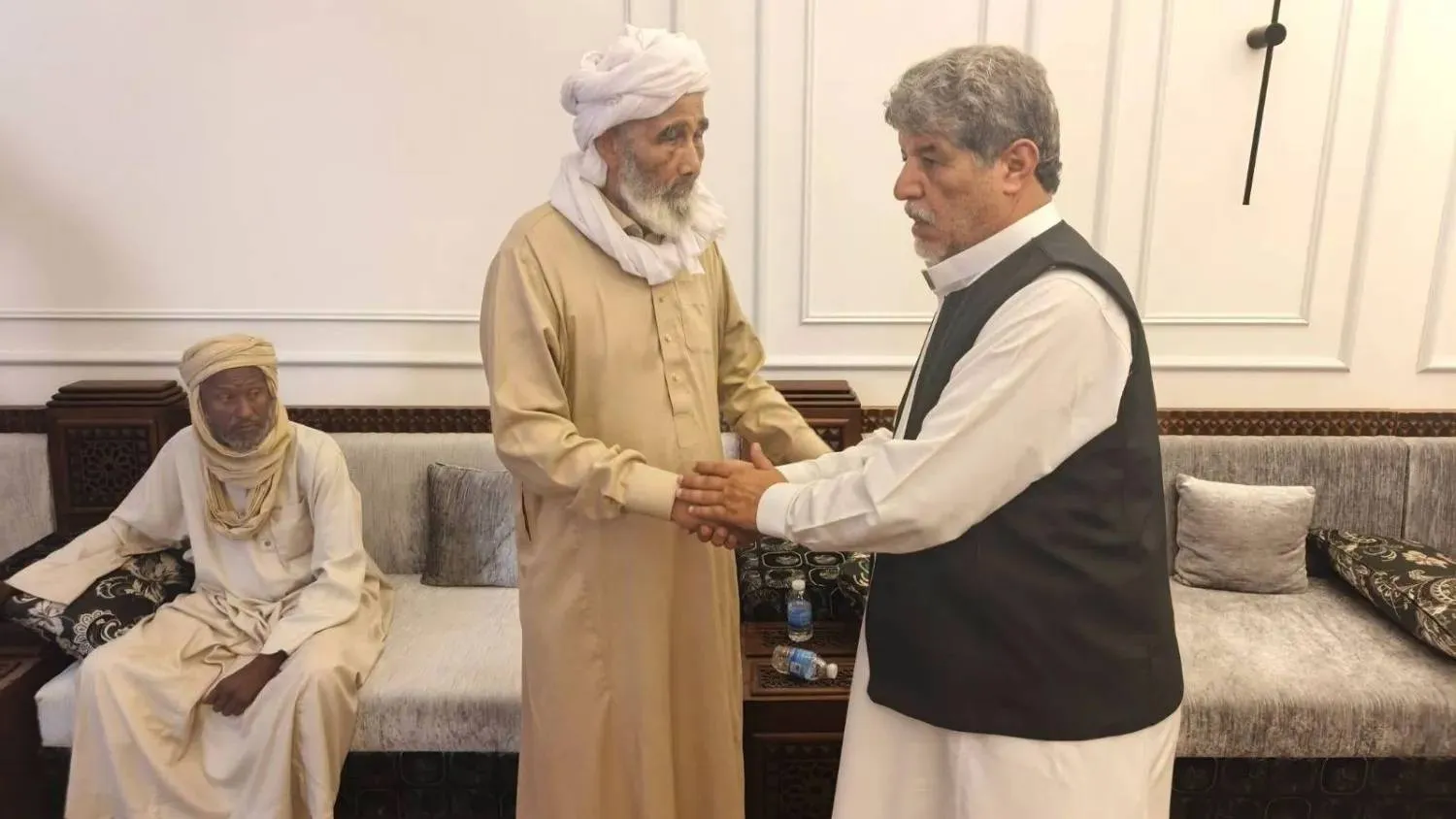
The Supreme Council of Sheikhs and Dignitaries of Fezzan offers condolences to the people of al-Qatrun (Council)
TT

Libya: Tensions Flare in Al-Qatrun After a Young Man Killed in Shooting Blamed on LNA

The Supreme Council of Sheikhs and Dignitaries of Fezzan offers condolences to the people of al-Qatrun (Council)

Tension gripped the southern Libyan city of al-Qatrun following the killing of 16-year-old Hussein Matar, who was shot while at a petrol station in the city.

Accounts differed over who opened fire on Matar, as residents accused the Libyan National Army’s 87th Battalion of responsibility.

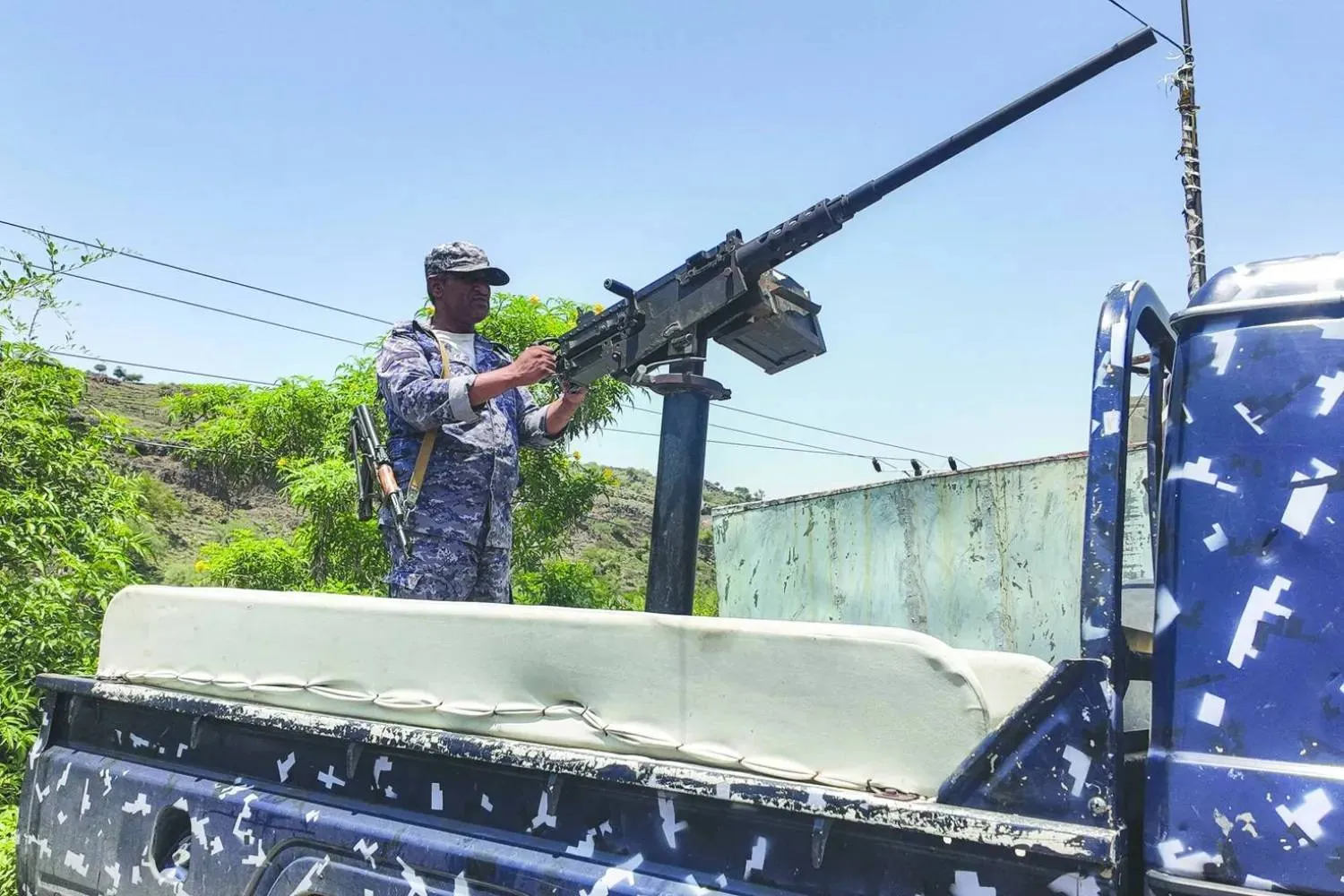
Al-Qatrun witnessed skirmishes and running clashes between residents and members of the 87th Battalion on Thursday evening, during which shots were fired indiscriminately. Several members of the Tebu tribe were seen carrying weapons.

The Fezzan National Political Gathering moved quickly to hold the perpetrators fully responsible and called on the 87th Battalion to “bear the full consequences of this crime”.

The Libyan National Army has not officially commented on the incident. However, a source close to its General Command said the leadership valued the people of al-Qatrun and was working to address their living difficulties.

Rania al-Sayd, a founding member of the Fezzan Gathering, said the incident “cannot be viewed as an isolated event or an individual dispute”.

She described it as “a direct attack on the social fabric and the fragile stability we are trying to preserve in the south”, saying it was intended “to drag the region back into chaos and cycles of revenge”.

Al-Sayd told Asharq Al-Awsat that “any attack on life, property or honor is unacceptable”, calling on the security and judicial authorities to carry out their duties by apprehending the perpetrators and bringing them to justice immediately.

She said she was counting on “the role of councils of elders, dignitaries and sheikhs in al-Qatrun and across the south”.

“Your role today is not ceremonial, but a duty,” she said. “You bear the responsibility of healing divisions, preventing bloodshed and containing the strife before it escalates.”

A delegation from the Supreme Council of Sheikhs and Dignitaries of Fezzan, headed by Sheikh Ibrahim Abu Bakr Nasr, arrived in al-Qatrun on Thursday evening in an effort to contain the escalating unrest, offer condolences and assess the situation in the city.

The Fezzan Gathering called for “the formation of an urgent and transparent investigative committee, the disclosure of its findings to the public and the surrender of the perpetrators to justice without concealment or delay”.

It also called for an end to what it described as “any retaliatory measures or collective punishment against the people of al-Qatrun”, warning against burdening the region with further bloodshed and tension.

In a statement issued on Thursday evening, the gathering called on the United Nations Support Mission in Libya to “fulfil its legal and moral responsibilities to protect civilians in the south and open an independent international investigation into the incident”.

It also urged the international community to “intervene urgently to stop these acts targeting innocent people and put an end to human rights violations in southern Libya”.

Al-Sayd said Libya “cannot withstand further crises and divisions”, warning that “what is happening in al-Qatrun could be repeated in any city if we continue to treat the symptoms while ignoring the causes”.

She also warned against “being drawn into strife and hate speech, or turning the region into a weapon in the hands of those who seek to divide us”.

Al-Qatrun is controlled by the Libyan National Army. The interim Government of National Unity has no presence in the city, which is experiencing fuel shortages similar to those affecting most Libyan cities.

The Supreme Council of Sheikhs and Dignitaries of Fezzan said its delegation had offered condolences to the people of al-Qatrun “as part of its community role and efforts to reunite the people of the region and consolidate unity”.

The council said on Friday that the delegation was received by Tebu sheikhs, elders and young people in al-Qatrun.

It said they discussed the incident in the city and stressed the importance of social cohesion and containing its repercussions.

“The blood of the people of Fezzan is one, and al-Qatrun’s wound is a wound for all of Fezzan,” the council said, pledging to continue pursuing “tolerance, reconciliation, the prevention of bloodshed and the upholding of justice”.

Libya’s National Institution for Human Rights also weighed in, expressing concern over “the rising number of extrajudicial killings in many cities, regions and municipalities”.

It attributed the increase to “the security chaos affecting many cities across the country as a result of the absence of the Interior Ministry and the relevant security authorities”.

The institution called on the Interior Ministry, the al-Qatrun Security Directorate, the Criminal Investigation Agency and the attorney-general’s office within the jurisdiction of the Sebha Court of Appeal to open a comprehensive investigation into Matar’s killing.

It also urged them to intensify efforts to arrest those accused of involvement in the crime and bring them to justice.

Lieutenant General Saddam Haftar, deputy commander-in-chief of the Libyan National Army, previously met sheikhs and dignitaries in al-Qatrun during a wider tour of several southern cities to assess security conditions and residents’ living needs.


Can Libyan Lawmakers Force a Change in Parliament’s Leadership?

A still from the Libyan House of Representatives’ latest session on Sept. 15 (video posted by the House on its Facebook page)
TT

Can Libyan Lawmakers Force a Change in Parliament’s Leadership?

A still from the Libyan House of Representatives’ latest session on Sept. 15 (video posted by the House on its Facebook page)

A push to change the rules of Libya’s parliament and rotate its leadership has put a question to the Benghazi-based chamber: Can lawmakers unseat Speaker Aguila Saleh after nearly 12 years at its helm?

The effort has also raised questions about why a bloc opposed to Saleh’s “unilateral decision-making” is acting now, whether its campaign is tied to the “4+4” agreement, and whether that deal can be carried out.

The agreement is seen as a possible route out of Libya’s political divide through a unified executive authority that would lead the country to elections within two years.

The lawmakers opposing Saleh say they will press on with efforts to “reform parliament and change its leadership.”

They say they were blocked from holding a session on the issue in the middle of last week when the chamber’s Benghazi headquarters was closed on its leadership’s orders.

Issam al-Jehani, a prominent member of the bloc, said its 86 lawmakers could meet in any Libyan city where they could carry out their duties.

Their aim was “neither a conspiracy nor an attempt to take Saleh’s seat,” he said, but reform in response to Saleh’s unilateral decisions and determination to stay in office.

Other political figures say the campaign could splinter and fade. Its momentum, they argue, depends on the balance of power in eastern Libya and on regional pressure.

Lawmaker Ali al-Takbali expects it to lose steam. He told Asharq Al-Awsat that a similar call in March for a session to change parliament’s rules came to nothing.

He also questioned whether Saleh’s opponents could keep enough lawmakers together to hold a session to remove him. They may unite over a grievance, al-Takbali said, but become harder to assemble once they return home, particularly if some reconsider their position because of personal interests or tribal ties.

Fellow lawmaker Montaser al-Hassi warned that some members’ actions could split parliament. Lawmakers have the right to amend its rules, he said, but must do so through legal channels.

Libya has long been divided between two governments: the interim Government of National Unity led by Abdulhamid al-Dbeibah in Tripoli, and Osama Hammad’s parliament-appointed government, which runs the east and some southern cities and is backed by Libyan National Army commander Field Marshal Khalifa Haftar.

Under the “4+4” agreement reached late last month by representatives of the Government of National Unity and the Libyan National Army under UN auspices, a new presidential council and unified government would prepare the country for general elections within two years.

Some observers and political figures say regional countries regard Saleh’s continued leadership as a safeguard against a split in the legislature, which they describe as the only institution to have remained intact through Libya’s institutional divisions.

Analyst Hossam Fnish linked the turmoil in parliament to the “4+4” deal. He said the reform bloc’s insistence on changing the rules before holding sessions would delay incorporating the agreement into Libya’s constitutional declaration, hindering a deal that could lead to elections and end the divide.

The UN mission, he said, prefers to incorporate the agreement through a constitutional amendment before seeking Security Council endorsement.

Fathi al-Shibli, head of the Voice of the People party, questioned the reform bloc’s motives. Complaints about Saleh making decisions alone and sessions going ahead without a quorum had circulated for years without drawing objections from lawmakers, he said.

That, in his view, lent weight to suspicions that the dispute was a struggle between blocs backed by powerful interests, rather than a drive for reform.

Al-Shibli expects Saleh to remain in office until the UN mission calls for a constituent council to replace parliament and the High Council of State to implement the “4+4” agreement. He said both bodies oppose a change to Libya’s political landscape.

Political analyst Mohammed Mahfouz likewise described the parliamentary dispute as a contest between powerful groups in eastern and western Libya, each seeking to show the international community that it can control the political scene.

Saleh’s hold on his position rests on two factors, Mahfouz told Asharq Al-Awsat: whether he and his allies can absorb the current anger, and whether regional and Western countries support him.

Saleh’s two deputies may help him contain the challenge, Mahfouz said, because they too could face replacement.


Iraq’s PM Tells UN The State Alone Will Decide War, Peace

Iraqi Prime Minister Ali al-Zaidi speaks during the 81st session of the United Nations General Assembly on Sept. 25, 2026. (AP)
TT

Iraq’s PM Tells UN The State Alone Will Decide War, Peace

Iraqi Prime Minister Ali al-Zaidi speaks during the 81st session of the United Nations General Assembly on Sept. 25, 2026. (AP)

Iraqi Prime Minister Ali al-Zaidi said on Friday that one of his government’s priorities was to ensure the state alone decides matters of war and peace, stressing that weapons must remain in the hands of constitutional institutions.

“The practical measures to bring weapons and decisions on war and peace under state control are moving in the right direction,” al-Zaidi told the UN General Assembly.

He called them essential to building state institutions, protecting sovereignty and securing stability.

He said the end of the international coalition’s mission in Iraq would mark a new phase in relations with strategic partners, shifting from military cooperation to economic and development cooperation. Iraq would continue to strengthen its security and military capabilities, he added.

Al-Zaidi called for tighter border controls, the closing of security gaps and continued vigilance against conditions that could fuel extremism.

He reiterated Iraq’s support for dialogue, diplomacy, respect for sovereignty, noninterference and good neighborly relations, and urged countries to resolve conflicts through negotiations and prevent renewed wars.

He urged the world to engage more closely with Iraq, saying the country could contribute to security and stability.

He also highlighted the Development Road project as a “strategic corridor for trade, investment and energy” linking Iraq’s Grand Faw Port to Türkiye and, from there, Europe.

“Iraq has never been on the margins. It is at the heart of history and the pulse of the present, and it deserves a partnership for the future,” he said.

US Secretary of State Marco Rubio had warned Baghdad that militias must be disarmed to avoid the “Balkanization of Iraq,” amid growing pressure on the Iraqi government to bring weapons under state control.

Rubio expressed US support for al-Zaidi’s efforts to strengthen state authority and called for armed factions to be dismantled. He warned that competing centers of power could fragment Iraq and weaken its institutions.

Al-Zaidi had proposed a plan beginning with a 90-day period during which armed factions would cease attacks, with the transfer of weapons to the state to be completed by June 30, 2027.


UN Identifies 214 Firms Linked to Israeli Settlements

Palestinians protest against Israeli settlements near Nablus in the occupied West Bank (Reuters)
TT

UN Identifies 214 Firms Linked to Israeli Settlements

Palestinians protest against Israeli settlements near Nablus in the occupied West Bank (Reuters)

The United Nations on Friday released a fresh update of its database of companies with activities in Israeli settlements in Palestinian territories, listing 214 firms from 11 countries.

Since last year's update, the UN rights office added an additional 61 companies to the database and had removed five companies.

But major firms like Airbnb, Booking.com, Motorola Solutions and TripAdviser remained on the list.

The report, which was harshly criticized by Israel, served as a "reminder to companies that they have human rights responsibilities", UN rights chief Volker Turk said in a statement.

Firms, he said, "are expected to conduct due diligence to ensure that they do not become involved in human rights violations or abuses".

While most of the companies were based in Israel, others were based in Canada, China, France, Germany, Luxembourg, the Netherlands, Portugal, Spain, Britain and the United States.

There were two Spanish companies removed from the database since last year, along with one each from Canada, Israel and Portugal.

The list was first produced in 2020 after a UN Human Rights Council resolution called for a database of firms that profited from business in illegally occupied Palestinian territory.

The UN rights office was asked to list companies found to be taking part in any of 10 activities, including construction, surveillance, demolitions and destruction of agricultural land in Israeli settlements in the West Bank, including East Jerusalem.

Despite a requirement for the database to be updated annually, it has been revised just twice before, in 2023 and 2025.

The list is not exhaustive.

It only reviews companies about which it received submissions during set timeframes, the last of which closed in June 2024.

In all, it has received submissions about 596 companies, of which it has so far reviewed 381.

Israel, which has been harshly critical of the database from the start, slammed it again Friday as "a distorted mechanism... established solely to persecute the Jewish state".

The country's mission to the UN in Geneva charged that it was "a political tool" used by the rights office "to advance a smear campaign against business enterprises that committed no wrongdoing".

Israel has controlled the West Bank since 1967 in an occupation considered illegal under international law.
