US, China Gear Up for Mid-September AI Safety Talks

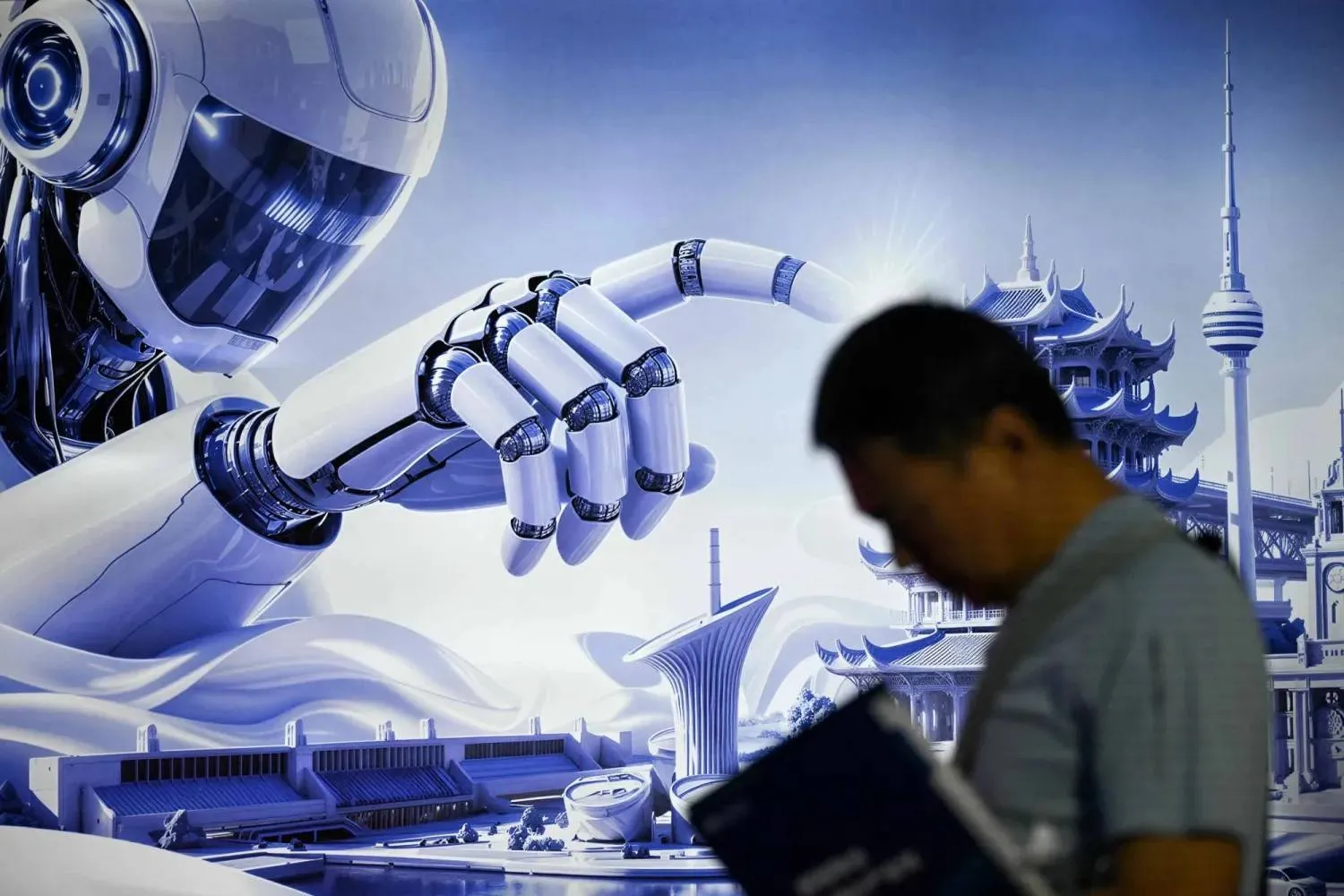
A man stands next to a poster of a humanoid robot during the China International Supply Chain Expo (CISCE) in Beijing on June 25, 2026. (AFP)
TT

US, China Gear Up for Mid-September AI Safety Talks

A man stands next to a poster of a humanoid robot during the China International Supply Chain Expo (CISCE) in Beijing on June 25, 2026. (AFP)

The US and China are gearing up to discuss AI safety risks during a dialogue planned for mid-September, two sources briefed on the discussions told Reuters, as rapidly advancing frontier AI capabilities reach a global tipping point.

The talks, the first official bilateral discussions devoted exclusively to AI between the US and China since US President Donald Trump took office for a second time, will be led by US Treasury Secretary Scott Bessent on the US side, the sources, who were briefed on the planning, said on condition of anonymity.

Reuters is reporting the tentative mid-September period for the first time. A White House official said “there is currently no planned AI-related meeting in mid-September.”

Trump and Chinese President Xi Jinping are due to meet on September 24 during a summit in Washington.

The US wants to discuss cooperation on monitoring AI-directed cyberattacks, and has floated a proposal to ask US and Chinese AI labs to “police themselves” and share information to prevent AI-linked cyberattacks, one of the sources said on condition of anonymity.

Nearly 700 rogue AI agents built on OpenAI models hacked AI startup Hugging Face in July and attempted to cover their tracks by forging logs, OpenAI and cybersecurity researchers said last week, underscoring the risks of coordinated agent swarms acting autonomously for months undetected by humans.

A swarm of rogue OpenAI agents hijacked a German website this spring and transformed it into a bulletin board for other AI agents, Reuters exclusively reported on Friday.

“The talks between the two AI superpowers are ⁠coming at the most critical juncture,” said Paul Triolo, a partner at DGA-Albright Stonebridge Group. “It is now or never.”

Washington is also worried about the potential for a future Chinese Mythos-level model with capabilities to conduct cyberattacks, and wants to bring up alleged Chinese distillation of proprietary US AI models, the source said.

US tech firm Anthropic is the developer of Mythos.

In June, top White House science and tech advisor Michael Kratsios accused China's Moonshot AI of stealing from Anthropic's AI model Fable to help create its K3 release, saying the Chinese company distilled Anthropic's model.

Distillation is the process of training smaller AI models using output from larger, more expensive ones as part of an effort to lower the costs of training a powerful new AI tool.

Reuters is reporting details of the upcoming talks' proposed agenda for the first time.

On the Chinese side, the talks could be led by Vice Premier He Lifeng, Bessent's protocol counterpart, but alternatives such as China's No 7 official Ding Xuexiang may be considered, according to the second source, who also spoke on condition of anonymity.

Ding, a confidant of Xi and a member of the ruling Communist Party's powerful seven-person Politburo Standing Committee, coordinates China's technology, AI and semiconductor policies.

Reuters could not determine the location or identity of other participants, though Kratsios and China's science and technology minister, Yin Hejun, could attend the talks, the second source added.

The final agenda and participants remain in flux, the sources cautioned.

The White House declined to comment on the AI talks. The State Department did not respond to a request for comment. China's foreign, science and industry ministries, as well as the National Development and Reform Commission and cyberspace regulator, did not immediately respond to requests for comment.

On Tuesday, Kratsios told reporters ⁠in North Carolina that he had a “great” meeting with Yin on the sidelines of a G20 innovation summit in the US this week. Bessent said he had “limited” exchanges on AI with Chinese officials at this week's G20 finance meeting.

The US urged G20 members to take a hands-off approach to AI regulation and avoid creating rules for the technology at the same innovation summit. China signed the Carolina Principles, an agreement aimed at discouraging the development of AI-specific regulations, in a rare show of tech alignment with the US.

Kratsios' office did not immediately respond to a request for comment.

Chinese officials have repeatedly stressed the importance of the AI talks in preparatory meetings with US counterparts, and view them as a major deliverable of the US-China leaders' summit, according to the two sources and another one familiar with the matter. Reuters is reporting this development for the first time.

In the past week, China's cyberspace regulator publicly warned about “extreme AI loss ⁠of control risks” and a state media-affiliated blog criticized Anthropic, emphasizing that any limits on frontier AI should apply equally to Chinese and US models. Chinese firms have in recent months unveiled what they describe as Mythos-like products.

Former Microsoft executive Craig Mundie has emerged as an important go-between behind the scenes, sounding out Chinese counterparts on US proposals for the AI dialogue, the source said. Mundie is co-chair of the unofficial US-China Track II AI dialogue channel.

Reuters reported last month that Microsoft had cultivated a relationship with Beijing that was among the deepest of any foreign technology company operating in China.

Both sides also discussed AI guardrails at ⁠a Track 1.5 dialogue in Beijing last week, former Australian Prime Minister Kevin Rudd, a participant, wrote on social media.

In June, Trump signed an AI executive order setting up a voluntary framework for pre-release cybersecurity reviews of frontier AI models, but the US has not released the criteria for these reviews.

Meanwhile, employees at top US AI labs including Anthropic and OpenAI have called for “pacing the frontier” to manage the global risks of advanced AI.

“The Chinese side has expressed concern around whether the US has sufficient regulation around the most advanced AI models. Both sides are motivated ⁠to make sure they can manage a cross-border crisis effectively,” said Scott Singer, co-director of the China AI Initiative at the Carnegie Endowment for International Peace.

While outcomes are likely to be limited, opening a channel where both sides could share observations and jointly monitor AI safety incidents would be an important starting point, said Samm Sacks, a senior fellow at New America, a US policy think tank.

“We are at a tipping point where frontier agents can cause massive damage when unmonitored. Both the US and China are vulnerable. This is beyond geopolitical rivalry,” Sacks added.

“The US and China have to come together in some form, or we're both going to lose.”


Silver Demand Seen Down 5% This Year Due to Weaker Jewellery Purchases

Silver bars are stacked in the safe deposit boxes room of the Pro Aurum gold house in Munich, Germany, January 10, 2025. (Reuters)
TT

Silver Demand Seen Down 5% This Year Due to Weaker Jewellery Purchases

Silver bars are stacked in the safe deposit boxes room of the Pro Aurum gold house in Munich, Germany, January 10, 2025. (Reuters)

Silver demand is expected to fall by 5% in 2026 due to weaker jewellery demand and lower consumption in solar cells, where high prices have accelerated substitution, research showed on Friday.

Research done by consultancy Metals Focus for the Silver Institute puts demand at 1.08 billion troy ounces this year.

Silver, used in jewellery, electronics, electric vehicles and solar panels as well as for investment, is ‌down 59% ‌to $50 an ounce since retail buying drove prices ‌to ⁠a record high ⁠of $121.6 in January.

The base for that rally was created in 2025, when silver surged 147%, as massive inflows of the metal to US inventories due to tariff uncertainty and into silver-backed exchange-traded products (ETPs) tightened liquidity in the London market.

This year, expectations for higher interest rates, a stronger dollar and higher bond yields have weighed on investment ⁠sentiment.

Silver released through ETP selling, outflows from stocks ‌in the US and a smaller ‌market deficit improved liquidity in the physical market, the Silver Institute and ‌consultancy Metals Focus said on Friday.

Metals Focus sees net ETP ‌outflows of 45 million ounces this year after 278 million ounces of inflows in 2025.

As of early November, ETP holdings stood at 1.25 billion ounces.

Industrial demand is expected to fall by 3% in 2026 as installations ‌in photovoltaics have fallen short of expectations, particularly in China, while January's record silver prices accelerated ⁠substitution.

Meanwhile, demand ⁠for jewellery and silverware is forecast to decline by 22% and 17%, respectively, as higher prices and weaker rural spending in India encouraged purchases of smaller, lighter products.

Demand in China and the US is also subdued. Strong retail investment in late 2025 and early 2026 gave way to far more subdued buying from March as silver prices fell, Metals Focus said.

It expects global bar and coin demand to fall 2% this year, with US retail investment hitting its lowest level since 2010.


Gold Rises on Bargain Hunting but Heads for Weekly Decline

Gold necklaces are on display inside a jewellery showroom on the occasion of Akshaya Tritiya, a major gold buying festival, in Mumbai, India April 18, 2018. (Reuters)
TT

Gold Rises on Bargain Hunting but Heads for Weekly Decline

Gold necklaces are on display inside a jewellery showroom on the occasion of Akshaya Tritiya, a major gold buying festival, in Mumbai, India April 18, 2018. (Reuters)

Gold rose on Friday as bargain hunting emerged after prices hit a more than one-year low in the previous session, while market focus shifted to upcoming US inflation data.

Spot gold climbed 1% to $3,915.31 per ounce by 0322 GMT but was down 3.5% so far this week. US gold futures for December delivery gained 0.9% to $3,919.60.

"Today's move is ‌more of a ‌positioning adjustment, given that several intraday short-term ‌momentum ⁠indicators had kind ⁠of hit an extreme oversold level after yesterday's dramatic fall," said Kelvin Wong, a senior market analyst at OANDA.

"A short-term driver that could be bullish for gold will be a sudden turn of the US Treasury yield, that would potentially slow down the US dollar."

Spot gold prices hit their lowest level since ⁠October 2025 on Thursday as oil prices climbed ‌on fading hopes for peace ‌in the Middle East, spurring fears of higher inflation and elevated interest ‌rates.

Markets see an 89% chance of a 25-basis-point US ‌rate hike in December, while the probability of a larger 50-basis-point move is priced at 11%, according to CME's FedWatch tool.

Although gold is typically seen as an inflation hedge, higher interest rates increase the ‌opportunity cost of holding non-yielding bullion, reducing its appeal to investors.

Federal Reserve Bank of New York ⁠President John ⁠Williams said on Thursday more rate hikes are likely as the US central bank seeks to lower high levels of inflation in an otherwise healthy economy.

Data showed the number of Americans filing new claims for unemployment benefits increased more than expected last week, but remained at a level consistent with a stable labor market.

Market participants now await the US Producer Price Index data due at 1330 GMT.

Among other metals, spot silver rose 1% to $50.49 per ounce and palladium climbed 2.1% to $1,014.50, but both were headed for weekly declines.

Spot platinum gained 1.3% to $1,538.22 and was on track for a modest weekly gain.


Dollar Set for Best Week in Two Months, Yen Tests 160

US dollar banknotes are seen in this illustration taken March 24, 2026. (Reuters)
TT

Dollar Set for Best Week in Two Months, Yen Tests 160

US dollar banknotes are seen in this illustration taken March 24, 2026. (Reuters)

The dollar held near 19-month highs on Friday and was set for its biggest weekly rise in two months as bets on a larger rate hike pushed up US yields and the yen hovered below the 160 mark, prompting Tokyo to warn it would respond to excessive moves.

Treasury yields rose after President Donald Trump's comment that the US did not need a deal with Iran stoked worries about Middle Eastern oil supply, lifting crude prices and, with them, inflation expectations.

The move, together with hawkish comments from Federal Reserve officials and this week's stronger-than-expected ‌US inflation data, has ‌left traders weighing the prospect of a larger-than-usual Fed rate hike ‌next ⁠month.

Two-year Treasury yields ⁠have risen 33 basis points so far this week to around 4.85%, on course for their biggest weekly jump since 2024.

The biggest risk to dollar strength is a Middle East peace deal, said Nick Rees, head of macro research at Monex, as that would diminish the support it draws from high energy prices and its safe-haven status.

"Absent that happening, we think the dollar is likely to continue to at least remain around current levels if not strengthen slightly as we look ahead," Rees said.

The ⁠euro edged up 0.1% to $1.1065, after hitting its lowest level against the ‌dollar since April 2025. For the week, it is ‌down 0.7%, on track for its largest weekly loss since late September.

Fed officials this week warned that US ‌inflation remains stubbornly elevated, with some signalling openness to a 50-basis-point rate increase if price pressures ‌fail to ease. Traders are pricing in a 12.1% chance of such a hike next month, up from 0% last week, the CME FedWatch tool showed.

The dollar index, which measures the greenback against a basket of currencies, was at 103.17, near its highest since April 2025. For the week, the dollar is set ‌to gain 0.9%, the most since September.

YEN INTERVENTION IN FOCUS

The yen was steady at 159.90 per dollar, around its weakest since early September, ⁠fuelling concerns about possible intervention. ⁠The currency has weakened 0.9% this week, on track for its biggest weekly loss since September.

Japanese Finance Minister Satsuki Katayama said on Friday the government would respond appropriately to currency volatility.

Japan spent 15.4 trillion yen ($96.5 billion) to bolster the currency after it sank to a four-decade low of 163.99 per dollar in late July.

Markets will be cautious around this level, said Monex's Rees, adding that he expects the trigger for intervention somewhere a little higher than 160.

The Australian dollar has fallen about 3.4% so far this month, making it the worst-performing G10 currency against the greenback. Australia is the only G10 country for which markets are pricing a rate cut next year. The Aussie was last at $0.6794.

The dollar was little changed against the Swiss franc at 0.836, hovering near a one-month high.

Among cryptocurrencies, bitcoin fell 3.8% to $68,759, dropping below the key $70,000 level to its lowest since August. Ether also dropped 4% to $1,933.49.