
Iraq: Fuel Crisis Exacerbates the Country’s Problems, Citizens’ Burdens

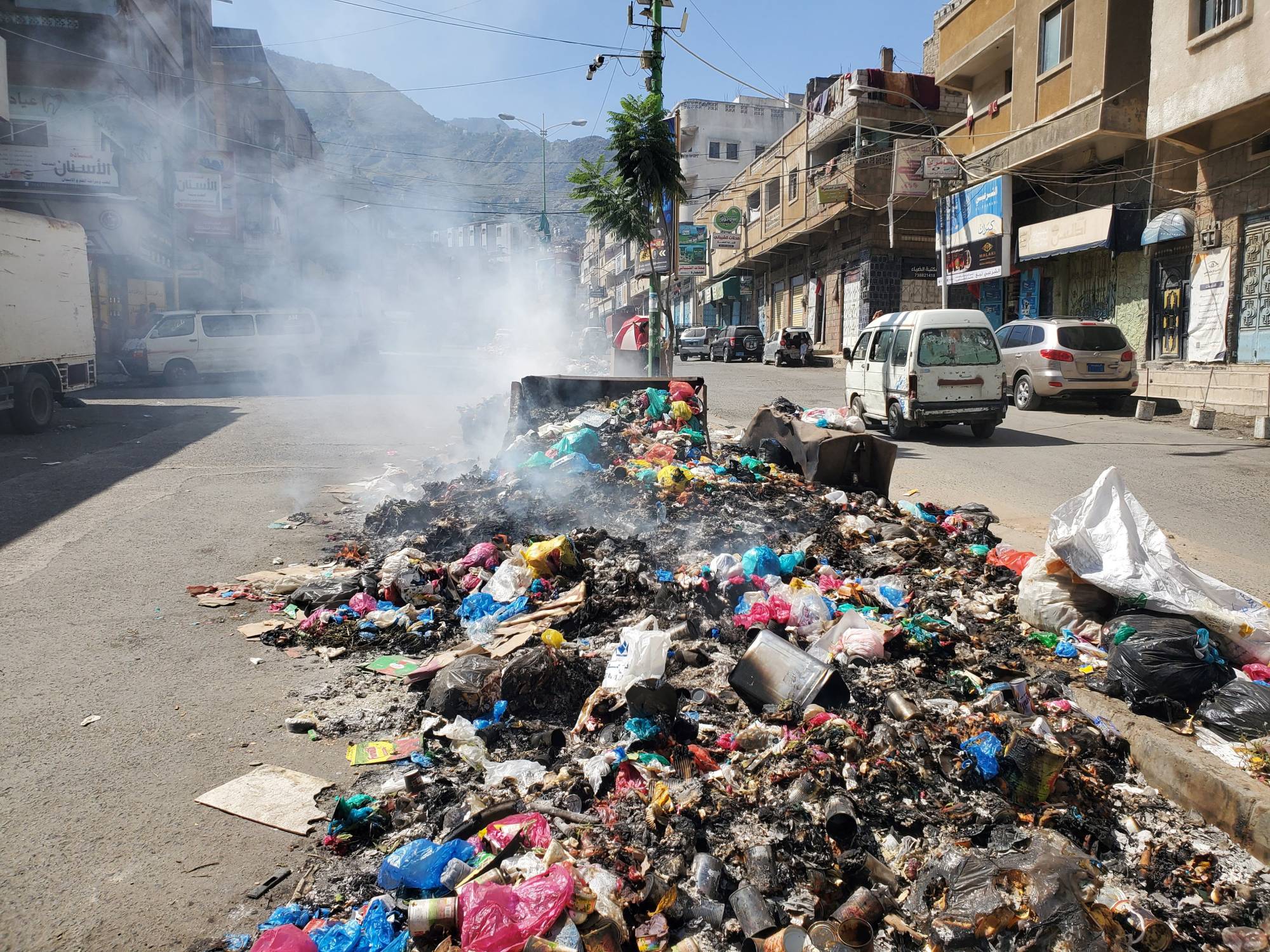
A scene of congestion at a gas station in Baghdad (Iraqi News Agency)
TT

Iraq: Fuel Crisis Exacerbates the Country’s Problems, Citizens’ Burdens

A scene of congestion at a gas station in Baghdad (Iraqi News Agency)

Many Iraqi provinces, including the capital Baghdad, are facing a severe fuel shortage, forcing motorists in some cases to wait for hours to get gasoline. This is placing additional burdens on citizens who are already dealing with deteriorating public services, fewer hours of available electricity, and delays in the payment of pensions and salaries for public-sector employees.

Despite repeated government promises to overcome the fuel crisis, long lines of vehicles can frequently be seen at gas stations across Baghdad, Kirkuk, Babil, Basra, and most provinces of the Kurdistan Region. This is further deepening public distrust in government statements.

According to observers, the current fuel crisis "is one of the consequences of the war and the ongoing state of tension between Washington and Tehran, and its negative repercussions for Iraq since the war began on February 28."

At the same time, successive Iraqi governments face intense public criticism for failing to build enough oil refineries to meet domestic demand in a country that sits on vast oil reserves.

"Deliberate Manipulation"?

While many experts link the fuel crisis to the negative effects of the US-Iran war, particularly following the closure of the Strait of Hormuz and the disruption of most of Iraq's oil exports and foreign imports, sources close to Prime Minister Ali al-Zaidi's government do not rule out "deliberate manipulation" within the Oil Ministry that is worsening the crisis.

They link this alleged manipulation to groups that were recently affected by arrests targeting senior ministry officials on charges of stealing billions of dinars and dollars. Those arrested include former Deputy Oil Minister for Refining Affairs Adnan al-Jumaili, Deputy Oil Minister for Distribution Affairs Ali Maaraj al-Bahadli, Director General of the Oil Products Distribution Company Hussein Talib Abboud, and other figures.

In contrast, the Oil Ministry attributes the current fuel crisis to several factors, including increased demand and higher daily domestic gasoline consumption, technical failures that forced some production units at local refineries to shut down, and delays in the arrival of imported fuel shipments because of security tensions at ports and along regional transportation routes.

Despite the lines of cars at filling stations in more than one province, Oil Minister Basim Mohammed al-Abadi insists that petroleum products are available. During a meeting attended by senior ministry officials, he said that "the temporary shortage of gasoline is being addressed" and that additional gasoline shipments would arrive soon, helping to stabilize supplies and meet citizens' needs.

He added that "gasoline consumption averages around 33 million liters per day and rises to around 38 million liters when citizens become concerned."

He said his ministry "continues to closely monitor supply and distribution flows and is taking the necessary measures to secure petroleum products and strengthen stability in the domestic market."

Regarding the country's current oil exports following the near-total disruption caused by the US-Israeli-Iranian war, Minister al-Abadi said that "crude oil exports were around 250,000 barrels per day when the government took office, while current crude oil production has exceeded 3 million barrels per day."

In a subsequent statement, the Oil Ministry explained that "the congestion at fuel stations is caused by a negative gap between production and consumption." It said the ministry had relied on imported shipments delivered through maritime entry points to make up the shortfall, but regional events and the ongoing conflict have created logistical difficulties for tanker movements, delaying their arrival or docking at Iraqi ports.

No Plans to Export

The Iraqi Oil Ministry on Saturday denied reports circulated by some media outlets and news agencies that it planned to export gasoline, stressing that its immediate priority is to achieve self-sufficiency.

The ministry said in a statement that "the future shift toward exporting certain petroleum products depends on completing expansion work at other refineries," which it is pursuing as part of its strategic plans to transform Iraq from an importer into an exporter.

The statement noted that Iraq currently exports fuel oil and naphtha, in addition to previous shipments of jet fuel and sulfur.


The US Military Says Its Withdrawal of Troops from Iraq is Complete

A car moves past a sign depicting Iraqi flags and images of Iraqi security forces on Sovereignty Day, marking the withdrawal of US-led coalition forces from Iraq, thereby ending more than two decades of military presence there, in Baghdad, Iraq, September 30, 2026. REUTERS/Ahmed Saad
TT

The US Military Says Its Withdrawal of Troops from Iraq is Complete

A car moves past a sign depicting Iraqi flags and images of Iraqi security forces on Sovereignty Day, marking the withdrawal of US-led coalition forces from Iraq, thereby ending more than two decades of military presence there, in Baghdad, Iraq, September 30, 2026. REUTERS/Ahmed Saad

The US military announced on Wednesday that it has completed the withdrawal of all American troops from Iraq, ending a 12-year mission to fight the ISIS group. The last US troops left an air base in northern Iraq under a deal between Baghdad and Washington.

The withdrawal, agreed on two years ago, comes against the backdrop of the ongoing war between the United States and Iran that has also sometimes spilled over into Iraq, with Iran-backed militias firing on US troops and the US striking the groups' strongholds.

Baghdad touted the end of the US mission as a sign of the country's increasing strength and sovereignty.

The withdrawal was also celebrated by Iran-backed groups but raised concerns among some other Iraqis, particularly in the Kurdish region. Meanwhile, questions loom around the future of the Iraqi militias, which the Baghdad government has sought — with little success so far — to disarm.

Pentagon spokesperson Sean Parnell said in a statement that US troops and equipment had completed an “orderly departure” from the air base in Irbil, in northern Iraq's semi-autonomous Kurdish region.

“This milestone reflects the success of a 12-year campaign that defeated ISIS as an organized military threat in Iraq and across the region,” he said. “It also marks a transition from a wartime coalition mission to an Iraqi-led security effort supported by a more normal bilateral security relationship.”

Iraqi Prime Minister Ali al-Zaidi presided over the handover ceremony and described the US withdrawal as the beginning of a “new phase, one defined by Iraq’s sovereignty, the strength of its institutions, the readiness of its forces, the unity of its decision-making, and balanced partnerships with its friends.”

He said Iraqi security forces will continue the fight against ISIS and the government will ensure that non-state groups no longer hold weapons.

US troops invaded Iraq in 2003 to topple Saddam Hussein. They departed in 2011, but three years later, Iraqi authorities invited a smaller US-led mission to fight the ISIS group, which had rampaged across Iraq, seizing large swaths of territory.

With the extremist group reduced to scattered sleeper cells, Washington and Baghdad agreed in 2024 to wind the mission down.

US troops pulled out of bases in most areas of Iraq last year but maintained a small presence of hundreds of troops in the semiautonomous northern Kurdish region. Bases there have regularly come under attack since the US and Israel launched their war against Iran on Feb. 28.

The Iraqi government initially linked the Sept. 30 deadline for US withdrawal to the disarmament of non-state armed groups by that date.

While a handful of less-influential militias have agreed to turn over their weapons, powerful groups close to Iran rejected the prospect or set conditions for disarming that the government would be unlikely to meet.

Al-Zaidi has since walked back the deadline. He told The New York Times earlier this month that the deadline for militia disarmament has been pushed to June 2027.

The effects of the US withdrawal may not be immediately visible, particularly since the US military presence had already been scaled down. But officials in Iraq's Kurdish region have expressed anxiety about the departure and particularly about the removal of US air defense systems.

The Kurdish regional government's Peshmerga Ministry said the Kurdish region had faced more than 1,000 drone and ballistic-missile attacks during the recent US-Iran conflict.

“The departure of the United States from the Kurdistan Region under these complex regional circumstances, without the provision of a defense system, is a matter of concern,” the statement said.

Iran-allied groups in Iraq, meanwhile, have celebrated the US withdrawal.

“The expulsion of the occupation forces, defeated, from the land of Iraq is the beginning of full sovereignty,” Abu Mujahid al-Assaf, a security official with the powerful Kataib Hezbollah militia, said in a statement.

He added a warning to al-Zaidi and his government not to carry out American plans, threatening that “any government that does not work for the benefit of the people will be overthrown by all means.”


Lebanon Urges US Pressure on Israel, Seeks Army Support and Commits to Reforms

President Joseph Aoun welcoming US Congress members Darin LaHood and Josh Gottheimer (Lebanese Presidency)
TT

Lebanon Urges US Pressure on Israel, Seeks Army Support and Commits to Reforms

President Joseph Aoun welcoming US Congress members Darin LaHood and Josh Gottheimer (Lebanese Presidency)

Lebanon’s top leaders urged Washington to pressure Israel to implement agreements and halt its operations in South Lebanon, while stressing the need for continued support for the Lebanese Army and pledging to press ahead with economic, financial and political reforms.

The messages emerged from President Joseph Aoun’s and Parliament Speaker Nabih Berri’s meetings with US Reps. Darin LaHood and Josh Gottheimer, as well as Prime Minister Nawaf Salam’s talks in Washington.

Aoun told the US lawmakers that Lebanon was placing considerable importance on Washington pressuring Israel to implement the “framework agreement” reached through Lebanese-US-Israeli negotiations in Washington.

Lebanon remains fully committed to the agreement, while Israel continues to disregard its provisions, Aoun stressed, according to a Lebanese presidency statement.

He stressed the need to halt demolition, bulldozing and destruction activities in the southern villages occupied by Israel, arguing that implementing the agreement required accelerating the return of Lebanese prisoners, resolving disputed points along the Blue Line and a gradual Israeli withdrawal from Lebanese territory alongside Lebanese Army deployment up to the internationally recognized southern border.

Aoun warned that continued delays would prolong tensions in the south and hinder the state’s ability to extend its authority throughout its southern territory, remove armed manifestations and return displaced residents to their villages and towns.

He also underscored the need to provide the Lebanese Army with the resources required to carry out its wide-ranging duties, from combating terrorism and smuggling and securing borders to protecting institutions and maintaining civil peace.

On domestic affairs, Aoun reaffirmed the government’s commitment to financial, economic and judicial reforms, pointing to legislation including amendments to the banking secrecy law, bank restructuring and the media law.

LaHood described the current situation as an opportunity to restore stability to Lebanon and the wider region and affirmed continued US assistance to Lebanon and its army through military aid provided by the administration with congressional approval.

Berri, meanwhile, focused on the continuing Israeli operations in Lebanon, arguing that Israel’s failure to fulfill its obligations under agreements reached to end the war was the main obstacle to their implementation.

He reiterated that the US administration and President Donald Trump had the ability to pressure Israel to halt its war on Lebanon, warning that its continuation would undermine efforts by the state and its institutions to carry out their roles, according to a statement from the parliament speaker’s office.

Berri welcomed assistance to the Lebanese Army but stressed the need to avert a failure to renew the mandate of the UN Interim Force in Lebanon, or UNIFIL, noting that there was still time to prevent such a step.

During a separate meeting with a British military delegation, he emphasized the importance of maintaining a UN umbrella and flag for any force assisting the Lebanese Army after Israel withdraws from occupied Lebanese territory.

Deputy Prime Minister Tarek Mitri also presented Berri with a documented report on crimes committed by Israeli forces in South Lebanon. Berri maintained that Lebanon’s right to pursue Israel over those acts was a “sovereign right” that could not be relinquished.

In Washington, Salam discussed economic and financial relations with US Treasury Secretary Scott Bessent, along with financial and banking reforms, negotiations with the International Monetary Fund and cooperation with the World Bank.

Salam outlined government measures to address the repercussions of Lebanon’s financial crisis and rebuild the banking sector, while seeking US support for reforms and economic recovery. Discussions also covered efforts to curb the cash economy and strengthen transparency, compliance and measures against money laundering and terrorism financing.

Meeting young Lebanese in Washington, Salam linked domestic reform with full state sovereignty, stressing that state-building rested on two inseparable tracks.

“There can be no state with two armies, and no state with two decision-making authorities,” he declared, reaffirming the government’s determination to pursue reforms and extend state authority across all Lebanese territory.

Salam stressed that government success should be measured not only by laws and projects but by its ability to build a country where young people see a future, making the return of Lebanese from abroad “a choice, not a sacrifice.”

He called for a state that respects its citizens and provides a trustworthy judiciary, a productive economy and an effective administration, urging Lebanese abroad to remain engaged through their expertise, investments and connections.

“Judge us by our work; judge us by the results,” Salam concluded.


Violent Pilot Altercation Forces Diversion of UAE Plane en Route to Israel

A Flydubai aircraft (archive - Asharq Al-Awsat)
TT

Violent Pilot Altercation Forces Diversion of UAE Plane en Route to Israel

A Flydubai aircraft (archive - Asharq Al-Awsat)

A violent altercation between two pilots forced a flight traveling between the United Arab Emirates and Israel to divert on Wednesday. Israel's Prime Minister Benjamin Netanyahu's office denied reports that the aircraft had been hijacked, according to Reuters.

Netanyahu stressed that the situation was "under control" and that all necessary measures are being taken to ensure the safe return of the Israeli passengers.

Flydubai said Flight FZ1073 experienced an incident while airborne and landed safely in Tabuk, Saudi Arabia, with all passengers unharmed.

CNN, citing sources, reported that a violent clash between the pilots led to the transmission of emergency signals. An Israeli official told Reuters that the pilots sent distress codes after becoming involved in a physical confrontation, though it remained unclear whether either pilot intentionally activated the alerts.

Israeli media reported that the aircraft, carrying about 150 passengers, briefly transmitted emergency codes, raising concerns that it may have been hijacked and prompting Israel to scramble two fighter jets to escort the plane.

According to the Ynet news website, the emergency signal was transmitted while the aircraft was descending under manual control and turning back in the opposite direction.

Israeli Prime Minister Benjamin Netanyahu and Defense Minister Israel Katz held urgent security consultations following the incident.

The flight departed Dubai at 7:05 a.m. local time and was scheduled to land at Ben Gurion Airport near Tel Aviv at about 9:30 a.m.

Roughly 90 minutes into the flight, as the aircraft entered Jordanian airspace, it transmitted Code 7700, the international signal for a general emergency. It later sent Code 7500, used to indicate unlawful interference with an aircraft, including a possible hijacking.

Israeli Air Force fighter jets were scrambled to escort the plane while authorities worked to determine the cause of the emergency alerts.