Iran Raises Price of Petrol as US Applies Economic Pressure

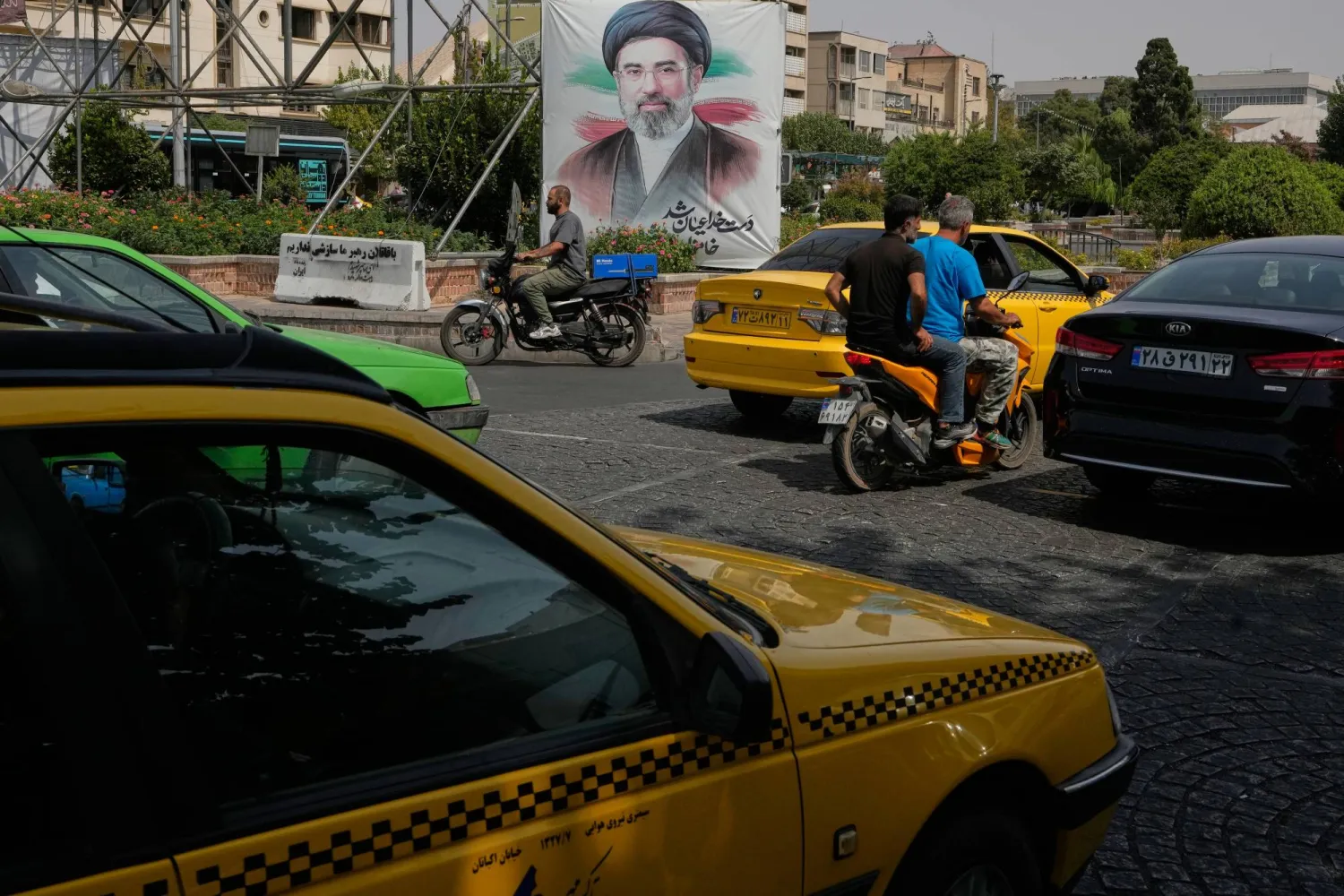
 Vehicles pass a banner showing a portrait of the Iranian Supreme Leader Mojtaba Khamenei, in downtown Tehran, Iran, Monday, Aug. 31, 2026. (AP)
Vehicles pass a banner showing a portrait of the Iranian Supreme Leader Mojtaba Khamenei, in downtown Tehran, Iran, Monday, Aug. 31, 2026. (AP)
TT

Iran Raises Price of Petrol as US Applies Economic Pressure

 Vehicles pass a banner showing a portrait of the Iranian Supreme Leader Mojtaba Khamenei, in downtown Tehran, Iran, Monday, Aug. 31, 2026. (AP)
Vehicles pass a banner showing a portrait of the Iranian Supreme Leader Mojtaba Khamenei, in downtown Tehran, Iran, Monday, Aug. 31, 2026. (AP)

Iranian authorities on Sunday announced they were raising the price of petrol for heavier consumers, as the United States steps up sanctions seeking to isolate the country's economy.

Iran's quota system prices petrol in three tiers -- 1,500 tomans per liter for a consumer's first 60 liters in a given month, 3,000 tomans per liter for their next 50, and 5,000 tomans per liter after that. The toman is an informal unit equivalent to 10 Iranian rials.

On Sunday, government spokeswoman Fatemeh Mohajerani said the price for the third tier would double to 10,000 tomans (about 4.5 US cents).

"The rate will increase to 10,000 toman rials from the morning of September 8," Mohajerani said in remarks carried by state media.

"Different numbers were mentioned in expert meetings, but because the president had promised the people, the rate of 10,000 tomans was set," she added.

She later clarified that the price of the first and second tiers would not be changed.

Iran, a major oil producer with some of the world's cheapest fuel, has for years heavily subsidized petrol, making any changes to pricing politically sensitive.

The development comes as the Iranian currency was trading on the black market Sunday at more than 2.2 million rials to the US dollar, according to websites that track the rate.

Before the start of the Middle East war on February 28, the rial traded at around 1.7 million to the dollar, and in late April it hit what was then a record low of 1.8 million.

Late last month, US Treasury Secretary Scott Bessent laid out plans for the "economic asphyxiation" of Iran, hoping to use financial pressure to hasten the end of the war.

The new measures build on a sanctions regime by the US and allies that has been in place since 2018, when President Donald Trump withdrew from an international deal struck with Tehran on its nuclear program.

The United States has also put Iran's ports under a naval blockade, attempting to reduce its oil exports to zero.


Trump: Iran is Trying to Drive Up Oil Prices Before Midterm Elections

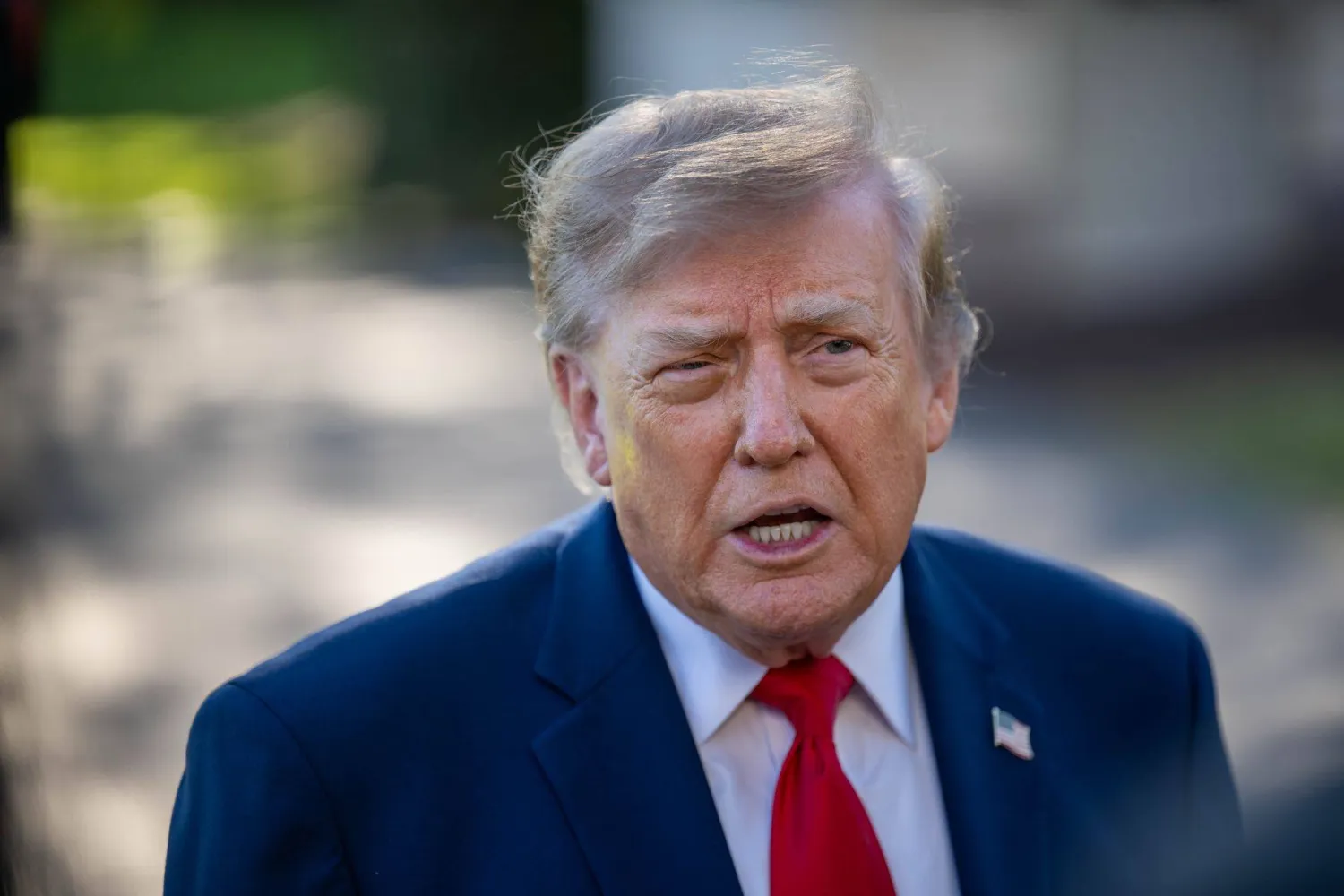
21 October 2026, US, Washington: US President Donald Trump speaks to the press at the White House before departing for South Carolina. Photo: Matt Kaminsky/ZUMA Press Wire/dpa
TT

Trump: Iran is Trying to Drive Up Oil Prices Before Midterm Elections

21 October 2026, US, Washington: US President Donald Trump speaks to the press at the White House before departing for South Carolina. Photo: Matt Kaminsky/ZUMA Press Wire/dpa

US President Donald Trump said on Thursday that Iran was doing all it could ⁠to drive up ⁠the price of oil before ⁠the US midterm elections.

"They are even making up fake hits, mines, and everything else," he said ⁠in ⁠a Truth Social post.

Iran's state television reported on Thursday that seven oil tankers were either struck by attacks or hit naval mines in the Strait of Hormuz overnight, possibly the largest single-day number of vessels damaged in the waterway since the Iran war started on Feb. 28.

Quoting a statement by the Revolutionary Guard's navy, the Iranian report said four of the tankers were transferring oil when they were targeted and caught fire. Three more were damaged and immobilized after hitting naval mines. The report didn't provide details about possible casualties or the tankers' flags.

Oil prices climbed about 2% to a five-month high on Thursday.

Brent futures rose $2.42, or 2.2%, to $111.24 a barrel at 10:45 a.m. EDT (1445 GMT), while US West Texas Intermediate (WTI) crude rose $1.14, or 1.2%, to $98.29.

That drove Brent into technically overbought territory for a third time in a week and set for its highest close since May 18.


French Justice Minister: 217 People Jailed Over Riots

France's Justice Minister Gerald Darmanin leaves after attending the weekly cabinet meeting at the Elysee Palace in Paris on October 22, 2026. (Photo by Ludovic MARIN / AFP)
TT

French Justice Minister: 217 People Jailed Over Riots

France's Justice Minister Gerald Darmanin leaves after attending the weekly cabinet meeting at the Elysee Palace in Paris on October 22, 2026. (Photo by Ludovic MARIN / AFP)

French courts have jailed 217 people after convicting them in fast-track trials linked to last weekend's rioting, the justice minister said Thursday, hailing the judiciary's "extremely firm" response.

Speaking outside the Fleury-Merogis prison on the outskirts of Paris, Gerald Darmanin said 2,700 people had been detained since Saturday.

More than 1,000 of them had appeared in court, he said, of whom "217 people have been imprisoned... and this figure is continuing to rise a lot."

Darmanin told reporters that of the 217 sent to jail "half had no criminal record", adding that "in general these are men aged between 18 to 25."

"This shows that prosecutors and judges are imprisoning people who, until now, were not known to the judiciary and are first offenders. It shows that the decisions of the judiciary are being applied in an extremely firm way," AFP quoted him as saying.

Darmanin has vowed to oversee expedited trials to rapidly clear the backlog of cases and to serve as a deterrent. New protests over grievances including the rising cost of living are planned this weekend.

But he has faced criticism from some lawyers who have accused the judiciary of lurching into repression.

France, like many European countries, faces problems with prison overcrowding but Darmanin said the solution was not "to imprison fewer people, but to create more space in prison."

As of September 1, there were 90,020 inmates in French prisons, well above the capacity of 63,348 places and a new record, according to ministry statistics.


Iranian Lawmaker Threatens to Close Border with Pakistan

Pakistani students walk across the Pakistan-Iran border after returning from Iran in Taftan, in Pakistan's Balochistan province, on June 19, 2025, amid the ongoing conflict between Israel and Iran. (Photo by Banaras KHAN / AFP)
TT

Iranian Lawmaker Threatens to Close Border with Pakistan

Pakistani students walk across the Pakistan-Iran border after returning from Iran in Taftan, in Pakistan's Balochistan province, on June 19, 2025, amid the ongoing conflict between Israel and Iran. (Photo by Banaras KHAN / AFP)

An Iranian lawmaker has threatened to close the land border with Pakistan if Islamabad continues to block trucks arriving from Iran, as hundreds of trucks remain stranded at border crossings following the suspension of trade between the two countries.

Fadahossein Maleki, head of the Iran-Pakistan Parliamentary Friendship Group, told the reformist ILNA news agency on Thursday that the border had been reopened "unilaterally."

"If this situation continues, Iran will certainly close the border on its side," he said.

Maleki explained that after following up with authorities in Iran's Baluchestan region, he learned that trucks stranded in Pakistan were being allowed to enter Iran, but traffic from Iran into Pakistan "remains blocked."

He said he had discussed the issue with Pakistan's army chief, Field Marshal Asim Munir, during Munir's visit to Tehran.

According to Maleki, Munir "issued orders from here in Tehran to open the border," while Pakistani officials attributed the restrictions to a "technical problem."

Maleki, who also serves on the Iranian parliament's National Security and Foreign Policy Committee, claimed that the developments were part of "US political pressure on neighboring countries to restrict or close their borders and limit trade and economic relations" with Iran.

"We never expected anything like this from our Pakistani friends, nor did we expect them to be influenced by American pressure," he said.

He offered no evidence to support the alleged connection.

Maleki called for Pakistan's ambassador to appear before parliament "as soon as possible," alongside provincial officials, to resolve the outstanding issues.

He also referred to similar "fluctuations" along Iran's border with Iraq, saying it had previously been closed "under pressure" before reopening.

He noted that these issues were now being raised in connection with the withdrawal of US forces from Iraq.

Trucks Stranded at Border

Hundreds of trucks remained stranded Wednesday on the Pakistani side of border crossings with Iran following the suspension of bilateral trade, according to a local official and business representatives who spoke to AFP.

An AFP journalist at the Gabd-Rimdan crossing in southwestern Pakistan observed hundreds of heavy trucks loaded with goods bound for Iran, while drivers complained of waiting for days.

Driver Abdul Ghani, 28, said truckers were facing "extreme difficulties."

"We have no drinking water and no proper facilities for food or other basic necessities," he said.

Another driver, Azeem Khan, 32, said everyone was suffering, particularly Baloch traders and workers.

"People's losses are increasing day by day," he added.

An official in Pakistan's Balochistan province, speaking on condition of anonymity, said the border had been closed to trade for five days, with all goods bound for Iran barred from crossing.

However, some trucks carrying goods through Iran to Central Asia or Türkiye were allowed to cross on Wednesday.

Provincial official Shahid Rind had said Saturday that the closure was "temporary" and intended to "address security concerns" and "curb smuggling."

Shamsul Haq, a trader from the city of Gwadar, said Pakistani importers and exporters had suffered "losses amounting to billions of rupees."

Pakistan's Foreign Ministry declined to comment.

Munir's Visit

Munir, whose country is serving as a mediator between Tehran and Washington, told Iranian Parliament Speaker Mohammad Bagher Ghalibaf during his visit Tuesday that the border problems were "temporary and technical" and that the crossings had "reopened as of today."

Munir also met Iranian President Masoud Pezeshkian and Supreme National Security Council Secretary Mohsen Rezaei, who told him that Iran would not proceed with negotiations with Washington until "trust is built."

Iranian authorities had announced last Saturday that Pakistan had closed the Rimdan-Gabd crossing to commercial activity while allowing passenger traffic to continue.

Iranian Foreign Ministry spokesman Esmail Baghaei attributed the suspension of border crossings and trade to "technical problems" and "precautionary measures."

Peyman Sanandaji, head of the Transportation Committee at the Tehran Chamber of Commerce, said Iranian exports to Pakistan had been temporarily suspended because of sanctions on Iran's banking system.

He added that imports from Pakistan remained possible, but their continuation depended on cooperation from the Pakistani side.

A Land Blockade?

Iran's land crossings have become increasingly important amid the US naval blockade of its ports.

Admiral Brad Cooper, commander of US Central Command (CENTCOM), said that apart from humanitarian assistance authorized by Washington, Iran had no imports or exports moving by sea.

The US Treasury Department has warned foreign financial institutions against conducting transactions with sanctioned Iranian banks.

Secretary of State Marco Rubio said Tuesday that Washington would maintain "extraordinary economic pressure" to cut off funding for Tehran's regional allies and its military production.

ILNA questioned whether US pressure had "extended to land routes" connecting Iran with its neighbors, amid restrictions at the Pakistani border and reports of possible limitations on crossings with Iraq.

However, the agency acknowledged that the announced restrictions "do not, on their own, prove the existence of a coordinated plan to impose a land blockade."