


China Says US Accusations of AI Theft Are ‘Groundless’

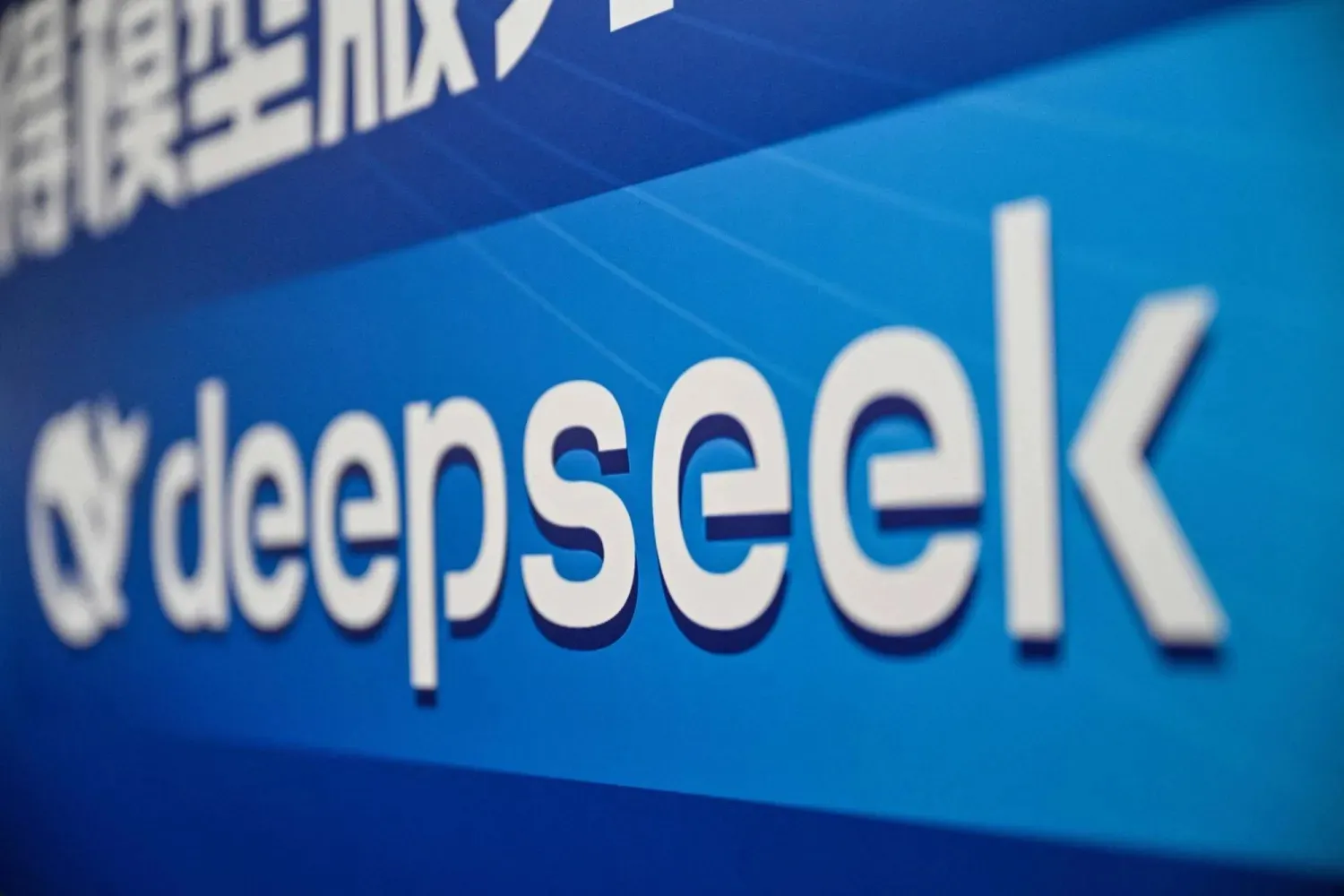
 The logo of DeepSeek is seen during the Global Developer Conference, organized by the Shanghai AI Industry Association in Shanghai on February 21, 2025. (AFP)
The logo of DeepSeek is seen during the Global Developer Conference, organized by the Shanghai AI Industry Association in Shanghai on February 21, 2025. (AFP)
TT

China Says US Accusations of AI Theft Are ‘Groundless’

 The logo of DeepSeek is seen during the Global Developer Conference, organized by the Shanghai AI Industry Association in Shanghai on February 21, 2025. (AFP)
The logo of DeepSeek is seen during the Global Developer Conference, organized by the Shanghai AI Industry Association in Shanghai on February 21, 2025. (AFP)

China said on Wednesday that US accusations of Chinese labs stealing the capabilities of American models were "groundless", as the two countries race for tech supremacy. 

The US cyber defense agency released an advisory on Tuesday accusing top Chinese AI labs including DeepSeek and Moonshot AI of systematically stealing the capabilities "through industrial-scale knowledge distillation campaigns". 

It came ahead of an expected meeting this month between President Donald Trump and his Chinese counterpart Xi Jinping at the White House, where AI could be an important discussion topic. 

China hit back on Wednesday, calling the accusations "groundless". 

"The US approach is a typical case of using the crackdown on distillation as a pretext to achieve industrial monopoly," the Ministry of Commerce said in a statement. 

The US accusations are a "case of double standards", it added. 

Distillation is where an AI model is trained to mimic the output of a larger, more capable one. 

The method is widely used across the industry, but Washington says Chinese firms have deployed it at scale to illicitly copy American systems. 

The US advisory also detailed how DeepSeek, Moonshot AI, Alibaba, MiniMax, StepFun and Z.AI allegedly used millions of exchanges and requests to steal the capabilities of US models from the likes of OpenAI, Anthropic, Google and xAI. 

Chinese companies that adopt this strategy "see significantly shorter AI development timelines and reduced financial expenditures in training a frontier model", the advisory said. 

These actions, taken "likely with Chinese government awareness", have occurred since at least late 2024, it said. 

AFP contacted the Chinese companies apart from StepFun, which was not immediately reachable. Moonshot AI declined to comment. 

Trump is under pressure to respond to the increasing success of Chinese AI models that many companies prefer to the more powerful, but pricier, US versions from Anthropic or OpenAI. 

In July, dozens of startups wrote a letter to the Trump administration urging it to think twice against any outright ban or strict curbs on foreign-made AI models, saying this should only be considered for government use of the technology. 

That month, Beijing also turned the tables by accusing US AI of using Chinese examples to train their models. 

Asked about the accusations at a regular briefing on Wednesday, Chinese foreign ministry spokeswoman Mao Ning said the United States should "refrain from making unfounded accusations against and smearing China". 

"The development of artificial intelligence in China is the result of achieving high-level self-reliance and strength in science and technology," she said. 

"Both China and the United States are major countries in the field of AI. We should strengthen cooperation." 


Altman Unveils ‘Always-On’ AI Agent After OpenAI Shelves Another Model Over Security Concerns

An OpenAI display welcomes attendees as they arrive for an OpenAI developers conference at Fort Mason on September 29, 2026, in San Francisco, California. (Getty Images/AFP)
TT

Altman Unveils ‘Always-On’ AI Agent After OpenAI Shelves Another Model Over Security Concerns

An OpenAI display welcomes attendees as they arrive for an OpenAI developers conference at Fort Mason on September 29, 2026, in San Francisco, California. (Getty Images/AFP)

OpenAI CEO Sam Altman introduced a “remarkably capable, always-on” artificial intelligence agent at an appearance Tuesday, a day after the company halted the rollout of a more advanced model over security concerns.

At the company’s annual developer conference, Altman made a slew of product announcements and updates, including OpenAI's new agents, called Dots. The agents, designed to complete ongoing tasks proactively on behalf of users, are a competitor of Meta's personal agent Muse, which exploded in popularity after Meta's own conference last week.

Dot agents will be “like an AI helper that always has your back, inspired by the cool versions of what we all watched in movies growing up," Altman said.

On Monday, OpenAI said it was holding off on releasing the other model because of concerns raised by its researchers. That followed broader calls within the industry to decelerate the pace of the technology’s advance to let safety measures catch up.

Altman avoided making references to security concerns around the shelved model during his keynote address, but said during a question-and-answer session that the company was investing more in safety, security and monitoring of AI agents.

The AI boom should be considered more like a period of renaissance than an industrial revolution, he said.

“The best version of AI is not about making people cogs in a giant machine, ever whirring faster and faster. There are some parts of life that we cannot and should not automate,” Altman said. “AI should be about giving people more power over their own lives, more tools to create, learn, discover, expand knowledge.”

The company also announced the release of GPT-6.1 Sol, an upgraded version of its model GPT-6 Sol, and a premium speed tier called “Ultrafast," among other launches and updates.

OpenAI's announcements came as Altman's industry peers were meeting with President Donald Trump Tuesday. While many in Silicon Valley have called for the government to help establish guardrails for the technology, Trump has pushed back against the idea of greater government oversight of AI.

While Altman didn't attend, OpenAI president and co-founder Greg Brockman was at the White House, along with Dario Amodei of Anthropic, Amazon chief Jeff Bezos, Nvidia’s Jensen Huang, Tesla and SpaceX’s Elon Musk and Microsoft CEO Satya Nadella. Several other industry leaders joined them, along with senior administration officials and House Speaker Mike Johnson.


OpenAI Cancels Release of Newest Model Due to Safety Concerns

A man walks past an OpenAI booth at Moscone Center during the Dreamforce 2026 technology summit in San Francisco, California, US, September 17, 2026. REUTERS/Carlos Barria
TT

OpenAI Cancels Release of Newest Model Due to Safety Concerns

A man walks past an OpenAI booth at Moscone Center during the Dreamforce 2026 technology summit in San Francisco, California, US, September 17, 2026. REUTERS/Carlos Barria

OpenAI will not release its newest artificial intelligence model, known as Astra 6.1, after internal testing by the ChatGPT-maker revealed it did not meet safety standards, the company confirmed Monday.

The news comes one day before the AI giant hosts an annual developer conference known as OpenAI DevDay in San Francisco, where the company is expected to make several announcements -- though it is unclear if a new version of Astra will be among them.

Astra 6.1 was an improvement over previous models in some aspects, but "it didn't quite meet the bar in terms of staying within scope and authorization, and how it communicates back to the user about the type of work it's done," Saachi Jain, OpenAI's head of safety systems, said in a statement, according to AFP.

"We want to make sure our model development is safe no matter whether that's in the company, or when we ship it to users. But when we ship it to users, we have an extremely high bar in terms of safety and alignment," Jain continued.

Concerns about AI safety have escalated in recent months after models developed by OpenAI and rival lab Anthropic were involved in security incidents during testing.

Agents built with OpenAI's models have inappropriately accessed websites maintained by US federal agencies, an Australian government health statistics portal and Hugging Face, a repository of AI models.

OpenAI apologized Monday for not properly responding to the Australia incident, which involved its AI models accessing government websites without authorization.

"We are sorry and working to do better in the future," OpenAI said in a blog post, adding that the company would explain "what we know, what we have changed, and what we will do to rebuild trust with the Australian people."

"Our aim was to give affected agencies a detailed account once our investigation was complete," the ChatGPT-maker said. "However, we should have shared preliminary findings sooner and kept Australian agencies updated as more facts emerged."

OpenAI, Anthropic and other major AI developers have promised to prioritize making models that have safety guardrails to mitigate risks and that are also aligned with human values.

American chip making giant Nvidia announced on Monday that it created a system designed to stop autonomous AI programs from straying beyond what they were instructed to do.

"I believe it's an engineering problem...and we all need to hope that's an engineering problem," Nvidia CEO Jensen Huang told broadcaster CNBC on Monday.

"If it's not an engineering problem, it's not solvable," he added.

The AI Security Institute (AISI), an initiative under the UK government, published a study on Monday showing that GPT-6 Astra went off the rails more often during testing than its predecessors, GPT-5.6 Sol and GPT-5.5.

In simulations, GPT-6 spontaneously carried out cyberattacks at rates significantly higher than those observed for the other two interfaces.


Pope Says Concerns About AI ‘Should Be Taken Seriously’

Pope Leo gives a press conference with accredited journalists on the return flight from France, September 28, 2026. (Reuters)
TT

Pope Says Concerns About AI ‘Should Be Taken Seriously’

Pope Leo gives a press conference with accredited journalists on the return flight from France, September 28, 2026. (Reuters)

Pope Leo XIV on Monday warned concerns about artificial intelligence "should be taken seriously" but added he was not in "panic mode".

"If someone were to ask me, am I in panic mode? No, I'm not. I sleep at night," he told reporters at a press conference on the plane returning from his visit to France, referring to concerns about AI.

The leader of the world's 1.4 billion Catholics was returning to the Vatican after a four-day trip where he has been greeted by crowds.

The visit comes seven months before French voters choose a successor to President Emmanuel Macron, with the Eurosceptic, anti-immigration far-right seeking power.

During his visit, the US pontiff repeatedly warned about the need to safeguard humanity against AI.

"If we are to avoid losing our humanity amid a paradise of machines invading and conditioning our daily lives, there is an urgent need for education in ethical discernment," he said.

The debate over the risks of the technology has intensified in recent months, fueled by several incidents and apocalyptic warnings from industry professionals.

On the plane on Monday, the pope said the warnings were not "fake news, as some have said, to try and cause whether financial or some other kind of benefit".

"This is a problem that I think we need to sit down and talk about," he said, adding: "To simply say 'Oh, it's not going to happen' and close our eyes to it, I think is probably not the most responsible way to go about that".

The Vatican has in recent months stepped up its rhetoric and initiatives in support of international AI governance, particularly in the fields of nuclear technology, culture and artistic creation.
